Search results for: linux

FoxSDR Updates: Node Canvas, Single Map Display, Linux+Android Builds, Locating Air Traffic Radar Positions

Thank you to wonderingStars for writing in and sharing updates to his FoxSDR software program. FoxSDR is a new AI-coded software that supports all common protocols and SDRs.

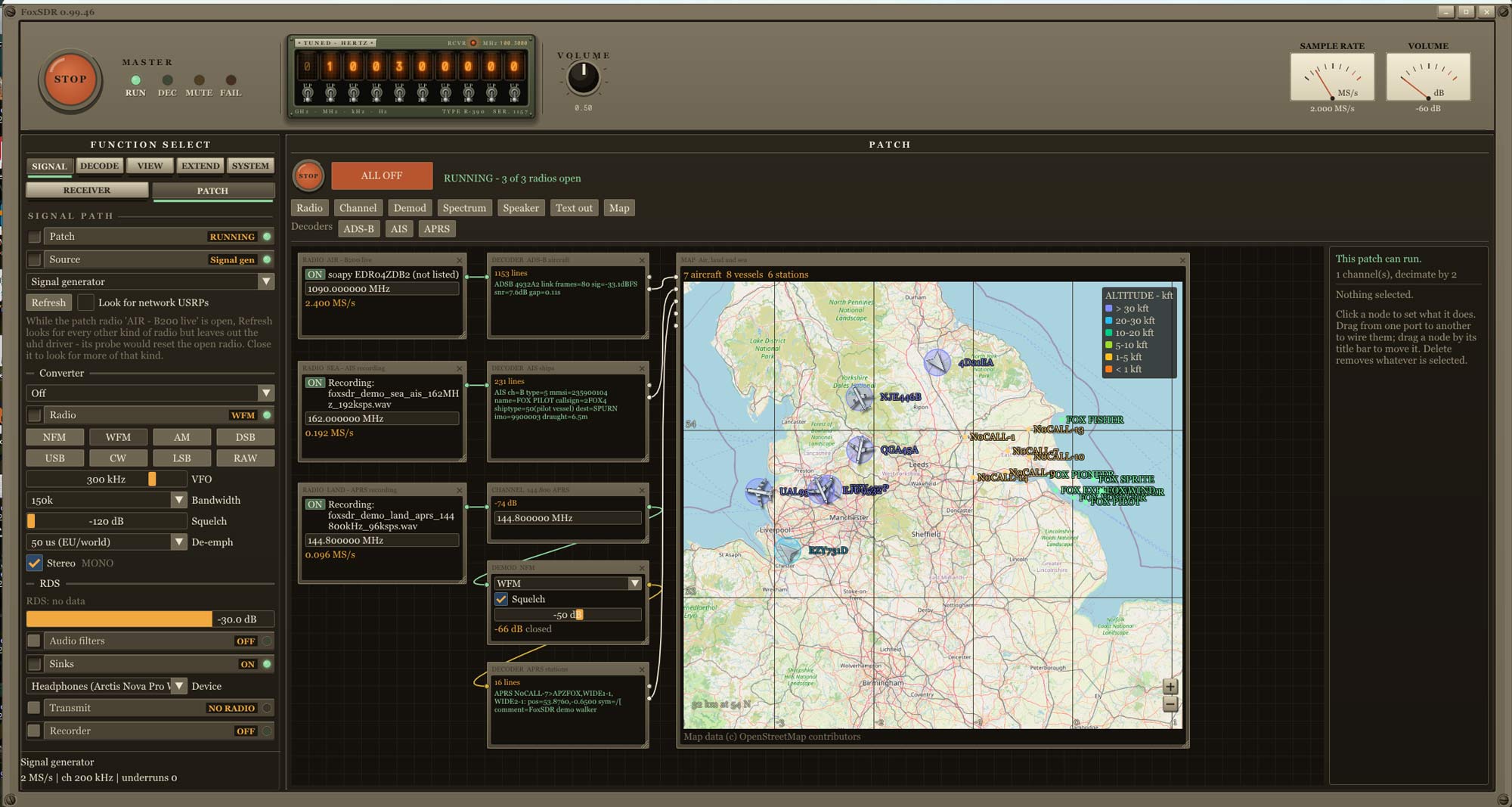
The first update that wonderingStars notes is the addition of a node canvas where you can wire radios, decoders, speakers, and displays together. It can run up to five SDRs at the same time, each with its own decoders. This is now FoxSDR's main screen.

The second update is a map that can accept multiple inputs from multiple decoders, allowing users to plot various data streams such as ADS-B, AIS, amateur high-altitude balloons, and more on a single map.

The third update is that Linux x64 builds are now published, although they are noted to still be in development. An Android arm64 build has also been released in alpha form. To access this, users will need to sign up to test.

The final update adds a new radar sweep feature, which locates the positions of air-traffic radars around you by listening to 1090 MHz. The author explains:

Secondary surveillance radars rotate and interrogate aircraft transponders as their beam passes. Aircraft that broadcast ADS-B also report their own position, so every reply they give reveals where a radar was pointing at that moment. Radar Sweep collects these replies over hours and works out each radar's location, rotation speed and direction on its own. It then draws bearing lines towards aircraft that answer the radar but broadcast no position, and marks a position where two radars' lines cross.

It is the same idea as PlanePlotter's Beamfinder, except that Radar Sweep finds the radar sites itself instead of being given them. It is not affiliated with PlanePlotter or its authors.

In testing on a 12.8-hour recording, it confirmed two radars, each within about 5 km of a published airfield position. Bearings to held-out aircraft had a median error of 0.3°.

You need a 1090 MHz antenna, an SDR running at 2 MS/s or more, and a few hours of traffic. Radar Sweep remembers the radars it finds and never reveals your location.

It is available free to FoxSDR users in the United States.

The author also wanted to share an upcoming feature, which is the GUI builder, which will allow you to customize your own GUI.
FoxSDR: New Node Canvas + Radar Sweep

AI Disclaimer: wonderingStars describes their company as a human-gated AI company, and FoxSDR is AI coded.

WXCorrector: Updating Keplers for Linux users of WXtoIMG

Thank you to Hamdy Abou El Anein for submitting news about the release of his software called "WXCorrector".  

WXCorrector is a dedicated solution designed specifically for Linux users who face challenges with the handling of Kepler elements in Wxtoimg. This tool addresses a critical issue where incorrect or outdated Keplerian elements can cause disruptions in tracking software, leading to inaccurate predictions and potential data loss.

It work on Linux, it needs sudo rights and Python3 installed.

https://github.com/hamdyaea/wxcorrector-for-linux

WXtoIMG is a commonly used piece of software for decoding images from NOAA APT weather satellites. However,  WXtoIMG is now considered abandonware as the original website has gone, and the main author has not updated the program in many years. The latest versions from 2017 can be downloaded from Archive.org. An alternative download site is https://www.wraase.de/wxtoimg, where they also provide a way to update Keplers for Windows machines.

Due to it's abandonment, certain features like Kepler updates from the internet appear to have broken over time with changes to the way Kepler files are served. Up to date Kepler files are required for the software to know exactly where satellites are in the sky for tracking and scheduling.

A modern alternative to WXtoIMG is SatDump, which now supports NOAA APT satellites.

WXtoIMG

SIGpi: A Signal Intelligence Focused Linux “Go-Kit”

Thank you to Joe NE2Z for sharing his Linux distribution called SIGpi. SIGpi is an installable Linux distribution for Ubuntu and Raspberry Pi 3/4 that focuses on providing multiple open source SDR programs that can be used for signal intelligence. Support for RTL-SDR and other SDRs is included.

The distro is actually created via a bash script that installs all the programs automatically on a fresh OS install. It also provides a system for easily upgrading software as developers work on them.

For a full list of the software that comes with SIGpi check out their Wiki.

SIGpi is a "go-kit" for Signal Intelligence (SIGINT) enthusiasts with emphasis on capabilities in the VHF, UHF, and SHF spectrum. For completeness, HF spectrum related software is included for optional install. This (bash) shell script builds SIGINT tools on the following platforms:

  • Raspberry Pi4 4GB RAM or Raspberry Pi 400 with 32GB microSD card running Raspberry Pi OS Full (64-bit)
  • Ubuntu 22.04 LTS on arm64 and amd64

A headless server only install (Node Install) can be performed on Raspberry Pi3 B+ with 32GB microSD card running Raspberry Pi OS Full (64-bit)

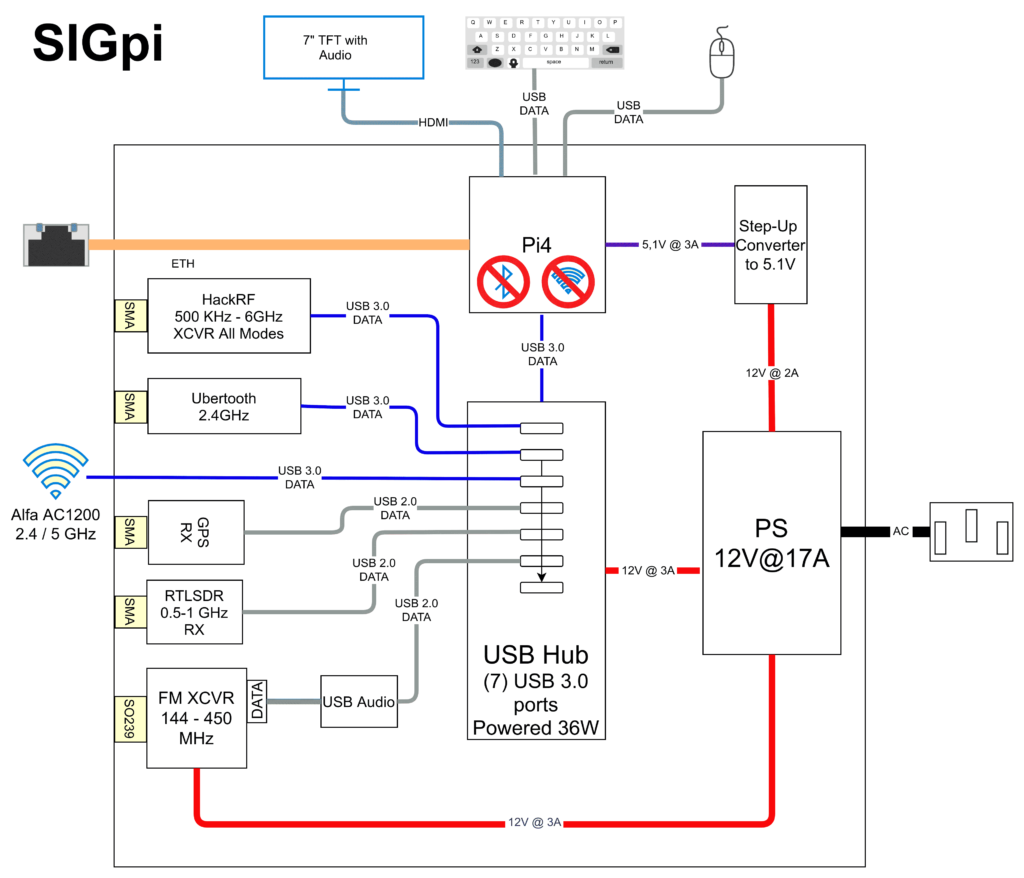
A possible hardware setup with SIGpi

Gorizont Linux Updated to 2022.1 Edition

Thank you to Steve Cox, creator of the Gorizont Linux distribution for letting us know that is has now been updated to the 2022.1 Edition. Gorizont-linux is an RTL-SDR focused Linux distribution based on Xubuntu 20.04 LTS. It comes in a bootable .iso image for easy installation. Steve writes:

[Gorizont-linux] is still an Xubuntu 20.04 LTS based bootable .iso image for RTL-SDR only, but I've put a lot more work into writing instructions in simple English, refining things and freshening everything up to the latest available release. Here are some highlights:

gqrx 2.15.8
SigDigger 0.3.0
Universal Radio Hacker 2.9.0
gqrx-scan
Welle.io 2.4 for all your DAB and DAB+ needs.
guglielmo v0.3 for simple FM radio and DAB reception - fast, quick and light.
Baudline
fldigi
fmsg
Due to multiple issues with linux versions of Dream DRM, Dream DRM is now installed as a Win 32 .exe running under wine. It works!
w-scan for creating DVB-T/ATSC/etc. scan files for DVB TV viewing using VLC.

Various extra utilities in home folder and command line path
Much clearer instructions and scripts in simple English.

NOTE: Due to current events, gorizont linux now ships with networking disabled on boot. To use internet in a trusted environment, left-click on networking icon to the left of the battery indicator and click 'Enable Networking'.

If I was about to have to flee my home with little more than a laptop and a rtl dongle, this would be my distro of choice for staying in touch with the outside World - fast and easy to use,  yet packed with (other people's) good software.

TechMinds: Testing DragonOS Focal, a Linux ISO with many SDR programs built-in

In the past we've posted many times about DragonOS which is an Ubuntu Linux image that comes preinstalled with multiple SDR software packages. This takes the hassle out of needing to compile and install programs on Linux, some of which can often be very difficult and time consuming to get up and running. Aaron who is the creator of DragonOS also runs a YouTube channel where he provides multiple tutorials and demos of the software installed.

This week on the Tech Minds YouTube channel, host Matt tests out DragonOS in a Virtual Machine and gives a broad overview of what DragonOS is capable of. He shows how to set up VMWare Workstation in order to create the virtual machine, installs Dragon OS, shows what programs are included and demonstrates a few programs in action.

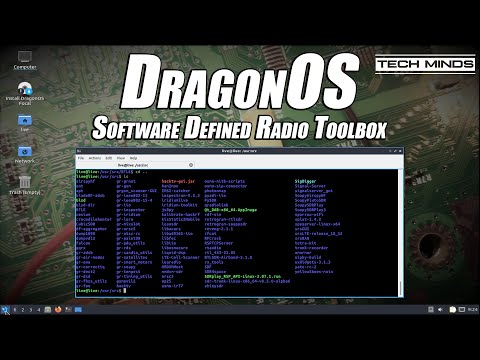
DRAGON OS FOCAL - The Software Defined Radio Toolbox

Guglielmo: RTL-SDR FM + DAB Tuner Software for Linux

Thank you to Marco for submitting news about the release of his Linux based RTL-SDR FM and DAB tuner software package named Guglielmo. The code is based on the Qt-dab and sdr-j-fm packages, with some bug fixes, a new GUI and new audio features implemented. Marco writes:

Guglielmo implements a simple FM and DAB receiver based on Qt and the Qt-dab and sdr-j-fm packages.

The primary reason it is being developed is there is a lack of media centre quality Open Source Software Defined Radios: most of the packages out there focus more on hobbyist features, such as signal and content monitoring, leaving out media features like a volume slider or MPRIS control.

Yes, I have blown the ribbon tweeter fuses on my maggies because my previous go to SDR DAB receiver started at full blast, and I run my media centre headless: I don't really want to scramble for a VNC session when I want to stop the music, when I could simply use KDE connect on my phone.

There is also a distinct lack of FM SDR receivers, which is disappointing, since, at least in the UK, for reasons of cost, most stations transmit at a fairly poor bitRate, if not downright in mono, and FM stations seem to still be a better proposition in terms of sound quality.

If you're interested in trying it compilation instructions are available on the GitHub, and there is also a ready to use AppImage on the GitHub releases page too. 

Guglielmo: Screenshot of the DAB Interface

Gorizont Linux 2.0.4 Update

Thank you to Steve Cox, creator of the Gorizont Linux distribution for letting us know that the latest update is now out, although it is a small update only. Gorizont Linux is a custom distribution based on Xubuntu 20.04 LTS which contains many preinstalled RTL-SDR compatible programs. Steve writes that the following programs have been updated and added:

  • gqrx updated to 2.14.4
  • Universal Radio Hacker updated to 2.9.2
  • markjfine's nrsc5-DUI HD FM decoder included.

Adding an RTL-SDR Antenna Port to a Pinetab Linux Tablet

The Pinetab is a US$99.99 open source Ubuntu Linux Tablet based on a low power Pine64 singe board computer. The Pinetab can optionally support an internal RTL-SDR, which is essentially just a standard RTL-SDR PCB connected to the single board computer inside the tablet enclosure.

Over on YouTube channel Privacy & Tech Tips has uploaded a video where he takes the Pinetab apart and adds an external antenna port, allowing for external antennas to be connected. In the video we get a good look at the internals of the Pinetab, and after installing the external antenna port he shows us the Pinetab receiving a LoRa signal.

Opening Pinetab (Linux Tablet) back cover (+show tips for safer opening) on video and show how you can add an external threaded antenna port for your internal SDR. It makes for an amazingly compact SDR kit and smaller antennas like LoRa fit right inside the keyboard/tablet/laptop stand. Larger antennas such as a dipole, the antenna cord fits along the case/stand perfectly.

I show how to open the Pinetab safely, and install an external threaded antenna port. After this I take a Heltec LoRa ESP32 I have had laying around and use it to demo GQRX on the screen. I show LoRa packets coming over the radio waves at 915MHz. Series on SDR using Pinetab/Pinephone/Pine64 hardware. Linux makes for an amazing platform where the tools at hand leave the limits to what you can do to the power of your imagination.

Opening Pinetab + Add SDR Modification!