Tagged: POCSAG

RTL-SDR Pager: Android App for Receiving and Decoding POCSAG and FLEX Pager Messages

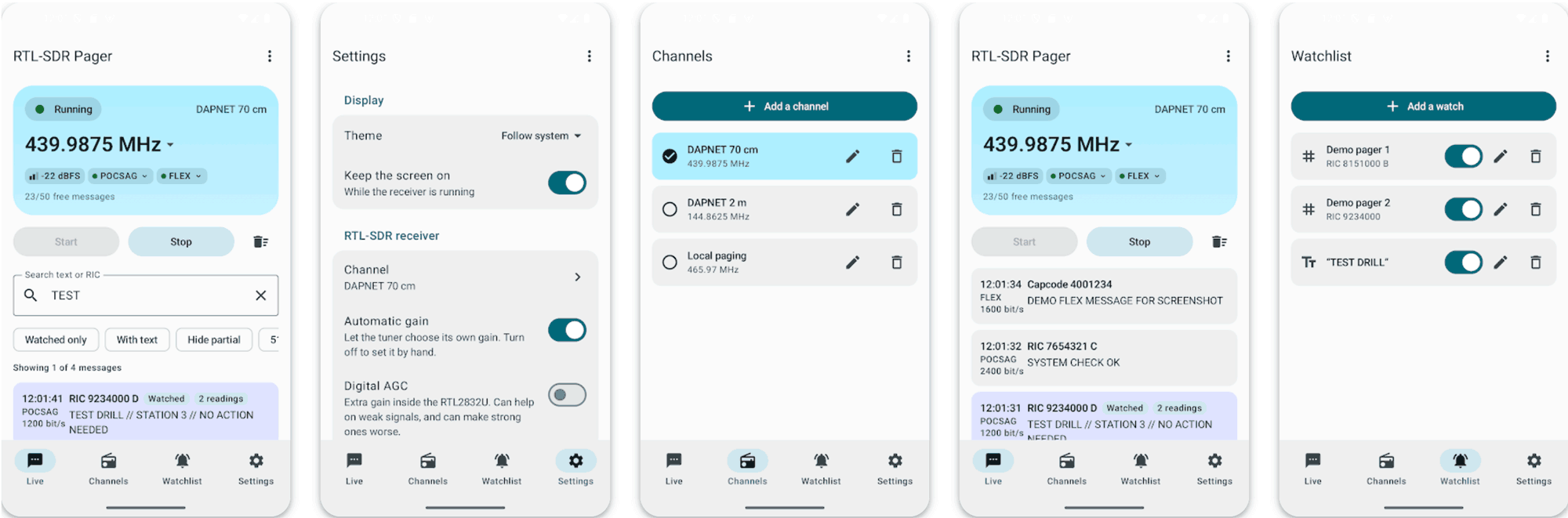
Thank you to Christian from ebcTech.eu for writing in and sharing with us the release of his new Android app called "RTL-SDR Pager" (Google Play Store link). The app is designed to work with an RTL-SDR dongle connected to the Android device. It is capable of decoding POCSAG and FLEX messages. However, Christian notes that he hasn't been able to test FLEX decoding so far because there are no FLEX channels in his area, so he would be interested in any feedback on this.

The app also provides push alerts, allowing you to monitor for a specific RIC or keyword and allows you to save channel lists.

The app offers a free demo that allows up to 50 messages. Upgrading to unlimited messages costs $3.99.

Screenshots of the ebcTech RTL-SDR Pager App

LakeShark: P25 Phase 1, FM, POCSAG, ADS-B and Sub-GHz with an RTL-SDR on the LilyGO T-Display P4 (ESP32-P4)

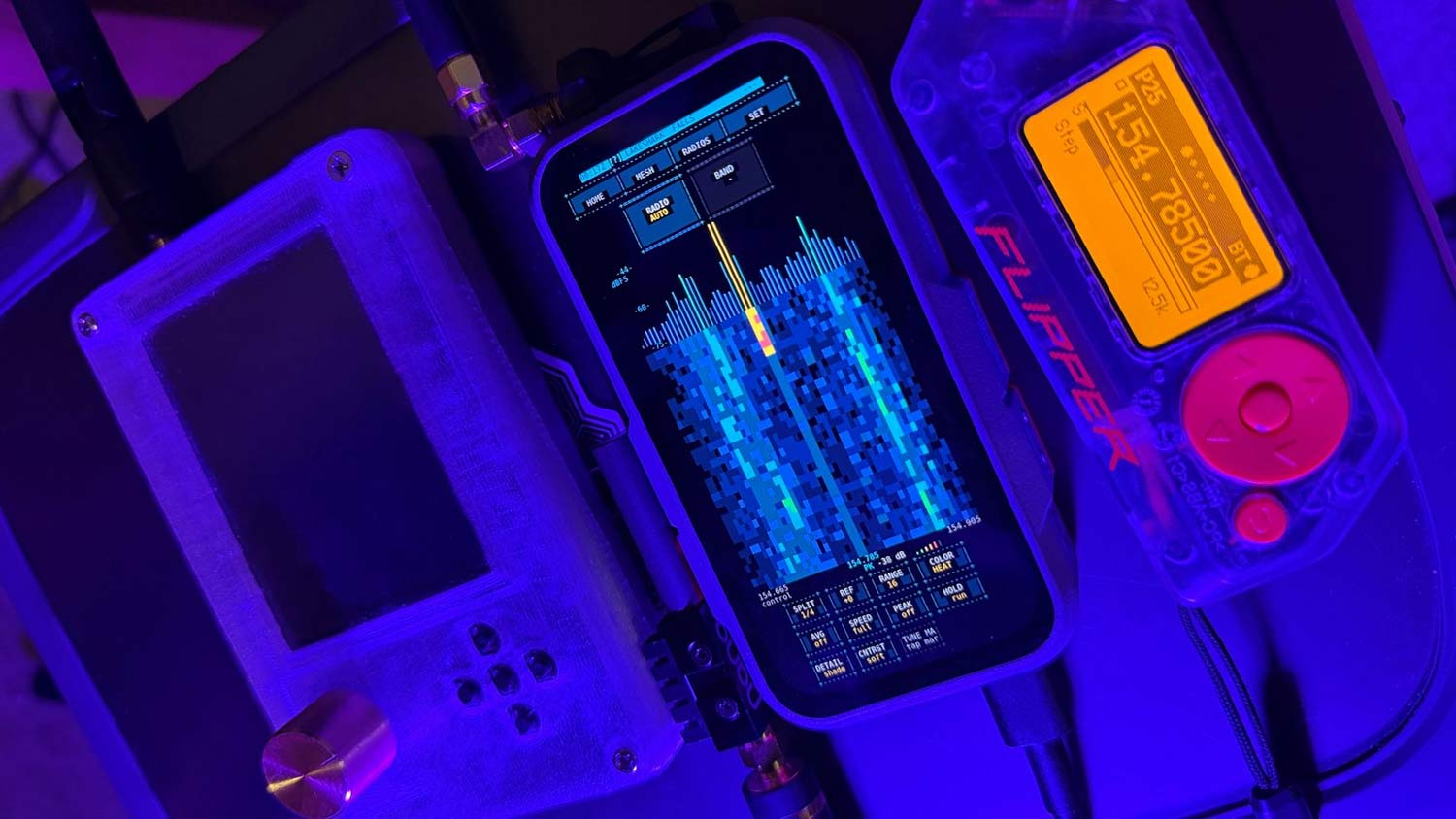
Thank you to Samuel Reynolds (aka SAMS0N1TE on GitHub), for writing in and sharing with us his project called 'LakeShark'. LakeShark is firmware for the LilyGO T-Display P4 (an ESP32-P4-based microcontroller with a 4.1 Inch touchscreen, detachable keyboard, GPS, and nine-axis motion sensor), which allows a USB-connected RTL-SDR Blog V3 or V4 to be used for P25 Phase 1 trunking, FM, POCSAG, ADS-B, and sub-GHz capture. Samuel writes:

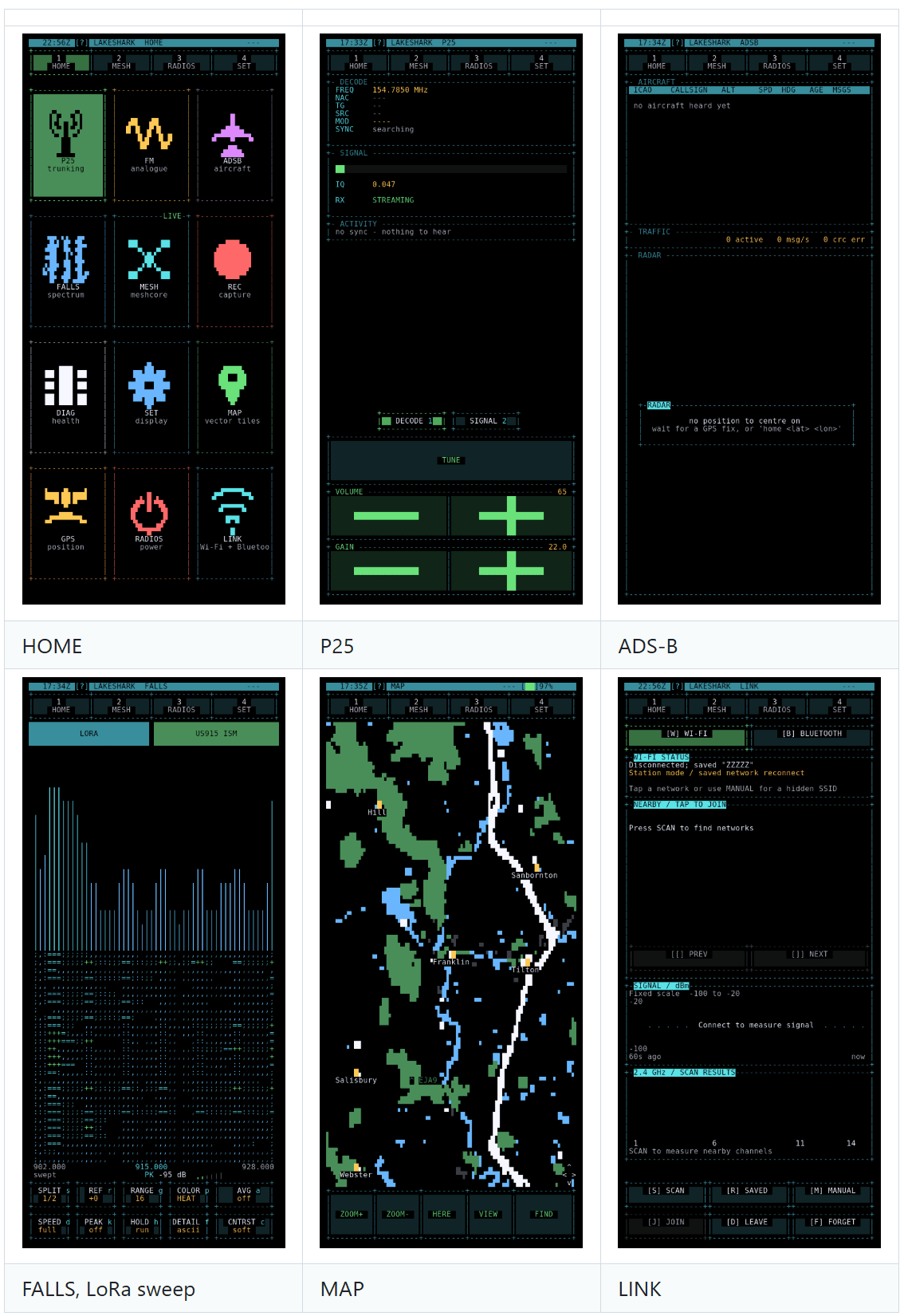
LakeShark supports P25 Phase I conventional and trunked voice, analog FM, POCSAG pager decoding and 1090 MHz ADS-B, with a spectrum display and waterfall for tuning around.

There are a few other things that might interest your readers:

  • Passive sub-GHz pulse recording with export to Flipper .sub files, so captures can be transferred to a Flipper and opened in its Sub-GHz app.'
  • Offline maps showing aircraft and MeshCore nodes, plus GPS track recording with GPX export.
  • Mixed P25/FM scan lists and a field journal for saving notes with radio readings, position and sensor data.
  • MeshCore messaging and LoRa experiments using the onboard SX1262. The optional MIX-RF keyboard adds CC1101, nRF24 and NFC tools.

The T-Display-P4 touchscreen works on its own, but you can also use the keyboard or connect a Flipper Zero over Bluetooth. LakeShark also supports a headless ESP32-P4 Nano receiver controlled from the Flipper. That lets you keep the radio and antenna in a bag while tuning from the Flipper.

Version 2.2.0 is available now. Experimental work includes manually tuned P25 Phase II decoding, HackRF support and GPS-based scan filtering. Those have separate limitations documented in the wiki. Next steps include live-RF validation, Phase II automatic call following and further work on portable power and everyday usability.

There’s also an experimental CELL WATCH app for surveying cellular-band activity and comparing it against a saved baseline. It’s meant for spotting changes worth investigating, rather than identifying a cell site as malicious or claiming to detect an IMSI catcher.

LakeShark builds on xtrsdr, OP25 and other open-source projects. ADS-B Scope also provided a reference for part of the aircraft position decoding. Full credits are in the README.

Showcase, photos and overview:
https://terminalbay.com/?m=lakeshark-showcase

Source and credits:
https://github.com/SAMS0N1TE/LakeShark

Version 2.2.0 downloads:
https://github.com/SAMS0N1TE/LakeShark/releases/tag/v2.2.0

Flipper companion app:
https://github.com/SAMS0N1TE/LakeShark-Flipper

Wiki and guides:
https://terminalbay.com/?m=wiki

LakeShark is part of a growing repertoire of ESP32-P4 microcontroller RTL-SDR applications. Just last week we posted about OrcSDR, a standalone RTL-SDR application built around the M5Stack Tab5. Back in May, we also posted about a portable open-source 1090 MHz ADS-B firmware for the LILYGO T-Display-P4.

Previously, RTL-SDR applications have only run on full general-purpose CPUs running an OS like Windows/Linux/MacOS/Android. But the ESP32-P4 has shown that commodity microcontrollers are now powerful enough to run an RTL-SDR too, via custom bare-metal drivers and software.

LakeShark Running on A LilyGO T-Display-P4 next to a HackRF (left) and Flipper Zero (right).
LakeShark running on A LilyGO T-Display-P4 next to a HackRF (left) and a Flipper Zero (right).
LarkShark Screens
LarkShark Screens

SDR–: A Software-Defined Radio Application with Visual Signal Path

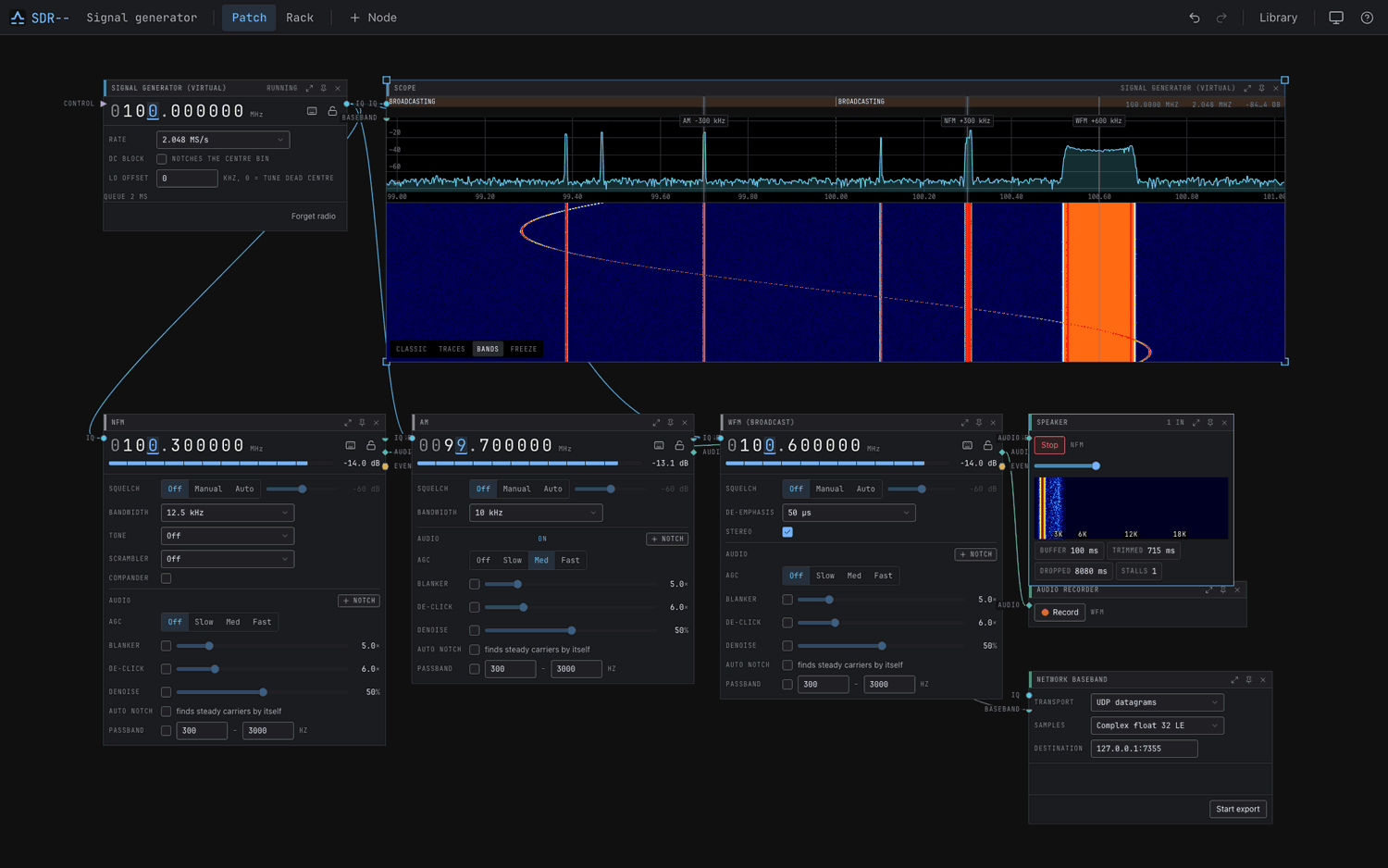
Thank you to Julian for writing in and sharing with us his interesting project called SDR-- (SDR minus minus). SDR-- is an open-source app that lets you wire devices, decoders, and displays together on a desktop window or browser-based canvas. It is described as "a software-defined radio application with a visual signal path. Connect devices, decoders, displays, and recorders on a canvas, then pin the controls you use to a rack."

A separate Rust server, which can sit on the same PC or a remote computer (like a Raspberry Pi), handles the DSP. Julian notes that SDR-- has native RTL-SDR support, and decoders for ADS-B, AIS, POCSAG, FT8, SSTV, and RDS are already implemented, with more in progress. The app also has a built-in signal generator and a repository of IQ recordings that can be used for experimentation and testing the various decoders.

The project releases are available on GitHub releases, and they cover Windows, Linux, and MacOS. 

SDR-- Screenshot
SDR-- Screenshot

NyxScope: A Windows Multi-Protocol SDR Decoder Program with Multiple Digital Native Decoders

WARNING: Multiple people have noted that this program is not working as expected and may be overly buggy.

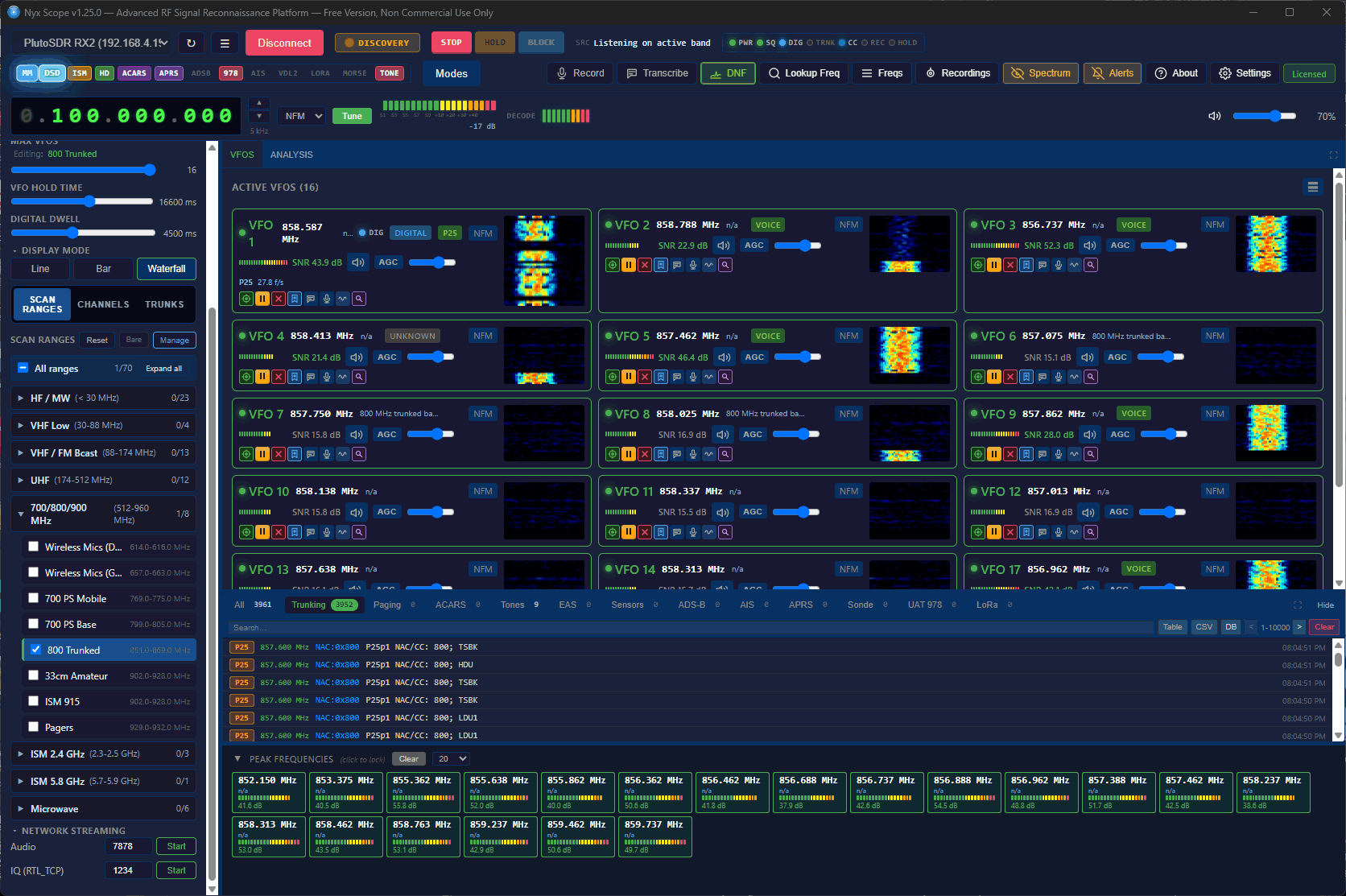
Recently, we've learned about NyxScope, a multi-protocol SDR receiver program for Windows that comes with multiple native decoders built right into the software. Their own description describes this all-in-one program best:

You get spectrum and waterfall, multiple concurrent VFOs, trunked-radio following, digital voice, aviation and marine tracking, paging, ISM sensors, HD Radio, and transcription, in one binary.

NyxScope includes decoders for P25 Phase 1 and Phase 2 voice, EDACS and NXDN control channels, ADS-B, AIS, ACARS, POCSAG, FLEX, LoRa CSS PHY + LoRaWAN MAC, Morse, RDS, CTCSS/DCS, Iridium decoding (with voice), and also includes a signal classification tool, Bluetooth LE scanner, and Whisper voice-to-text transcriber. It also outsources decoding of other protocols to mature decoding software such as multimon-ng, rtl_433, dsd-neo, nrsc5, direwolf, dumpvdl2, dump978, rs41mod where required, noting that the outsourced decoders are bundled with the software, meaning no extra installation work is required.

The software supports RTL-SDR, HackRF, Airpsy, bladeRF, SDRplay, Fobos and PlutoSDR. It also supports using multiple SDRs used in parallel.

The software does not appear to be open source, but it is provided for free with a limitation of 3 concurrent VFOs and a limitation on recording, transcribing, and pager messages. A perpetual per-machine license for $89.95 can be purchased to lift these restrictions and add access to their FCC frequency lookup database.

AI-Disclaimer: While the developers have not noted any use of AI tools, we suspect that AI was used in the creation of this software.

NyxScope Screenshot Scanning the 800 MHz Band

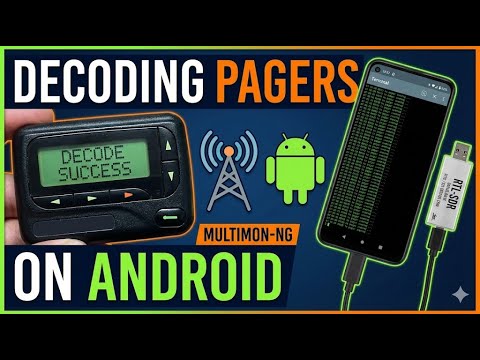
Multimon Pager Decoding on Android

Sarah (aka SignalsEverywhere) has recently released another open-source Android app that enables the multi-signal decoder Multimon-ng to be used on Android. Multimon-ng is a commonly used decoding app, that supports various protocols such as POCSAG/FLEX pagers, as well as DTMF, ZVEI, EAS and more.

The app requires the SDR++ Android app to be running in the background with an SDR like an RTL-SDR connected. The role of SDR++ is to receive the signal and send the demodulated audio over a network connection to the Multimon-NG app, which performs the final decoding.

The app APK can be downloaded from Sarah's website via a minimum $0 donation, or alternatively, built and installed from source.

Multimon-ng on Android!

Tech Minds: Testing Out A New Signals Intelligence Tool Called Intercept

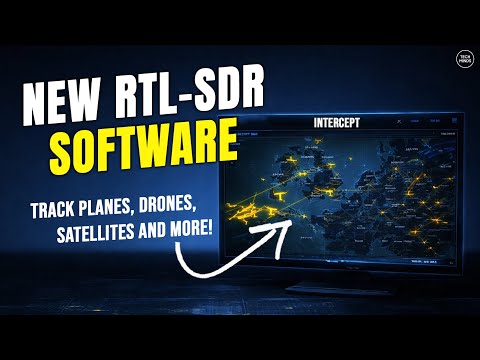
Over on the Tech Minds YouTube channel, Matt has uploaded a video where he tests out 'Intercept', a new tool for RF signals intelligence with RTL-SDRs and other wireless devices. It is open source with code available on GitHub and can be installed on Linux and OSX devices.

Intercept is a tool that combines multiple external decoder tools into one easy-to-access web interface. It is capable of the following:

  • Pager Decoding - POCSAG/FLEX via rtl_fm + multimon-ng
  • 433MHz Sensors - Weather stations, TPMS, IoT devices via rtl_433
  • Aircraft Tracking - ADS-B via dump1090 with real-time map and radar
  • Listening Post - Frequency scanner with audio monitoring
  • Satellite Tracking - Pass prediction using TLE data
  • WiFi Scanning - Monitor mode reconnaissance via aircrack-ng
  • Bluetooth Scanning - Device discovery and tracker detection

We note that features like WiFi and Bluetooth scanning will require a separate WiFi and Bluetooth adapter to be connected. In terms of supported SDR hardware, Intercept supports RTL-SDRs, as well as any SDR supported by SoapySDR.

In the video Matt shows how to install Intercept, and shows it decoding data from the various supported signal types.

Intercept Radio Signals For Intelligence Gathering With An RTL SDR

mmng-ui: A Text User Interface for Multimon-NG

Thank you to Jason for writing in and sharing with his his recently released software "mmng-ui" which is a TUI (text user interface) for Multimon-NG. If you were unaware, Multimon-NG is multipurpose decoder software for the RTL-SDR and other SDRs which is capable of decoding pager protocols like POCSAG and FLEX, as well as other common protocols like EAS, AFSK, FSK9600 DTMF, CW and more.

mmng-ui is a front end for Multimon-NG that allows you to view pager messages in a clean-looking text interface. mmng-ui listens on a chosen UDP port for raw streams from software like SDR++, passes that to Multimon-NG, and then displays the results.

The mmg-ui Text User Interface

SDRangel Now Available on Android: Mobile ADS-B, AIS, APT, Digital Voice, POCSAG, APRS, RS41 Radiosonde Decoders

SDRangel is a free open source software defined radio program that is compatible with many SDRs, including RTL-SDRs. SDRAngel is set apart from other programs because of it's huge swath of built in demodulators and decoders.

Thank you to reader Jon for writing in and noting that SDRangel has recently been released for Android as a free Google Play download. This is an amazing development that could open up many doors into portable decoding setups as the Android version supports almost every decoder implemented on the desktop version. Jon writes:

It includes most of the functionality of the desktop version of SDRangel, including:

  • AM, FM, SSB, Broadcast FM and DAB, AIS, ADS-B, Digital Voice (DMR, dPMR, D-Star, FreeDV), Video (DVB-S, DVB-S2, NTSC, PAL), VOR, LoRa, M17, Packet (AX.25), Pager (POCSAG), Radiosonde (RS41), Time signal (MSF, DCF77, TDF and WWVB) modems.
  • RTL SDR, Airspy, Airspy HF, LimeSDR, HackRF and SDRplay support via USB OTG as well as networked SDRs
  • 2D and 3D signal analysis in both time and frequency domain with statistical measurements of SNR, THD, THD+N, SINAD, SFDR and channel power
  • Satellite tracker, star tracker, maps and rotator controller

It should work on Android 6 and up. It’s a straight port of the desktop application, so although it will run on a phone, probably best used on a large tablet with a stylus or mouse.

SDRangel on Android
SDRangel on Android