FreeDV RADE: An Open-Source Digital Voice Mode for HF that Beats SSB at Low SNR
Thank you to Rebecca Key (KO4KVG) for writing in and sharing with us an article she's written over on the ARDC website about a relatively new amateur open-source radio digital voice mode called FreeDV RADE.
ARDC is a private foundation that issues grants that support amateur radio and digital communications technologies. FreeDV is an ARDC grantee, and it has been using the funds to develop "a digital voice mode that could compete with SSB across varying signal-to-noise conditions on HF while providing more natural-sounding speech".
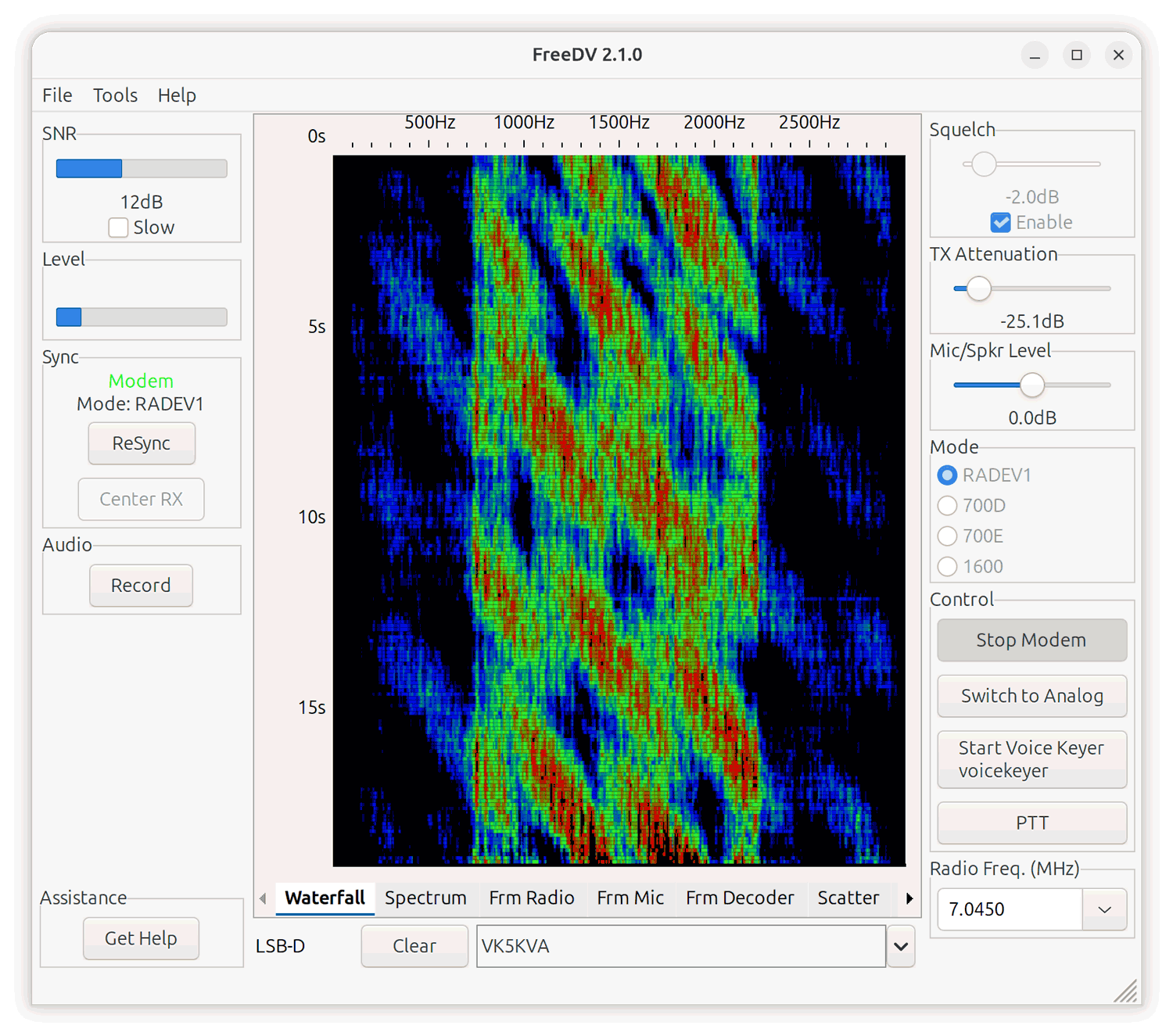
Last year, they released the FreeDV Radio Autoencoder (FreeDV RADE), which is their flagship digital voice mode. FreeDV RADE incorporates both machine learning and classical DSP, resulting in working audio at SNRs as low as -2 dB, with only half the bandwidth of a typical 3 kHz SSB voice signal. The article goes on to describe how the audio quality, power, and bandwidth efficiency are superior to other digital voice modes.
The article also mentions how FreeDV RADE is seeing increased adoption by hardware manufacturers, with FlexRadio now supporting the mode in several radios. It also mentions upcoming improvements, including a goal of reducing bandwidth use to under 1 kHz.





























FreeDV is quite an achievement, but the claimed benefits should be stated/compared to real SSB specifications and not fictional values.
It looks and sounds very interesting, I do wish there would be more work toward an option of maximizing audio quality within a 2.5kHz bandwidth instead of always seeming to be chasing reducing bandwidth with a minimum acceptable audio. Basically a digital version of the ESSB trend.
Bit late but never late than never haha. Nice