Tagged: hackrf pro

HackRF Pro Updates: Sensitivity and Noise Figure Measurements + Free Stuff Program

Over on the Great Scott Gadgets blog, Mike Walters, one of the team behind the HackRF Pro has uploaded a post detailing the HackRF Pro's sensitivity and noise figure measurements.

If you are unaware, the HackRF One has long been a core staple in the SDR community. While it is not classed as a high-performance SDR for optimized reception, it is one of the most versatile hacker/experimenter SDR's on the market with a wide frequency range, wide bandwidth and RX and TX capability. The soon-to-be-released HackRF Pro is an upgrade from the original HackRF One.

The measurements by Mike show that the HackRF Pro has significantly lower noise figure across all frequencies compared to the HackRF One. A lower noise figure equates to improved receiver sensitivity. However, although improved, the noise figure is still high enough that you'll probably want to use a low-noise amplifier (LNA) for optimizing reception of weaker signals. 
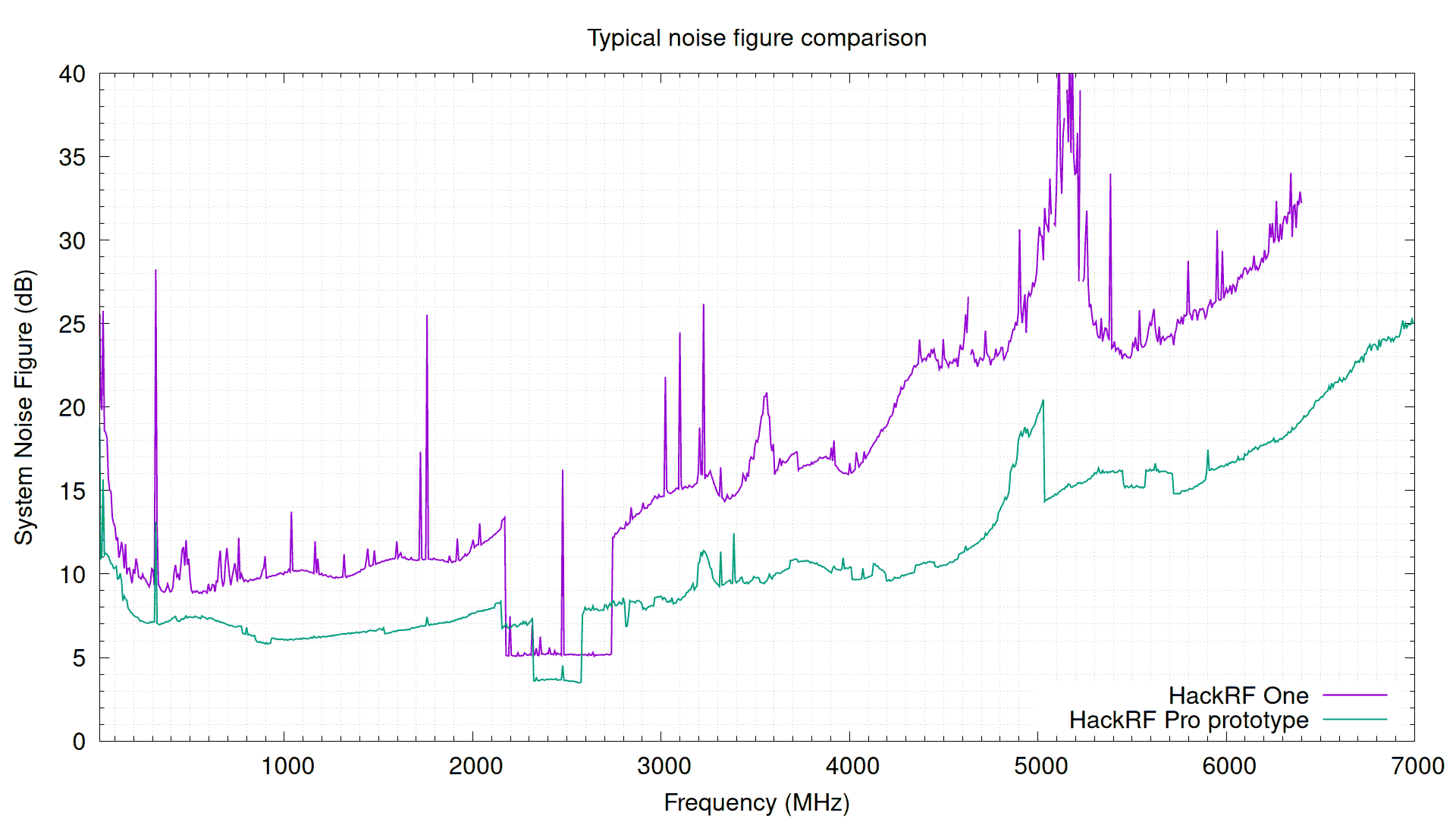
HackRF Pro vs HackRF One Noise Figure Measurements

Mike also confirms the noise figure improvements equate to improved real world performance by receiving ADS-B signals from aircraft, with the HackRF Pro showing increased range and doubling the number of messages received.
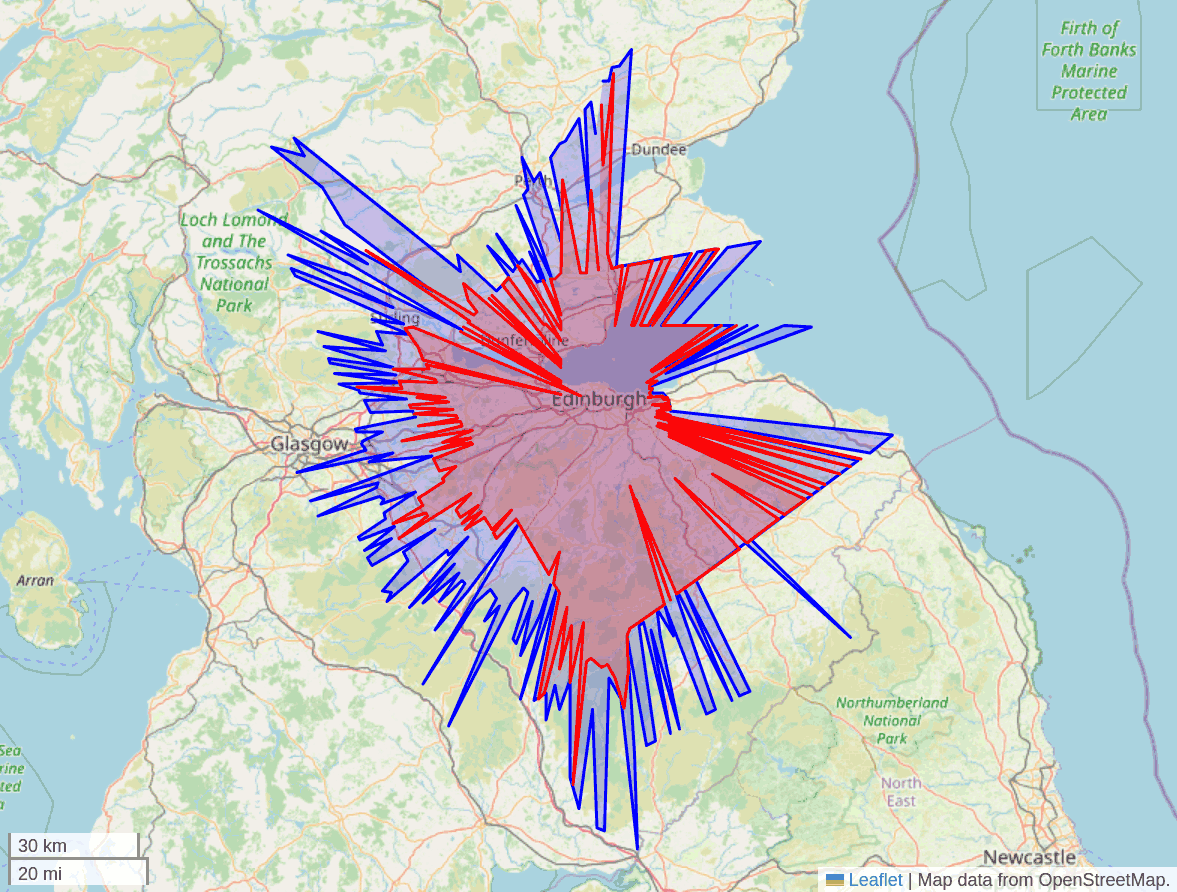
HackRF Pro (Blue) vs HackRF One (Red) ADS-B Range Comparison

Also, in related news from a post a few days earlier, Maggie Way wrote about the Great Scott Gadgets free stuff program. This program allows people in the open source hardware community to submit a request for free hardware from Great Scott Gadgets if they have intentions to use the hardware to spread education, support community projects, or contribute to open source projects or research

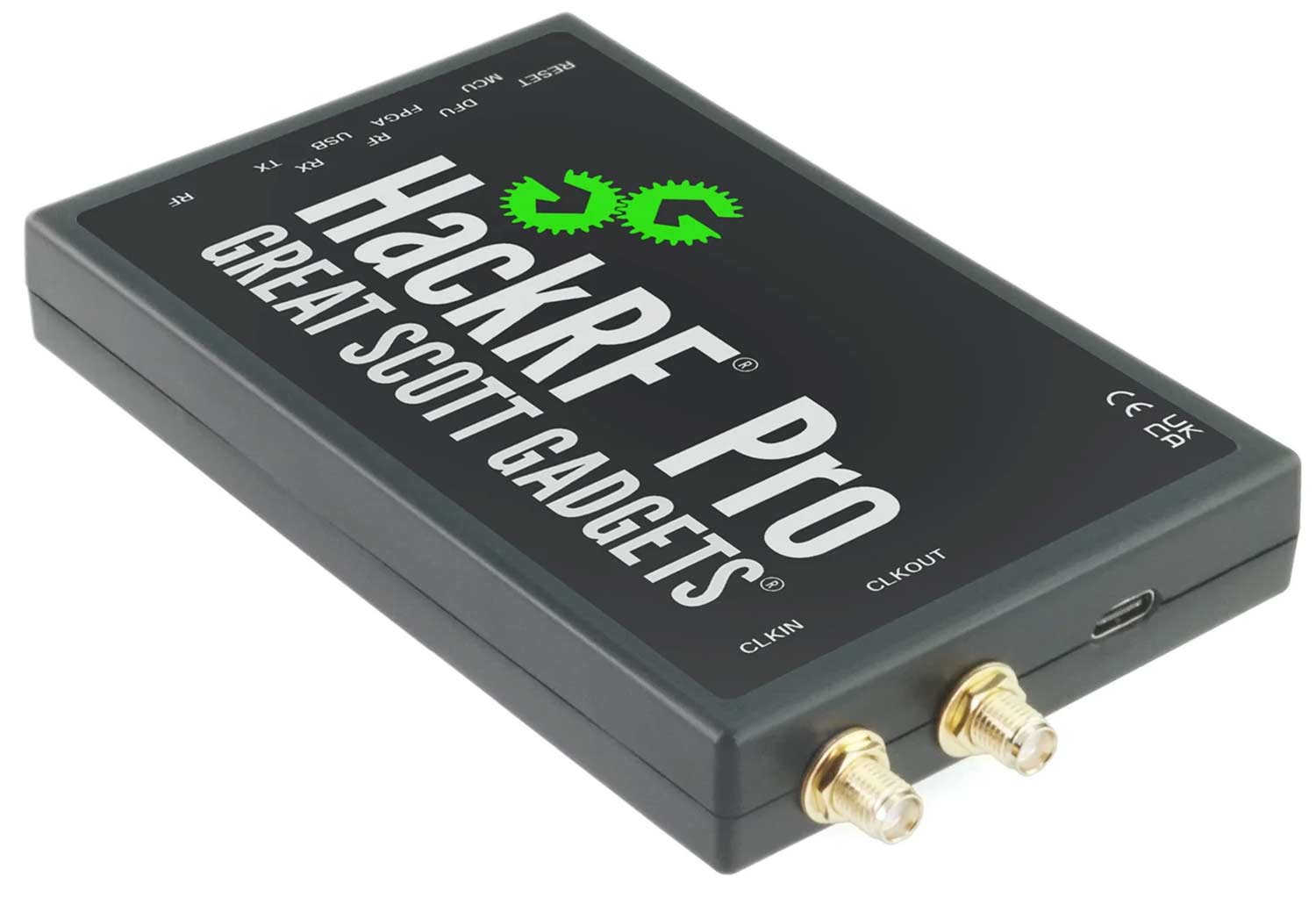
Michael Ossmann Gives A First Look at the HackRF Pro in YouTube Video

Recently, Great Scott Gadgets announced the upcoming September release of their HackRF Pro, an upgrade to their popular HackRF software-defined radio. 

On YouTube, Michael Ossmann, the founder of Great Scott Gadgets, has just uploaded a video explaining the improvements that the HackRF Pro will bring. Apart from the change from microUSB to USB-C, Michael demonstrates how the HackRF Pro has achieved improved performance by eliminating the DC spike and reducing the number of strong signal mirror images.

First Look at HackRF Pro

HackRF Pro Pre-Order: Frequency Range and RF Performance Improvements, USB-C, TCXO Added

The HackRF by Great Scott Gadgets, released in 2014, remains among the most popular software-defined radios (SDRs) on the market due to its open-source nature, affordability, wideband tuning range, wide 20 MHz bandwidth, and transmit capability.

However, over the past 10 years, very little has changed with the HackRF, with most changes only being made out of necessity due to end-of-life components. It has mostly been the open-source community and clone manufacturers innovating on the circuit.

Today, Great Scott Gadgets has finally announced the HackRF Pro.

Key improvements include expanding the lower frequency limit from 1 MHz down to 100 kHz, integrating a TCXO for enhanced frequency stability, upgrading the microUSB port to USB-C, and improving RF performance with additional shielding, a flatter frequency response, and the elimination of the DC spike. They have also added more RAM and flash memory, and added a 16-bit output mode for low sample rates.

The product is available from their usual distributors (listed on the release page) and costs US$400. Note that the HackRF Pro is currently in pre-order, with production slated to begin in July 2025 and shipping in September 2025. 

The full release article from Great Scott Gadgets reads:

HackRF Pro from Great Scott Gadgets is a Software Defined Radio peripheral capable of transmission or reception of radio signals from 100 kHz to 6 GHz. Designed to enable test and development of modern and next generation radio technologies, HackRF Pro is an open source hardware platform that can be used as a USB peripheral or programmed for stand-alone operation.

  • 100 kHz to 6 GHz operating frequency
  • Tunable from 0 Hz to 7.1 GHz
  • Half-duplex transceiver
  • Up to 20 million samples per second
  • 8-bit quadrature samples (8-bit I and 8-bit Q)
  • Compatible with GNU Radio, SDR#, and more
  • Software-configurable RX and TX gain and baseband filter
  • Software-controlled RF port power (50 mA at 3.3 V)
  • SMA RF connector
  • SMA clock input and output for synchronization and triggering
  • Convenient buttons for programming
  • Internal pin headers for expansion
  • High-Speed USB 2.0 with Type-C connector
  • USB-powered
  • Open source hardware

Compared to HackRF One, HackRF Pro introduces a host of new and updated features, including:

  • Wider operating frequency range
  • Improved RF performance with flatter frequency response
  • Modern USB Type-C connector
  • Built-in TCXO crystal oscillator for superior timing stability
  • Logic upgrade from a CPLD to a power-efficient FPGA
  • Elimination of the DC spike
  • Extended precision mode with 16-bit samples for low sample rates (typical ENOB: 9-11)
  • More RAM and flash memory for custom firmware
  • Installed shielding around the radio section
  • Trigger input and output accessible through clock connectors
  • Cutout in the PCB provides space for future add-ons
  • Improved power management

Software that works with HackRF One is already compatible with HackRF Pro. We designed HackRF Pro for backward compatibility, following the same basic architecture of HackRF One but with many small enhancements. Prior to shipping HackRF Pro, we will publish a migration guide that will show software developers how to take advantage of certain new capabilities of HackRF Pro, but out-of-the-box HackRF Pro will behave like HackRF One with superior performance. In addition to host software compatibility, our migration guide will address firmware, allowing developers to port custom firmware to the new platform and take advantage of its unique capabilities

The HackRF Pro
The HackRF Pro