Tagged: NSA

NSA GENESIS: How NSA Spies Snooped on Local RF Bands using Modified Cell Phones with a Built-in SDR

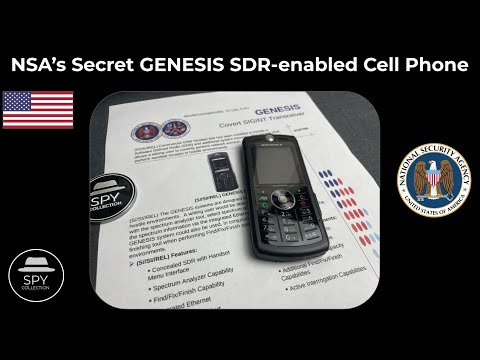
Over on YouTube, the "Spy Collection" channel has recently uploaded a video detailing the US National Security Agency's (NSA) GENESIS spy gadget. GENSIS was a modified Motorola cell phone that contained a full software-defined radio system within. This system allowed NSA agents to discreetly record the local RF spectrum for later analysis. For example, an agent may have been able to record the frequencies and RF protocols used at particular facilities of interest for use in later operations. 

Details about the NSA GENESIS were revealed when the NSA's Advanced Network Technologies (ANT) catalogue was publicly leaked back in 2013. Originally, project GENESIS was due to be declassified in 2032.

Spy Collection also notes that the leaked documents indicate it is possible the phone was also used, or intended to be used, as a "finishing tool". In other words, a remotely detonated explosive phone, that could be given to persons on the US terrorist list. 
NSA's Leaked Secret GENESIS Cell Phone

Hak5: The NSA Playset and SDRSharp Plugins

Hak5 a popular YouTube hacking and electronics enthusiast channel has uploaded a new video interviewing Micheal Ossman, the creator of the HackRF about the NSA’s ‘Playset’. The NSA playset describes the set of tools the NSA has access to for spying which was leaked by the documents released by Edward Snowden. Previously we posted how the HackRF was used to help reverse engineer some NSA spy tools called retro reflectors.

In the second part of the episode presenter Shannon also shows off the SDRSharp frequency manager and scanner plugin that can be used with the RTL-SDR.

The NSA Playset and SDRSharp Plugins, Hak5 1622

Reverse Engineering NSA Spy ‘Retro Reflector’ Gadgets with the HackRF

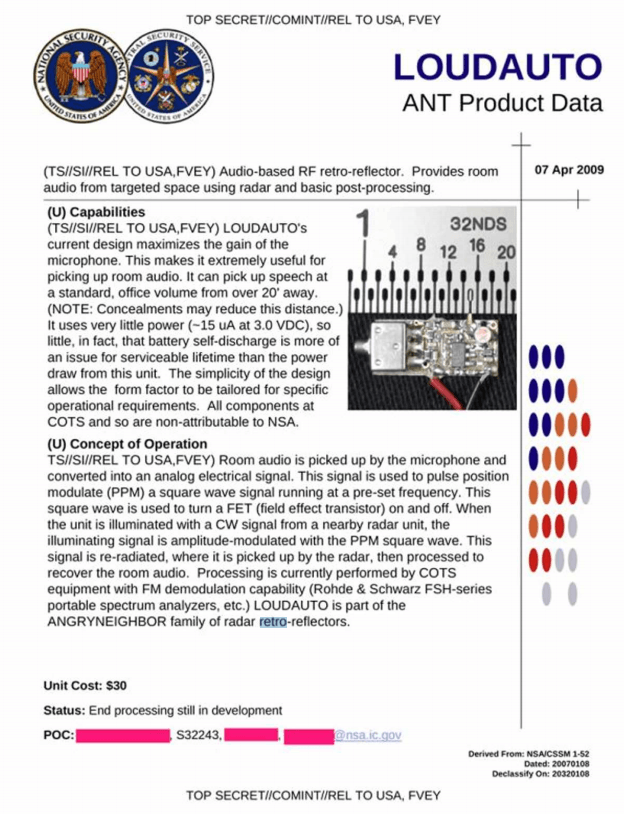
In 2013 whistleblower Edward Snowden leaked (along with other documents) some information about the American National Security Agencies (NSA) spy tools. One such group of tools named ‘retro reflectors’ has recently been investigated and reverse engineered by Micheal Ossmann, the security researcher behind the recently available for preorder HackRF software defined radio. The HackRF is a SDR similar to the RTL-SDR, but with better performance and transmit capabilities.

Newscientist Magazine has written an article about Ossmann’s work here. From their article a retro reflectors are described in the following quote.

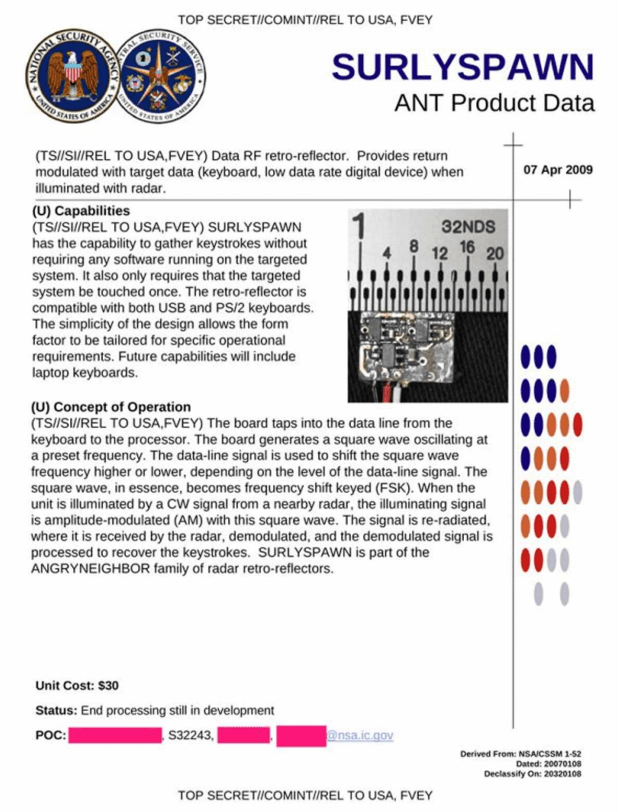
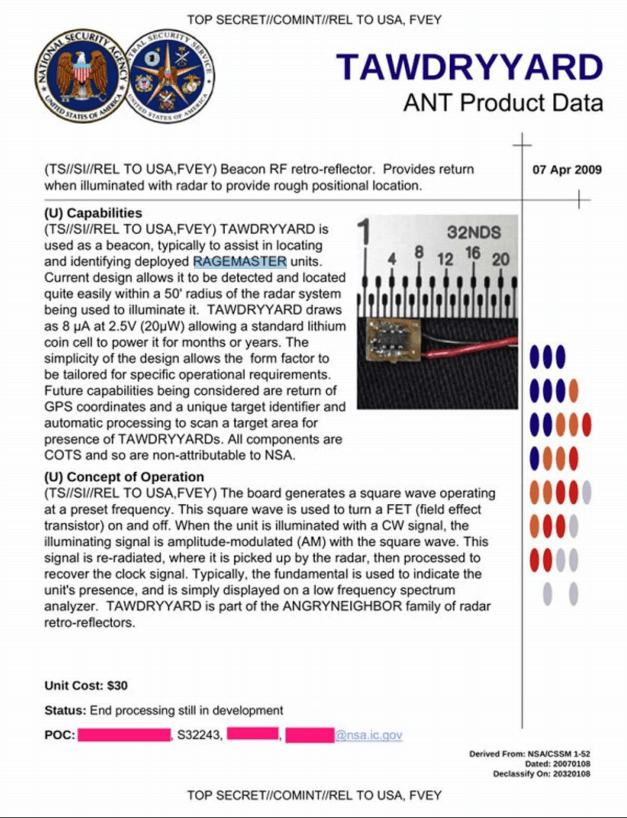
One reflector, which the NSA called Ragemaster, can be fixed to a computer’s monitor cable to pick up on-screen images. Another, Surlyspawn, sits on the keyboard cable and harvests keystrokes. After a lot of trial and error, Ossmann found these bugs can be remarkably simple devices – little more than a tiny transistor and a 2-centimetre-long wire acting as an antenna.

The HackRF comes in to play in the following quote

Ossmann found that using the radio [HackRF] to emit a high-power radar signal causes a reflector to wirelessly transmit the data from keystrokes, say, to an attacker. The set-up is akin to a large-scale RFID- chip system. Since the signals returned from the reflectors are noisy and often scattered across different bands, SDR’s versatility is handy, says Robin Heydon at Cambridge Silicon Radio in the UK.

Ossmann will present his work at this years Defcon conference in August.

retro-reflector-surlyspawn     retro-relector    retro-reflector-ragemaster