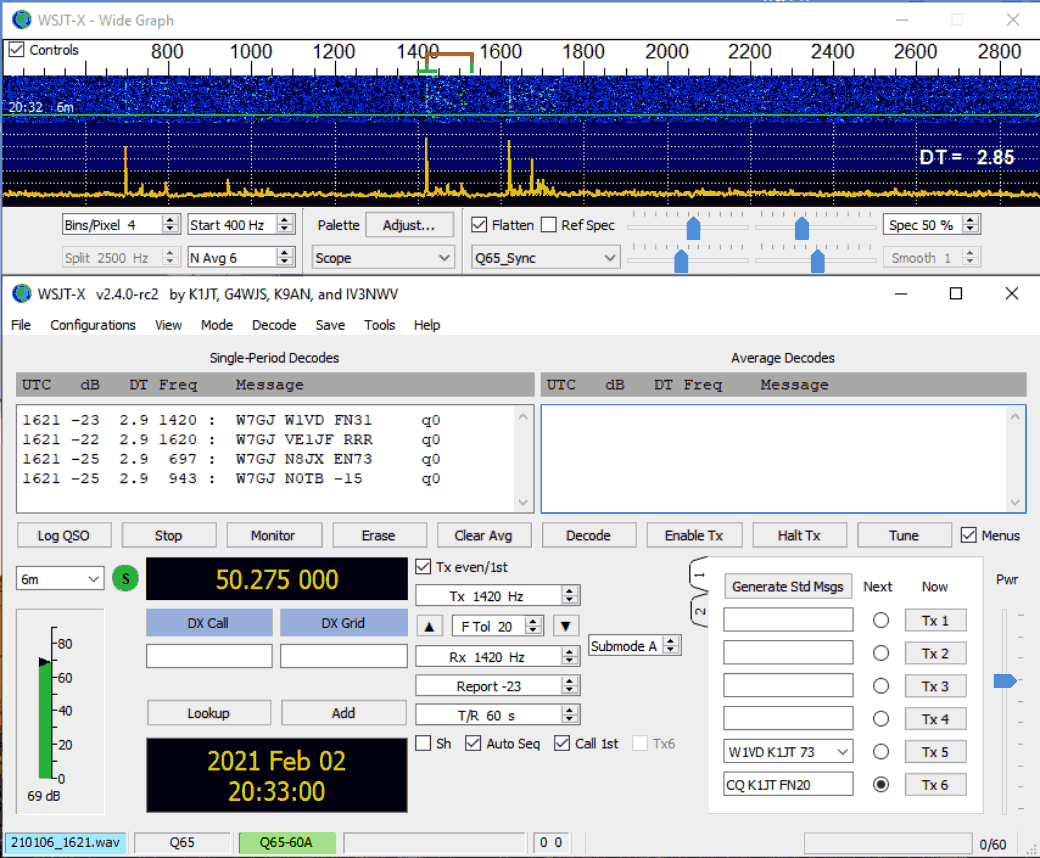
WSJTX is a popular program for various digital amateur radio protocols such as FT8 and WSPR which are designed for making contacts with very weak and low power signals on HF. With some of these protocols contacts can be made all over the world in poor conditions with very low transmit power. If you're interested we have a tutorial on how you can use the direct sampling mode on a RTL-SDR Blog V3 dongle to set up a super low cost monitor for FT8, WSPR etc on a Raspberry Pi.
Recently WSJTX have introduced a new mode called "Q65" which claims to have the best weak signal performance amongst all modes implemented in WSJTX. As explained in the Q65 quickstart guide (pdf) they note:
Q65 is particularly effective for tropospheric scatter, rain scatter, ionospheric scatter, and EME on VHF and higher bands, as well as other types of fast-fading signals.
Q65 uses 65-tone frequency-shift keying and builds on the demonstrated weak-signal strengths of QRA64, a mode introduced to WSJT-X in 2016.
If anyone has tested reception of this mode with an RTL-SDR please let us know in the comments. It will be interesting to see what sort of distances can be achieved.
SDRplay have recently released a blog post warning potential customers to be wary of the proliferation of fake and imitation SDRplay devices on various online marketplaces. SDRplay warn that these clones may not function with the latest SDRplay software such as SDRUno, and that no technical support for the clones is provided.
Of note is that ICQ Podcast Episode 344 released on Feb 14 also discusses this issue starting at 30:50 in the episode. They note that ethically these clones are problematic as they are ripping off a small company who have sunk a lot of costs into R&D and software development.
SDRplay is a UK based company that designs and manufactures low cost software defined radios which start from $109 + shipping. In the past we've posted a few times about SDRplay clones like the MSI.SDR, and about more elaborate clones of the RSP1A as well as Airspy and RTL-SDR V3 clones. As Mirics, the company manufacturing the main silicon chips used in SDRplay products is owned by most of the same people behind SDRplay it is unclear as to how their chips made it onto the Chinese markets. However, as these Mirics chips were originally used in mass market TV tuners, it is thought that they were probably desoldered from a batch of old USB TV tuners.
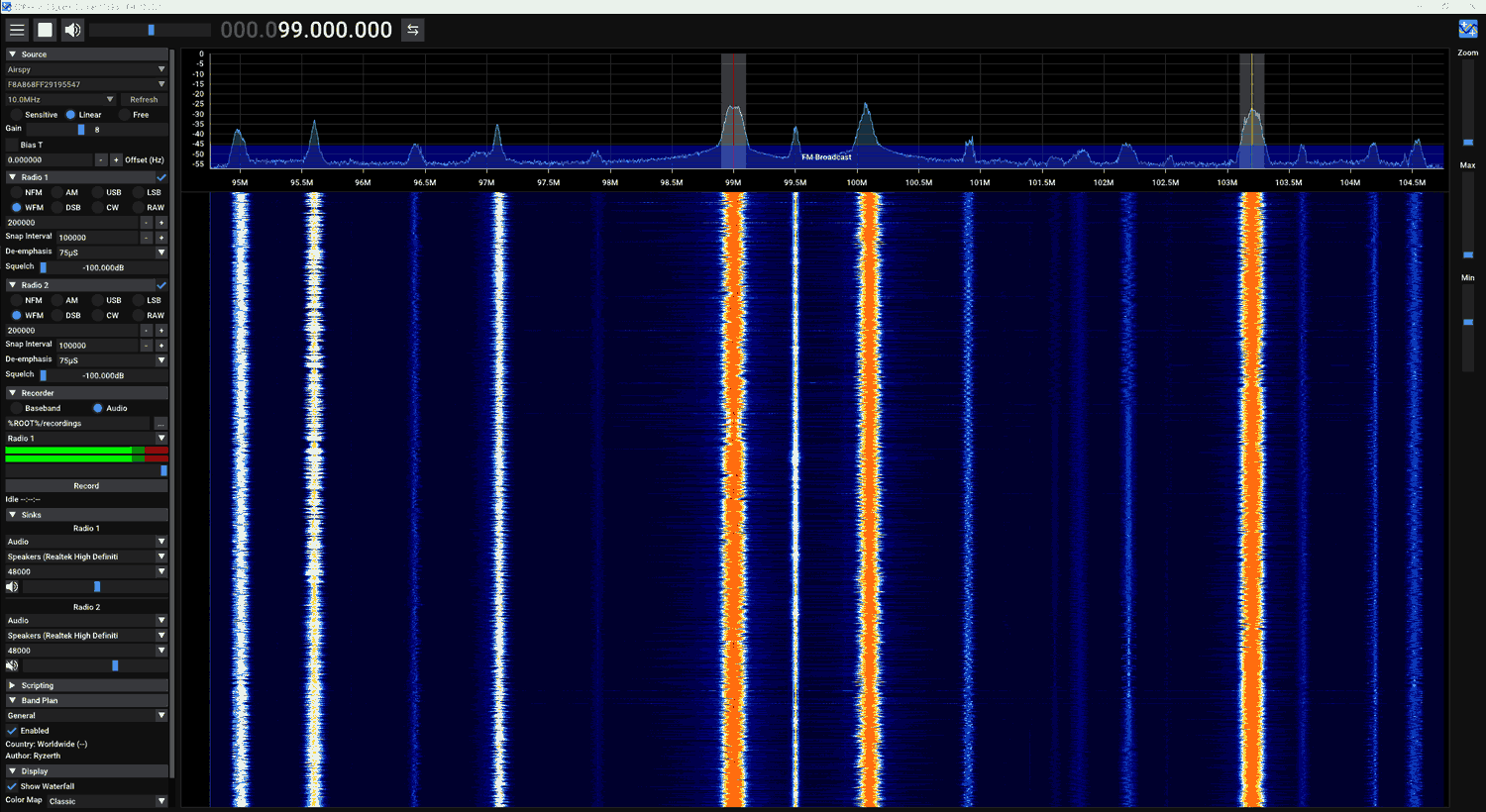
Back in July 2020 we first posted about the alpha release of "SDR++" which back then was a new project by "Whatsthegeek" that was determined to bring an open source, cross platform, C++ based GUI general receiver program for various SDRs including the RTL-SDR to the community. Over the past few months the author has been working hard on updating the software, and it's looking a lot more mature today. Recently he has released the following updates as mentioned on his Reddit post:
As some of you might remember, I posted back in june about my SDR++ project. During the past 6 months, I've been hard at work to make it into usable software! The versions I released in june and july were extremely buggy and unusable. All of those issues have now been fixed. It's now simple to build and install. Here's a small rundown of the features it now has:
Fully modular architecture (plugins)
Multi-VFO
Support for most SDRs through dedicated modules or SoapySDR
Both baseband and audio recording with a level meter and volume adjust
Multiple bandplans available (very easy to write your own)
Switchable waterall colormap
Low CPU usage (lower than GQRX, CubicSDR, SDRConsole and in some cases SDR#)
Full waterfall update when zooming or changing min/max level
Also, SDR++ now runs on Windows, Linux, OSX and BSD! Do note that it still has a few quirks and misses some features (see https://github.com/AlexandreRouma/SDRPlusPlus/projects/2 for the todo list) In addition to what's in the todo list, decoders for common satellites will be written very soon. They will allow decoding of Meteor and NOAA with no external software needed!
I'd like to thank Airspy, Analog Devices, SDRplay and Howard Su for sending samples of their hardware for development! Would never have been able to add support for their hardware without it!
I hope this software will be useful to the community :)
SDR++ GUI
Releases for Debian Linux and Windows can be found over on the GitHub Releases page.
We note that over on Twitter Whatsthegeek (@ryzerth) has been releasing further updates. He notes that some of the latest code updates for SDR++ add a native RTL-SDR module including bias tee support, and that it is also now available as a package for Arch Linux users over on the user Repository. However these latest updates are not yet available as binaries on the releases page.
In a recent tweet he also demonstrates the very useful looking multi-vfo feature allowing him to decode three AERO signals with Jaero simultaneously on a single RTL-SDR dongle.
SDR++ Running two Jaero instances and 3 demodulators at once from a RTL-TCP server thousands of km away. (with a waterfall running at 1440p). Quite low CPU usage!#sdr#sdrpp#rtlsdrpic.twitter.com/LuX1nRZZPA
Back in July 2019 we posted about a new development in radio technology known as "Atomic Radio" or "Quantum Radio". In that post we discussed an article that explained the concept and science behind the idea and noted how some researchers described the possibility of a very wideband capable receiver.
The Rydberg sensor uses laser beams to create highly-excited Rydberg atoms directly above a microwave circuit, to boost and hone in on the portion of the spectrum being measured. The Rydberg atoms are sensitive to the circuit's voltage, enabling the device to be used as a sensitive probe for the wide range of signals in the RF spectrum.
Army researcher Kevin Cox notes how this is the first implementation that can operate over such a wide frequency range:
"All previous demonstrations of Rydberg atomic sensors have only been able to sense small and specific regions of the RF spectrum, but our sensor now operates continuously over a wide frequency range for the first time," said Dr. Kevin Cox, a researcher at the U.S. Army Combat Capabilities Development Command, now known as DEVCOM, Army Research Laboratory. "This is a really important step toward proving that quantum sensors can provide a new, and dominant, set of capabilities for our Soldiers, who are operating in an increasingly complex electro-magnetic battlespace."
Quantum radios may be one of the next big leaps in radio technology. However as they require lasers and the space of a small laboratory the technology will probably be restricted to the military and institutions for the time being.
A Rydberg sensor setup (LEFT), The experimental setup for a Rydberg Quantum Radio Receiver (RIGHT)
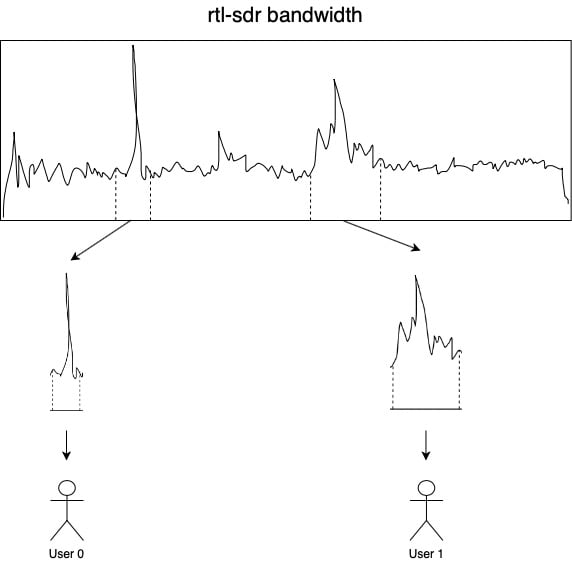
Developer @dernasherbrezon has recently released a new program called "sdr-server" which is a streaming server. Unlike the more basic rtl_tcp server, sdr-server has some more advanced features like being able to serve multiple clients a slice of the bandwidth simultaneously. When compared to SpyServer, another advanced RTL-SDR compatible streaming server, sdr-server has similar features, however, sdr-server is open source. Some of the key features include:
Share available RF bandwidth between several independent clients:
Total bandwidth can be 2016000 samples/sec at 436,600,000 hz
One client might request 48000 samples/sec at 436,700,000 hz
Another client might request 96000 samples/sec at 435,000,000 hz
Several clients can access the same band simultaneously
Output saved onto disk or streamed back via TCP socket
Output can be gzipped (by default = true)
Output will be decimated to the requested bandwidth
Clients can request overlapping RF spectrum
Rtl-sdr starts only after first client connects (i.e. saves solar power &etc). Stops only when the last client disconnects
MacOS and Linux (Debian Raspberrypi)
How bandwidth slices can be shared with sdr-server.
The popular SDR# (SDRSharp) software has recently been updated to version 1788, and now runs on the .NET5 SDK. Most of the upgrades are behind the scenes, but generally the new version appears to be more memory efficient and loads faster. The new version also brings more theme and layout customizations and as explained further below an improved plugin SDK for developers.
In order to install the latest version you will need to download .NET5 runtime from Microsoft which may not already be on your system. For RTL-SDR users you can then run install-rtlsdr.bat then start the software as usual.
One of the most exciting new developments is the new .NET 5 plugin SDK that is now available. This allows third party developers to easily code up plugins for SDR#. While a plugin SDK already existed before, the new version appears to make development much simpler, and also comes with a few examples to help get developers started quickly. The result is that we should start to see more plugins appearing in the future with more features.
SDR# .NET5 Plugin SDK Example Code
One plugin called Scytale-C for Inmarsat STD-C channel decoding has already been updated to the new SDK. The developer notes that the plugin now works great with the SDR# "slicer" feature, which allows users to decode multiple STD-C signals within the received bandwidth at the same time.
We've also recently seen reports of Twitter users having success with running this new SDR# version on WINE under Linux. Unfortunately direct USB still doesn't work under WINE, but it would still function via SpyServer or rtl_tcp.
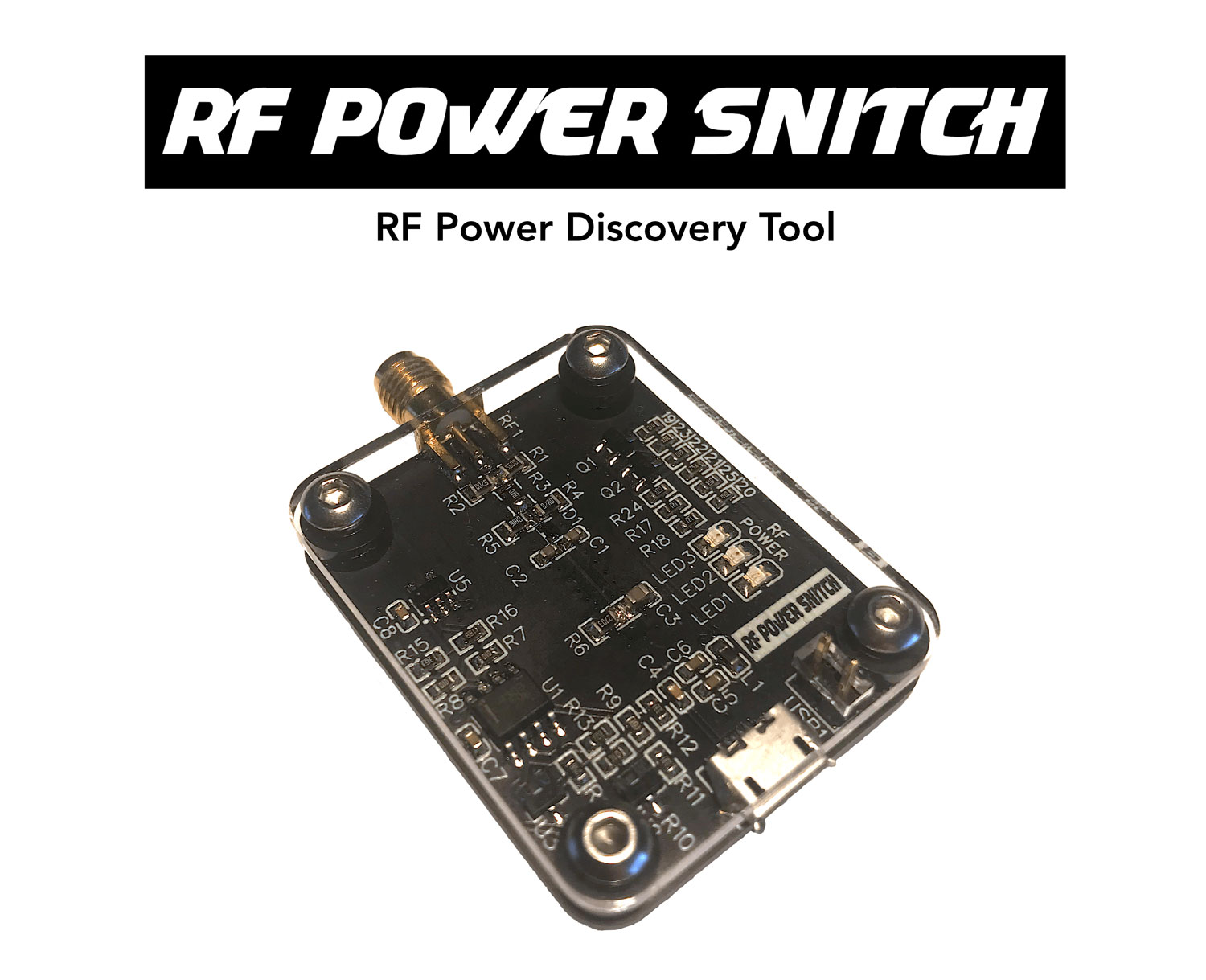
Thank you to Majodi Ploegmakers who wrote in and wanted to share a product he's created that might be useful for some RF enthusiasts. The product is called the "RF Power Snitch", and is a tool used to quickly measure RF input power to determine if input power from a signal source is too strong and could damage measurement equipment such as an SDR or NanoVNA. The product is not yet for sale, but Majodi has an availability notification signup page.
The Netherlands: Today, NickStick Design, an electronics design company for Makers, announced their RF Power Snitch. After a successful launch of SwarmDrive through Crowd Supply last year, NickStick Design went on and designed another useful tool for makers in the RF (Radio Frequency) domain this time.
Of the company’s recent crowd funding campaign, Majodi said, “We were very pleased with the interest our last, somewhat niche, product received. It spurred us on to develop and realize our next idea”.
Today, the RF domain has become accessible to everyone through affordable tools that many could only dream of before. The only tool missing though, is a simple device for checking the, potential, destructive power of the signals one would want to analyze. Because, although tools like the TinySA, NanoVNA or SDR devices are extremely affordable today, for a maker it is still an investment worth protecting.
That’s why our goal was to develop a low-cost companion device that can help makers and experimenters (especially beginners) in the RF domain to gain insight in the power levels of a signal before hooking things up to their valuable test equipment. As an extra to this we also made it possible to attach an MCU for doing power readings and plotting.
Thank you to Laakso Mikko a PhD student at Aalto University School of Electrical Engineering for submitting news about his research group's latest paper involving a 21-channel phase coherent RTL-SDR system. Laakso writes that he an his colleagues have built a (massive) multichannel receiver array from RTL-SDRs to use in low-budget research. The paper presented at EUSIPCO2020 can be found at IEEE, and for free on their research portal (direct pdf link). The code is also entirely open source and available on GitHub.
Phase coherent SDRs enable interesting applications such as radio direction finding (RDF), passive radar and beam forming.
We introduce a modular and affordable coherent multichannel software-defined radio (SDR) receiver and demonstrate its performance by direction-of-arrival (DOA) estimation on signals collected from a 7 X 3 element uniform rectangular array antenna, comparing the results between the full and sparse arrays. Sparse sensor arrays can reach the resolution of a fully populated array with reduced number of elements, which relaxes the required structural complexity of e.g. antenna arrays. Moreover, sparse arrays facilitate significant cost reduction since fewer expensive RF-IF front ends are needed. Results from the collected data set are analyzed with Multiple Signal Classification (MUSIC) DOA estimator. Generally, the sparse array estimates agree with the full array.
Mikko notes that his next paper on applying deep neural nets to the problem of near-field localization will be presented at this years VTC2021 conference, so we are looking forward to that paper too.
21 element array connected to a 21-input phase coherent RTL-SDR array