Testing WSPR HF Propagation with a Raspberry Pi 3B+ and TAPR Shield Running WsprryPi
Thank you to Simone Spadino (SWL ID I8926BA), who wrote in to share his low-cost WSPR setup. WSPR (Weak Signal Propagation Reporter) is an amateur radio mode designed to test propagation paths using very low-power transmissions, with receiving stations reporting spots in real time to the WSPRnet map.
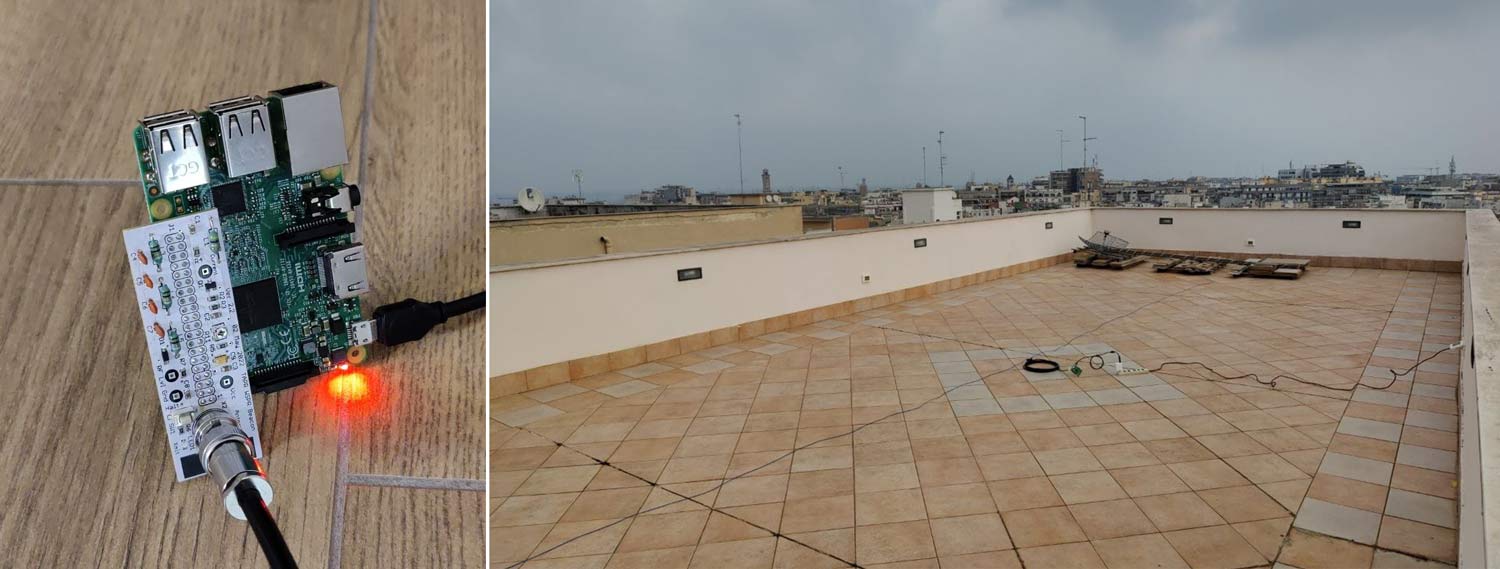
Simone's setup consists of a Raspberry Pi 3B+, which can be made to modulate a square wave RF signal on one of its GPIO pins via the WsprryPi software. Because a square wave generates many harmonics, he used the 20m WSPR shield from TAPR, which provides a low-pass filter to remove them. A dipole made from simple electrical monopole wire was connected to the shield via 50 ohm coax, and the signal was transmitted at 14.0971 MHz.
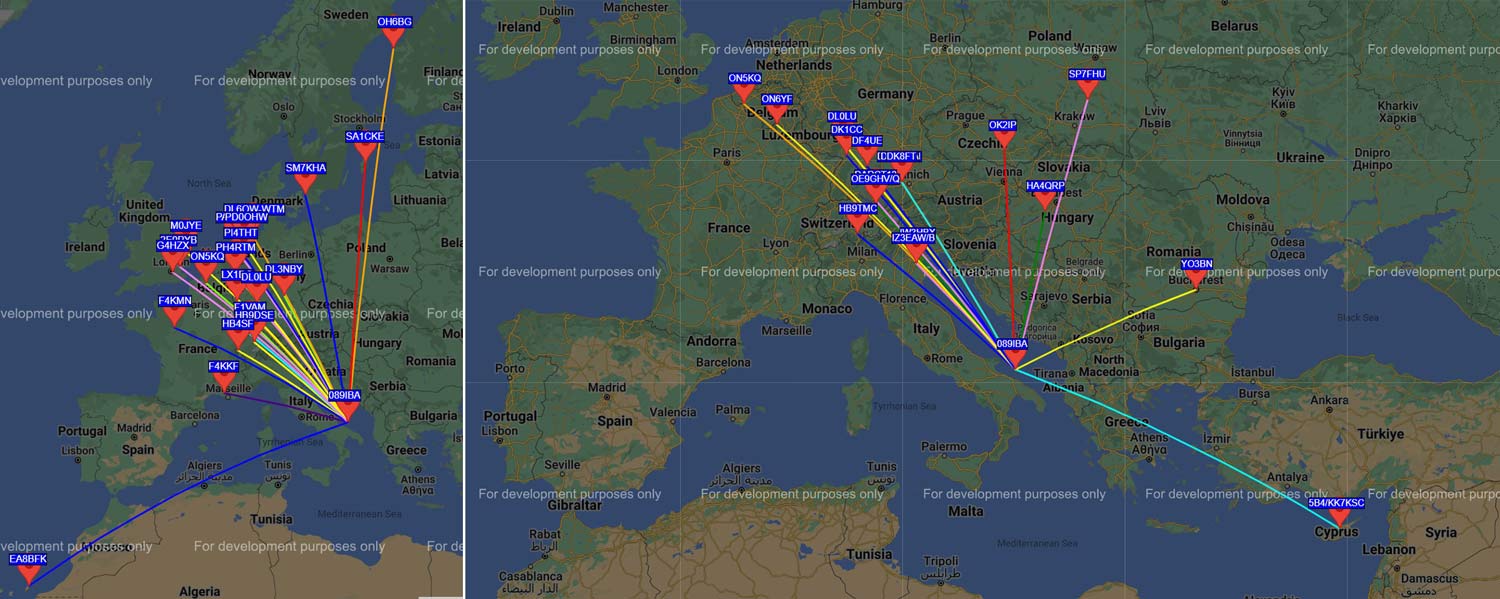
Transmitting from his rooftop in the center of Bari in southern Italy, Simone had his beacon received in England, Finland, Cyprus, and the Canary Islands, all more than 3100 km away. He repeated the experiment a week later with similar results. This is a reminder of how far low-cost hardware can transmit with a resilient protocol like WSPR.





























I love how much can be achieved with a Raspberry Pi 3B+, the right software, and a carefully filtered signal. The technical creativity here is fantastic. Drift Boss is what I usually recommend when someone wants a lighter challenge afterward. What Raspberry Pi projects have you built?
Hi, I’m writing this comment to clarify once and for all a couple of things about this experiment:
1) it dates back to some years ago years ago, even if the article was only written this month
2) it consisted of only two transmissions (two weeks apart, as stated in the article)
3) it was done together with a friend who has got a valid amateur license and callsign, I want to stress this (I redacted his name because, as stated, many years have passed since then)
4) even if he was present during the transmissions, the callsign which I set up in the Raspberry software was my SWL one, and so it was transmitted over WSPR. It was indeed a mistake, but it didn’t cause any harm or damage
5) I’ve already fully clarified this situation with the local chapter of the ARI organization (the Italian member of IARU)
6) I fully understand (and respect) the local laws and the risks of radio transmissions, and that’s why I also wanted to clarify this here
The questions were absolutely legitimate and gave me the opportunity to better explain these points, which were omitted in the article
It’s one of the favorite online shooters for me due to deadshot io the fact that each round brings fun. Even losing gives some additional knowledge that can be used during the next round.
The Raspberry Pi’s clock is stable enough to support WSPR? I thought you couldn’t have >6 Hz of drift for decoding.
Ciao, vorrei chiederti alcune informazioni circa il tuo progetto: ti dispiace contattarmi via mail? IK7IMK chiocciola gmail.com
Interesting experiment and impressive results for such low-cost hardware. However, one important point seems unclear: the article identifies Simone Spadino only with an SWL ID, and the WSPR map appears to show a non-standard identifier near Bari, not a regular Italian amateur radio callsign.
Since WSPR spots on 14.0971 MHz are the result of actual transmissions on the 20 m amateur band, this is not just a receiving/SWL activity. Could you clarify which licensed amateur radio callsign was used for the transmissions?
If the test was made under Simone’s valid amateur licence, a club station callsign, or another authorized station, it would be useful to mention that in the article. Otherwise, as currently written, it may look as if an SWL transmitted on amateur bands, which would be misleading and potentially problematic.