SDRUno 1.41 Released: Scheduler and ADS-B Plugins Added

Last week SDRplay released version 1.41 of their SDRUno software platform. SDRuno is the official software for the SDRplay line of low cost software defined radio devices. The main new feature is the addition of the scheduler facility which allows users to easily schedule recordings. This is great if for example you wish to automatically record a shortwave programs playing overnight.

SDRuno V1.41 was fully released today. It includes the much requested full scheduler facility which allows you to set up numerous recording events for your RSP. As well as providing all the expected calendar options (time of day, date, start and stop times, repeating options and so on), you can also set the ‘profile’ for each recording – this allows you to pre-set frequencies, bandwidths, demodulator options (AM/FM/USB/LSB etc.), choice of filters and antenna port selection. Additionally you can choose the settings for connectivity to other third party software or the running of a specific plugin.

Introduction to SDRuno 1 41 - Scheduler & Profiles (VID597)

The new version also includes a finalized version of their ADS-B aircraft tracking plugin. Last month TechMinds tested the ADS-B plugin beta, noting that it worked well, but there were bugs with the built in mapping feature. In the official tutorial video the ADS-B plugin is demonstrated and shows that the mapping problem is fixed.
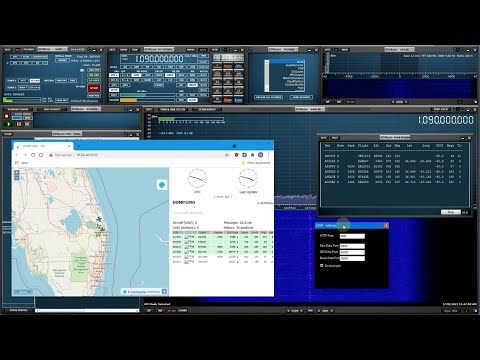
SDRuno ADSB Plugin (VID599)

Is the Titus II Portable Android Tablet Shortwave SDR Close to Release?

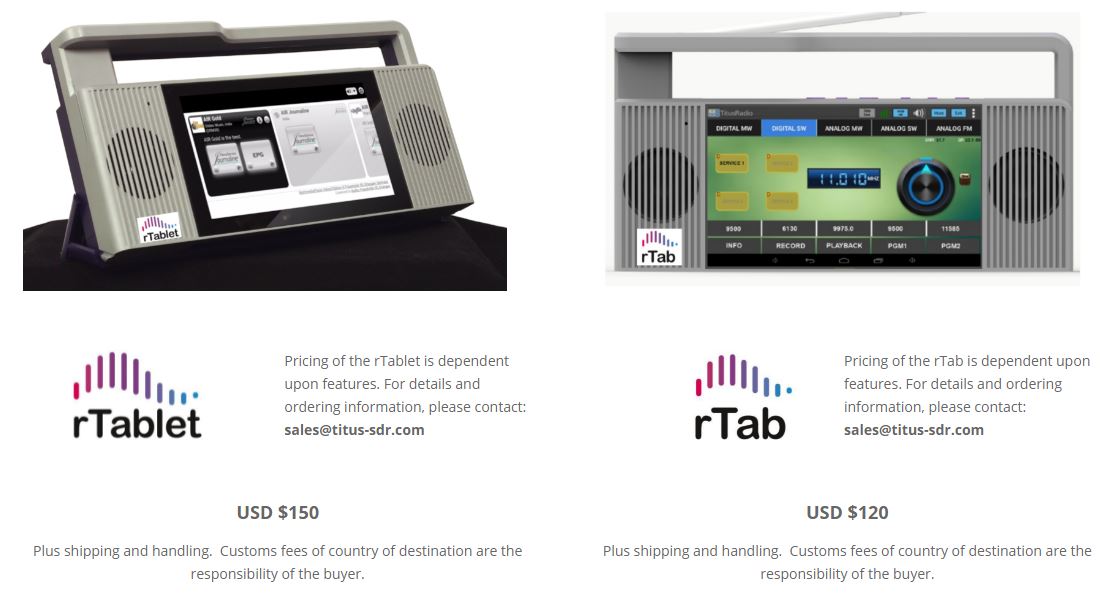
The PatronX Titus II SDR is something we've been posting about several times since 2016, but in the end it was never released and assumed to be vaporware. However, we found that the website for the Titus II SDR was updated only a few weeks ago, and pricing details have been added advertising $120 and $150 for two versions of the product. But on the new website there is no store, just an email link to contact sales for ordering information. We contacted that email two weeks ago for more information but have not received a reply back yet.

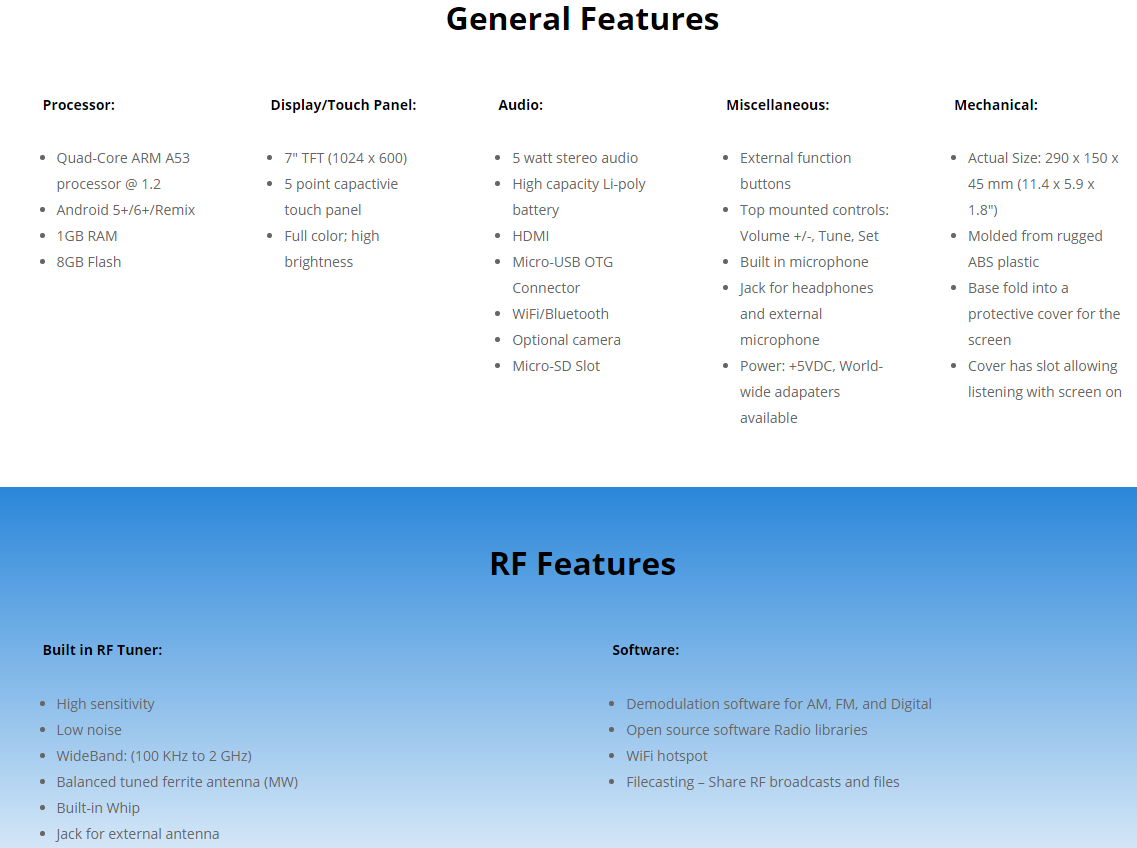
The PantronX Titus II was advertised to be a portable Android tablet based SDR that would feature a 100 kHz - 2 GHz tuning range, and software that focuses on HF digital DRM decoding, as well as DAB on VHF. Computer rendered images show the tablet housed in a portable carry enclosure with two speakers. Their new website writes:

The design of rTablet / rTab defined radio receiver started in 2014. It soon became evident that electronic products available on the market could not be modified to incorporate the advanced features requested by potential buyers. This initiated the process of the innovative design of the Titus SDR (Software Defined Radio) unit. The engineering team started with a general purpose computer unit and embedding it in a broadband radio receiver module.

All types of applications, including RF software, could be installed. For example, DRM capabilities could be added as DRM is an open source. Dream Linux app was converted to run under Android mobile operating system.

The Titus rTablet / rTab being introduced to the market, is a low cost, high performance platform with many RF and PC factory installed applications.

Key feature of rTablet / rTab is the compatibility with analog (SW, AM, FM) and digital standards (DRM, DRM+, DAB, DAB+, HD). Consequently the market of rTablet / rTab is global.

The updated website with pricing and an ordering email makes us think that it might be finally on the way, but the lack of email reply is concerning. If anyone has any further information about the rTab/Titus II please be sure to share with us in the comments!

Titus II SDR updated website
Titus II Specs

Talks and Poster Presentations from the HamSCI 2021 Virtual Workshop

HamSCI is an organization dedicated citizen radio science and specifically the "publicity and promotion of projects that advance scientific research and understanding through amateur radio activities". Back in March they held their HamSCI 2021 workshop online, and the videos from presentations and posters are now all available on the Ham Radio 2.0 YouTube channel.

Most of he presentation videos were released back in June, but the poster talks were just released in the past few days. Many of the projects mentioned in the talks involve the use of software defined radios.

The talks include multiple presentations on the HamSCI personal space weather station project, updates on the TangerineSDR and lots of ionosphere research.

HamSCI 2021: iPoster Breakout Room 1

Decoding the RF Output of a VCR with an RTL-SDR

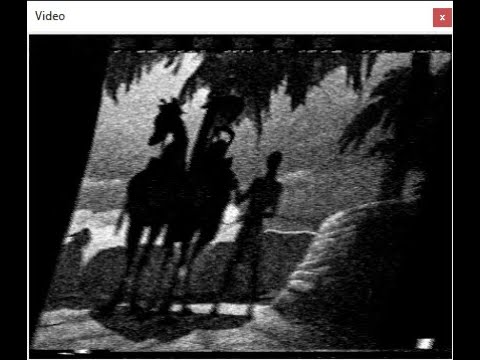
Over on YouTube use Scelly has uploaded a video showing how he has used an RTL-SDR dongle and the TVSharp SDR# plugin to decode video from the RF output of an old VCR (videocassette recorder). VCR players were designed to output the same PAL or NTSC signal that old analog TV transmissions used, and the RF output of the VCR was connected directly to the TV's antenna input.

The TVSharp plugin for SDR# can be used to decode these signals, however as the bandwidth of PAL/NTSC signals is much larger than the 2.4 MHz provided by the RTL-SDR, only a black and white image can be received. Scelly writes:

RF Output from VCR connected directly to input of my RTL-SDR. The RF output is tuned to channel 22 (487.25 MHz), and as the signal is so wide, my RTL-SDR can only display the luminance data (black and white video) and audio, although not at the same time. If I had two RTL-SDRs or an SDR with a larger bandwidth, I could have both audio and video playing at the same time.

The video playing is "The Prince of Egypt" on VHS Video Cassette.

Decoding RF Output of a VCR with RTL-SDR Dongle

Reminder: GNU Radio Conference 2021 to be held Sept 20-24 with Virtual and In-Person Events

Just a reminder than GNU Radio Conference 2021 (GRCON21) will be going ahead on Sept 20 - 24 with virtual and in-person events. It is free to register for virtual attendance and you will be able to view all talks live via streaming. If you wish to attend workshops virtually, the registration fee is $50. All links for YouTube live streaming can be found on the virtual attendance page as well. Be sure to use the YouTube "set reminder" feature to be notified when the streams begin.

GNU Radio Conference (GRCon) is the annual conference for the GNU Radio project and community, and has established itself as one of the premier industry events for Software Radio. It is a week-long conference that includes high-quality technical content and valuable networking opportunities. GRCon is a venue that highlights design, implementation, and theory that has been practically applied in a useful way. GRCon attendees come from a large variety of backgrounds, including industry, academia, government, and hobbyists.

The yearly GNU Radio Conference (GRCon) is a conference all about the development of GNU Radio and projects based on GNU Radio. GNU Radio is an open source digital signal processing (DSP) toolkit which is often used in cutting edge radio applications and research to implement decoders, demodulators and various other SDR algorithms. 

Check out the list of upcoming talks here to see if there is anything that interests you, and perhaps check out last years GRCon20 video playlist too

Video on Using RF Filters with an RTL-SDR

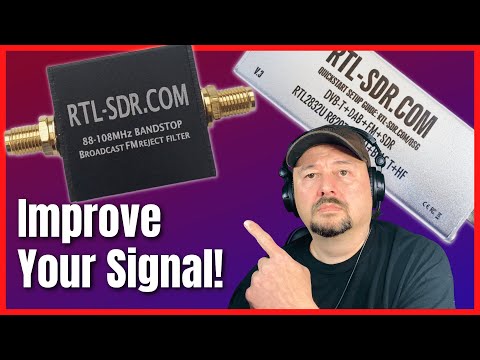
Over on YouTube channel TheSmokinApe has uploaded a video about using RF filters with an RTL-SDR. In the video he first explains why FM bandstop and AM high pass filters might be required when using a software defined radio in order to avoid overloading the SDR with very strong signals. He goes on to test and review our RTL-SDR Blog FM Bandstop and AM Highpass filters, by testing them on a spectrum analyzer.

RTL-SDR RF Filters

Near Field Localization with Machine Learning and 7 Coherent RTL-SDRs

Thanks to Laakso Mikko and Risto Wichman researchers at the Department of Signal Processing and Acoustics in Aalto University, Finland for submitting news that their recent paper titled "Near-field localization using machine learning: an empirical study" is available on IEEE Xplore. (To access the paper you need an IEEE subscription, but we see no harm in letting individuals know that they can search for the DOI on sci-hub to get it for free).

The work described in the paper uses 7 RTL-SDR dongles with their clocks connected together. Combined with noise source calibration, this results in a coherent SDR. They then train a Deep Neural Network to perform near field localization using an antenna array. If you are interested, we have out own 5-channel coherent SDR called "KrakenSDR" which will soon be released for crowd funding. The abstract reads:

Estimation methods for passive near-field localization have been studied to an appreciable extent in signal processing research. Such localization methods find use in various applications, for instance in medical imaging. However, methods based on the standard near-field signal model can be inaccurate in real-world applications, due to deficiencies of the model itself and hardware imperfections. It is expected that deep neural network (DNN) based estimation methods trained on the nonideal sensor array signals could outperform the model-driven alternatives. In this work, a DNN based estimator is trained and validated on a set of real world measured data. The series of measurements was conducted with an inexpensive custom built multichannel software-defined radio (SDR) receiver, which makes the nonidealities more prominent. The results show that a DNN based localization estimator clearly outperforms the compared model-driven method.

The paper notes that the code used in the experiments is open source and available on GitHub.

If you're interested, we also posted about Laakso's previous work on beamforming with a phase coherent 21-channel RTL-SDR array back in February.

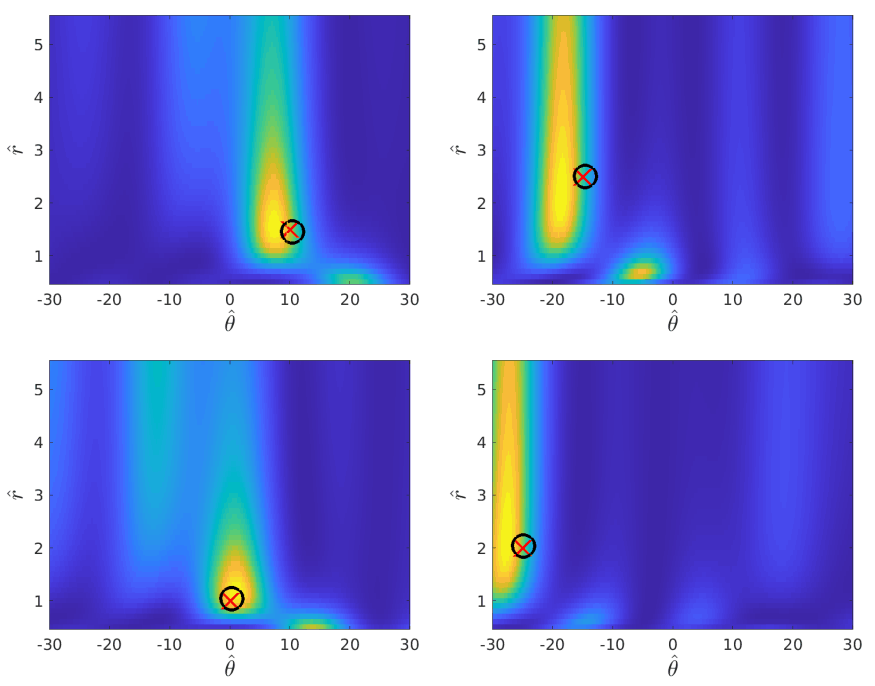
Examples of MUSIC pseudospectra. The units are [m] for range r on the vertical axis and degrees for θ on the horizontal axis. Red crosses mark the true location and black circles the NFLOPnet estimated location.

Decoding Voyager 1 Telemetry with GNU Radio

Daniel Estévez often posts on his blog about advanced SDR and radio experiments he's worked on. In a recent post he describes how he decoded telemetry from the Voyager 1 spacecraft using GNU Radio. As Voyager 1 is so far away, and the signal so weak, a rather large scale 100 meter dish is required to receive Voyager 1. So he uses publicly available recorded data received by the Green Bank Telescope in 2015.

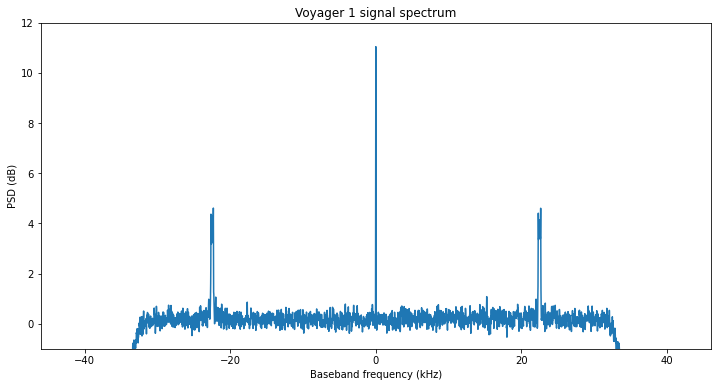
Using GNU Radio he first converts the telescope's data file discarding most of the 187.5 MHz recorded bandwidth, then decimates the signal allowing the very weak carrier and data subcarriers to be seen in the resulting high resolution FFT plot. Daniel notes how most of the power is spent in the carrier, allowing ground stations to more easily detect the signal and at least measure doppler to determine the spacecrafts trajectory. The rest of the post explains how the carrier is tracked, how to correct for doppler and phase shifts, how to demodulate the data, apply error correction, and finally decode the data packet.

While not something we can easily listen to directly, it is amazing that we can all be NASA engineers right at home with GNU Radio and tutorials like this.

Voyager 1's Spectrum. Strong carrier in the middle, and two data subcarriers.