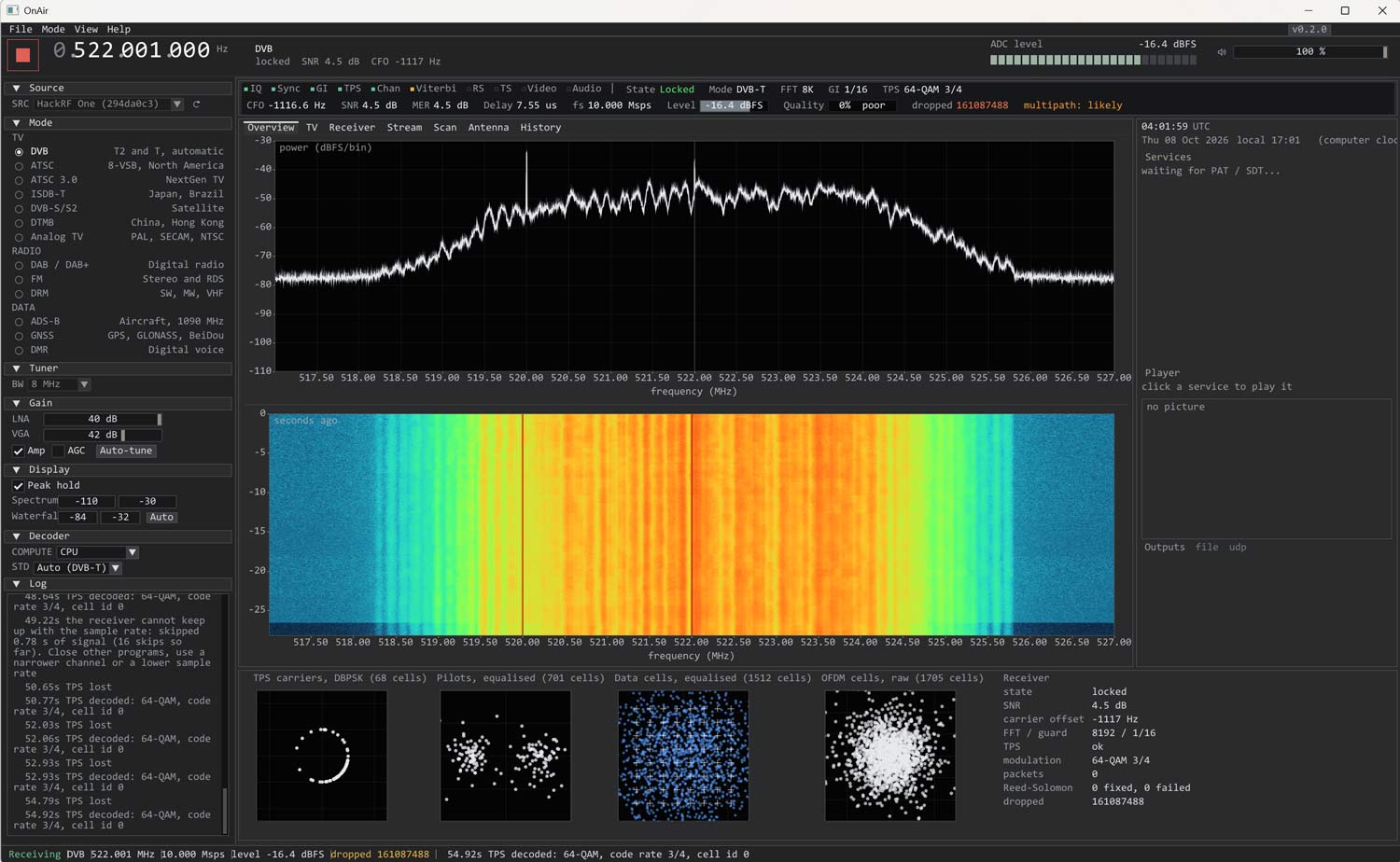
Thank you to Kristijonas for writing in and sharing with us his project, OnAir. OnAir is an easy-to-use digital TV decoder for DVB-T2, DVB-T, ATSC 1.0, ATSC 3.0, ISDB-T, and a digital audio decoder for DAB / DAB+ and FM Radio. It also supports Analog TV modes such as PAL, SECAM, and NTSC, and data modes like ADS-B, GNSS (GPS, GLONASS, BeiDou), and DMR.
It supports various wideband SDRs, including HackRF, PlutoSDR, BladeRF, LimeSDR, USRP, Airspy R2, and SDRplay. RTL-SDRs unfortunately do not have enough bandwidth to decode digital TV channels in SDR mode, but the software still supports RTL-SDRs for narrowband signals.
The software is easy to install, with an installer .exe being available for Windows, a .deb file for Debian Linux, and a .dmg file for macOS.
OnAir Screenshot
AI Disclaimer: This software lists Claude as a contributor.
You may have seen in the news that researchers have recently mapped the brain and nervous system of a fruit fly and digitally simulated it in what they call a 'connectome'. Without additional training, the connectome exhibited fruit fly-like behavior when connected to a virtual body, suggesting that the fruit fly's behavior is encoded in its brain structure.
The fly brain neural network can also be hacked into performing other tasks. Various researchers have already repurposed it for tasks like controlling robots, driving a simulated car, playing virtual games like Beat Saber and Doom, trading crypto, and more. One novel fly brain application related to RTL-SDRs was submitted to us by Nik K (SV1EEX). Nik used the fruit fly connectome to tune an RTL-SDR-based FM radio. Nik writes:
Can the reconstructed nervous system of a fruit fly navigate the FM broadcast band and find a radio station?
I built an open-source experiment to test that question using an RTL-SDR Blog V4 and the published adult male Drosophila melanogaster CNS connectome: 165,122 traced neurons connected by more than 10 million signed neural edges.
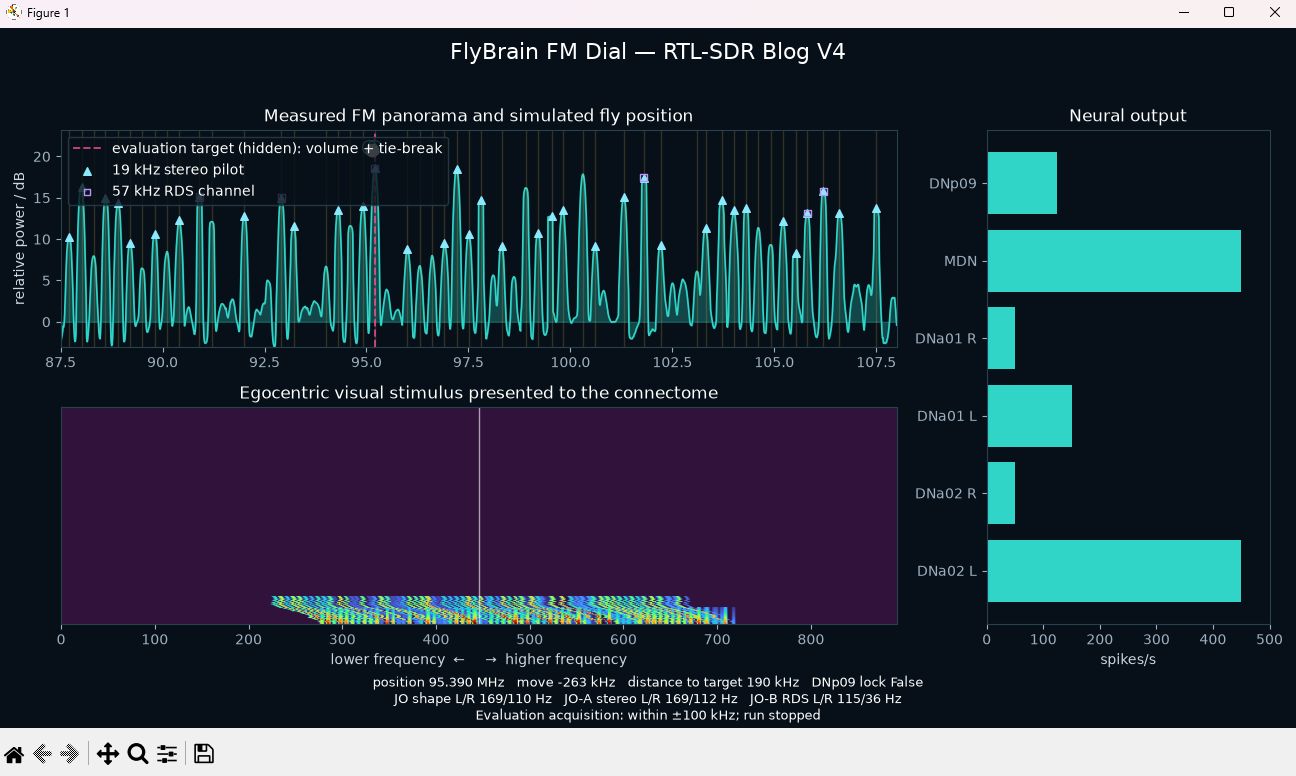
The RTL-SDR V4 scans the real 87.5–108 MHz broadcast band and creates a panoramic RF environment. Instead of giving the software a list of stations, I convert that measured spectrum into an egocentric visual scene and present it through the 892 retinotopic optic columns used by the connectome simulation. Activity produced by anatomically identified DNa02 descending neurons moves a virtual receiver left or right along the dial.
The experiment also gives the simulated biomimetic fly a substituted RF “mechanosensory” channel. Spectral shape is mapped to bilateral Johnston’s-organ input, while the 19 kHz stereo pilot and 57 kHz RDS subcarrier stimulate JO-A and JO-B populations. This helps distinguish stations that appear similar in power and occupied bandwidth. These mappings are engineered sensory substitutions; they are not a claim that biological flies can detect radio waves.
In one preliminary run on a panorama recorded with the RTL-SDR Blog V4, the connectome-driven controller started at 97.750 MHz. Without receiving the target frequency directly, it entered the predefined ±100 kHz acquisition region around the hidden 95.200 MHz target after 33 actions and stopped at 95.126973 MHz.
The result is deliberately reported as a single preliminary observation. The repository separates external acquisition from neural DNp09 lock events and includes random, visual-only and direct-peak controllers for controlled comparisons.
I describe the resulting system as a connectome-driven virtual embodied agent operating in an RF-derived sensory environment—effectively, a digital fruit-fly nervous system whose world is the FM spectrum and whose movement consists of tuning a radio.
The complete source code, Windows setup, RTL-SDR V4 compatibility fixes, connectome setup procedure, technical manual, experimental protocol, limitations and acquisition dashboard are available here:
Thank you to Luke Berndt for writing in and sharing with us a new RTL-SDR browser-based app he's created called TunerScope. TunerScope is a spectrum analyzer program that focuses on helping users in areas with ATSC digital TV achieve perfect HDTV antenna positioning.
The app runs entirely in a Chrome browser, so you can just connect your RTL-SDR to your device, browse to https://tunerscope.com, and start using the app instantly.
TunerScope has a few interesting features, including the use of spectrum stitching to visualize the full 6 MHz + wide ATSC signals as the RTL-SDR only provides 2.56 MSPS max, multipath detection via in-channel flatness, a snapshot reference trace to see how well your antenna movements are helping, an SNR reading, location-aware channel labeling and a tower map, and a channel list view.
We note that from what we can gather, this app appears to be designed for the US only and may only support ATSC signals and FCC lookups for the location aware features.
AI-Disclaimer: From a comment on the YouTube video it appears TunerScope was developed with Claude.
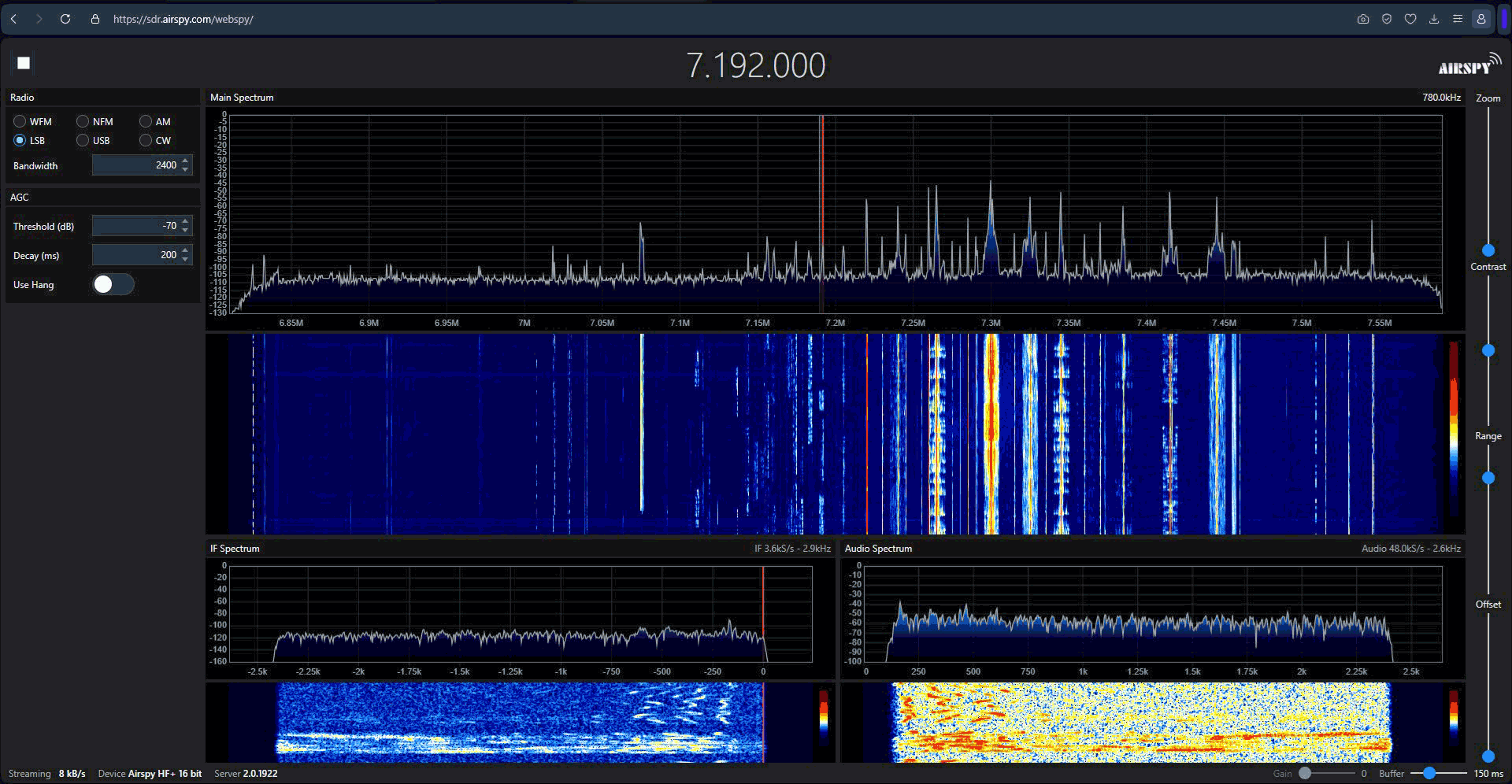
Over on X @lambdaprog, (aka Youssef Touil), the developer of SDR#, has been teasing development of a new web client called "WebSpy" for Airspy software-defined radios. The web client allows users to tune in to a remote Airspy SDR via a web browser interface that mimics the SDR# Windows software. Before WebSpy, it has only been possible to access Airspy devices remotely via the SpyServer server software and the SDR# Windows application.
While the software is still in development and not yet available for download, you can access a demo version (HF server) (Broadcast FM server) that Youssef has currently set up on his own server in France. From the X posts on the development of the software, it seems that WebSpy boasts some impressive efficiency in terms of the low 6 kB/s network bandwidth required. This means that even over slow connections, the FFT and audio should be smooth and clear. The web interface also works well on mobile, providing a touch-optimized interface.
Youssef wrote in and wanted to share some additional information about how SharpIQ and SharpFFT work:
Under the hood, WebSpy streams both the radio signal and the spectrum display using two purpose-built compression codecs: SharpIQ for the channel data and SharpFFT for the FFT display.
A key design choice is what gets streamed: unlike most web receivers, which demodulate on the server and send you compressed audio, WebSpy sends the raw IQ signal of the tuned channel and does all the demodulation right in your browser — the same DSP chain as the gold standard SDR#. This matters more than it might sound: with server-side audio you're listening to a lossy rendition of what the server decided to demodulate, with voice-codec artifacts baked in; with local IQ, the actual signal arrives at your machine, so demodulation, filtering and mode changes happen instantly and the audio quality is limited only by the signal itself, not by an audio codec.
Unlike general-purpose compressors, SharpIQ and SharpFFT were designed from the ground up for radio: they adapt in real time to what's actually happening on the band, spending bits only where there is information worth keeping, while preserving the weak-signal fidelity that SDR users care about — a CW signal buried near the noise floor comes through intact.
The result is that a complete listening session — channel IQ, live spectrum, waterfall and all — typically fits in about 5 kB/s, a fraction of what conventional audio streaming would need. That's low enough to comfortably operate a remote receiver over a modest mobile connection, which is precisely what makes a full SDR experience in a browser tab practical — nothing to install, nothing left behind, just a tab you can close; and at 5 kB/s the stream itself hides in the noise of ordinary web traffic. Discreet SIGINT, if you're so inclined.
Thank you to Ivan (NO2CW) for submitting news about how he added HD Radio decoding capability to his FM DX Webserver receiver. The FM DX Webserver is a community of worldwide FM broadcast-band online receivers that mostly use SDRs based on the TEF6686 chip, with a few also using RTL-SDR receivers. HD Radio (aka nrsc5) is a proprietary digital audio standard used by FM broadcasters in North America. It's often observed by SDR users in a waterfall as the two rectangles flanking both sides of a broadcast FM signal. Ivan writes:
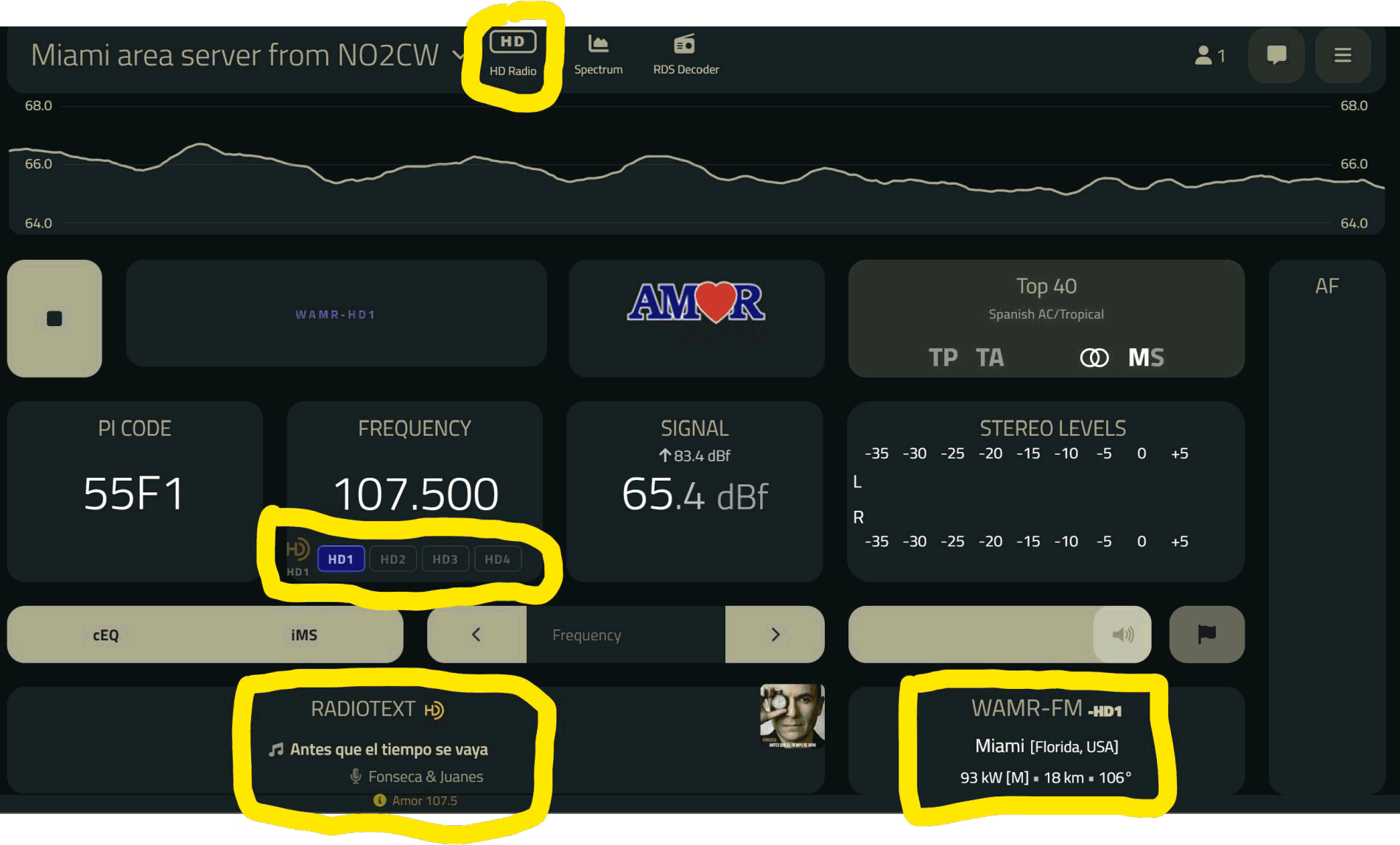
A major challenge has been that up until now none of the online receivers were HD Radio capable. I have now added this capability with the help of an RTL V3. The online receiver uses a combination of two receivers: a TEF6686 which is known to be highly sensitive and, when an FM HD Radio signal is present, an RTL V3 automatically kicks in to provide HD radio capability opening up HD1, HD etc audio streams together with bundled album art, traffic and weather. The program was initially conceived by discord user seehed and then further developed by me.
The core code for this plugin was developed by GitHub user seehed and can be found here: https://github.com/Seehed/NRSC5_HDRadio. I had to make a few tweaks to get it fully working.
How the Setup Works: The hardware setup requires both a TEF6686 receiver and an RTL dongle operating simultaneously.
I tested an RTL-SDR V4 first, but the necessary DLLs worked much better with an RTL-SDR V3 in my current build.
By default, the server uses the TEF6686 for browsing the FM band for analog signals. When a user tunes to a frequency where an HD Radio signal is present, the logic switches to "HD Mode" and the RTL V3 takes over. The NRSC5 library is used to process the digital signal. In this mode, users will notice the change in audio quality and the available subcarrier streams (HD1, HD2, HD3, etc.) become visible and selectable.
How Users Can Set It Up: To replicate this, a user would need:
A working FM DX Webserver with a TEF6686.
An RTL-SDR V3 plugged into the same host.
The NRSC5 library installed.
The plugin from the GitHub link above installed and configured in the webserver directory.
Ivan also notes that currently his Miami NO2CW receiver is the only one on the network supporting HD Radio.
HD Radio on FM DX Webserver. Receiving HD Radio inside the fm dx webserver application.
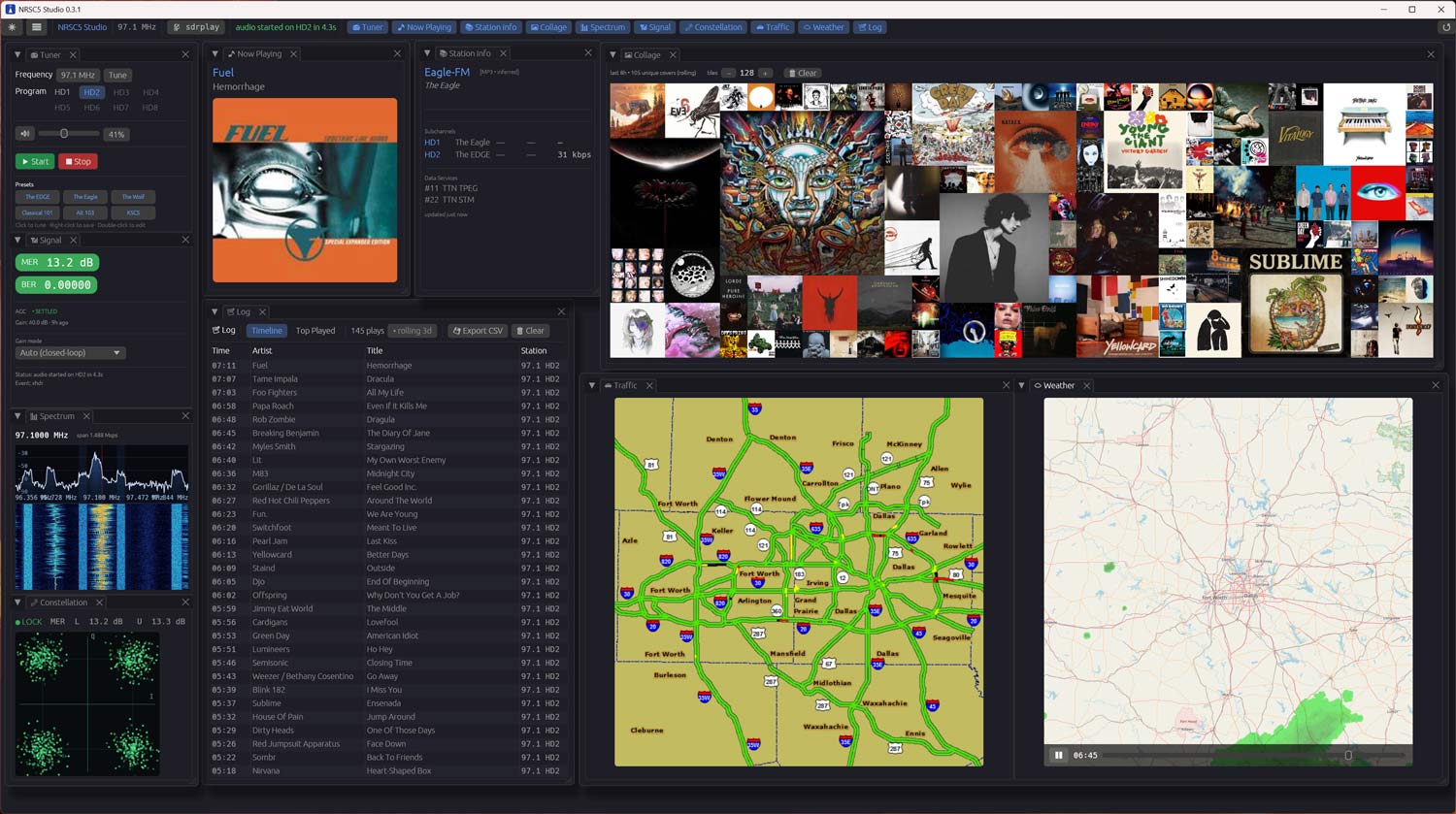
We've recently had several submissions about the release of a new program called NRSC5 Studio, a new native open source Windows and Linux supported GUI for the nrsc5 HD Radio decoder. We note that in the past, we've posted about nrsc5 and the NRSC5-DUI interface.
nrsc5 is an open source decoder for the proprietary HD Radio digital audio standard used by FM broadcasters in North America, and it works with low-cost RTL-SDR dongles. NRSC5 Studio is written in Rust with an egui-based dockable interface, and it wraps nrsc5 to provide tuning, HD1 to HD4 subchannel selection, station presets, and now-playing metadata with album art and station logos.
NRSC5 Studio appears to be quite feature-rich. There's a live FFT spectrum and waterfall display tapped from the same I/Q stream feeding the decoder, a QPSK constellation viewer driven by live MER readings per sideband, and a closed loop AGC that automatically tunes the R820T2 gain table to maximize MER. Other extras include a rolling 8-hour album art collage heat map, a 24-hour song log with CSV export, and TPEG traffic map and animated weather radar decoding on stations that broadcast it (currently iHeartMedia stations only).
A portable zip release is available on the GitHub releases page, requiring no installer or admin rights.
AI-Disclaimer: The software Readme credits GitHub Copilot, an AI tool.
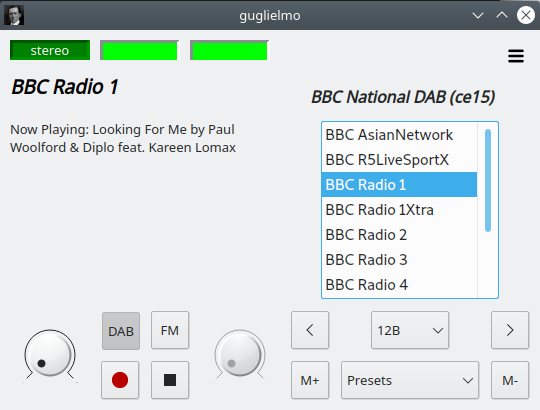
Guglielmo is an FM and DAB receiver for Linux, Windows and MacOS. It supports all major SDRs, including RTL-SDR, Airspy, SDRplay, HackRF, and LimeSDR. It is designed to be easy to use for media users rather than hobbyist technical users.
Version 0.7 adds the following features:
Raspberry PI appimage
UI improvements
Basic skins support
Logo handling
The new Raspberry Pi appimage, and binaries for other platforms can be found on the GitHub Releases page. Just expand the "assets" tab.
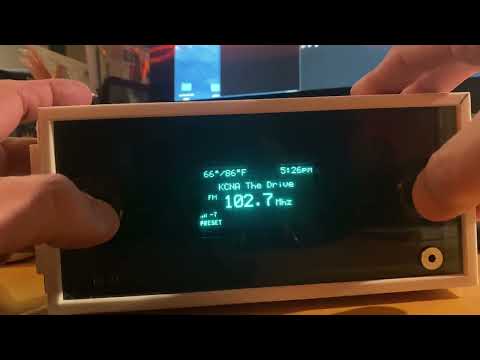
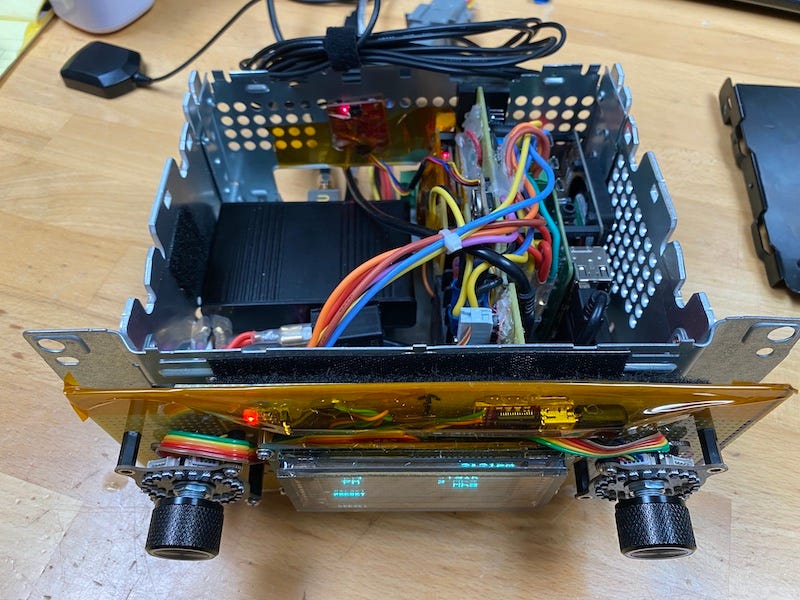
Thank you to Vinnie Moscaritolo for writing in and sharing with us PiCar, a project to develop a homebrew car radio head unit out of a Raspberry Pi and RTL-SDR. The advantage of PiCar over a standard vehicle head unit is that PiCar is not just a broadcast AM/FM tuner, but is also capable of tuning to and scanning for other signals, such as public safety. In addition, Vinnie has also added various other features to PiCar, such as a GPS nav system, and CAN bus snooper.
Vinnie writes:
What happens when a radio nerd with a Jeep and a Raspberry Pi decides factory dashboards are too boring? You get PiCar — a DIY car radio replacement with a VFD display, a couple of knobs, and a whole lot of hacker soul.
Built around RTL-SDR and Raspberry Pi, PiCar does AM/FM, GPS nav, CAN bus snooping, 1-wire sensors, and even streams tunes from your iPhone — all without draining your Jeep’s battery. It's not just a head unit, it's a rolling testbed for software-defined radio, CAN hacking, and embedded Linux audio.
Vinnie has posted a full 9-part series on PiCar over on his blog. The series covers the why and the how, with several demonstration pictures and videos.