Tagged: EME

Open.Space: An Open Source SDR Based Phased Array for Bouncing Signals off the Moon

Open.space is an upcoming open-source project aiming to unlock affordable earth-moon-earth (EME) bounce communications for the amateur radio public. To achieve this, they have designed a software-defined radio-based tiling system that allows people to easily create phased arrays.

EME (Earth–Moon–Earth) bouncing is a part of the amateur radio hobby that typically involves using (~1m - 3m diameter) high-gain dish antennas to transmit a signal toward the Moon, reflect it off the Moon’s surface, and have it received by a distant contact on Earth with similar hardware.

A phased array consists of a grid or lattice of many small antennas working together in sync. By applying tiny delays between elements and combining their signals, the array can make radio waves add up in one chosen direction and cancel in others. This lets software steer the receive/transmit beam electronically (no motors or moving parts), improving sensitivity and reducing interference. Compared to a dish antenna, it can scan and track targets much faster, form multiple beams if needed, and is compact and low-profile without physically turning. A common phased-array antenna many may have used before is a Starlink antenna.

A single open.space tile consists of a 4x4 MIMO SDR and four antennas. The SDR's frequency range covers 4.9 - 6.0 GHz, and it has 40 MHz of bandwidth via an 8-bit ADC. The tiles can be used on their own as a general SDR, for radio direction finding, as an Open-Wi-Fi router, as a 4G/5G basestation, or for drone HD links and robotics communications.

Multiple tiles can also be combined in a lattice shell to form the "Mini" starter phased array, which consists of 18 tiles. With the Mini phased array, you can achieve 60 degrees of beam steering, up to 34 dBi of gain, and 52.6 dBW of EIRP transmit power. The Mini is not large enough for EME, but upgrading to "Moon", which consists of 60 tiles, makes EME possible. "Moon" gets you 60 degrees of beam steering, up to 39.3 dBi gain, and 63.1 dBW transmit power.

This sounds expensive, but each tile is actually slated to cost only US$49-US$99. The Mini is priced at US$899 - US$1499, and the "Moon" at US$2,499 - US$4,999.

The Open.space hardware has not yet been released for sale, but the website indicates March 2026 as the expected shipping date. You can sign up to their email list on their website for updates.
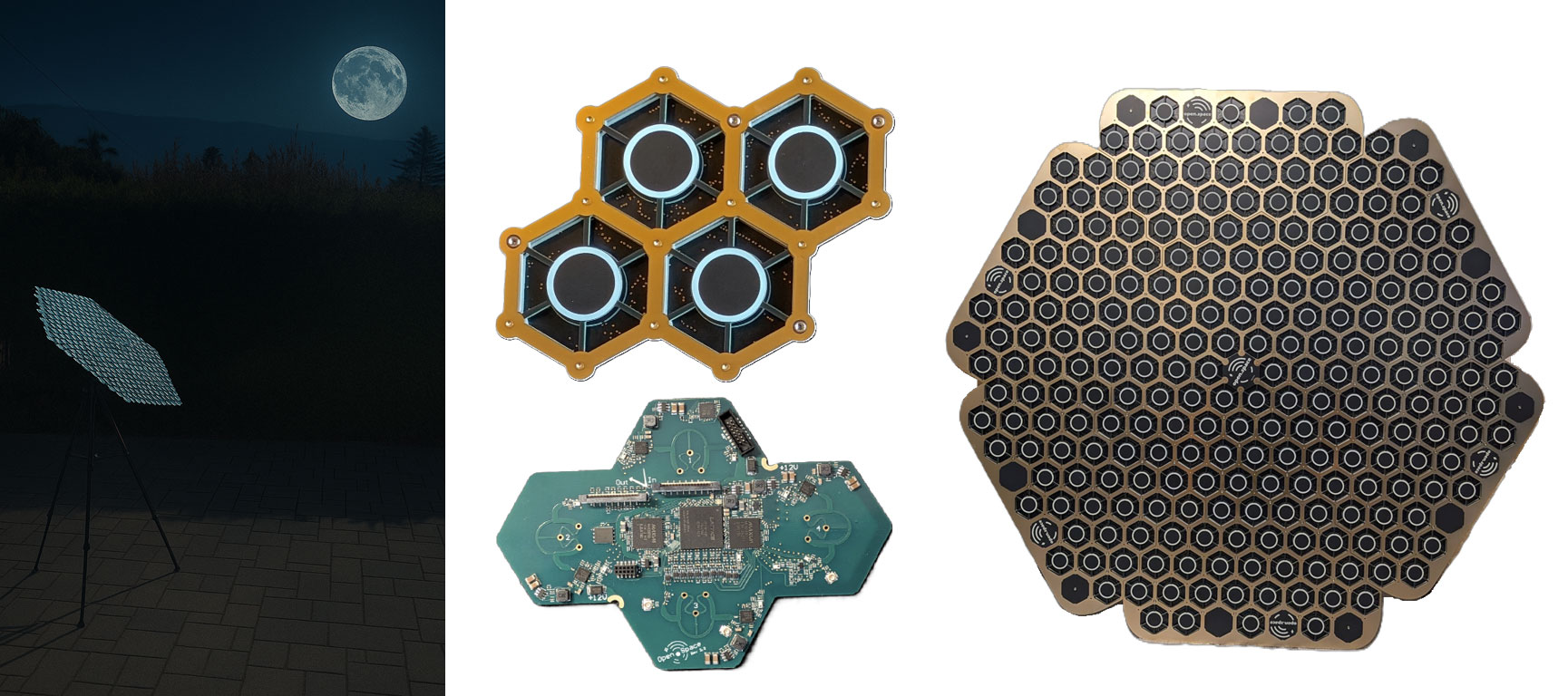
Open Space. Left: EME Concept, Middle: Single Tile, Right: Moon Phased Array consisting of 60 tiles.
Left: EME Concept, Middle: Single Tile, Right: Moon Phased Array consisting of 60 tiles.

Bouncing LoRa Signals off the Moon with a HackRF

One part of the amateur radio hobby is 'EME', or Earth-Moon-Earth. The idea is to bounce radio signals off the surface of the moon, and have them received over a vast distance. Typically weak signal amateur radio modulation schemes such as JT65 are used due to their ability to be decoded even with the very weak signals that come back from the moon bounce.

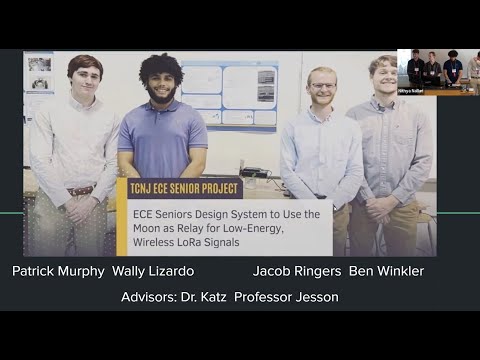
Recently a group of students from the College of New Jersey are attempting to bounce signals off the moon using the LoRa modulation scheme. LoRa is a modulation scheme designed to be used with IoT devices, however it also has great performance when signals are weak so it's a good candidate for moon bounce.

The students are using a HackRF and the SDR-Angel software with the signal being transmitted in the amateur radio bands at 1296 MHz. The antenna hardware consists of an 1296 MHz feedhorn attached to an 8-meter dish. They hope that the use of LoRa modulation can reduce the power requirements for EME.

The main goal of this project is to establish Earth-Moon-Earth communication with LoRa modulated signals. There are three main goals that this project is trying to accomplish. The three goals of our project are to reflect a signal off the Moon and receive it back here in New Jersey, transmit a signal from here in New Jersey, bounce it off of the Moon, and then receive the signal on a dish located in Alaska, and our final goal for this project is to establish two way communication between New Jersey and Alaska.

Our initial approach to this project is to use SDRAngel to modulate and demodulate our signal. SDRAngel is a free, open-source software that we can use to transmit and receive signals via SDR (Software Defined Radio).

Our modulation technique, LoRa, uses Chirp Spread Spectrum modulation that allows for low power, long range transmissions at the cost of a low data rate.

The peripheral of choice for this project is the HackRF One, a SDR peripheral that allows us to send and receive signals.

This story was also presented on Hackaday.

Bouncing LoRa Signals Off the Moon - TCF 2023, track 5, TCNJ student presentations

Comparing the RTL-SDR, FunCube PRO Plus and SDRplay on Moon Bounce/EME Reception

Moon Bounce or “Earth Moon Earth” (EME) is an amateur radio activity where people attempt to transmit a signal towards to the moon, and listen to the reflected signal. In some cases a separate transmitter is not needed, as an already powerful constant transmitter like the GRAVES radar in France can be used.

Over on his YouTube channel user cqpy2rn has uploaded a video showing his moon bounce reception of the GRAVES radar using an eleven element yagi antenna. He compares the reception with an RTL-SDR, FunCube PRO Plus and SDRplay. He writes:

+++ Nooelec model NESDR Smart (RTL-SDR) +++
GOODs: Price $20, frequency stability 0.5ppm tcxo, aluminum case, firm sma antenna connector, better dynamic range than regular-cheaper RTL dongles. Easy gain adjustment.
BADs: No pass filters, freq coverage from 24MHz to 1.7GHz, poor dynamic range (moderate de-sense with near strong signals)

+++ FunCube PRO PLUS – FCDPP +++
GOODs: freq coverage from 150KHz to 2GHz, pass saw filters, frequency stable 0.5ppm tcxo, easy gain adjustment, acceptable dynamic range.
BADs: Plastic case, fragile sma connector, just 192KHz wide spectrum view, price $160.

+++ SDRPlay +++
GOODs: Frequecy coverage from 10KHz to 2GHz, firm SMA connector, pass saw filters, up to 8MHz wide spectrum view, acceptable dynamic range.
BADs: Plastic case, legacy printer USB connector, frequency drift during warm up, difficult gain adjustment

CONCLUSION: In essence all these have the same “DNA”, they were made from digital TV tuner chips, comparisons produce very similar RX practical results, the RTL suffers due the lack of internal filtering which can be a little remediated adjusting the gain carefully through your SDR software or adding external filters. FCDPP and SDRPlay are vey similar, although the freq drift for SDRPlay is a bit annoying to me.

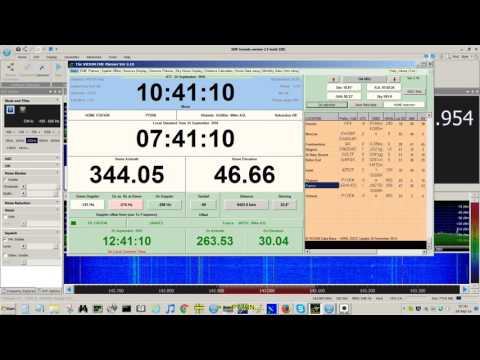
Nooelec RTL vs. FunCube PRO Plus vs. SDRPlay (VHF 143MHz graves via EME test)