At the beginning of 2020 Annunaki (@StupotSinders) released his third party user interface for DSDPlus. DSDPlus is a digital speech decoder capable of decoding protocols such as P25 P1, DMR, NXDN and more with an SDR such as the RTL-SDR. As it is a command line tool, it can be a little daunting for some users, which is where the GUI comes in handy.
Recently Annunaki has released an SDR# plugin version of DSDPlusUI. This makes it so you can visualize the digital voice signals at the same time as controlling and decoding with DSDPlus. The plugin is available on the DSDPlusUI website at dsdplusui.com. To use it you will need to be using SDR# 1777 or later.
The Arecibo Radio Telescope has collapsed. Once the largest single dish radio telescope in the world at 305m, Arecibo was mostly used for radio astronomy research. However, the dish was made famous in 1974 for deliberating beaming a message into space as part of a search for extraterrestrial intelligence (SETI) experiment. It also played a part in popular culture, being a part of several famous films such as Golden Eye and Contact.
As part of it's goodbye we thought we'd highlight a few old posts where Arecibo was used together with SDRs for some interesting applications.
The project required finding and researching the original spacecraft documentation, and implementing the modulators and demodulators in GNU Radio. Whilst being successful in communicating with the satellite, ultimately the project failed due to the satellite's nitrogen tanks which had long leaked empty. But the fact that they were even able to find and communicate with the spacecraft using Arecibo was a major achievement. If you're interested in that project, Balint's 2015 talk on YouTube is an interesting watch.
Later in 2017 we saw how Arecibo was used for an Ionospheric heating experiment which involved transmitting 600kW of net power into the Ionosphere. This resulted in SDR users around the world being able to receive the signal. Other posts involve u/moslers Reddit post where he toured Arecibo and showed how they used a familiar program, HDSDR, as part of their monitoring suite.
So goodbye to Arecibo. However, we can look forward to the 500 meter Chinese FAST (Five-hundred-meter Aperture Spherical Radio Telescope) giving us new opportunities for single dish radio observations in the future.
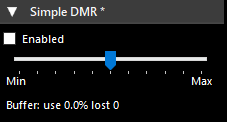
Simple DMR decoder. No external dependencies, no settings, uses SDR # audio path. Designed for listening to unencrypted DMR channels. The voice from both slots is mixed into one channel.
To install the plugin simply copy the dll's from the zip file into the SDR# folder, then copy the line from the magline.txt text file into the plugins.xml file which can be opened with any text editor.
On Wednesday Nov 11 Noon Pacific time, Hackaday will hold a hack chat (group text chat session) with Marc Lictman, author of the free online book "PySDR: A Guide to SDR and DSP using Python". We posted about the release of this book last month, noting that it is probably one of the best books in terms of explaining DSP fundamental concepts in an easy to understand way. Hackaday write:
“Revolution” is a term thrown about with a lot less care than it probably should be, especially in fields like electronics. It’s understandable, though — the changes to society that have resulted from the “Transistor Revolution” or the “PC Revolution” or more recently, the “AI Revolution” have been transformative, often for good and sometimes for ill. The common thread, though, is that once these revolutions came about, nothing was ever the same afterward.
Such is the case with software-defined radio (SDR) and digital signal processing (DSP). These two related fields may not seem as transformative as some of the other electronic revolutions, but when you think about it, they really have transformed the world of radio communications. SDR means that complex radio transmitters and receivers, no longer have to be implemented strictly in hardware as a collection of filters, mixers, detectors, and amplifiers; instead, they can be reduced to a series of algorithms running on a computer.
Teamed with DSP, SDR has resulted in massive shifts in the RF field, with powerful, high-bandwidth radio links being built into devices almost as an afterthought. But the concepts can be difficult to wrap one’s head around, at least when digging beyond the basics and really trying to learn how SDR and DSP work. Thankfully, Dr. Marc Lichtman, an Adjunct Professor at the University of Maryland, literally wrote the book on the subject. “PySDR: A Guide to SDR and DSP using Python” is a fantastic introduction to SDR and DSP that’s geared toward those looking to learn how to put SDR and DSP to work in practical systems. Dr. Lichtman will stop by the Hack Chat to talk about his textbook, to answer your questions on how best to learn about SDR and DSP, and to discuss what the next steps are once you conquer the basics.
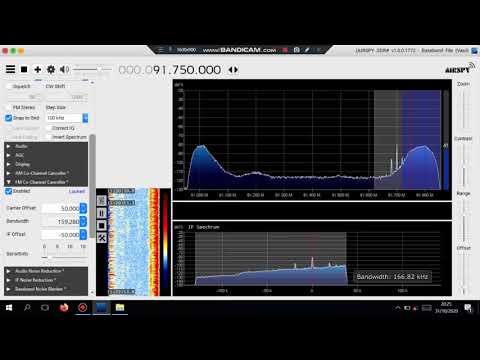
Over on YouTube a few more videos showing the new AM and FM co-channel cancelling algorithms available in recent versions of SDR# have been uploaded. In the first video YouTuber channel "Peter .DXChannel" shows an example of broadcast FM Sporadic E signals (temporary long range reception due to Tropospheric ducting) being recovered with the FM co-channel canceller.
A demonstration of the SDRsharp FM Co Channel Canceller with Es signals
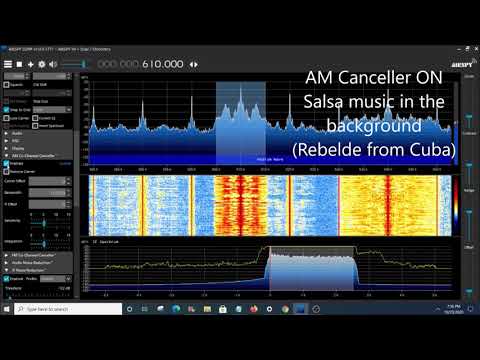
In the second video "icholakov" shows the AM co-channel canceller recovering a weaker signal being broadcast directly on top of a stronger one (zero carrier offset).
SDR Sharp Co-channel interference AM canceller. Several tests using Airspy HF+ Discovery
SDR# is a very popular Windows SDR program often used with the RTL-SDR and Airspy SDR. One drawback is that it lacks native Linux compatibility. In the past it has been possible to run SDR# via WINE, however some newer updates were thought to have broken that ability. WINE is a Windows emulator that allows some Windows programs to run under Linux.
However, recently on Twitter we've seen a Tweet by @albinstigo indicating that SDR# can indeed run on Ubuntu 20.04 via WINE 5.0. In a Tweet he explains the steps which are quite simple:
One limitation is that the emulated SDR# cannot connect to the SDR natively via the USB. So you will need to use TCP server software such as rtl_tcp or SpyServer to get it to work. Basically, run the server on the native Linux environment, then connect to it in SDR# running on the emulated Windows environment.
1. Install wine via apt.
2. Install dotNET 4.8 via winetricks.
3. Install the Verdana font via winertricks.
4. Enjoy SDR.
A few days ago the developer of SDR# added a very useful AM Co-Channel canceller plugin, and just today he has also added a new FM Co-Channel canceller. A Co-Channel canceller allow a user to remove an interfering station, allowing a buried station to be received cleanly. This is especially useful for DXer's where strong local and weak distant overlapping stations are likely to be received at the same time. The plugin works with all SDR# compatible SDRs including the RTL-SDR.
On a related note, we wanted to point out that recently the Airspy website and downloads have been getting flagged by some antivirus software, however we believe these detections to be false positives caused by the very frequent update schedule of SDR#.
SDRSharp FM Co-Channel Canceller
Over on Twitter we've seen a couple of videos from @K7al_L3afta demonstrating how well the new FM Co-Channel canceller works.
After a short break Frugal Radio's ongoing series of SDR beginners guide videos is back, and in the latest episode Rob provides part one of a two part overview of some software available to use with software defined radios such as the RTL-SDR.
In the video he demonstrates general Windows based receiver programs like SDR#, SDRUno, SDR-Console V3, HDSDR, as well as multiplatform software such as SDR Angel, GQRX and CubicSDR. He finishes up by explaining the options available for virtual audio cable programs, which are required to pipe audio from general receiver programs to decoders.