His initial idea was to create a flexible and open portable SDR device, however keeping the device open and built for general use meant increased complexity which quickly slowed his progress. Instead [Nathan] decided to focus on just ADS-B for his portable device as living near an airport he’d been interested in aircraft tracking since his first SDR arrived.
The device consists of a Raspberry Zero, RTL-SDR, 3.5″ IPS LCD and a battery pack for portability. For software he uses dump1090 with some custom code for the map plotting. Together with a 3D printed case and some buttons, the result is a very professional looking portable aircraft tracking device.
Hopefully Nathan will continue updating his project page so that others may replicate it on their own.
Raspberry Pi Zero and RTL-SDR Portable ADS-B Receiver
RadarBox24.com is a flight data aggregation service similar to sites like FlightAware.com and FlightRadar24.com. They aggregate ADS-B aircraft data obtained from (mostly) volunteer RTL-SDR based feeders based all over the world and use this to power their flight tracking map and flight information database.
Last year RadarBox24 came out with a specialty ADS-B RTL-SDR dongle. This is a custom RTL-SDR which contains a built in 1090 MHz tuned amplifier and filter. We have not tested this dongle yet, but we expect that the design and performance would be very similar to the FlightAware ADS-B dongles. A network analyzer report from RB24 is provided here.
These dongles can only receive 1090 MHz and do so better than a standard RTL-SDR due to the built in LNA and filter. The LNA reduces the noise figure of the dongle leading to greater sensitivity, and the filter removes any strong out of band signals that could overload and desensitize the dongle. This results in greater reception range, and more flights tracked. Please note that these dongles cannot be used as wideband general purpose RTL-SDRs due to the filtering.
ADS-B data can easily be shared to RadarBox24 with their Raspberry Pi image and RadarBox24 write that if you share data to their site, you will receive the following kickbacks:
Free Business Account while sharing (worth $39.95 /mo). This allows you to access RAW and historic flight data as well as enabling other features such as more advanced data filtering, and a weather layer.
Strong and enthusiastic Community on Whatsapp
Track your own station's flights in real-time not only on website but also on RadarBox apps
For ADS-B decoding, dump1090 is an RTL-SDR compatible program that is commonly used. In order to provide information about the aircraft being detected (e.g. icao24 hex address, registration/tail number and sometimes the type of aircraft like A380), dump1090 uses an offline database. Unfortunately this database has not been maintained in a very long time, so it is now out of date, and so cannot display information about many aircraft.
Contained within the data is the icao24 hex address and registration/tail number. By collecting this VDL2 data over a number of days, a new database can be generated which can then be imported into the dump1090 database. It however, doesn't seem to acquire aircraft type data.
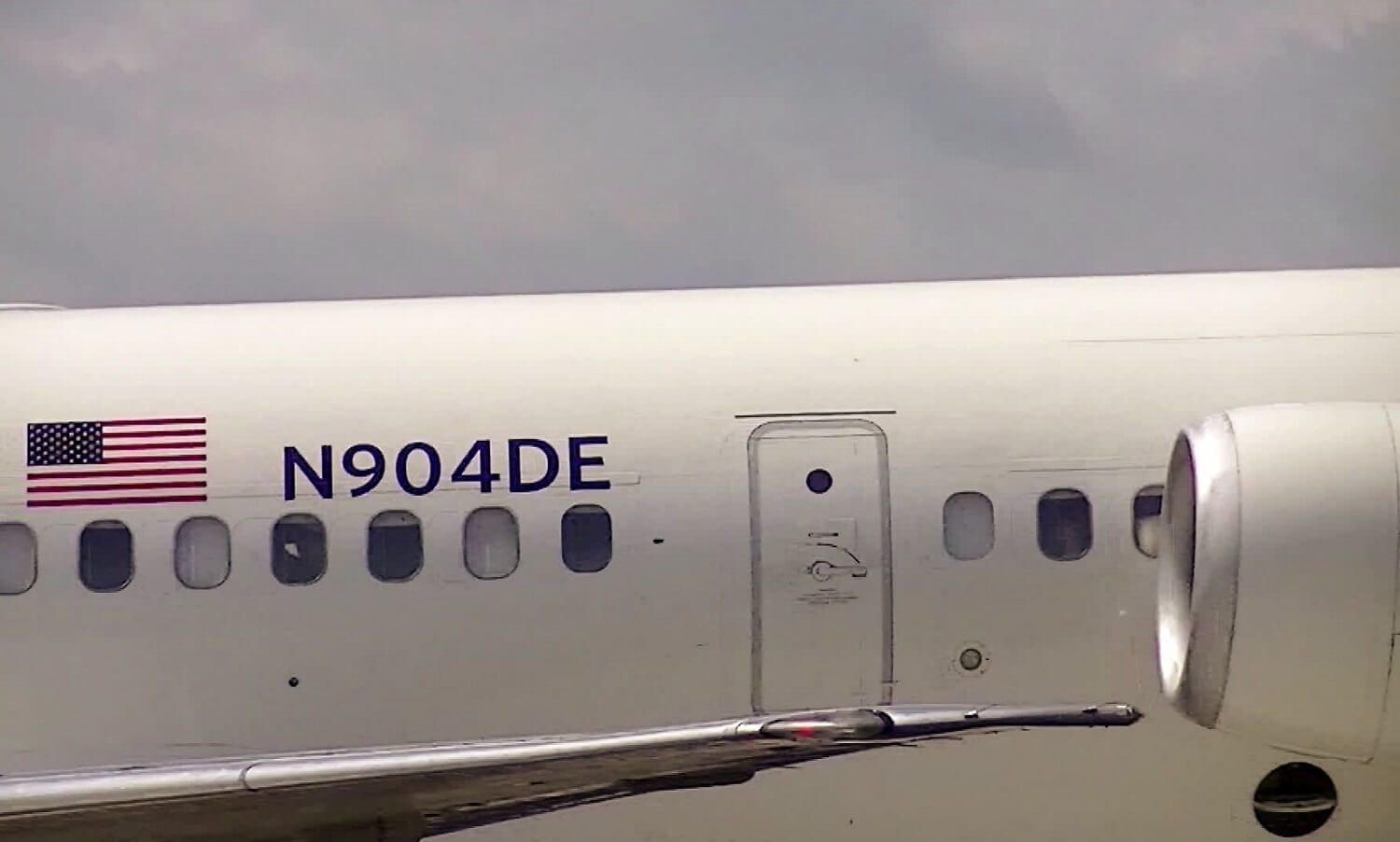
An aircraft registration/tail number displayed on the fuselage. Image source: Wikipedia
Thank you to Thierry Leconte (TLeconte) for writing in and submitting his new command line based open source software called vortrack. Vortrack is a simple VOR decoder which calculates the angle towards the VOR. It is compatible with both RTL-SDR and Airspy radios, and runs on Linux.
In the past we've seen several other posts about RTL-SDRs being used to decode VOR signals, but Thierry's implementation appears to be the easiest way to get a bearing straight away. You'll get the most use out of the software if you install it on a portable device like a Raspberry Pi and take it out for a drive as you'll be able to see the VOR angle changing then.
VOR stands for VHF Omnidirectional Range and is a way to help aircraft navigate by using fixed ground based beacons. The beacons are specially designed in such a way that the aircraft can use the beacon to determine a bearing towards the VOR transmitter. VOR beacons are found between 108 MHz and 117.95 MHz, and it's possible to view the raw signal in SDR#.
A DVOR Ground Station at an Airport. Source Wikipedia.
Over on YouTube icholakov has uploaded an informative video that gives an overview of the main communication modes that aircraft use from HF to UHF. In the video he also gives examples of those modes being received and decoded with an SDR.
The modes that he explains and demonstrates are VHF voice, VHF ATIS automated weather, ACARS short data messages, HF voice, HF automatic weather, HF data selective calling (SELCAL), HF data link (HFDL) and UHF ADS-B aircraft positioning.
2018: Monitoring airplane communications (aviation radio signal monitoring via sdr)
Over on YouTube Fuzz The Pi Guy has uploaded a video tutorial showing how to set up a Broadcastify air traffic control audio feed with RTL-Airband and an RTL-SDR running on a Raspberry Pi. This allows you to publicly share your received air traffic control audio online via sites like Broadcastify.
The video is based on a comprehensive Radioreference text tutorial which takes you through the process from scratch. Setting it up involves installing the Raspbian OS, installing RTL-SDR, installing and setting up RTL-Airband, configuring ezstream and then ensuring that everything runs automatically on boot. It's a fairly involved setup process, but the video helps make things easier.
How To Setup Broadcastify On A Raspberry Pi Using RTL_AM For Aviation
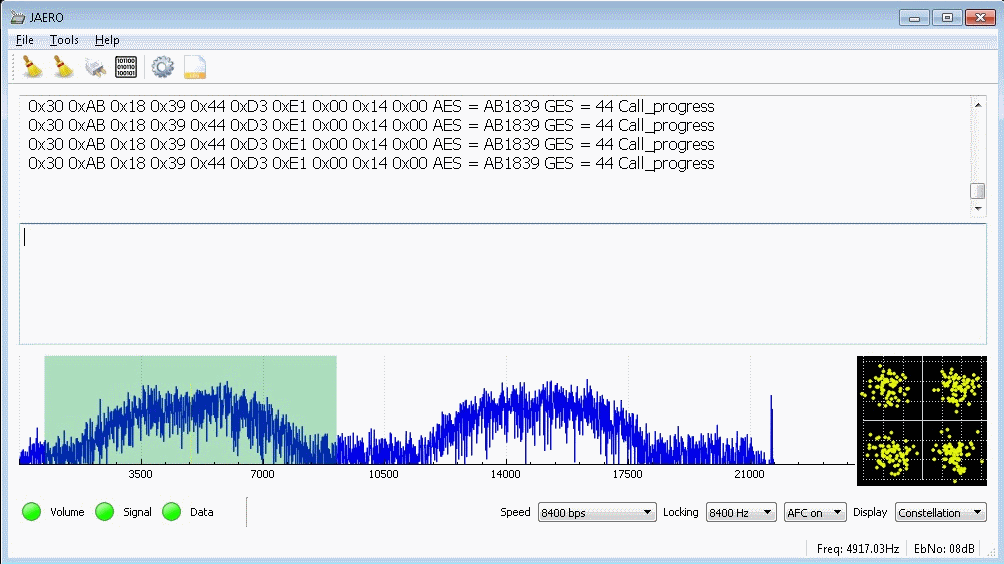
JAERO was recently updated by programmer Jonti, and it now supports the decoding of AERO C-Channels which are voice audio channels that exist on both the L-Band and C-Band frequencies of AERO. AERO is a satellite based communications service used by modern aircraft. The information transferred are normally things like aircraft telemetry, short crew messages, weather reports and flight plans. It is similar information to what is found on VHF/HF ACARS.
Jonti notes that these C-Channel voice signals are very weak as they are spot beams, so a good antenna system is required to receive them. Over on Jonti's JAERO website there is now some information about these C-Channels (scroll all the way down to the C-Channel heading and read to the end of the page), as well as a frequency list. An excerpt of the information is pasted below:
Inmarsat C and in particular AERO C channels provide circuit switched telephony services to aircraft. The channels of interest are those that carry AMBE compressed audio at a channel rate 8400 bps and voice rate of 4800bps. There is also an older speech codec still in use, LPC at a voice rate of 9600 bps and an overall channel rate of 21000bps.
Telephone channels are two-way duplex. In the from-aircraft direction transmissions are roughly in the 1646 to 1652 Mhz range. The satellite up-converts these transmissions to C band, similar to T and R channel burst transmissions. So it is possible to receive the from-aircraft transmissions although it is significantly more difficult than those in the to-aircraft direction on the L band. So for those who want to get started receiving these transmissions the L band is by far the easiest place to start.
Another aspect of the C channels is that they most often use spot beams rather than global beams which makes it more difficult to receive transmissions for aircraft using a spot beam that is aimed at another region. However if you are inside the spot beam the transmissions are relatively easily received on L band. A 60 cm dish with an LHCP helical and L band LNA will provide excellent results but even with a patch antenna it can be done.
Decoding these channels to audio in JAERO takes a little effort to setup. Due to the uncertain legal status of the digital audio AMBE codec, the codec code needs to be compiled manually first, and then placed into the JAERO directory. Jontio has uploaded the AERO AMBE codec source code at https://github.com/jontio/libaeroambe. Since JAERO is a Windows program, compilation of libaeroambe involves using MSYS2.
Once fully set up with the audio codec, the audio will come out of default soundcard set in Windows audio properties, so ensure that any Virtual Audio Cables are not set as the default device.
On the L-band link you can get conversations from the ground to the plane. The C-band link would get you the plane to ground side of the conversation too, but that is a challenging signal that would require a large dish and Jonti doesn't know of anyone who has managed to receive that before. Typically the conversation topics are things like Medlink which is a multilingual medical support line that can provide backup to doctors or aircrew handling medical emergencies in the air. In Europe the USAF also apparently use C-Channel.
VOR stands for VHF Omnidirectional Range and is a way to help aircraft navigate by using fixed ground based beacons. The beacons are specially designed in such a way that the aircraft can use the beacon to determine a bearing towards the VOR transmitter. VOR beacons are found between 108 MHz and 117.95 MHz, and it's possible to view the raw signal in SDR#.
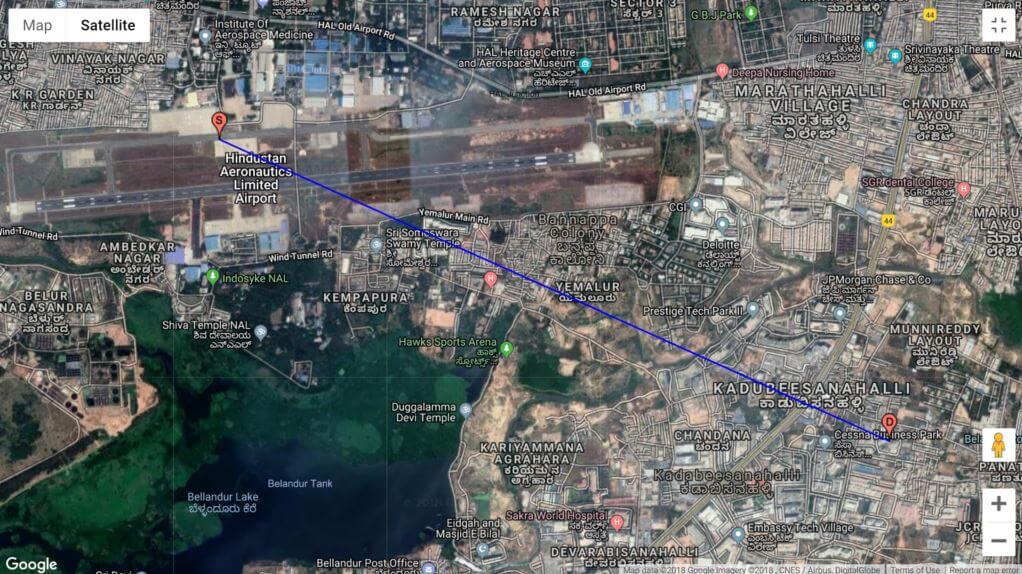
Over on RadioJitter author Arnav Mukhopadhyay has uploaded a post describing how to decode VOR into a bearing in real time using an RTL-SDR dongle. His post first explains how VOR works, and then goes on to show an experimental set up that he's created using a GNU Radio program. With the software he was able to decode an accurate bearing towards the VOR transmitter at a nearby airport.
Arnavs post is a preview of an academic paper that he's worked on, and the full paper and code is available by request on the radiojitter post. We've also seen on YouTube that Arnav has uploaded a video showing the software working in action, and we have embedded it below.
Bearing to nearby airport VOR transmitter determined with an RTL-SDR and GNU Radio.