Category: News

Avoiding Fake RTL-SDR Blog V3 Clones + 2021 Supply Chain Updates

As a follow on to the previous post on fake SDRplay units, we also wanted to provide some guidance on fake RTL-SDR Blog V3 clones which are on the market. We are starting to receive an increase in support requests for fake RTL-SDR Blog V3 units. Please be aware that we cannot support these devices, and most of them are missing key features like the bias tee and the TCXO despite advertising these features on the listing and writing on the dongle body. Also as mentioned below a good majority of them appear to have a defect and poor performance.

Please check our store at www.rtl-sdr.com/store for our official stores on Amazon, eBay, Aliexpress and this site. We also have links on our store to our official local resellers.

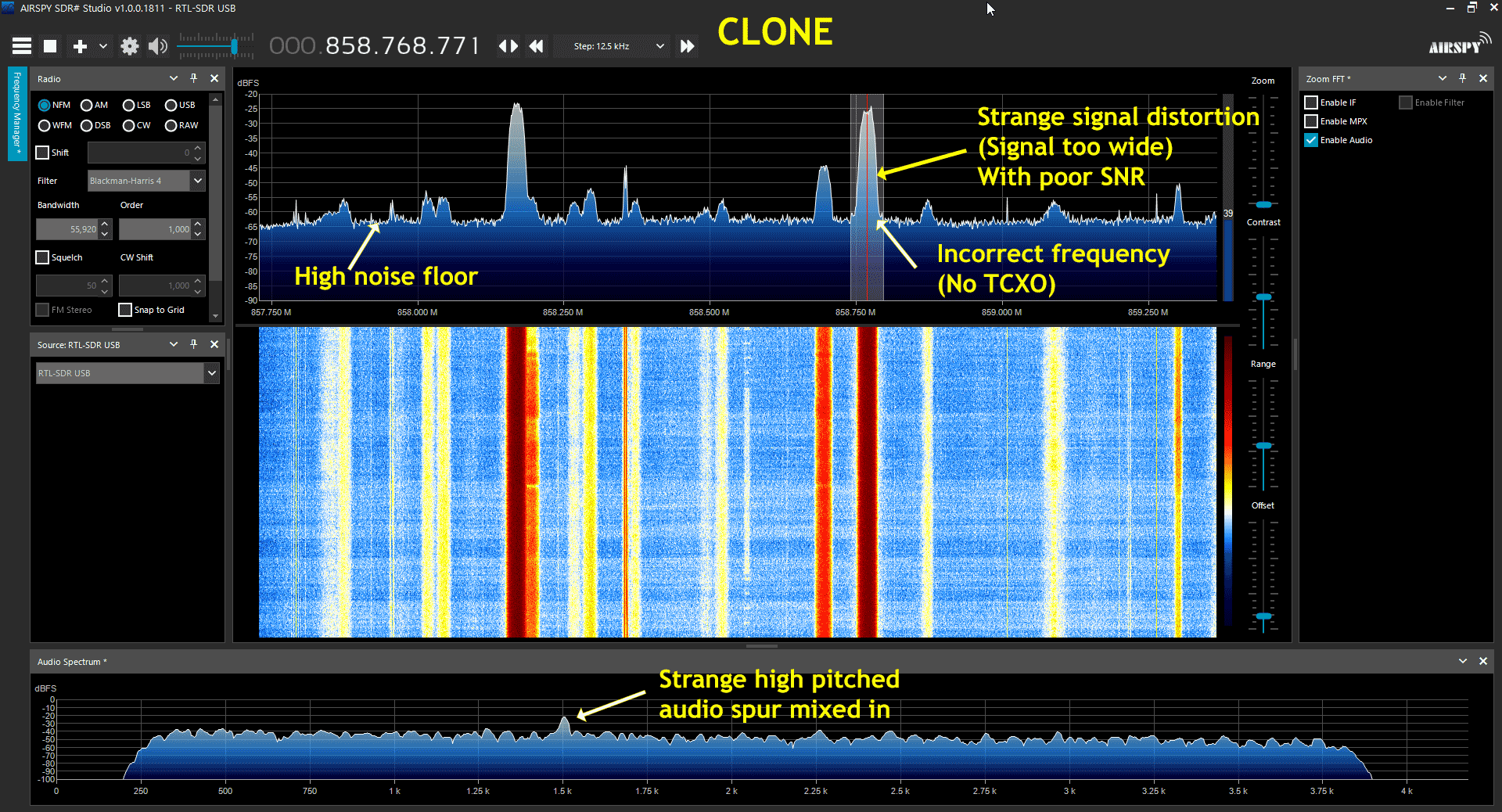
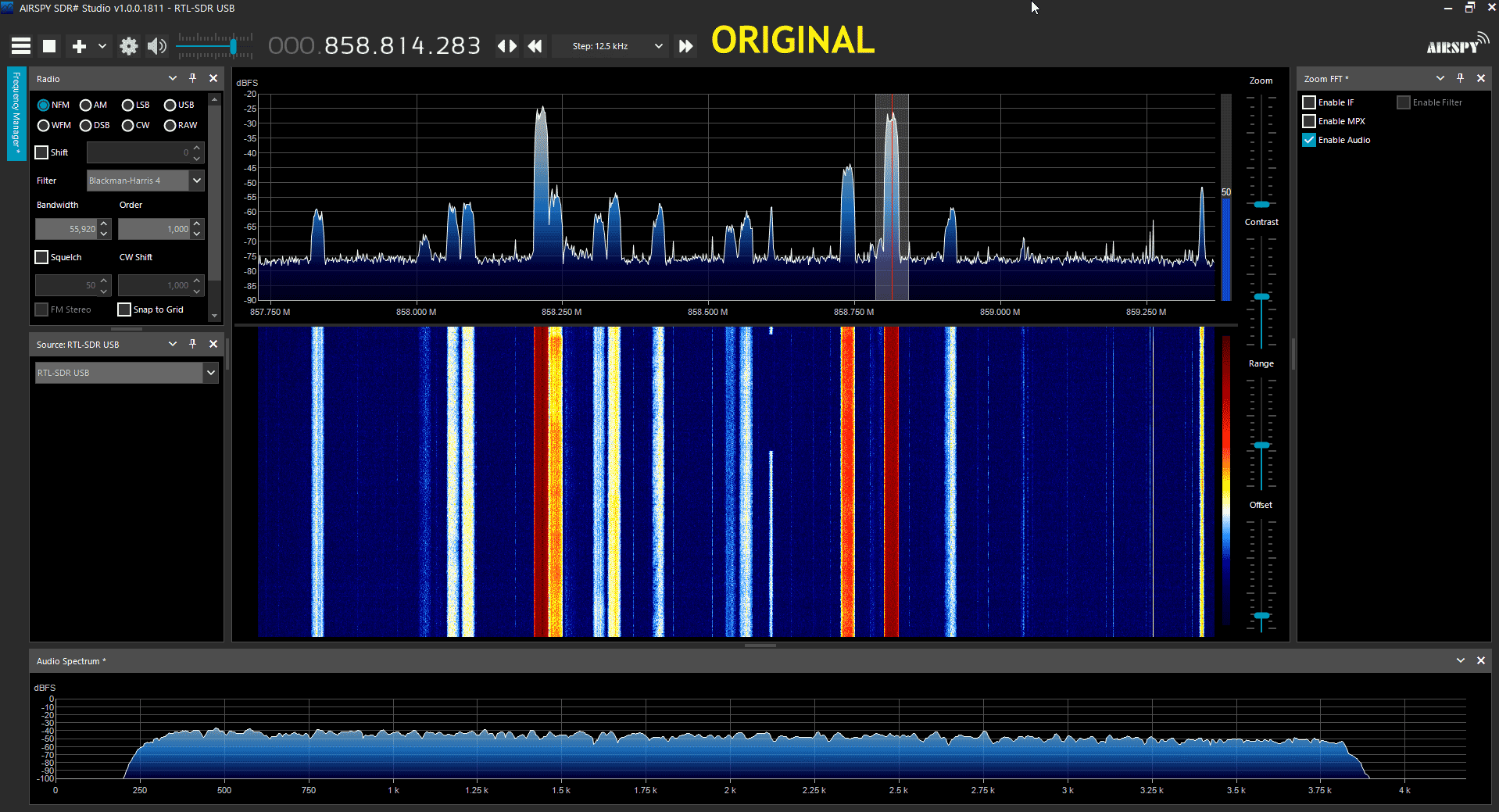
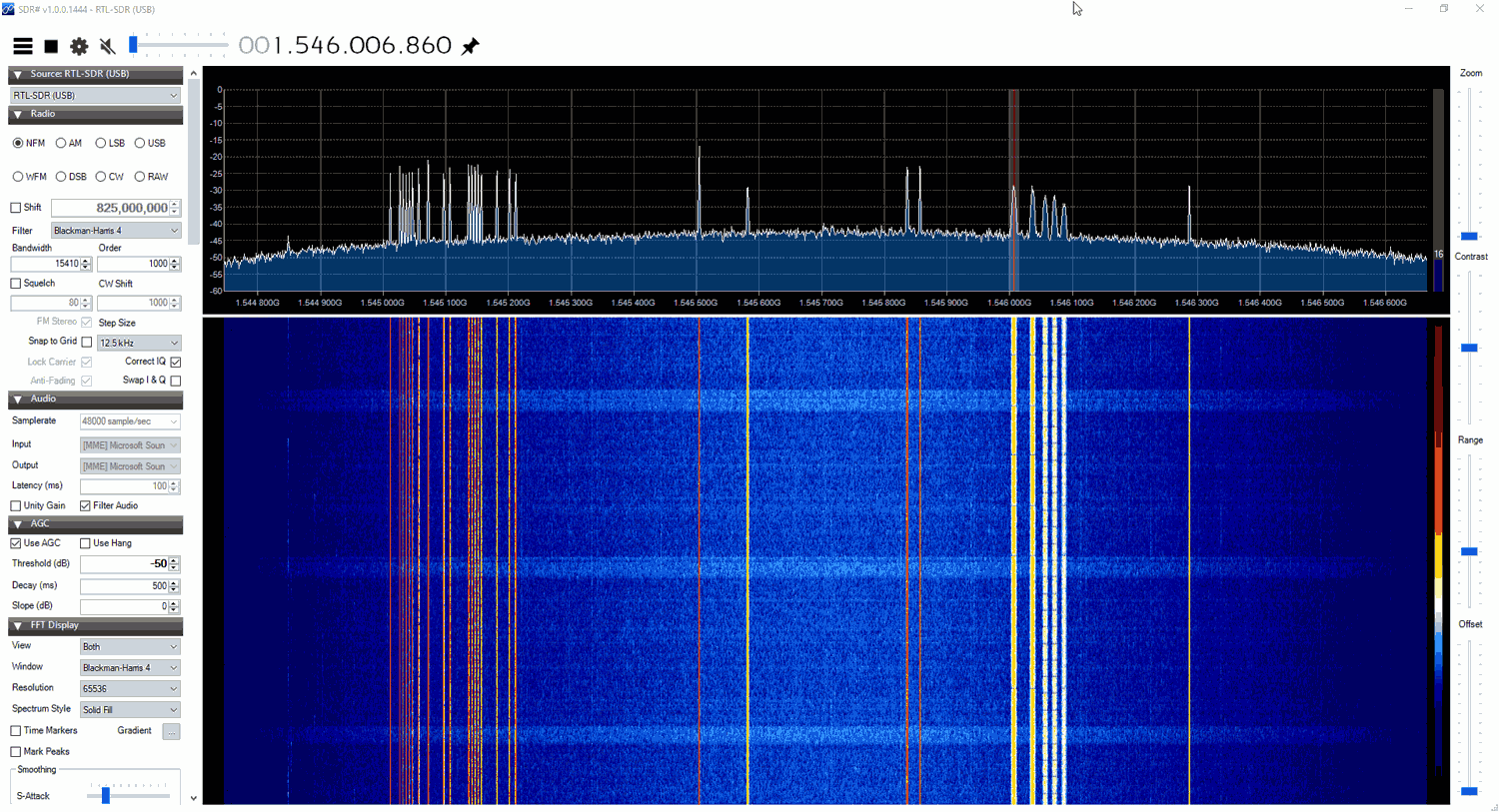
We note that we tested a few of the "RTL.SDR" clones, and all had a defect causing very strange distorted spectrums where the signals where wider than they should be, and some units introduced a mysterious high pitched whine into every signal.

Spectrum from clone
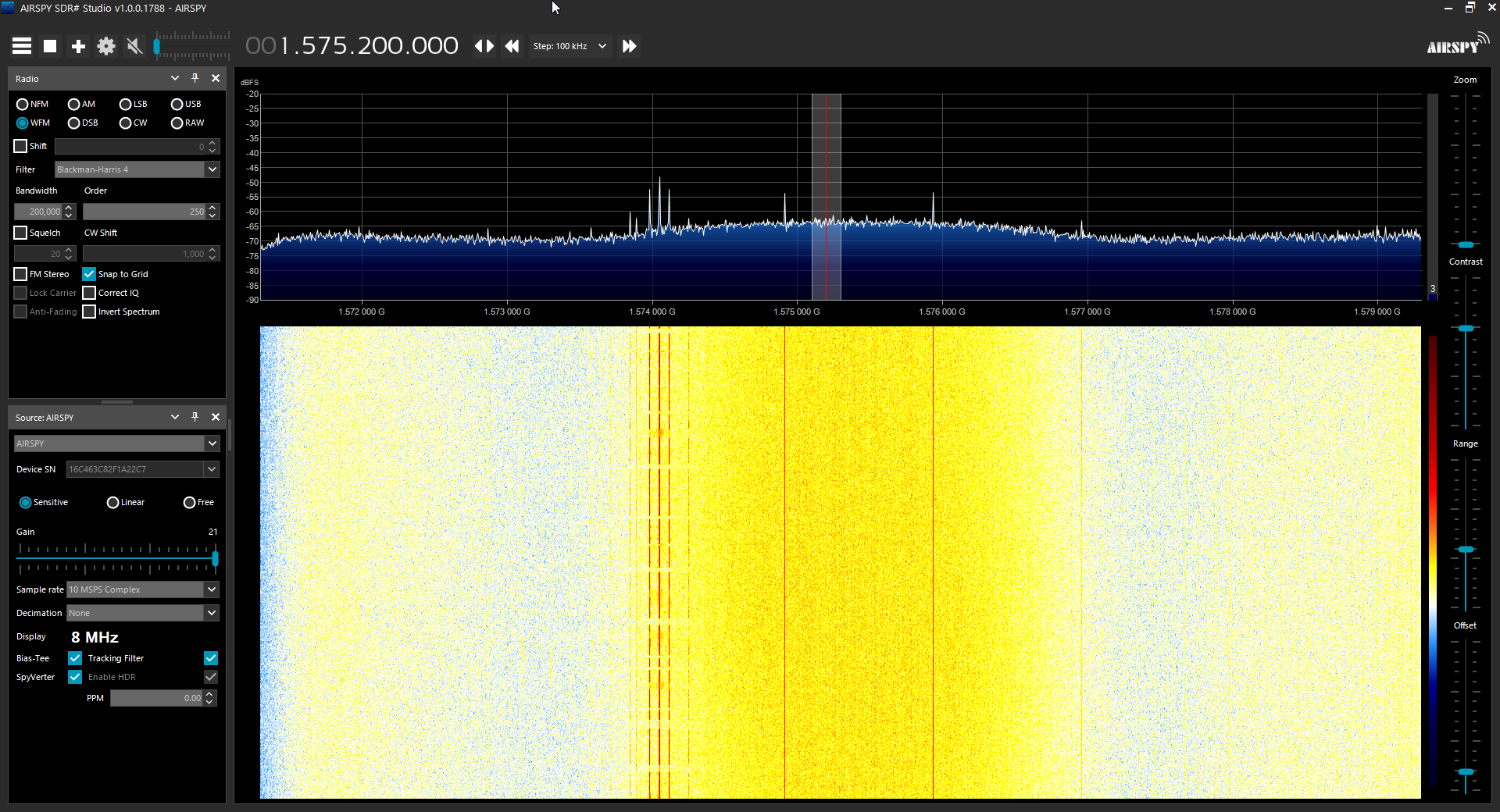
Spectrum of an original RTL-SDR Blog V3

To be clear, different brands of RTL-SDR are perfectly fine - no one owns the RTL-SDR hardware concept and we are not any more "official" than any other brand (although we believe we were the first to start designing and producing significantly improved units and the first to design in a factory fitted TCXO, SMA connector, bias tee, thermal pad, and a redesigned PCB for lower noise and less spurs).

However, these clones shown in the image above can be considered a sort of scam as they attempt to trick buyers into believing that they are purchasing our RTL-SDR Blog V3 units with false advertising and by copying the enclosure design, when in fact the PCB inside is something inferior.

2021 Supply Chain Updates

As many of you may know the world is currently dealing with a major shortage of many electronics parts so we wanted to provide an update on the supply chain for the RTL-SDR Blog V3.

In particular, the world is very short on temperature compensated oscillators (TCXO's), a critical component used in our units to ensure frequency stability. The TCXO shortage is actually much worse than other components as AKM, the Japanese semiconductor factory that produces a critical component for making TCXOs burned down late last year. There are alternative suppliers, however their pricing is many multiples higher, and they are also inundated with orders increasing lead times.

We believe that we have enough TCXO stock in storage to last us several more months, however we may run into a shortage in the later months of this year. After we expend our current TCXO stock, we expect to have TCXO again around December, with more RTL-SDRs being ready by January 2022. We want people to be aware, as during these months of no stock more clones may appear on the market. Most clones do not use TCXOs, and hence have poor frequency stability.

Also on a related note our Amazon stock levels may be a little spotty throughout this year as there are currently often delays with shipping and the ports.

We also note that other products that we resell on our store such as the FlightAware Prostick Plus and NanoVNA V2+ are also experiencing supply issues, and may not have stock for a while. Production of some of our other products like the L-band Patch are also delayed due to shortages. 

Due to the shortages component prices are also significantly increasing, and you may notice an increase in RTL-SDR pricing from us and competitors too. We hope that we will be able to reduce our pricing again once the global shortage is over, most likely around early next year.

Freenode ##rtlsdr IRC Channel Moving to Libera

The ##rtlsdr IRC Freenode chat channel will be moving to irc.libera.chat. However ##rtlsdr admins note that the Freenode channel will remain open for now. This move is in wake of the recent takeover drama surrounding Freenode, and the resignation of the majority of Freenode staff.

The ##rtlsdr IRC channel is where many RTL-SDR, software defined radio and RF enthusiasts hang out. You can join and idle with any IRC client, or a web client is available at https://kiwiirc.com/nextclient/irc.libera.chat/##rtlsdr.

A discussion about the move has also been opened on Reddit /r/rtlsdr.

Many other related project channels such as #gnuradio are also moving over to Libera.

Smart Meter Hacking Hack Chat to be held April 14 Noon Pacific Time

In the last post from a couple of days ago we posted about RECESSIM's YouTube series about smart meter hacking. Hackaday have noted that Hash, the security researcher behind the RECESSIM channel will be hosting a Hack Chat on April 14 noon pacific time. If you're unfamiliar with them, hack chats are live chat events where you can chat directly with an expert on a particular topic.

That electrical meter on the side of your house might not look like it, but it's pretty packed with technology. What was once a simple electromechanical device that a human would have to read in person is now a node on a far-flung network. Not only does your meter tote up the amount of electricity you use, but it also talks to other meters in the neighborhood, sending data skipping across town to routers that you might never have noticed as it makes its way back to the utility. And the smartest of smart meters not only know how much electricity you're using, but they can also tease information about which appliances are being used simply by monitoring patterns of usage.

While all this sounds great for utility companies, what does it mean for the customers? What are the implications of having a network of smart meters all talking to each other wirelessly? Are these devices vulnerable to attack? Have they been engineered to be as difficult to exploit as something should be when it's designed to be in service for 15 years or more?

These questions and more burn within Hash, a hardware hacker and security researcher who runs the RECESSIM reverse-engineering wiki. He's been inside a smart meter or two and has shared a lot of what he has learned on the wiki and with some in-depth Smart Meter Hacking videos. He'll stop by the Hack Chat to discuss what he's learned about the internals of smart meters, how they work, and where they may be vulnerable to attack.

Preorder Sale: Active L-Band 1525-1660 Inmarsat and Iridium Patch Back In Stock for $44.95

We have just received stock of our new L-band active patch antenna design. The antenna is designed for receiving RHCP L-band satellites such as Inmarsat, Iridium, GPS and other satellites that transmit between 1525 - 1660 MHz (please note that you cannot use it for weak signals that require a dish like HRPT or GOES). The antenna comes as a set with a large suction cup, 3M RG174 extension cable and bendable tripod to help with mounting. Preorder pricing is US$44.95 including free worldwide shipping to most countries shipped from our warehouse in Shanghai. At the end of this week (extended for one more week!) pricing will rise to the standard cost of US$49.95. Amazon stock will require time, and won't be in for at least 6+ weeks.

Please see our store to order the unit

Like our previous patch design, this is an actively amplified antenna as it contains a built in low noise amplifier which takes power from a 3.3 - 5V bias tee. This power is available from from our RTL-SDR Blog V3 dongles, and other SDRs like the Airspy, HackRF and SDRplay. It also has a built in SAW filter after the LNA to help reduce terrestrial interference.

Compared to the previous design the new patch is larger (175 x 175 mm) with higher gain and wider radiation pattern. This allows for much easier pointing of the antenna and for much stronger signals. The upper frequency range has also been extended to 1660 MHz from 1625 MHz. The included suction cup is also much larger allowing for the patch to point at more angles without being restricted by the window. The patch is enclosed within a new weatherproof plastic enclosure. 

L-Band Patch with Accessories
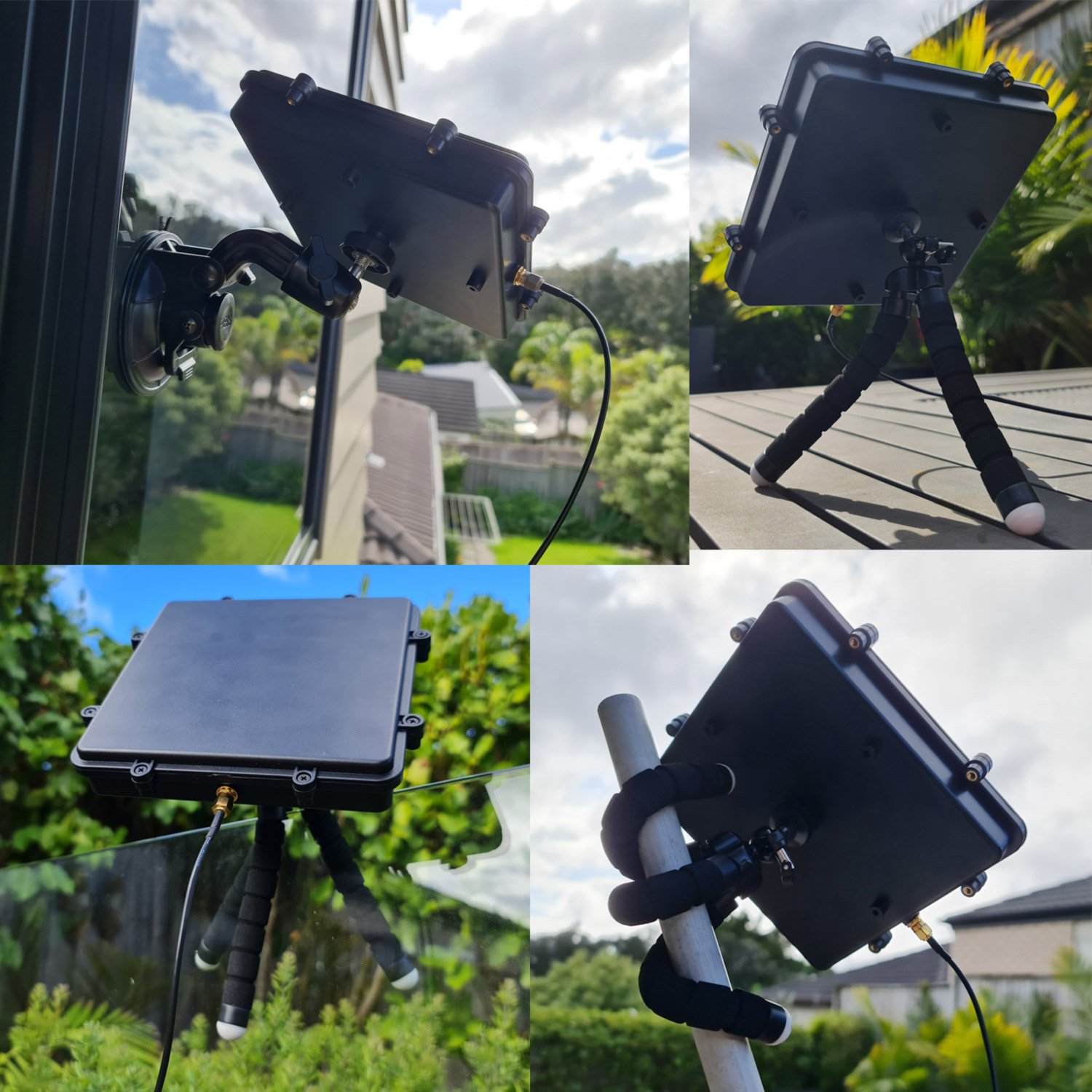
L-Band Patch Mounting Examples

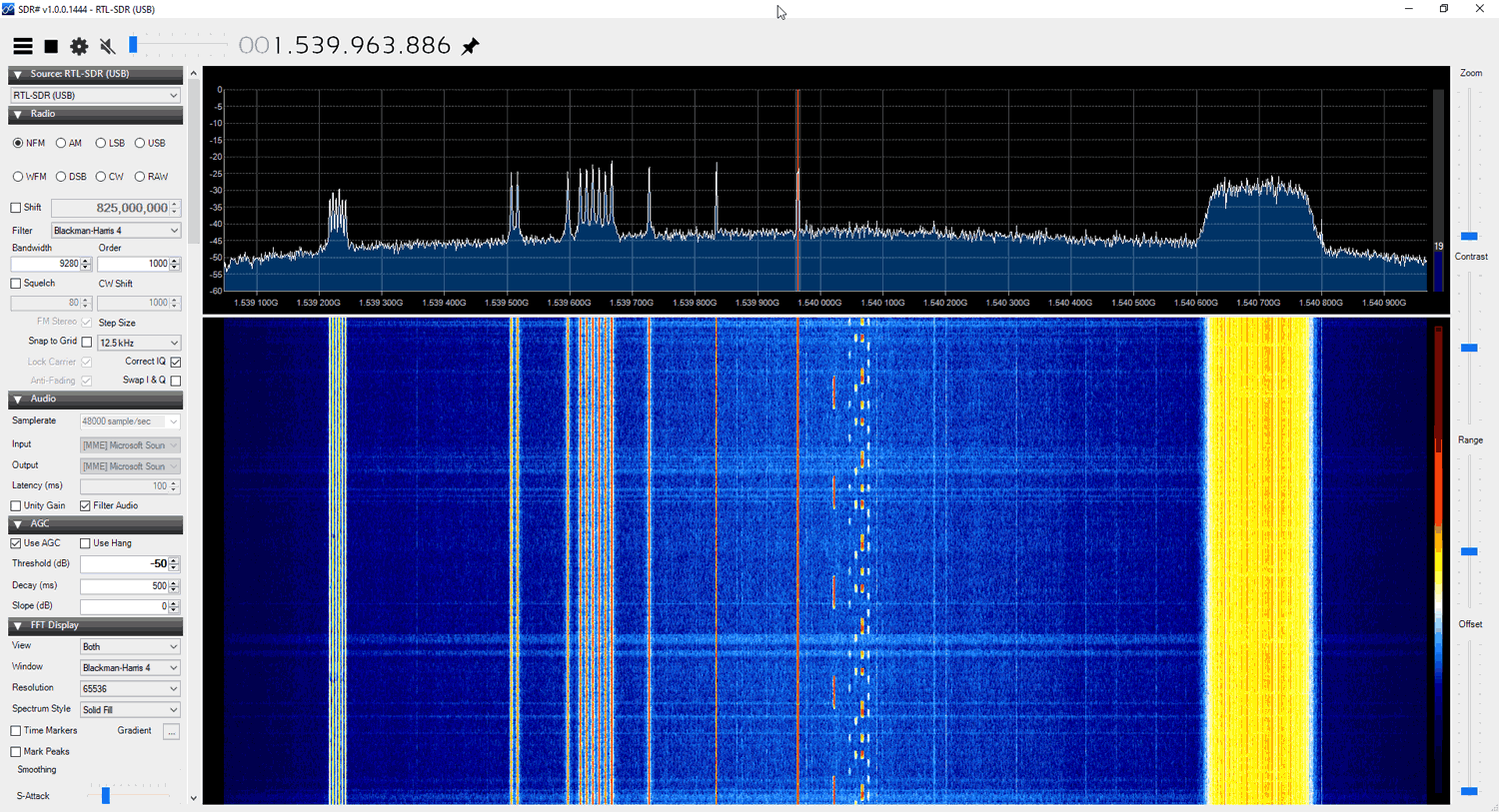
The screenshots below show the patch receiving various signals like AERO, STD-C and Iridium

Inmarsat Reception
Inmarsat Reception
Airspy Showing Patch Bandwidth
GPS "hump" visible

Usage Tips

  • The antenna should be used with one meter or more of coax cable. It may perform poorly if the RTL-SDR is placed right at the antenna due to interference. If you want to run very long cable, then low loss coax should be used. 
  • The patch can be used flat, or angled towards the satellite. Angling it towards the satellite will yield significantly higher gain.
  • If you have very strong cell phone interference in your area, try using the patch a bit lower to the ground, and use buildings to block the interfering signal.
  • If you want to mount this on a car roof, you can use a standard mag-mount camera adapter.
  • When using the suction cup, ensure you wipe down the cup and the window surface before sticking it on. Have a backup plan in case the suction fails.

What can you do with this antenna?

The R860 will replace the R820T2 – Same chip different name

We have recently received samples and tested the new R860 tuner chip from Rafael Micro. However, to be clear there is no change in terms of silicon or performance between the R820T2 and the R860. It is just a change in name signifying a minor change in the manufacturing chain which has allowed production of this chip to continue. In the future all R820T2 RTL-SDRs will transition to the R860 and we are just noting this now so that customers are not surprised if they see R860 markings on future dongles. We warn that some sellers of RTL-SDRs may attempt to market the R860 as an improvement, but we want to make clear that they are indeed identical to the R820T2.

Thank you to Rafael for continuing to support the SDR community, and thanks to all our customers!

The R860 tuner chip from Rafael

We note that Airspy will also be using the R860 in their products as per their latest tweet.

Testing Sharp Slicer: Multiple Spectrum Slices via SDR# with an Airspy SDR

Youssef the author of SDR# has recently released an update which adds a feature called "Sharp Slicer". This feature allows Airspy SDR users to open multiple instances of SDR#, each able to tune to a seperate signal within the currently tuned frequency range of the SDR. This is somewhat similar to the old multi-VFO plugin from rtl-sdr.ru, however the advantage of Slicer is that you can have seperate spectrum and waterfall graphs for each signal. This could be especially useful for monitoring multiple narrowband HF modes with an Airspy HF+ Discovery. 

To use Sharp Slicer you must have an Airspy SDR, be it an Airspy Mini/R2 or HF+/Discovery. Unfortunately it will not work with RTL-SDR or other SDRs. Once the SDR is running in SDR#, simply press the "+" button on the top left to open a new Slicer instance. It seems possible to open as many instances as you want, and probably the only limitation is your CPU. On our Intel i7-6700 we tested up to 8 instances running at the maximum bandwidth of an Airspy Mini, and the SDR# CPU utilization was only at 50%.

A nice touch is that you can also see the location of each VFO on the master SDR# instance, and the color can be changed on each Slicer instance.

Over on Twitter @ea3ibc has also been testing:

ARRL/TAPR Digital Communications Conference: Held Online for Free from September 11-12

Just a few days prior to the 2020 GNU Radio conference, ARRL and TAPR will hold their yearly Digital Communications Conference (DCC) online. DCC is a yearly conference with many SDR and RF related talks, with a focus on ham radio science. The talks will be live streamed on YouTube for free, however you can register for $30. Registration will grant you the ability to ask questions or chat via Zoom, and includes access to the papers. The YouTube live link has not been provided yet, so keep an eye on the DCC web page for the announcement.

The schedule of talks can be viewed here, and below we're listing the talk titles.

  • HamSCI PSWS Overview/Status
  • HF Propagation Measurement Techniques and Analyses
  • Early Results of Festival of Frequency Measurement Experiment & June 21, 2020 Asian Eclipse
  • Frequency Estimation Techniques
  • LC-PSWS Engineering Status
  • PSWS Control Software and Database
  • Evaluation of uBlox GPS Receivers Performance
  • TangerineSDR Hardware Update
  • TangerineSDR VLF Module (A new module!)
  • Characterizing and Optimizing the behavior of a Ground-based Magnetometer for Ionospheric Space Weather Observations
  • Mobile Mesh Tower Fleet
  • Design Tips for QSD Down Conversion SDR Designs
  • Packet Compressed Sensing Imaging (PCSI: Robust Image Transmission over Noisy Channels
  • Continued Lessons from the RF-Seismograph
  • Current Status Report of FX.25 KISS TNC Development
  • APRS Performance and Limits
  • Digital Signal Processing: I2S in ESP32
  • Aids to the Presentation and Analysis of WSPR Spots: TimescaleDB Database and Grafana
  • QMesh: A Synchronized, Flooded Mesh Network Protocol for Voice
  • GaN based RF Power Amplifier Design
  • The AERO/VISTA Twin Small Satellite Project
  • ENAMS (Electromagnetic Noise Area Monitoring System)
  • PSWS Antenna Designs
  • RF Machine Learning Applied to doing Cognitive Radio on HF
  • Improved Layer 2 Protocol
  • FreeDV 700D and 202
  • Forward Error Correction and Pictures from Mars

Reminder: Register for the GNU Radio Online Conference on September 14-18

This is just a reminder that the 2020 GNU Radio Conference will be held online in a few days time starting on September 14 and ending September 18 2020. Viewing the live talks and participation in the discussion forums is free for everyone around the world, however you must register first via their site. The paid $50 workshops are all currently booked however you can go on the waiting list in case more spaces are opened.

GNU Radio Conference (GRCon) is the annual conference for the GNU Radio project & community, and has established itself as one of the premier industry events for Software Radio. It is a week-long conference that includes high-quality technical content and valuable networking opportunities. GRCon is a venue that highlights design, implementation, and theory that has been practically applied in a useful way. GRCon attendees come from a large variety of backgrounds, including industry, academia, government, and hobbyists.

GRCon20 will be held starting September 14, 2020 online as a virtual event. The organizing team is hard at work to create a fun and interactive experience.

Our keynote speakers include: Becky Schoenfeld W1BXY, managing editor of QST magazine, Oona Räisänen [ windytan ] hacker of signals and computer programmer, and Jim St. Leger, Director Open Source, Intel.

With an annual program that has broad appeal, GRCon attracts people new to Software Radio just looking to learn more, experts that want to keep their finger on the pulse & direction of the industry, and seasoned developers ready to show off their latest work.

Titles of the talks scheduled are shown below. The full list of talks, workshops and descriptions can be found here

  • Oona Räisänen - Video Decoding Adventure
  • Introducing OpenCPI as an Infrastructure for GNU Radio and GNU Radio Companion
  • How Strong is my SDR Signal?
  • Introducing the Radio Resiliency Competition
  • Are We Alone? How GNU Radio Can Help Us Find ET
  • A Conversation with the Ettus Research / NI SDR R&D Team
  • Enabling Performance Portability of GnuRadio on Heterogeneous Systems
  • Architecture Update - Marcus Mueller
  • Becky Schoenfeld - Keeping Ham Radio Alive and Well: ARRL’s Education Initiatives
  • ESA's OPS-SAT Mission: Powered by GNU Radio
  • Designing a Narrowband Radar using GNU Radio and Software Defined Radio for Tomography and Indoor Sensing
  • The De-Swiggification of GNU Radio
  • Exploring RFNoC with the UHD Python API
  • Teaching the Principles of Time Delay Spectrometry Ultrasound with GNU Radio
  • Ultra-cheap SDR Digital Television Transmission: ISDB-T with an osmo-fl2k and an RTL-SDR
  • Software defined radio based Synthetic Aperture noise and OFDM (WiFi) RADAR mapping
  • Community Continuous Integration (CI) for GNU Radio
  • RadEOT: The Radio Education Outreach Tool
  • Software defined radio based Global Navigation Satellite System real time spoofing detection and cancellation
  • SDR to GPU Peer-to-Peer Data Streaming for Cognitive Radar and EW Use-Case
  • Security Analysis of Zigbee Networks with Zigator and GNU Radio
  • Using GNU Radio in Amateur Radio
  • GR Wiki Block Docs: What's Important?