Category: News

Nils Reviews the RX-888: A Sub $200 16-Bit 32 MHz Bandwidth SDR

A lot of affordable Chinese clone SDRs have been coming onto the market recently, and the RX-888 is one of the most interesting. The RX-888 appears to be an improved clone of the RX-666 which in turn is a clone derived from Oscar Steila (IK1XPV)'s BBRF103 original open source design.

The RX-888 is based on the LTC2208 16-bit ADC chip which is capable of streaming the entire 1 kHz to 32 MHz frequency range to the PC over USB 3.0 with direct sampling. Frequencies from 32 MHz to 1.8 GHz can also be received via an R820T2 tuner which is on the board (the same tuner used in most RTL-SDRs). Due to the bandwidth restrictions of the R820T2 silicon, the bandwidth above 32 MHz is restricted to 8 - 10 MHz. The main change when compared to the RX-666 appears to be that there is an LNA which improves medium wave and small antenna performance which was a problem on the RX-666. The RX-888 also adds several heat sinks to the enclosure, as excessive heat generation of the LTC2208 ADC appears to also be an issue.

The RX-888 Software Defined Radio

Recently Nils Shiffhauer (DK80K) wrote up a great review of the RX-888. In the review he covers the specs, shows a few screenshots of some signals he's received and also provides multiple audio samples of signals received.

The RX-888 is currently available on marketplace sites like Aliexpress and eBay priced at around US$180. In the past SDRs that could receive the entire HF band at once were rare, with the only affordable SDR with this capability being the KiwiSDR. So it is good to see that we may now be entering a stage of new advancement in affordable SDRs.

One thing to note is that this design can be considered a clone. However the original design by Oscar is open source and from this post on his blog he seems happy and accepting of the clones.

We note that we have ordered a unit and will be uploading a review once we test it.

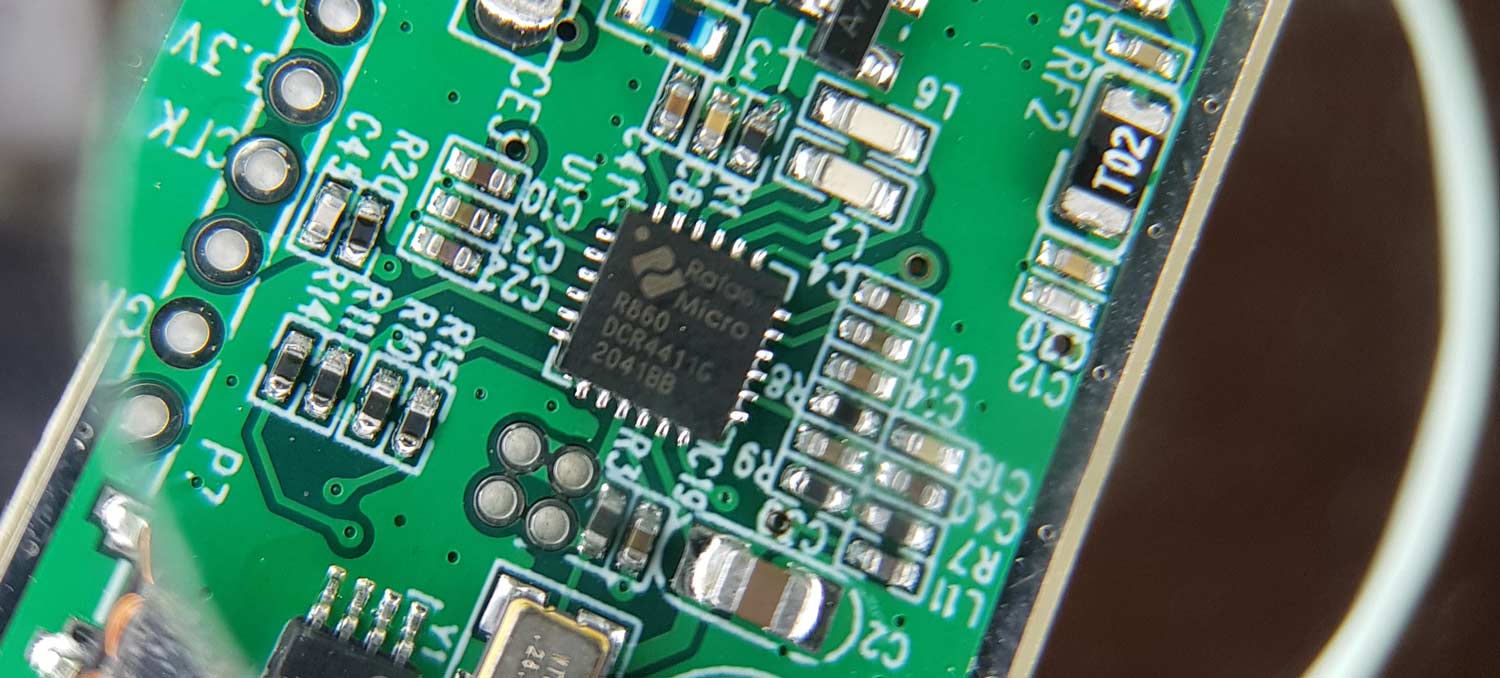
The RX-888 PCB

The NEWSDR 2020 Conference will be held Online on 12 August

The 10th New England Workshop on Software Defined Radio (NEWSDR 2020) will be held online this year due to the ongoing pandemic. It is due to be held on 12 August 2020, 9:00 AM (US Eastern) – 5:00 PM (US Eastern). Registration is free, however you do need to register before 9 August 2020 in order to receive login details.

The 2020 New England Workshop on Software-Defined Radio (NEWSDR’20) is the tenth installment of an annual workshop series organized by the Boston SDR User Group (SDR-Boston). Given the continued global health emergency of the COVID-19 pandemic, this year’s event will be safely hosted online using a variety of Internet technologies such as Zoom, YouTube Live, and Slack. Although this will be a virtual event, the NEWSDR 2020 organizers are committed to achieving the primary goal of this workshop by providing a forum that enables individuals working on SDR-related projects within the New England area to get together, collaborate, and introduce SDR concepts to those interested in furthering their knowledge of SDR capabilities and available resources. NEWSDR 2020 welcomes both experienced SDR enthusiasts as well as individuals who are interested in getting started with SDR.

This years talks include a Keynote by Dr. Tom Rondeau of DARPA, “Spectral Coexistence: What is its future in the US?”, “A Software-Defined Wireless Communications Network Research Infrastructure for the Internet of Things (IoT)”, “Open-Source Software in Software-Defined Radio” as well as several community and poster talks.

Videos of previous NEWSDR conference talks can be found listed on their website.

NEWSDR 2020 to be held online

Metal Case Upgrade for the SDRplay RSP1A back in Stock

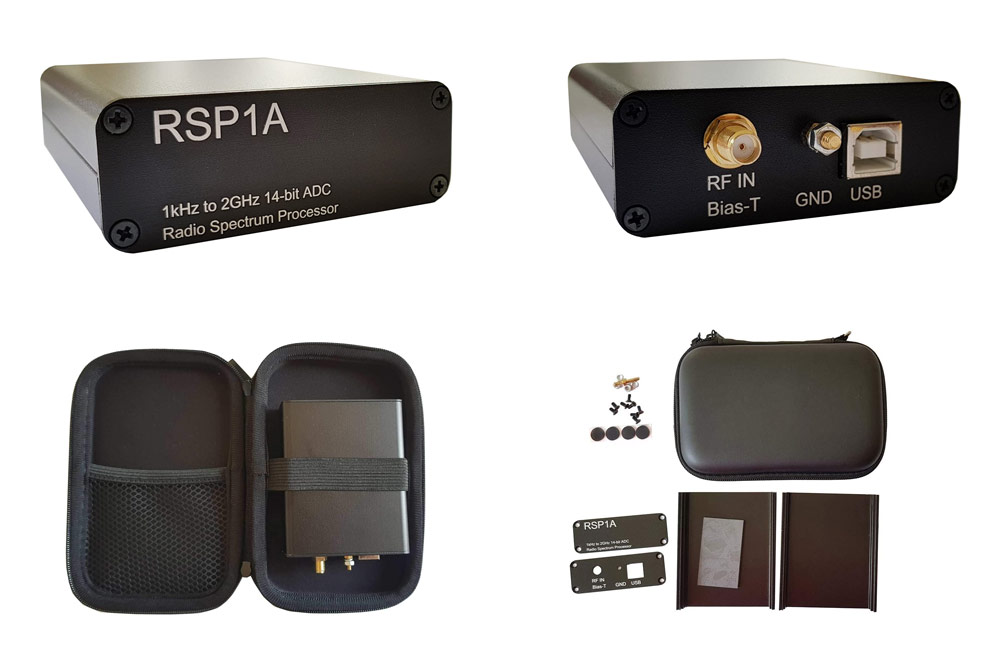
Our metal case upgrade kit for the SDRplay RSP1A software defined radio is now back in stock in our store and will be ready to ship out within the next couple of days. This is a premium aluminum metal upgrade enclosure for the SDRplay RSP1A. Helps block RF interference and protects the RSP inside the sturdy enclosure. This will be the final batch made of this product, so if you are interested please order before stock runs out for good.

The kit includes 1x black aluminum metal enclosure with two labelled side panels, 1x black semi-hardshell carry case, 1x thermal pad to keep the RSP1A cool and mechanically stable inside the enclosure, 1x accessory set including enclosure screws, GND lug bolt set and 3M anti-slip rubber feet.

RSP1A Metal Case Upgrade

NanoVNA V2 Now Readily Available for $60 + US Stock Available at R&L

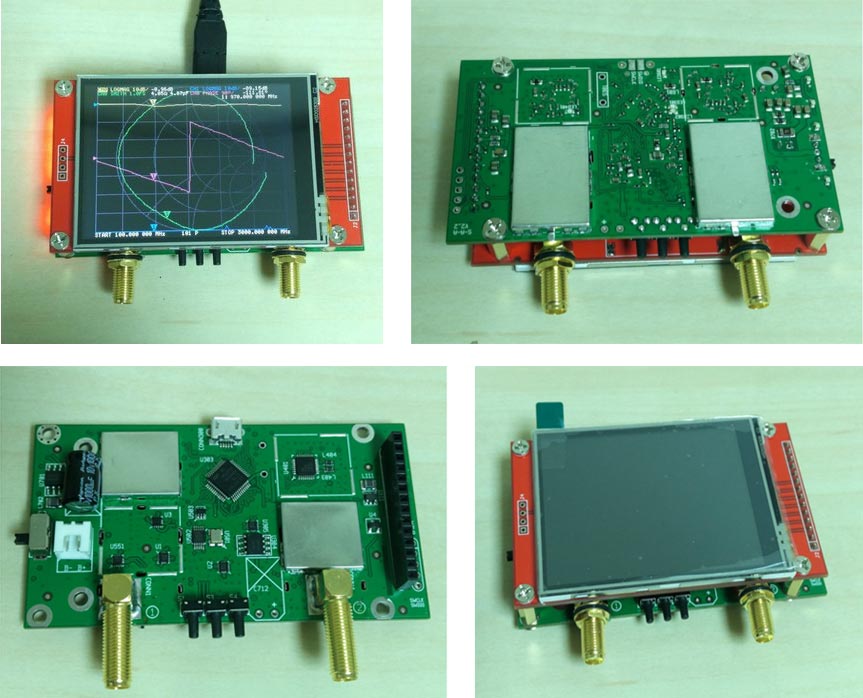
The much awaited NanoVNA V2 is now readily available for around $60 + shipping from the Tindie store. Shipping is noted to begin on June 30th due to a public holiday and you must agree to possible pandemic delays, although feedback from earlier customers indicates that most countries appear to be receiving the packages in good time. You can also add a calibration kit for $10 extra, or a calibration kit and acrylic enclosure for $14 extra.

For US customers R&L Electronics have them in stock in "high end" for $59.95 and "low end" for $54.95 options. The high end option appears to have higher quality cables included. UPDATE: It has been brought to our attention that the stock at R&L is actually from a "clone" manufacturer and the clones do not support the original developer.

We note that the NanoVNA V2 is an open source project created by OwOComm, a research organization with a mission to further "intellectual communism". Therefore any factory is free to produce their own version from the designs, and hence several other versions have already been showing up on marketplaces like Aliexpress/eBay. However, for now it is probably safer to buy directly from the original manufacturers on the Tindie store. This is because according to the developer the quality of the "unofficial" clones that are showing up on Aliexpress and eBay is not yet known. The official version also supports the original developer and funds future software development.

NanoVNA V2 Available for Sale on Tindie

A Vector Network Analyzer (VNA) is an extremely useful tool for radio hobbyists as it allows you to tune antennas, filters, and measure cable loss among other applications. Until recently a VNA would cost hundreds if not thousands of dollars. However, the original NanoVNA brought expensive VNA capabilities to the masses with its low $40 pricing. But the original design was limited to a maximum frequency of only 900 MHz. The new V2 design pushes this maximum frequency up to 3 GHz officially, and unofficially up to 4.4 GHz with reduced performance. It also improves on overall dynamic range and maintains the affordable price.

Trump Tweets about Pushed Buffalo Protestor Scanning to Jam Police Radios with an RTL-SDR and Android Phone

In political news 75 year old Buffalo protestor Martin Gugino has been generating controversy due to a video of him being pushed to the ground by a police officer, then subsequently lying motionless while bleeding from the head and being ignored by other officers.

Recently US president Donald Trump tweeted about a video news report by "One America News" (OAN) indicating that Gugino may have been trying to scan police with a "capture scanner". Whilst talking about the capture scanner they show an image of an RTL-SDR dongle and Android phone running the SDR Touch software. OAN go on to say that these capture scanners are designed to "skim microphones" in order to capture police communications, and are a tool commonly used by Antifa. Credit to @hackerfantastic for initially tweeting about the RTL-SDR being featured in the video.

Trump's tweet reads "Buffalo protester shoved by Police could be an ANTIFA provocateur. 75 year old Martin Gugino was pushed away after appearing to scan police communications in order to black out the equipment @OANN
I watched, he fell harder than was pushed. Was aiming scanner. Could be a set up?".

We're not entirely sure where this theory from OAN came from as there is no need to get so close in order to listen to police radio communications, since if unencrypted, they can be listened to from anywhere in the city. It's also unclear as to what microphones police would be using, and how these could be "skimmed" with an RTL-SDR. As for blacking out the equipment, an RTL-SDR cannot transmit so it would be impossible to use to jam the radios. An illegal jammer could be used after scanning, but police frequencies are already well known anyway, and there would be no need to scan for them so close even if low power comm links were used.

The video also shows that he appears to be filming police badge numbers with his phone before he was pushed, so it is unlikely that he was using an RTL-SDR and running SDR Touch at the same time as the camera app. No cables, antenna or dongle can be seen in the video either.

In the past we have seen a Slovenian researcher almost jailed for performing University research with an RTL-SDR, and a UN expert arrested for possessing an RTL-SDR in Tunisia. So this is a timely reminder to be careful as police and media do not always understand what an SDR is.

EDIT: Please note that this is not a political post or blog. We only post it to highlight the severe lack of understanding that can surround SDR and our technical hobbies. Comments inciting violence against protestors or anyone are NOT OK, and will be removed. Please keep discussions technical and civil in nature.

OAN indicates that Martin Gugino may have used an RTL-SDR on police
OAN indicates that Martin Gugino may have used an RTL-SDR "capture scanner" on police

A Self-Executable version of TempestSDR is now Available

TempestSDR is an open source tool made by Martin Marinov which allows you to use any SDR that has a supporting ExtIO (such as RTL-SDR, Airspy, SDRplay, HackRF) to receive the unintentional signals radiated from a screen, and turn that signal back into a live image. This can let you view what is on a screen through a wall without using any physical cables.

We first posted a demonstration of TempestSDR back in 2017 when we were finally able to get it to compile. Compiling the software took a fair amount of work for those without experience, and even running it was a chore. However, getting it to work is worth it as you can do some really interesting demonstrations.

However these problems are over and recently Erwin Ried @eried has made a self-executable version of TempestSDR. This means that no compilation, java installs, mingw or extra dlls are required to get the program to work as now it's just an exe that you can run. You will still need the appropriate ExtIO dlls for your SDR. The video in his twitter post shows it working with a HackRF.

OpenEar Updated to Version 1.6

The RTL-SDR compatible multi-mode digital decoder OpenEar has recently been updated to version 1.6. The latest version currently supports the decoding of FM/AM, TETRA, DMR, Pocsag and ADS-B. New features include a zoomable waterfall and other GUI and functionality improvements. The changelog reads:

6/4/2020
version 1.6.0
- saving last settings
- waterfall
- zoom on spectrum and waterfall with mouse wheel
- better list placement (pocsag & ads-b)
- wav(I/Q) loading (only 1024000 Sample/sec)
- voice volume & mute button
- spectrum range and offset
- rtl gain and correction (ppm)
- top menu
- frequency list
- some DMR improvement on SYNC detection
- solved center frequency issue (DC problem)
- and other few UI improvements

OpenEar Version 1.6
OpenEar Version 1.6

OpenWebRX directory SDR.hu has now shut down

OpenWebRX was first developed by Andras Retzler and is and open source program that allows users to make RTL-SDRs, KiwiSDRs and other SDRs accessible over the internet via a web browser. Recently the OpenWebRX public directory at SDR.hu, also run by Andras, has been closed. In the past we've posted about Andras' decision to move on from OpenWebRX and how sdr.hu went from public access to requiring an amateur radio callsign to access. Now Andras has decided to take the final step and close sdr.hu for good. The sdr.hu website now reads:

The SDR.hu project has been finished

I'd like to say a big thanks to everyone who joined my journey with this project!

I hope you had a good time listening on the site, and learnt some things about SDR. The purpose of this site was to provide a technological demonstration for amateur radio operators about Software Defined Radio, and I hope this goal has been reached. As this website was a one-person hobby project, with my tasks and responsibilities growing, and my focus moving to other projects at which I hope to make a greater positive impact, I'm unable to further develop SDR.hu and protect it from abuse.

Furthermore, I think this site has some good alternatives now. Nevertheless, in my opinion amateur radio receivers should be shared with strict access control in the future.

If you have more questions, feel free to consult the FAQ.

73!

Andras, HA7ILM

We want to note that although KiwiSDR makes use of OpenWebRX, the KiwiSDR project is not affected by this closure as they use a custom fork of OpenWebRX, and there is an official KiwiSDR directory at kiwisdr.com/public, a map version at map.kiwisdr.com, and an SNR score directory at snr.kiwisdr.com. Unfortunately the one major drawback is that these directories do not list public RTL-SDRs or other SDRs running OpenWebRX as only sdr.hu did that.

Also, although Andras has stopped development on OpenWebRX, a fork of the project led by Jakob Ketterl (DD5JFK) is alive and well at github.com/jketterl/openwebrx and openwebrx.de.

OpenWebRX Screenshot