Category: RTL-SDR

Skies-ADSB Updated to V2.0.3

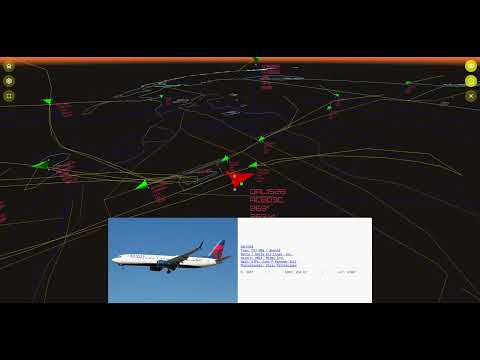
Back in 2022, we first posted about the release of skies-adsb, a browser-based app that uses ADS-B data from an RTL-SDR to provide a 3D view of the air traffic around your area. Recently skies-adsb has been updated from version 1 to version 2, bringing with it several improvements.

The new improvements include:

  • Generate custom GeoJSON map layers from Natural Earth, FAA, and OpenStreetMap data
  • Aircraft trails visualization
  • Enhanced map renderer with multi-layer vector support:
    • Aerodromes
    • Airspaces
    • States / Provinces
    • Counties
    • Urban areas
    • Roads
    • Rivers
    • Lakes
  • New aircraft follow camera controls

The YouTube video below by the author demonstrates some of the new features.
skies-adsb v2 release - RTL-SDR ADS-B 3D plane tracking app

Saveitforparts Checks out the Discovery Dish

Over on his YouTube channel 'saveitforparts,' Gabe has uploaded a video checking out and reviewing our Discovery Dish product that we successfully crowd-funded on CrowdSupply back in December 2023.

Discovery Dish is designed as a low-cost way to dive straight into backyard satellite experiments, including receiving L-band and S-Band weather satellites as well as Inmarsat satellites. It also offers an easy entry into making galactic Hydrogen line observations.

The dish is a 70cm prime focus dish, that can easily be broken down into three parts for easy storage and transport. The feeds are fully integrated, meaning that the feed antenna, LNA, and filtering are all in one unit and built into a waterproof enclosure. This means there is no need to purchase individual components and figure out waterproofing.

In his video, Gabe unboxes the Discovery Dish, builds it, and uses the L-band feed to receive a few images from GOES 16, Meteor M3, Meteor M4, and METOP weather satellites. He goes on to successfully test reception with the S-band feeds on NOAA weather satellites, before testing out the Inmarsat feed and successfully receiving signals. Finally, Gave notes that he hopes to test out the Hydrogen Line feed in a future video.

Checking Out The Discovery Dish - A Simple & Easy-To-Use Satellite Antenna For Everyone!

Video on the Basics of SDR for Hackers

On YouTube, An0n Ali posted a video providing a good overview of the basics of using a software-defined radio for hacking. The video introduces RTL-SDR and how it can be used to listen to unencrypted communications, the HackRF and how it can be used for replay and jamming attacks, and the Flipper Zero, noting how it is a more beginner-friendly entry into the world of RF security.

SDR Basics for HACKERS!

A USB-C Mod for RTL-SDR Blog V3/V4 Dongles

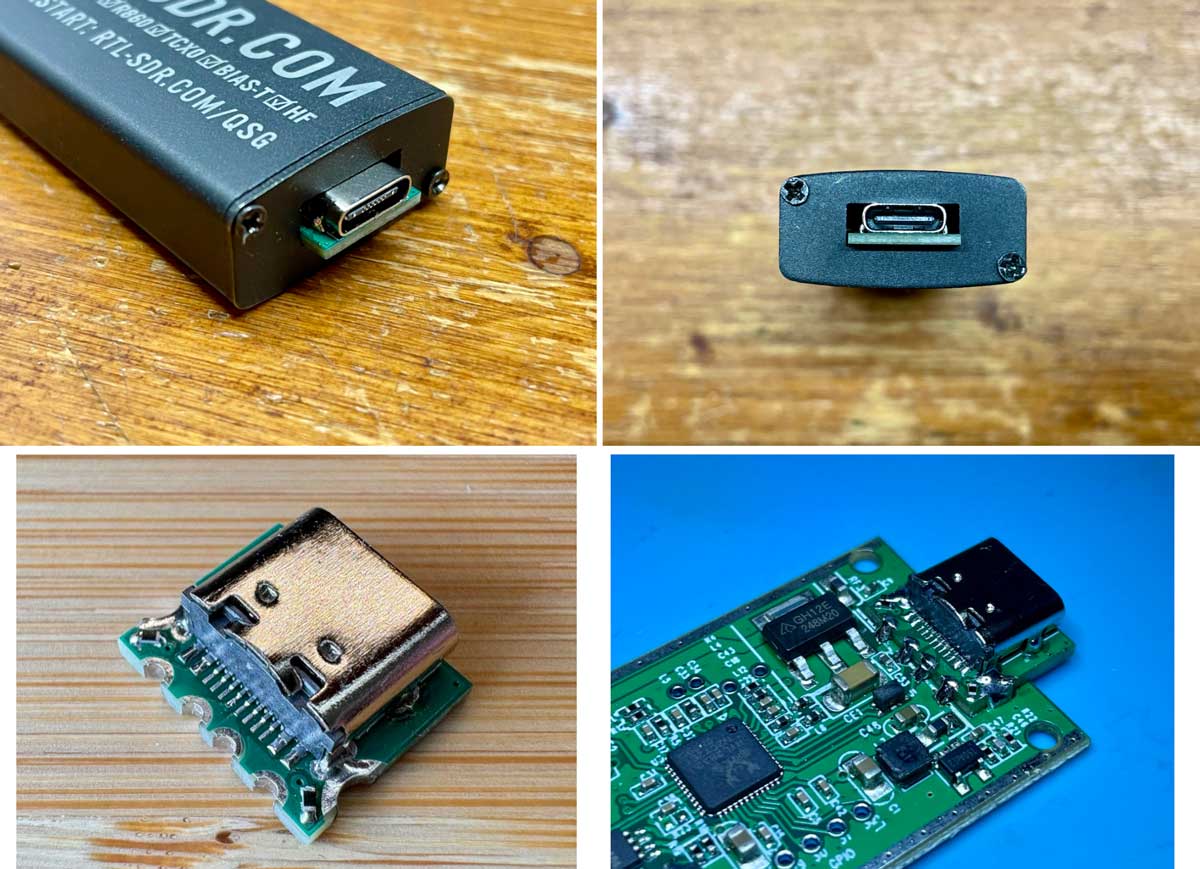
Over on GitHub, umbertoragone has uploaded some schematics for a USB-C modification he's made for RTL-SDR Blog V3 and V4 dongles. The modification removes the stock USB-A plug on the dongle, and instead replaces it with a USB-C connector mounted on an adapter PCB.

The repo contains all the gerbers, BOM, and assembly details required to replicate the modification. He notes that he is also selling a pre-made USB-C adapter board over on his Tindie or Lectronz store for US$4 (currently out of stock).

Let us know in the comments if you would be interested in seeing an official USB-C version of the Blog V3 and V4 line of dongles. Previous polling has indicated that USB-A is still the preferred choice by a wide margin, but attitudes may have changed over the years.

A USB-C Modification for RTL-SDR Blog V3 and V4 dongles.

Locating an Intermittent Interferer with a KrakenSDR

Over on YouTube Thomas Brinkoetter has uploaded a video demonstrating his experience with the KrakenSDR, and how he used it to find an intermittent interferer that he set up for a test. The video was prepared to support the RF Interference and Mitigation class at the IWCE trade show Las Vegas March 17 and 18th 2025.

If you weren't already aware, KrakenSDR is our 5-channel coherent radio based on RTL-SDRs, and it can be used for applications like radio direction finding. It can currently be purchased either directly from our krakenrf.com website, or from Crowd Supply or Mouser.

The test involved his wife keying up a repeater for one second out of every 15 seconds. In the video Thomas was able to successfully locate the transmitter with an antenna array and KrakenSDR mounted in his vehicle.

Locating an intermittent interferrer with the Kraken SDR

Saveitforparts: Hacking an Motorized RV Satellite Dish for Tracking LEO Satellites

Over on the saveitforparts YouTube channel, Gabe has uploaded a new video showing how he's hacking an old motorized Wineguard RV satellite dish for tracking low earth orbit satellites, such as the NOAA and Meteor weather satellites as well as the US Military's DMSP system.

The motorized RV satellite dish was originally intended for tracking TV satellites, but by connecting to the serial port on the control unit, Gabe is able to control the satellite dish through his own code.

In this video I'm creating a motorized satellite tracker for S-Band signals. S-Band includes NOAA weather satellites and the US Military's DMSP system (it's also the radio band for WiFi, which I might look at later).

I'm using a Winegard brand "Trav'ler" antenna designed for use on campers and recreational vehicles. It has a built-in three-axis motor system for pointing at TV satellites, but I wanted to use it for tracking satellites closer to earth. Since a low-orbit satellite like NOAA 18 or DMSP passes overhead in about 10 minutes, I need to move the dish faster and more precisely then it was intended for.

This project is still ongoing, and I don't yet have the code up on Github. When I do, it will be available at https://github.com/saveitforparts/ alongside the code for some similar antennas I've hacked in the past.

The serial cable I'm using is described here: https://saveitforparts.wordpress.com/2023/12/29/another-portable-radio-telescope/

Modifying RV Satellite Dish To Track Low-Earth-Orbit Satellites

Setting up a Dual RX System with an SDR and Ham Radio Rig via an SDRSwitch

There are two common options when using an SDR together with a ham radio rig. You can either create an IF tap within your ham radio and connect the SDR to that, or connect the SDR directly to the antenna via a switch that switches the SDR out when transmitting.

Over on YouTube, Ham Radio DX has uploaded a video discussing the latter option and revealing its advantages. In the video, he mentions results by HB9VQQ that show that connecting an Airspy HF+ directly to an antenna via an SDR switch from SDRSwitch.com results in 60% more spots on WSPR, compared to using an IF tap from an FT450D ham radio rig.

He goes on to explain and demonstrate his setup and the recommended switch that he is using, which is the SDRSwitch by N2EME, available at SDRSwitch.com. He notes that this switch is recommended due to its very low insertion loss and high isolation specifications and compares it against an MFJ switch, which has some rather terrible specifications.

Add a SDR Receiver to ANY Ham Radio Rig!

A Detailed Guide to Setting up RTL1090 for ADS-B Decoding

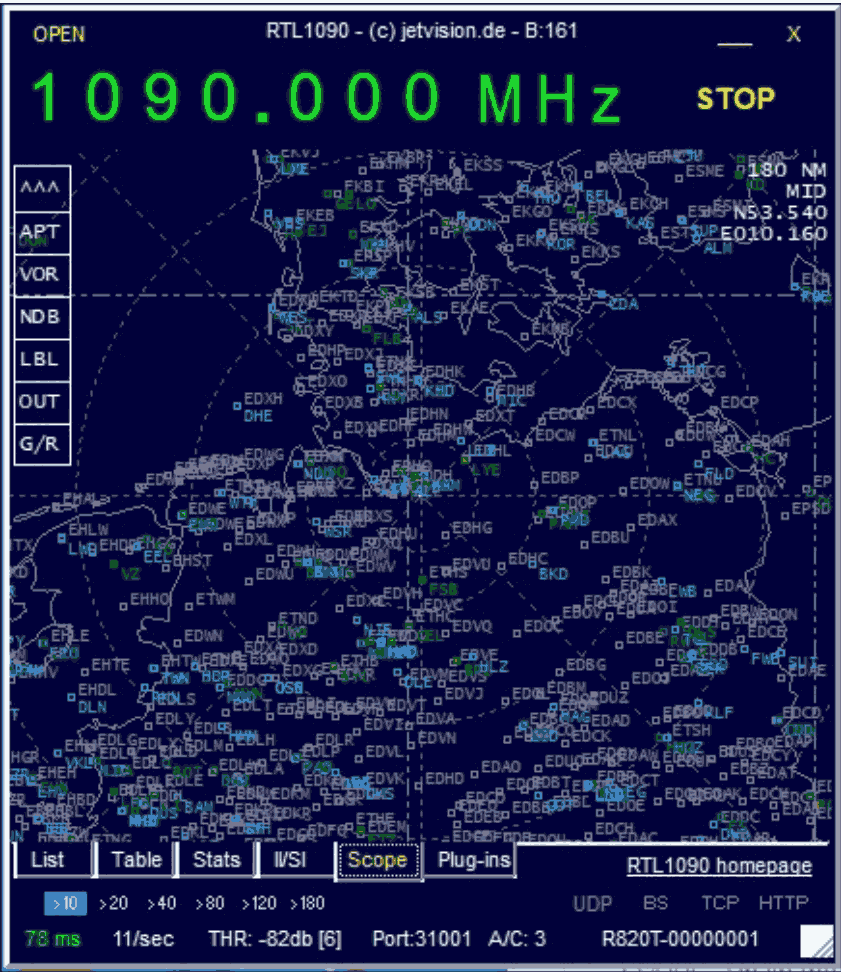
RTL1090 is a popular ADS-B decoder program that works with RTL-SDR dongles. With it, you can receive ADS-B signals from aircraft, decode them, and then pass that data to a mapping program to plot aircraft positions on a map.

Recently, RTL-SDR.COM reader Frank wrote in and wanted to share with us a detailed guide he's written on the process of setting up RTL1090. The guide starts by showing how to set up the RTL-SDR dongle by installing the WinUSB drivers via Zadig. It goes on to show how to download, unzip, and run RTL1090. Guides for RTL1090 V1, V2, and RTL1090 Scope are shown separately.

RTL1090 Scope
RTL1090 Scope