Tagged: amateur radio

Softrock Ensemble II vs the RTL-SDR + Upconverter on Shortwave

Over on YouTube user mutezone has posted a video comparing the RTL-SDR with upconverter against a Softrock Ensemble II software defined radio. The Softrock Ensemble II is an SDR dedicated to the HF frequencies and is thus expected to have better performance for that purpose. Mutezone writes

A performance between the Softrock Ensemble II vs the RTL-SDR (R820T) on shortwave. Here we are trying to see which one is best at receiving AM broadcasters. Both SDRs were using the same longwire antenna connected to an ATU (Antenna Tuning Unit).

Although I know this comparison is somewhat unfair, since the RTL-SDR is not meant for shortwave & the Softrock is, it is to show that there is a difference in performance, even though the RTL-SDR has a much wider frequency range & cannot be beaten when it comes to value for money. My opinion is that if you want an SDR that should deliver on HF / Shortwave performance, then go for a dedicated one like the Softrock, Afedri, SDR-IQ or any others that do the same job on the market. Even when using a decent HF Upconverter, the RTL-SDR will still not match the performance of more upmarket HF SDRs.
Receiving SO-50 Saudisat 1C with the RTL-SDR

Over on YouTube user Orlando Lima shows reception of the SO-50 Saudisat 1C satellite. Saudisat is an amateur radio satellite with an FM radio repeater. Orlando listened to the downlink frequency at 436.795 MHz using an RTL-SDR, Yagi antenna and Orbitron software to track the downlink frequency in SDR#.

KN0CK and KF7LZE Custom HF RTL-SDR Receiver Revision 5

Update: KN0CKs products are now available at http://www.kn0ck.com/HF_SDR/.

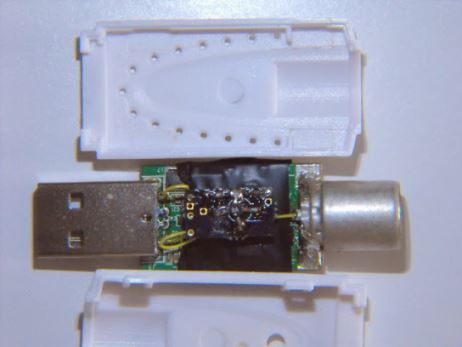
Previously on this blog we’ve seen KN0CK release his custom modified RTL-SDR tuners which have built in upconverters for accessing the HF bands. Revision 5 of the KN0CK receiver is now almost ready for sale, and will be sold over at KF7LZE’s webstore Easy-Kits.com.

Revision 5 promises to be lower priced as it will run using the direct sampling mod instead of using an upconverter which would require more components. It will also use a Mini-Circuits MAR 8 wideband amplifier to improve weak signal performance.

Kn0CK and KF7LZE RTL-SDR HF Receiver Rev. 5

Decoding D-STAR Headers with the RTL-SDR

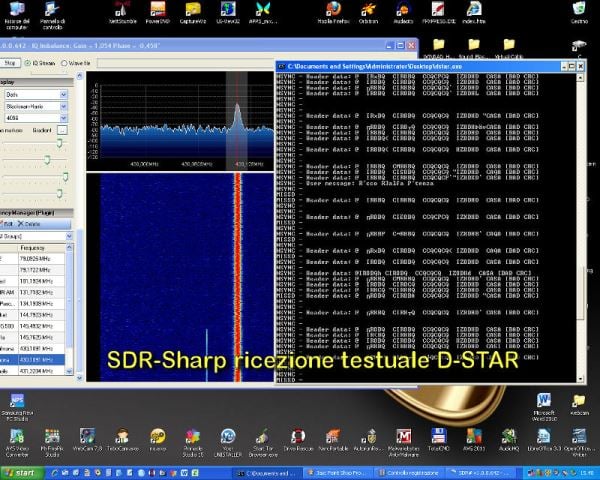
D-STAR or Digital Smart Technologies for Amateur Radio is a digital voice and data protocol used in amateur radio. I was tweeted a link earlier which shows how the RTL-SDR can decode D-STAR text messages and headers (link is in Italian but Google translate can help, and the pictures show more than enough information). By using SDRSharp and stereo mix you can tune to a D-STAR signal, and pass the audio to a command line based decoding program (dstar.exe) which can be downloaded from the above link, which will then decode D-STAR text messages.

dstar7

Here is also an older video showing D-STAR decoding with HDSDR in action.

RTL-SDR as a Cheap Panadapter

For people already with expensive ham radios, the RTL-SDR can be used as a cheap panadapter. A panadapter is device that allows you to visually see the RF spectrum and waterfall being received by the ham radio. There are multiple (expensive) commercial panadapters available, but combined with a PC or laptop, the RTL-SDR will work just as well.

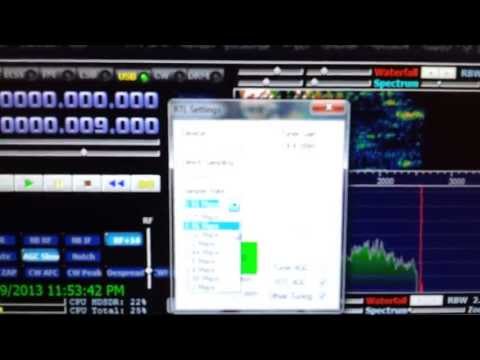
In this video YouTube user akdude47 shows a tutorial on setting up the RTL-SDR as a panadapter for a Yaesu FT-857. The setup involves connecting the IF output of the radio to the RTL-SDR, and putting in some settings into HDSDR.

How to setup a RTL SDR with HDSDR and a FT-857 for a panadapter and second receiver.

Receiving the FO-29 Amateur Satellite with RTL-SDR

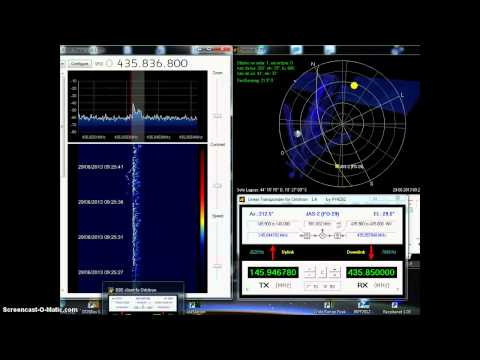
In this video YouTube user Roland Zurmely (PY4ZBZ) shows communications with the FO-29 amateur satellite using his RTL-SDR and a 6 element UHF Yagi antenna. The Fuji-OSCAR-29 (FO-29 a.k.a JAS-2) is an amateur radio satellite that allows voice communication via single side band, and has a voice downlink frequency of 435.8 MHz and uplink frequency of 145.9 MHz.

In this video, the RTL-SDR was used as the satellite receiver, and a conventional FT857 radio with 4 element VHF Yagi was used to transmit to the satellite uplink.

Receiving SSTV with RTL-SDR

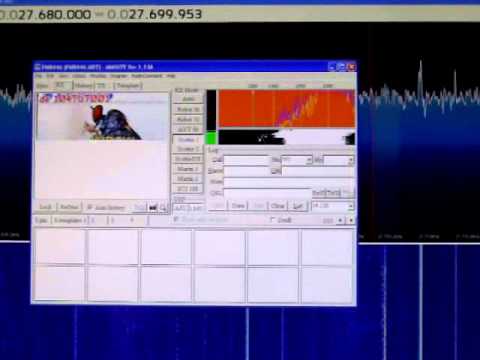
Over on the Radio Antics blog fellow RTL-SDR enthusiast Andrew has been using the RTL-SDR to receive Slow Scan Television (SSTV) amateur signals. SSTV is a method ham radio enthusiasts use to send small images to one another. The images often contain their ham call sign overlaid on the image.

Andrew was able to receive several SSTV images using an R820T dongle tuned to the 27 MHz (11 meter) band. He also used a Funcube Dongle+ and got similar results.

Check out his post for some of the images he received, and his video below for an example of the receiving process.

RTL-SDR Direct Sampling Compared with WebSDR

YouTube user opilarczyk has posted a video comparing HF performance of the rtl-sdr with the direct sampling mod at 7MHz with WebSDR, an online SDR streaming site. The comparison shows how the direct sampling mod is extremely susceptible to broadcast FM interference.

RTL-SDR gqrx direct sampling vs WebSDR on rtl2832u