Tagged: amateur radio

Receiving Hellschreiber with the RTL-SDR and an Upconverter

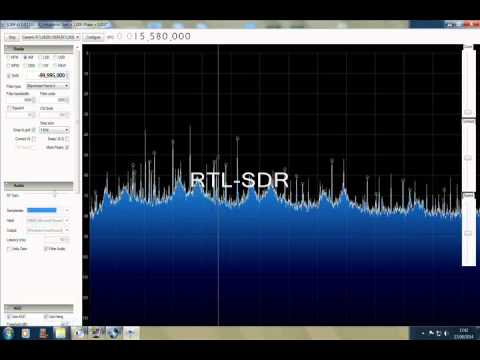
Over on YouTube user BSoD Badgers has uploaded a video showing reception of Hellschreiber on HF at 20m. To receive the HF frequencies he used a ham-it-up upconverter. He used SDR# to receive the signal and the Fldigi decoding software to decode the signal.

Hellschreiber is a fax-like communications mode used by amateur radio hobbyists.

Understanding Filtering in an Upconverter for the RTL-SDR

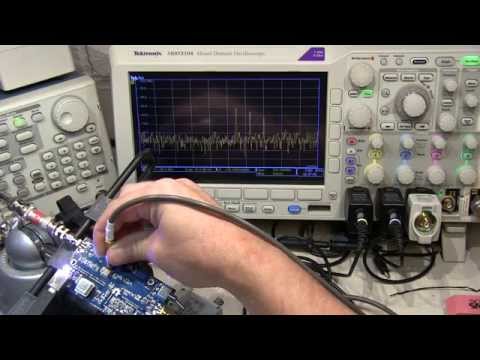
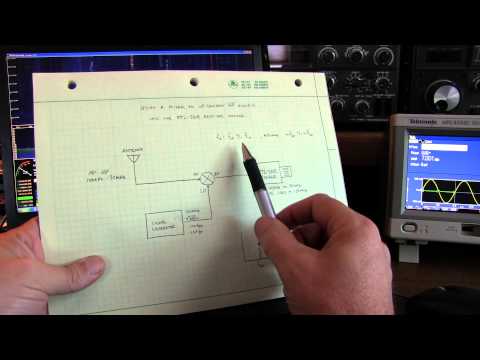
Over on YouTube user w2aew has uploaded a video tutorial explaining how filtering in an upconverter works. In a previous video w2aew explained how a simple upconverter for the RTL-SDR worked and noted that for best performance the upconverter needs three filters, one preselector at the input, one after the local oscillator and one after the mixing stage.

In this video w2aew takes a Nooelec Ham-it-up upconverter which has the three filters mentioned above implemented and scopes the output after each filter to show their effect on an input signal.

#175: Filter functions in an HF Upconverter used with RTL-SDR Dongle Receiver

Using a Mixer to Listen to HF on a RTL-SDR Dongle

Over on YouTube user w2aew has uploaded a tutorial video that clearly explains the theory behind upconverters. Upconverters are commonly used with the RTL-SDR to receive the HF (0 – 30 MHz) bands. In the video he shows how to make a simple homemade double-balanced diode ring mixer for the RTL-SDR and shows its performance in HDSDR.

#174: Using a mixer to listen to HF, shortwave, ham, etc. on RTL-SDR dongle

RTL-SDR HF Preselector Project

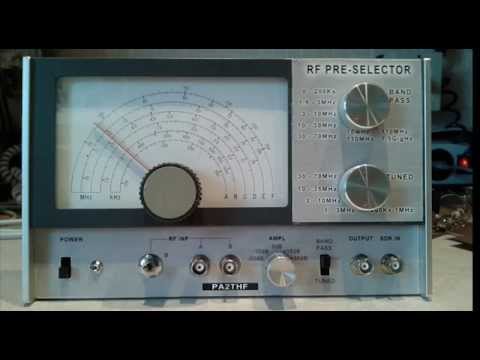
Over on YouTube user Theo Faber has uploaded a video showing his adjustable multiband HF preselector project for his RTL-SDR dongle. The preselector covers the entire HF band. Theo designed and built his own homemade upconverter for this project as well.

Preselectors on the RTL-SDR can vastly improve reception quality. Without preselection, noise and strong images of other nearby stations can cause strong interference.

My project ‘pre selector’ for wideband radios and in particular the popular tv-sticks than can be used for SDR reception. The sticks are very cheap and the software free available on the internet. SDR Sharp in this case, is operating stable under XP and W7. Sticks are sensitive, however the input level can only vary +- 20dB. The sticks are easely overloaded and will produce cross and intermediation. So you need in front of the stick / converter band pass or tunable filters. Hopefully this inspired you to build your own set of filters, to fully benefit from the perfect performing of this affordable SDR.
for more info contact me on: t.faber87__AT__upcmail.nl
kind regards and 73’s

SDR RTL dongle and pre selector with HF converter

Softrock Ensemble II vs the RTL-SDR + Upconverter on Shortwave

Over on YouTube user mutezone has posted a video comparing the RTL-SDR with upconverter against a Softrock Ensemble II software defined radio. The Softrock Ensemble II is an SDR dedicated to the HF frequencies and is thus expected to have better performance for that purpose. Mutezone writes

A performance between the Softrock Ensemble II vs the RTL-SDR (R820T) on shortwave. Here we are trying to see which one is best at receiving AM broadcasters. Both SDRs were using the same longwire antenna connected to an ATU (Antenna Tuning Unit).

Although I know this comparison is somewhat unfair, since the RTL-SDR is not meant for shortwave & the Softrock is, it is to show that there is a difference in performance, even though the RTL-SDR has a much wider frequency range & cannot be beaten when it comes to value for money. My opinion is that if you want an SDR that should deliver on HF / Shortwave performance, then go for a dedicated one like the Softrock, Afedri, SDR-IQ or any others that do the same job on the market. Even when using a decent HF Upconverter, the RTL-SDR will still not match the performance of more upmarket HF SDRs.

Receiving SO-50 Saudisat 1C with the RTL-SDR

Over on YouTube user Orlando Lima shows reception of the SO-50 Saudisat 1C satellite. Saudisat is an amateur radio satellite with an FM radio repeater. Orlando listened to the downlink frequency at 436.795 MHz using an RTL-SDR, Yagi antenna and Orbitron software to track the downlink frequency in SDR#.

KN0CK and KF7LZE Custom HF RTL-SDR Receiver Revision 5

Update: KN0CKs products are now available at http://www.kn0ck.com/HF_SDR/.

Previously on this blog we’ve seen KN0CK release his custom modified RTL-SDR tuners which have built in upconverters for accessing the HF bands. Revision 5 of the KN0CK receiver is now almost ready for sale, and will be sold over at KF7LZE’s webstore Easy-Kits.com.

Revision 5 promises to be lower priced as it will run using the direct sampling mod instead of using an upconverter which would require more components. It will also use a Mini-Circuits MAR 8 wideband amplifier to improve weak signal performance.

Kn0CK and KF7LZE RTL-SDR HF Receiver Rev. 5

Decoding D-STAR Headers with the RTL-SDR

D-STAR or Digital Smart Technologies for Amateur Radio is a digital voice and data protocol used in amateur radio. I was tweeted a link earlier which shows how the RTL-SDR can decode D-STAR text messages and headers (link is in Italian but Google translate can help, and the pictures show more than enough information). By using SDRSharp and stereo mix you can tune to a D-STAR signal, and pass the audio to a command line based decoding program (dstar.exe) which can be downloaded from the above link, which will then decode D-STAR text messages.

dstar7

Here is also an older video showing D-STAR decoding with HDSDR in action.