Tagged: flipper one

Flipper One Launches on Kickstarter: A Linux Multi-Tool with an Optional SDR Module and MT7921 Wi-Fi

Back in May, we posted about the early development plans for Flipper One, a pocket Linux computer from the makers of the Flipper Zero. The Flipper One Kickstarter campaign has now launched and is already well past its goal, with over 23,000 backers and over $12 million raised. Pledges start at US$399, or US$539 with the SDR module, and shipping is expected to start in July 2027.

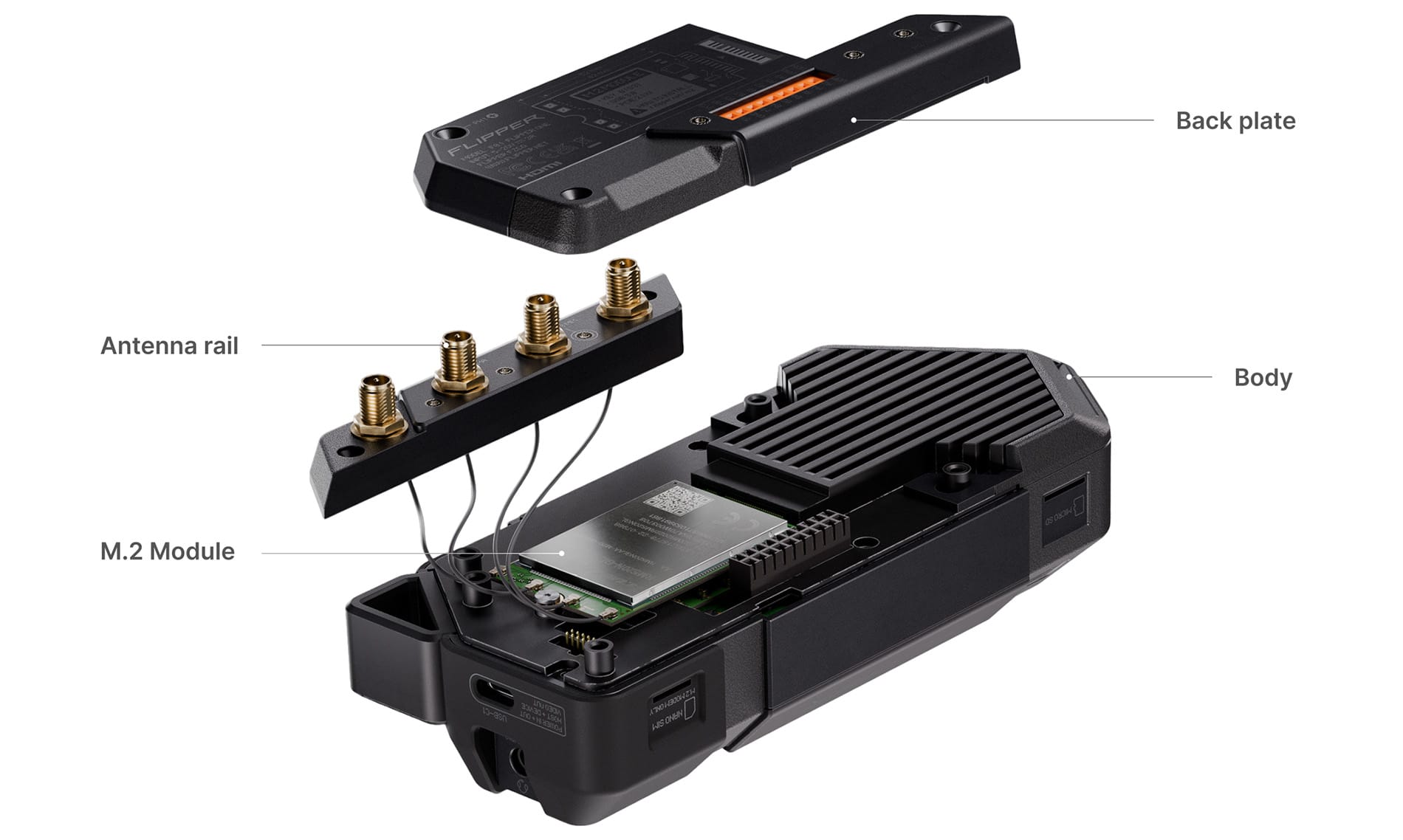
The SDR module is a USB device that mounts to the top of the Flipper Zero, and it screws to the frame to protect the USB connector. Flipper notes that its specifications are not finalized yet, as they are experimenting with "undocumented features of some unusual chips", but preliminary figures on the campaign page indicate 24 - 1700 MHz with 10 MHz of bandwidth. Interestingly, the built-in Wi-Fi 6E uses the MediaTek MT7921AUN, the same chip that the BirriaSDR and Mtk79ICAP projects use to capture raw I/Q, and Flipper says they are exploring this too. A LoRa module for Meshtastic, MeshCore, and Reticulum is also offered, along with a 5G module.

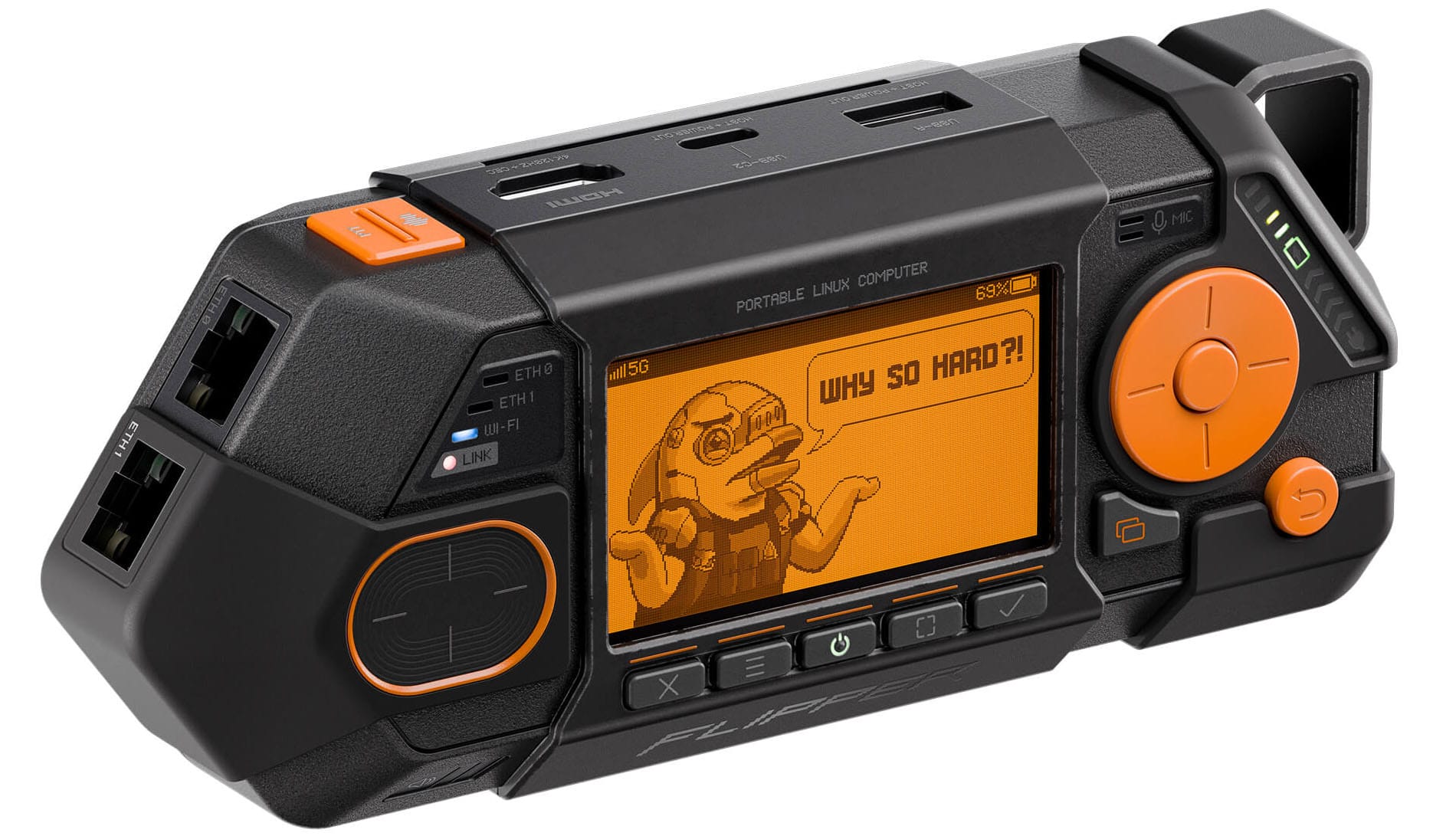
Otherwise, Flipper One is mainly a networking tool running mainline Linux, with a Rockchip RK3576 CPU, 8 GB of RAM, two Gigabit Ethernet ports, HDMI and an M.2 slot for 5G modems or SSDs. Note that it is not a Flipper Zero replacement, as it has no Sub-GHz radio, NFC or RFID.
Flipper One - Open Linux Multi-tool | Kickstarter Video

Early Development Plans for Flipper One Announced

The team behind the wildly popular Flipper Zero product has just announced their development plans for a Flipper One device. If you were unaware, Flipper Zero is an extremely popular wireless hacking/research tool based on a STM32 microcontroller and TI CC1101 sub-ghz transceiver. While not an SDR, the CC1101 hardware radio chip is very capable at demodulating/transmitting many sub-GHZ OOK/ASK/FSK/GFSK/MSK protocols, and for capture/replay attacks. Flipper Zero also implements 125 kHz RFID, Bluetooth LE, 13.56 MHz NFC, Infrared RX/TX capabilities, and general GPIO/UART/SPI/I2C interfaces. Flipper Zero has been so popular that it has been seen in more mainstream media such as on Linus Tech Tips. 

While Flipper Zero was extremely popular, the team outright makes clear that Flipper One is not a successor to Flipper Zero. Instead, it is a completely new project. Flipper One will be a full RK3576 ARM-based Linux computer (with computing power similar to a Raspberry Pi 5), with a Raspberry Pi RP2350 Microcontroller co-processor and PCIe M.2 expansion modules to add capabilities such as an SDR, a 5G modem, an SSD, or anything else. It will also include GPIO expansion modules, be a full Ethernet/WiFi multi-tool with MediaTek MT7921AUN, have a satellite NTN (non-terrestrial network) cellular modem, and, of course, come with a built-in NPU AI accelerator capable of supporting offline LLMs. On the more conventional side, they also plan to make Flipper One capable of running a full Linux desktop and serving as a portable TV media box.

Currently, they are in early development, still working through architectural and hardware choices, and developing software. The announcement post was created to announce that they will design and build Flipper One openly in public, and are actively seeking public support via their Flipper One development portal.

They note that building in public will be required to support their lofty ambitions to bring in full mainline Linux kernel support to the RK3576 ARM processor, push vendors to open up existing closed-source code and ditch binary blobs, build an unconventional CPU + Microcontroller co-processor architecture, build Flipper OS, a Debian layer with resettable user profiles, and design a Linux UI framework for small screens.

The closest competing existing devices appear to be the ClockworkPI uConsole and Vivid Unit, as well as the various Cyberdeck-type products.

The Flipper One
The Flipper One
An example of how a SDR module might be attached to Flipper One