SDROxide: A New SDR Client for HAMs and SWLs written in Rust
Thank you to Josef (OE3JJS) for writing in and sharing with us the release of his new open-source software called SDROxide, an SDR client designed for HAMs and SWLs (short-wave listeners), written in Rust. The software supports Linux, Windows, macOS, and also has a web client. As it supports SoapySDR, RTL-SDR dongles are supported for RX. Josef writes about SDROxide:
It's a completely new project written in Rust, supporting many SDR interfaces (CAT/Audio, CAT/IQ, SoapySDR, HPSDR, TCI) and with loads of features built in that used to require extra programs: FT8/FT4, SSTV, RTTY, PSK, OLIVIA, THOR, FSQ, a CW/RTTY/PSK skimmer, there's dx cluster and sota/pota spotting, a logbook with integrations for QRZ.com, HamQTH, eQSL, LoTW, there's neural-network noise reduction, a 3D "hamclock" that visualizes QSOs, satellites, Aurora, CME cones, with up-to-date images of the sun's surface, and you can run the client locally, remote with native binary, or remote via the web (WASM).
Josef notes that the project is fully open-source and available on GitHub.
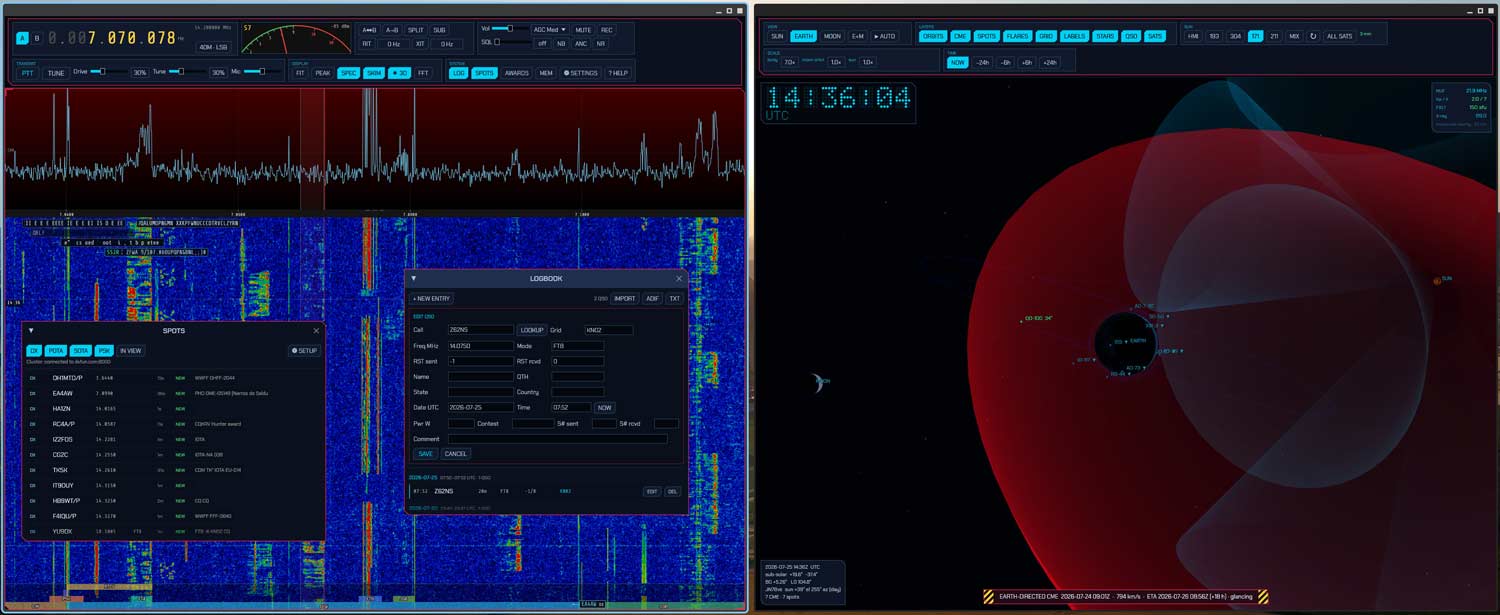
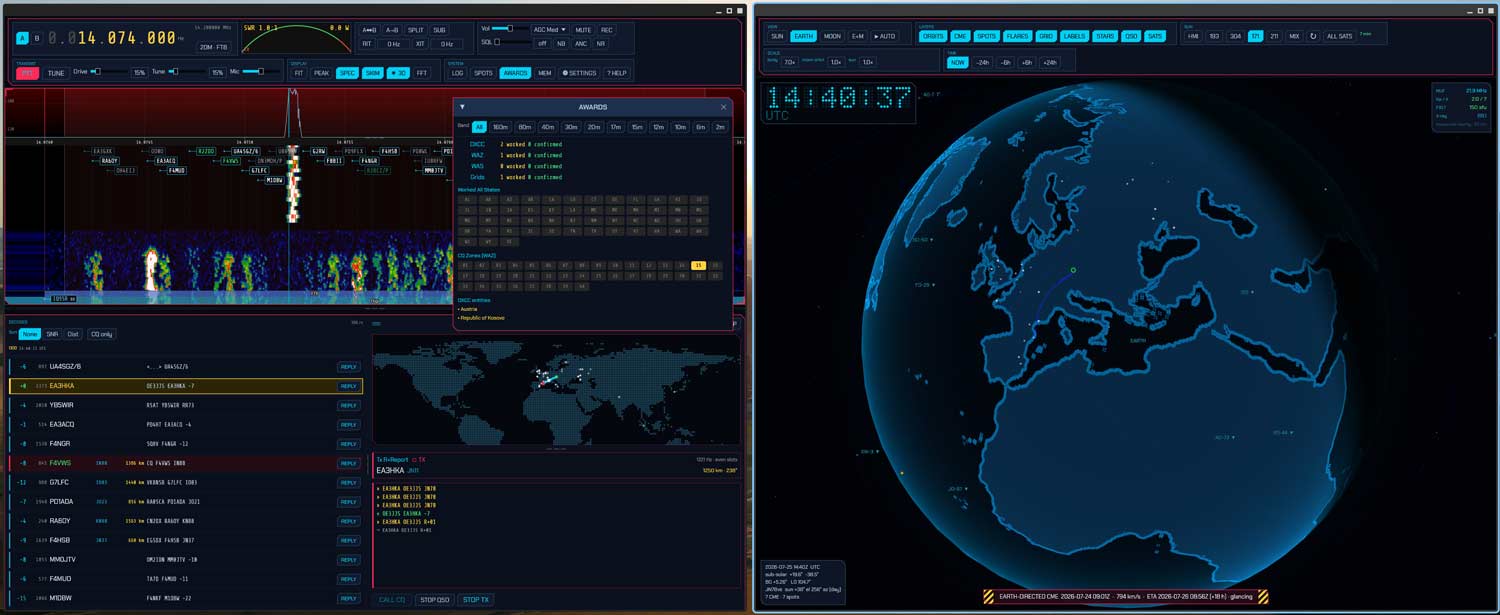
AI-Disclaimer: The author notes the use of local and hosted LLMs in the development of this software.