FutureSDR is an experimental open source SDR framework (similar to GNU Radio) that is being developed by Bastian Bloessl. The idea behind the framework is that it is implemented in Rust, which is a programming language that supports async (asynchronous) code. The end result to the user should be faster, more portable and lower latency digital signal processing (DSP) code. The framework is still in the early stages with there being very few DSP blocks available, but as per his blog new blocks are slowly being implemented by contributors.
Bastian has created a presentation introducing the framework. It will only be interesting to programmers, and DSP coders, but it shows the possible software engineering improvements that we could see applied to SDR DSP code in the future.
Features An experimental asynchronous SDR runtime for heterogeneous architectures that is:
Extensible: custom buffers (supporting accelerators like GPUs and FPGAs) and custom schedulers (optimized for your application).
Asynchronous: solving long-standing issues around IO, blocking, and timers.
Portable: Linux, Windows, Mac, WASM, Android, and prime support for embedded platforms through a REST API and web-based GUIs.
Fast: SDR go brrr!
Overview FutureSDR supports Blocks with synchronous or asynchronous implementations for stream-based or message-based data processing. Blocks can be combined to a Flowgraph and launched on a Runtime that is driven by a Scheduler. It includes:
Single and multi-threaded schedulers, including examples for application-specific implementations.
Portable GPU acceleration using the Vulkan API (supports Linux, Windows, Android, …).
User space DMA driver for Xilinx Zynq to interface FPGAs.
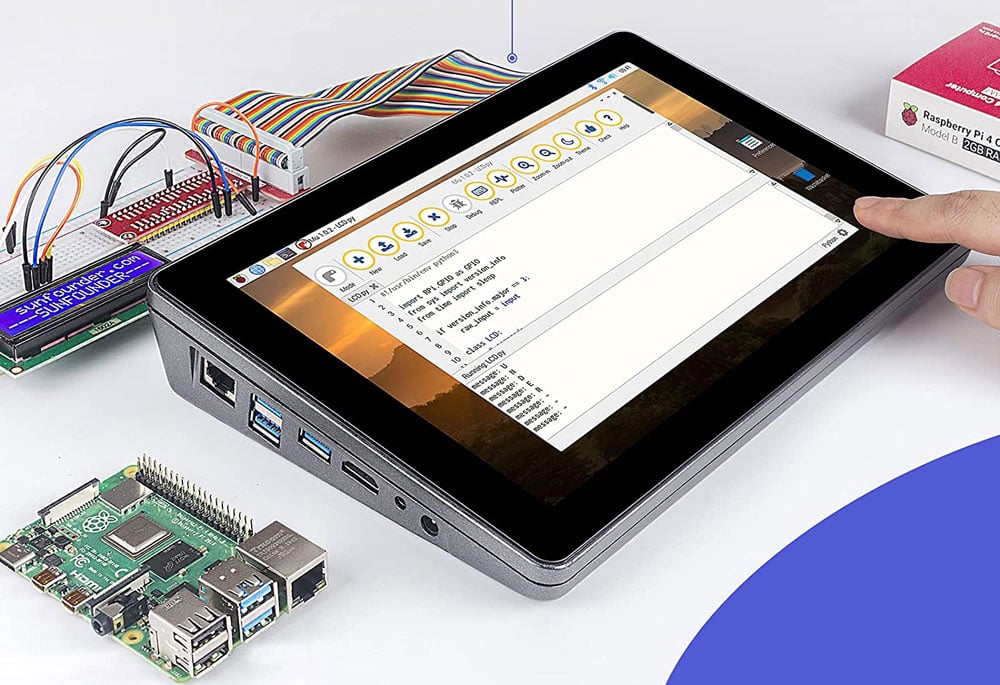
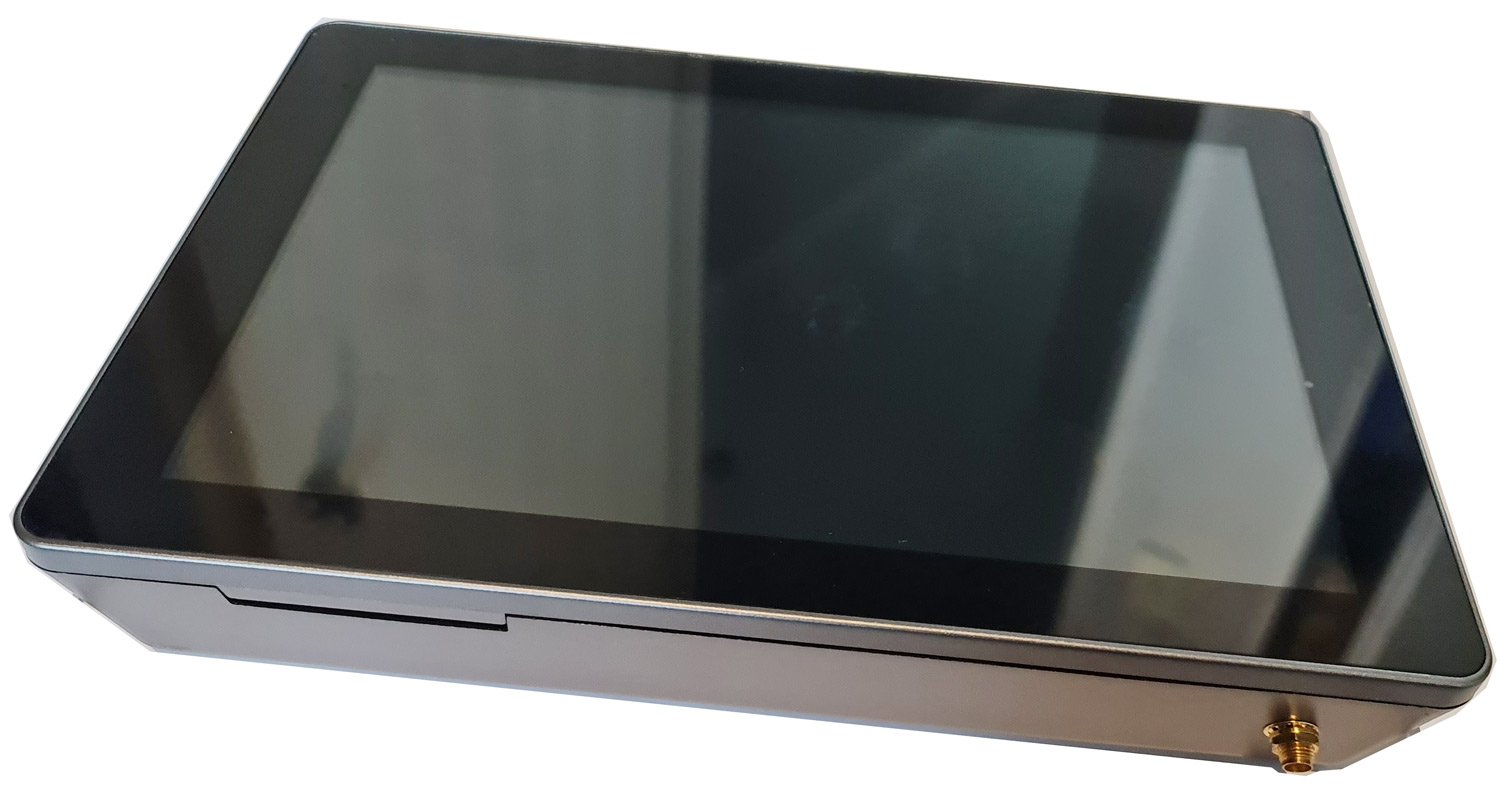
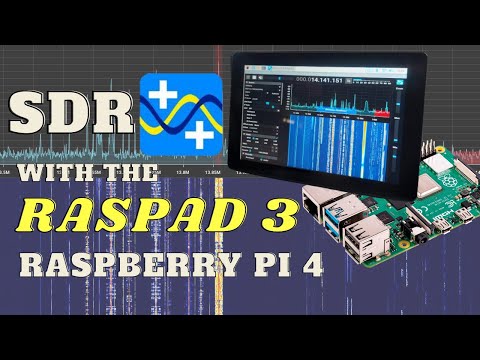
The Raspad 3.0 is a portable tablet enclosure for the Raspberry Pi 4B. It comes with a high resolution 1280 x 800 10.1 inch touch LCD screen, built in speakers, built in battery and a plastic enclosure that houses the LCD driver board and Raspberry Pi. Accessible on the side of the enclosure are the USB, HDMI, ethernet and audio ports which connect via the LCD driver board. They also include an accelerometer shim which allows the screen to autorotate.
A few months ago SunFounder, the company behind the RasPad 3.0 reached out to us and asked if we wanted to review the product with a free sample. Normally we don't review products unrelated to SDR like this, but given the amount of RTL-SDR software available for the Raspberry Pi, and what appeared to be sufficient internal space, we were curious if there was a way to turn this into a portable RTL-SDR tablet...
The RasPad 3.0
Unboxing
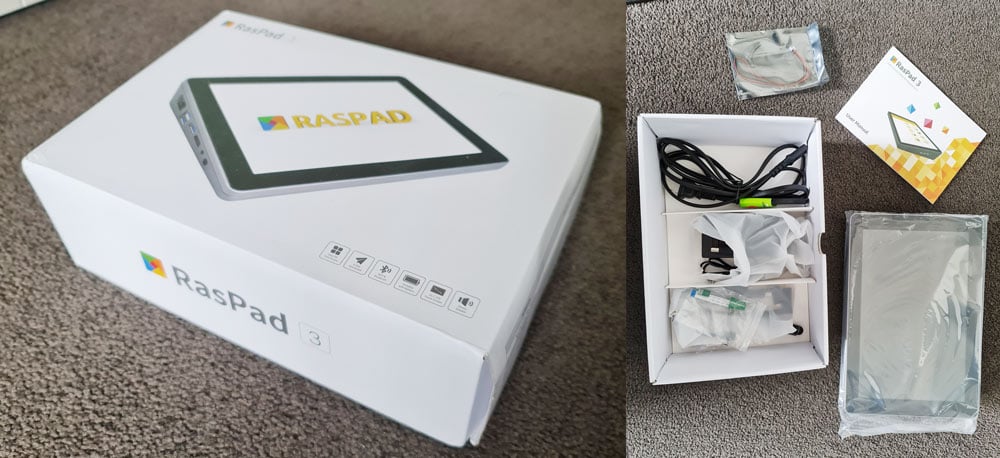
A few weeks ago the Raspad 3.0 arrived, well packed and with all the advertised components. Note that the Raspad 3.0 does not come with a Raspberry Pi 4B, this is something you will need to provide on your own.
Inside was a mains power cable, 15V DC power brick, two HDMI jumpers, a USB jumper, accelerometer shim, SD card ribbon, small 5V fan, heatsinks for the Pi, screwdriver and mounting screws, a manual and the RasPad LCD screen itself.
The Raspad 3.0 Box and Unboxing
Assembly
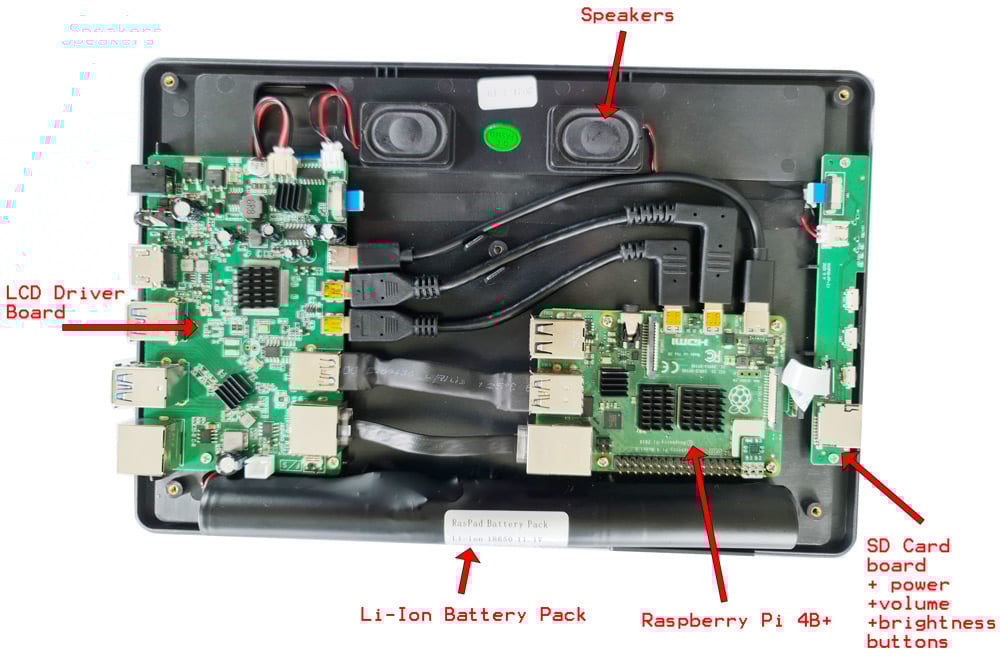
Assembly is straight forward. You unscrew the enclosure using the provided screw driver, insert the Pi 4B, screw it down, connect all the cables from the Pi to the LCD driver board and SD card slot, then reassemble. After inserting the Raspberry Pi 4B and attaching all the cables this is what the inside looks like.
Inside an assembled RasPad 3.0
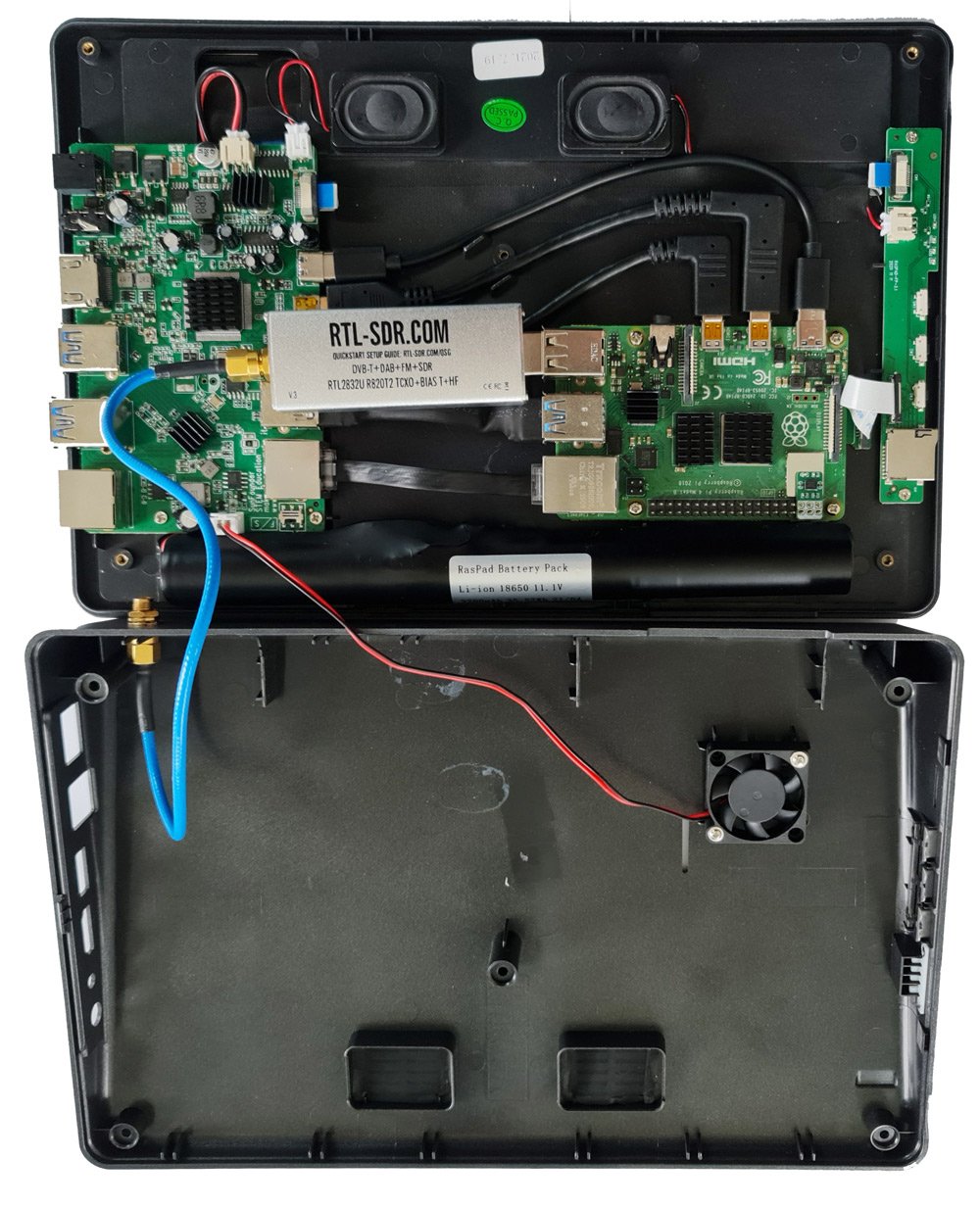
Now we could have reassembled the enclosure here, but we wanted this to be a portable RTL-SDR tablet, with the RTL-SDR and an SMA antenna port built in.
It turns out that the best way to fit in an RTL-SDR Blog V3 is to directly connect it to the spare USB port on the Pi. You might also consider using a micro style RTL-SDR which would fit more easily, but those do tend to get quite hot in a small package, and can be quite bad with internal noise. Also good shielding is probably quite critical in this application due to the dongles proximity with the LCD driver board which could be an RFI source.
The SMA side of the RTL-SDR Blog V3 rests nicely on top of the USB port of the LCD driver board providing some stability, and when the bottom lid is assembled there is plenty of clearance and no squashing.
Next we drilled a hole on the rear wall of the bottom half of the enclosure for the SMA female port, and tightened the SMA connector down with a nut. In the future we'll be upgrading this to a long barrel style SMA female connector, as a regular SMA female connector is a bit short. Then a short well shielded SS405 coax cable was used to connect to the RTL-SDR dongle.
RasPad 3.0 with RTL-SDR Blog V3 InsideRaspad 3.0 with SMA port hacked in
ProTip: Do take care to remember to remove the SD card when disassembling the RasPad! If you don't you'll end up with the SDcard slot getting ripped from it's ground traces. This happened to us, but we were able to easily solder it back on. There is a sticker on the backside of the enclosure warning about this.
Software & Testing
SunFounder provide a custom Raspbian distribution designed specially for the RasPad. However, we decided to instead install the DragonOS Pi64 Distro which is an Ubuntu distribution for the Raspberry Pi 4B that has many built in SDR programs. We burnt the image to a SD card, inserted it on the side, plugged the Raspad in to the power connector, and held the power button down for a few seconds to turn it on. Despite a few initial error messages saying it cannot enable the USB ports, everything eventually booted just fine.
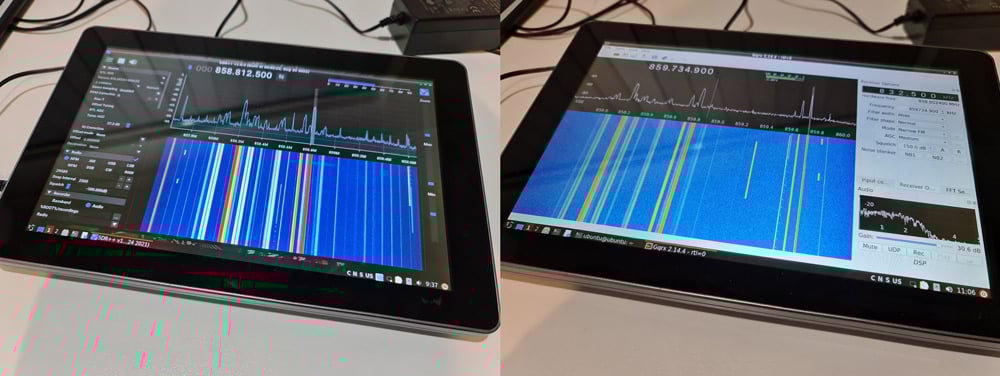
We then plugged in a cable going to one of our multipurpose dipole antennas mounted just outside the office window, and tested both SDR++ and GQRX. In both cases we were immediately able to connect to the RTL-SDR and receive signals with signal strength equivalent to that received by our desktop PC, indicating that LCD interference was not a problem.
The resolution of the screen is high enough and images and text are clear. The screen is also decently bright, and brightness can be adjusted using the buttons on the side.
RasPad 3.0 with built in RTL-SDR running SDR++ and GQRX
DragonOS Tablet Compatibility Issues & Fixes
As DragonOS is not designed for a tablet setup, there were a few bugs. It should be noted however that these issues are not a reflection on the Raspad hardware, as obviously the official Raspad OS will not have these issues as it's designed specifically for tablet use.
We initially had no sound in SDR++ from the built in speakers. After some troubleshooting we managed to get sound by disabling the headphone jack in the audio mixer settings, which appears to be the default output in DragonOS. To do this, click on the speaker icon on the bottom right task bar and click on Mixer. Then go to the Configuration tab and uncheck the second Built-in Audio entry. Close it, and open SDR++.
Disabling the headphone jack to get the built in speakers working.
In DragonOS the touch screen works fine, although it is difficult to click on small buttons. There is no onscreen keyboard available by default. We couldn't find a way to enable a tablet mode in DragonOS, so instead opted to install an onscreen keyboard called 'onboard' via 'sudo apt install onboard'. The accelerometer is also not enabled in DragonOS. We did not attempt to fix this as we have no need for screen rotation.
Interference
LCD screens are well known to be sources of RF interference, and putting an SDR in close proximity to one could result in the spectrum being very noisy. However, without an antenna connected we did not notice any interference across the spectrum from the LCD screen. It appears that the LCD RFI noise levels are not too bad, and the shielding on the RTL-SDR Blog V3 and the coax jumper cable is good enough to prevent any being received. When an antenna with a few meters of coax was connected (such as a magwhip or our portable dipole) we also didn't notice any LCD interference.
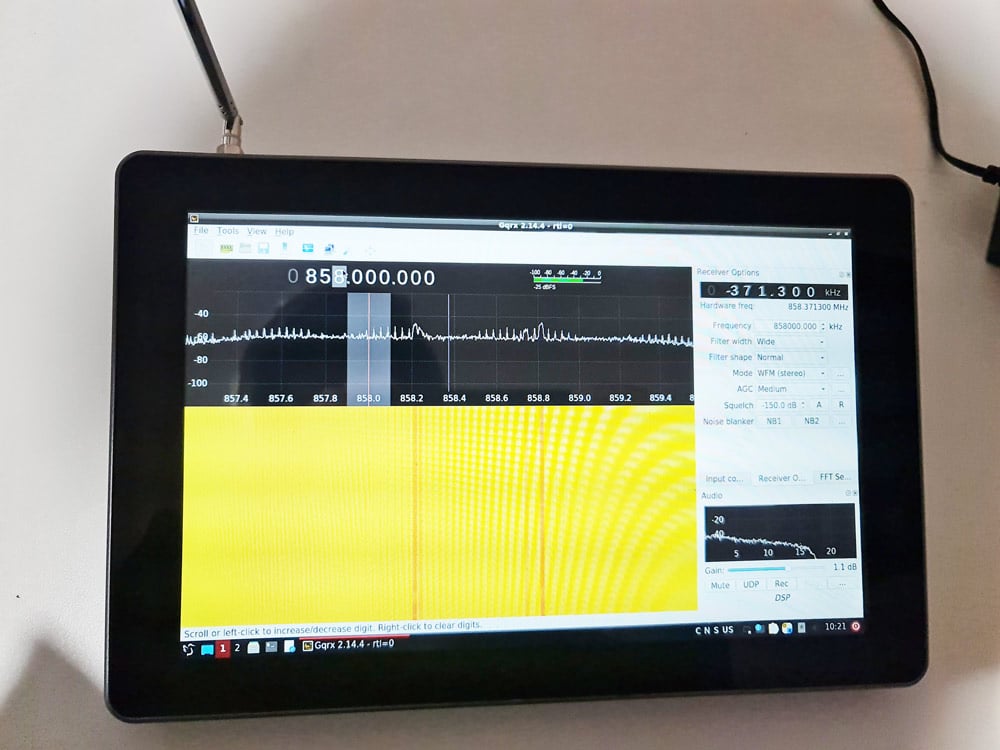
However, when a SMA telescopic antenna was connected directly to the SMA port we did start noticing the telltale spikes across the spectrum that are typically generated from LCD screens. If the magwhip or dipole was also moved within 2-3cm of the LCD screen, we also saw these interference spikes appear.
LCD Screen interference appears with a telescopic whip connected directly to the SMA port.
So it would be recommended to use a magwhip or dipole that has a coax run that can sit a few centimeters away from the screen. This limits the handheld ability of the RasPad a little, but you'd probably want a magwhip, dipole or other antenna over a directly connected telescopic whip for better reception anyway.
Battery Life
We tested a worst case scenario, with the RasPad running the RTL-SDR and SDR++ continuously at the brightest screen setting. With this test the battery lasted 2 hours and 10 minutes from a full charge. Presumably if the screen was dimmed and turned off for some periods of time, it would easily last 3-4 hours.
Portability
The total weight of the Raspad including our mods is just under 1 kg (2.2 lbs). About double the weight of a modern tablet, but still light enough to be easily carried.
Other Notes
The small 5V fan provided in the kit is unfortunately a bit noisy, and it's cooling ability is seems limited. We've seen these small fans on other Raspberry Pi cooling accessories and found that they are next to useless at cooling. It would be good to see a slightly larger and quieter fan, or perhaps a better passive cooling heatsink.
The power brick output is 15V, 2A. Ideally we would be able to charge the RasPad via a car/boat 12V connection as well. We're awaiting a response to see if this is possible. Update: Unfortunately 12V seems to be a no-go, quoting SunFounder "the 12v supply may cause the Raspad to fail to charge, as the minimum is 15v".
Conclusion
The RasPad 3.0 in our opinion overall a good product. It allows you to easily go portable with your Raspberry Pi 4. While it was designed for other projects, there was just enough hackability left in it for us to fit a RTL-SDR Blog V3 and antenna port into the enclosure, yielding us a clean and portable SDR solution.
With at least 2 hours of battery life when running an RTL-SDR and software, we can easily see this being taken out in the field for spectrum analysis, decoding with rtl_433, or for portable listening to the airband, trunking etc. However, some customization of DragonOS or the RaspadOS is going to be needed to get the most out of the touchscreen.
There are also alternative LCD screen products designed for the Raspberry Pi where you sit the Raspberry Pi on the back of the screen. But it's unclear if there would be enough space inside to fit an RTL-SDR, and not to mention the lack of a battery. We also previously reviewed the Elecrow CrowPi which is somewhat similar, but a lot more clunky if you're just after a pick up and go portable SDR tablet solution. There are also higher end higher priced laptop style enclosure products for the Pi, like the Pi-Top but we're unsure if they're likely to fit the RTL-SDR internally this easily.
Disclaimer: We do not receive any compensation for this review apart from a free Raspad 3.0.
We also recently came across this review from German YouTuber Manuel Lausmann who installed and ran SDR++ on the Raspad with an SDRplay RSP SDR.
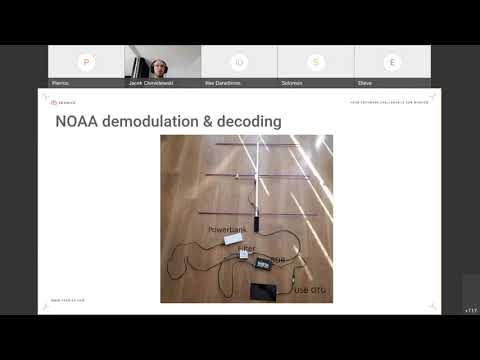
Libre Space Foundation ( Greece) and the Institute of Reconfigurable & Embedded Digital Systems(REDS) of the Haute Ecole d’Ingénierie et de Gestion du Canton de Vaud – HEIG-VD (Switzerland) have been implementing a number of smaller projects as part of an Software Defined Radio MakerSpace of the European Space Agency.
This activity is part of the ARTES programme of ESA that supports innovation in satellite communications.
The findings were presented in three 2-hour slots in the afternoon at 15:00 CEST (for which you are requested to register separately) on Mon 6, Tue 7 and Wed 8 September 2021.
Monday 6 Sep was focused on the evaluation of various SDR boards and FPGA tools chains. High-rate direct sampling by SDR’s and SDR on Android will also be presented.
Tuesday 7 Sep was dedicated to building blocks that have been implemented as open source developments for Gnuradio, such as gr-leo, gr-ccsds, gr-soapy etc.
Wednesday 8 Sep was mainly about the combination of SDR and AI/ML to do signal detection and classification. In addition, an SDR testbed and spectrum monitoring will be presented.
The talks cover various SDR topics related to satellite observing. Some talks we were interested in are highlighted below, but the full list can be found on the SDRMakerspace website, or the SDRMakerspace playlist on the Libre Space Foundation YouTube channel.
The TAPR/ARRL Digital Communications Conference (DCC) was held virtually during September 17 - 18 2021 and the live streamed talks are now available on YouTube. DCC is a yearly conference with many SDR and RF related talks, with a focus on ham radio science.
The talks include various updates on the development of the TangerineSDR (an SDR designed for citizen science experimentation), talks on the development of a magnetometer board for citizen science, as various other talks regarding ham radio and ham radio science experiments.
The two days of talks are all lumped into the two videos below, and a list of all the talks presented can be found on the TAPR schedule website.
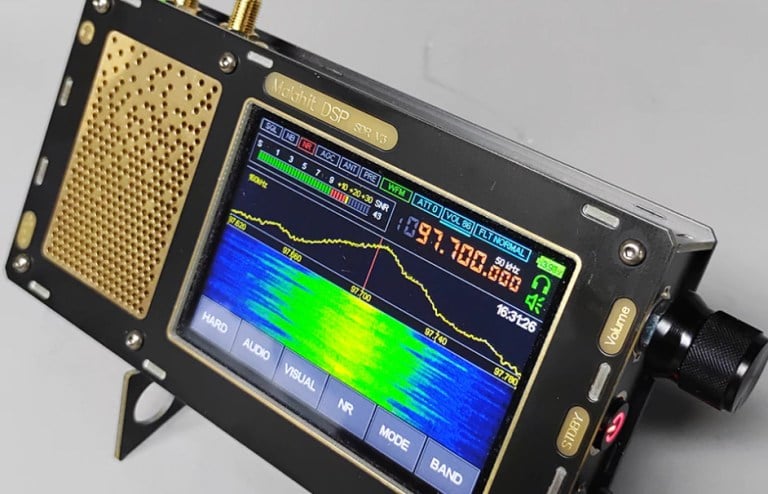
Over on the SWLing.com blog guest poster Dan Robinson has posted an article comparing the Russian made original "Malahit" DSP-2 (~$200) vs the Chinese clone who have upped the version number to DSP-3, but will be referred to as the "HFDY V3" (~$180). The original Malahit DSP-2 from "Malahiteam" is a portable SDR with built in speaker and touchscreen. It has a frequency range spanning between 50 kHz to 50 MHz, 50 MHz to 250 MHz and 400 MHz to 2 GHz.
There are several clones out there, but Dan notes that the Chinese "HFDY V3" version appears to be superior in terms of build quality with its high quality metal construction, high quality knobs, two antenna jacks for AM and FM, good internal shielding, and front firing speaker with beautiful gold grill. These are all improvements over the Russian made version, however it's important to note that the Chinese clone version comes with older firmware that must be carefully updated first, in order to obtain the same features as the original DSP-2.
Overall in terms of performance, after the firmware upgrade, Dan finds no difference in performance between the two. Dan goes on to mention that both the clone and original suffer from grounding problems and sensitivity to touch especially with shortwave.
Finally he notes how Malahiteam are planning a new higher end more expensive product which will include an optional add-on for enabling reception up to 6 GHz. The estimated cost of the new version will be $480 with the 6 GHz add-on, and $42o without.
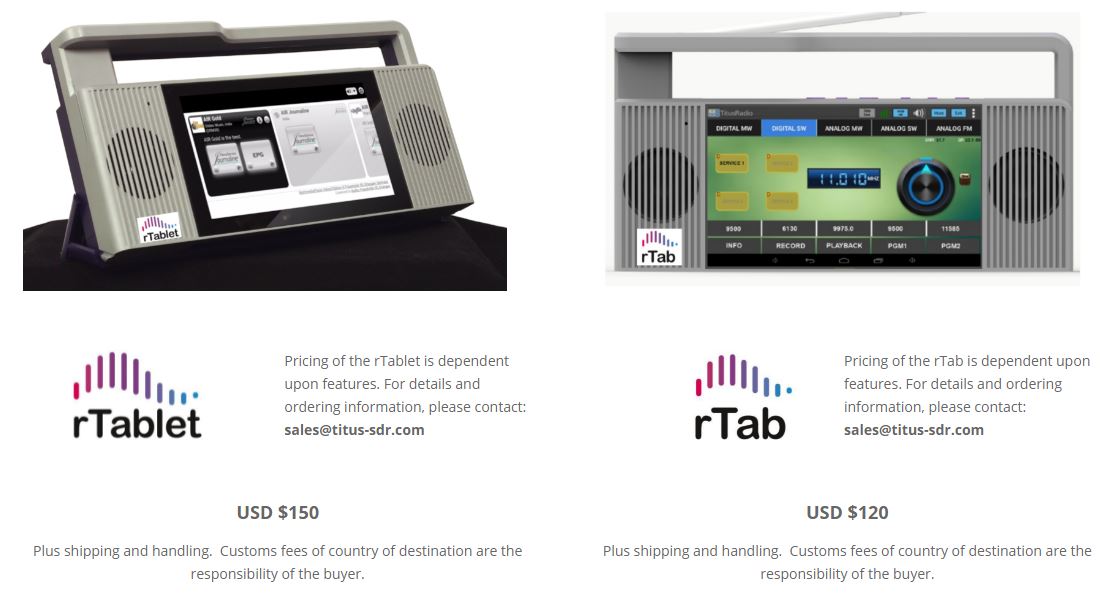
The PatronX Titus II SDR is something we've been posting about several times since 2016, but in the end it was never released and assumed to be vaporware. However, we found that the website for the Titus II SDR was updated only a few weeks ago, and pricing details have been added advertising $120 and $150 for two versions of the product. But on the new website there is no store, just an email link to contact sales for ordering information. We contacted that email two weeks ago for more information but have not received a reply back yet.
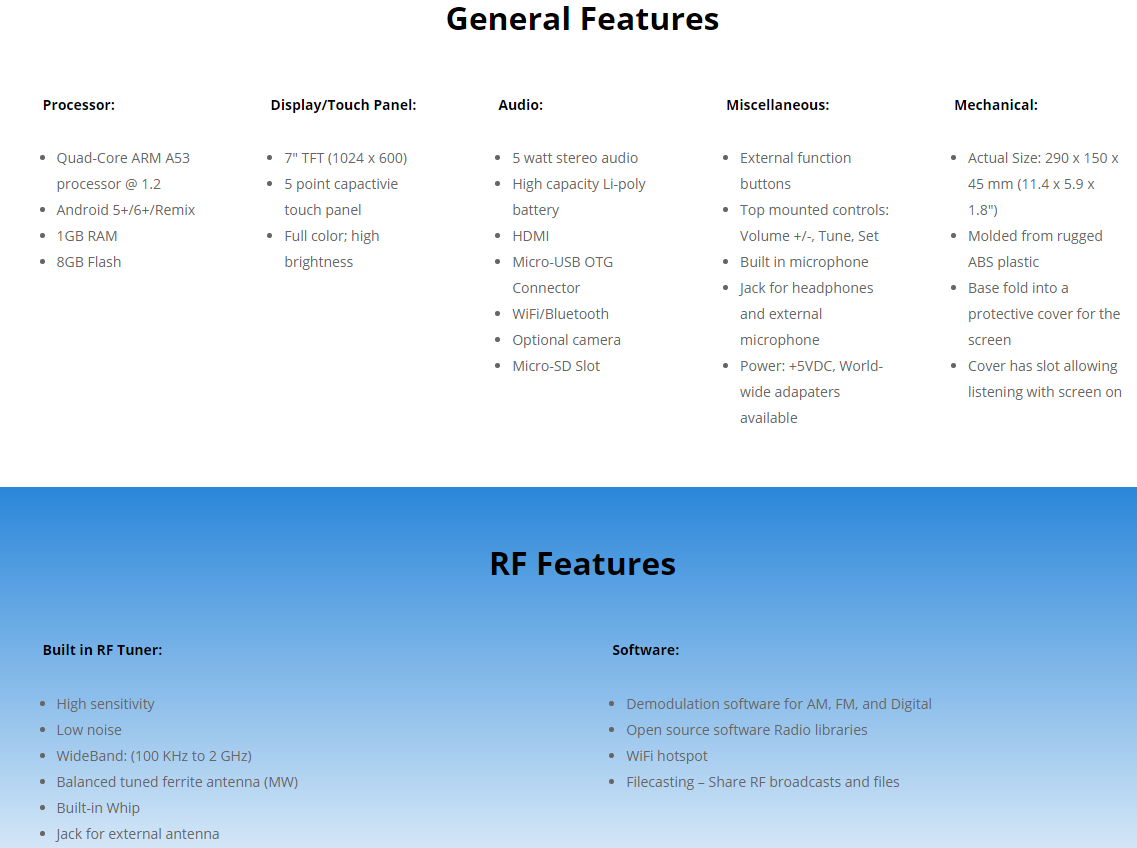
The PantronX Titus II was advertised to be a portable Android tablet based SDR that would feature a 100 kHz - 2 GHz tuning range, and software that focuses on HF digital DRM decoding, as well as DAB on VHF. Computer rendered images show the tablet housed in a portable carry enclosure with two speakers. Their new website writes:
The design of rTablet / rTab defined radio receiver started in 2014. It soon became evident that electronic products available on the market could not be modified to incorporate the advanced features requested by potential buyers. This initiated the process of the innovative design of the Titus SDR (Software Defined Radio) unit. The engineering team started with a general purpose computer unit and embedding it in a broadband radio receiver module.
All types of applications, including RF software, could be installed. For example, DRM capabilities could be added as DRM is an open source. Dream Linux app was converted to run under Android mobile operating system.
The Titus rTablet / rTab being introduced to the market, is a low cost, high performance platform with many RF and PC factory installed applications.
Key feature of rTablet / rTab is the compatibility with analog (SW, AM, FM) and digital standards (DRM, DRM+, DAB, DAB+, HD). Consequently the market of rTablet / rTab is global.
The updated website with pricing and an ordering email makes us think that it might be finally on the way, but the lack of email reply is concerning. If anyone has any further information about the rTab/Titus II please be sure to share with us in the comments!
Daniel Estévez often posts on his blog about advanced SDR and radio experiments he's worked on. In a recent post he describes how he decoded telemetry from the Voyager 1 spacecraft using GNU Radio. As Voyager 1 is so far away, and the signal so weak, a rather large scale 100 meter dish is required to receive Voyager 1. So he uses publicly available recorded data received by the Green Bank Telescope in 2015.
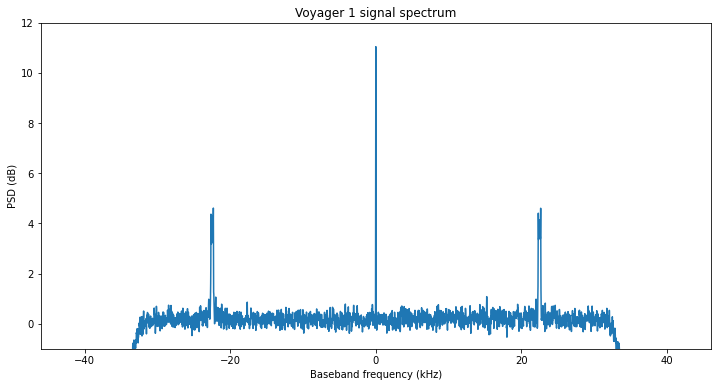
Using GNU Radio he first converts the telescope's data file discarding most of the 187.5 MHz recorded bandwidth, then decimates the signal allowing the very weak carrier and data subcarriers to be seen in the resulting high resolution FFT plot. Daniel notes how most of the power is spent in the carrier, allowing ground stations to more easily detect the signal and at least measure doppler to determine the spacecrafts trajectory. The rest of the post explains how the carrier is tracked, how to correct for doppler and phase shifts, how to demodulate the data, apply error correction, and finally decode the data packet.
While not something we can easily listen to directly, it is amazing that we can all be NASA engineers right at home with GNU Radio and tutorials like this.
Voyager 1's Spectrum. Strong carrier in the middle, and two data subcarriers.
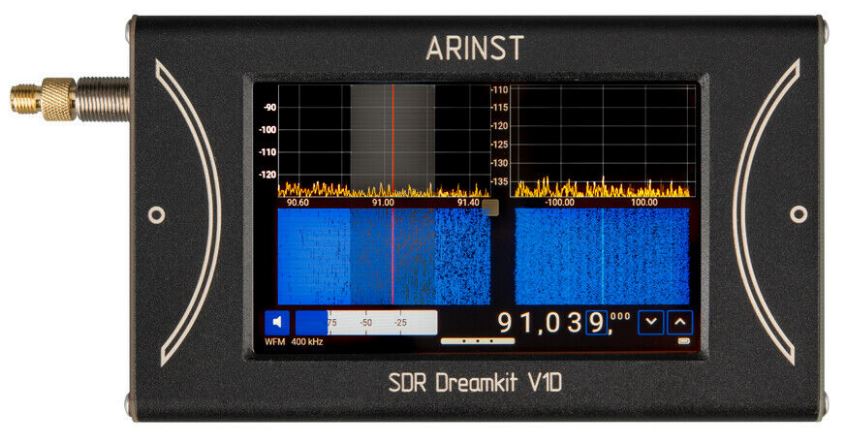
About a month ago we posted about the Arinst Dreamkit, which was an unreleased Russian made portable receive only SDR with 16-bit ADC, 1 - 3100 MHz tuning range, up to 5 MHz instantaneous bandwidth, and very fast scanning capabilities.
Reader 'sunny' has written in and informed us that the Arinst Dreamkit is now released and available for sale on both eBay and Aliexpress. The pricing is $230 + shipping costs. Sunny notes that the manual is only in Russian, and currently it does not have any digital decoding capabilities, and no preselector on the input.