Thank you to everyone who has backed or been following our KrakenSDR project on Crowd Supply. The initial funding campaign has now concluded with almost 5x our minimum funding goal! If you missed out, please don't worry as the product is will still be available for sale on Crowd Supply at the campaign price, but later orders may receive units from the second batch produced a few months after the first.
Thanks to the successful funding campaign we now have all the required parts on order and we expect the factory to receive them in a few weeks time. The final confirmation prototype is in production now, finishing touches to the enclosure are being worked on, a QC process is being developed and EU compliance certification and logistics details are being worked through.
At the same time work on on the DFing software is continuing to progress as well. If you are testing the software with the older KerberosSDR units, please note that the software is still in beta and that a thorough reading of the documentation is required to understand the DAQ control parameters. As direction finding with an SDR can involve learning a lot of new technical information, we are aiming to significantly simply the knowledge that is needed to understand the DAQ parameters, and hope to have a simplified version released with a tutorial by mid-December. So if you have a Kerberos, and are struggling with the setup, please kindly wait until the official release, unless you are interested in learning the nitty gritty technical details.
Recently we have also been working on improvements to the intermittent signal squelch handling and we are also working on multichannel DFing capabilities. We have a new developer starting work on a multiplatform networked mapping program too.
We are also looking to sponsor some accelerator projects such an GNU Radio integration and beam forming investigations for applications like radio astronomy. If you have DSP programming skills, and you're interested in helping on this, or have the DSP skills and interest in developing another project, please email us at [email protected] with details.
Thanks to everyone’s amazing support we were able to fund in less than 24 hours from release! Now, thanks to funding, we can move on to the job of finalizing our batch manufacturing and accelerating development of our codebase.
Please keep in mind we’ve sold almost half of the first batch of 1000 units! So, if you have been hesitating, please get your order in soon since subsequent batches could be susceptible to manufacturing delays.
Enclosure Update
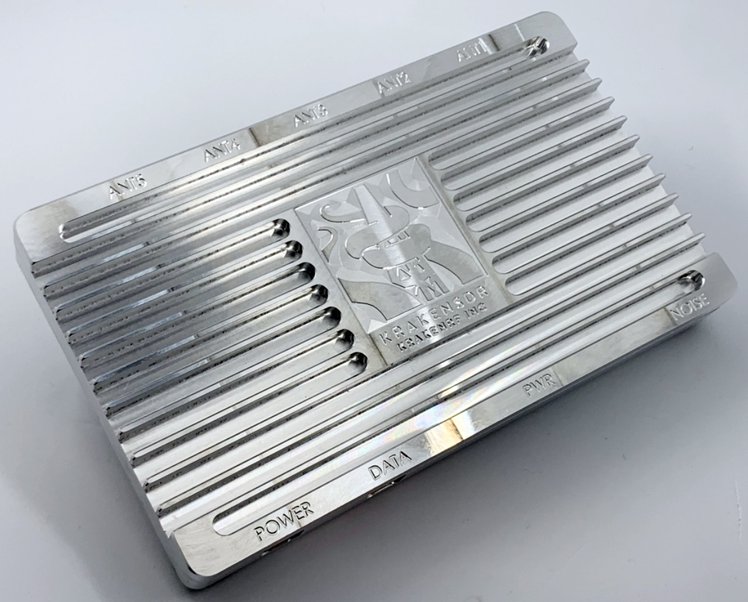
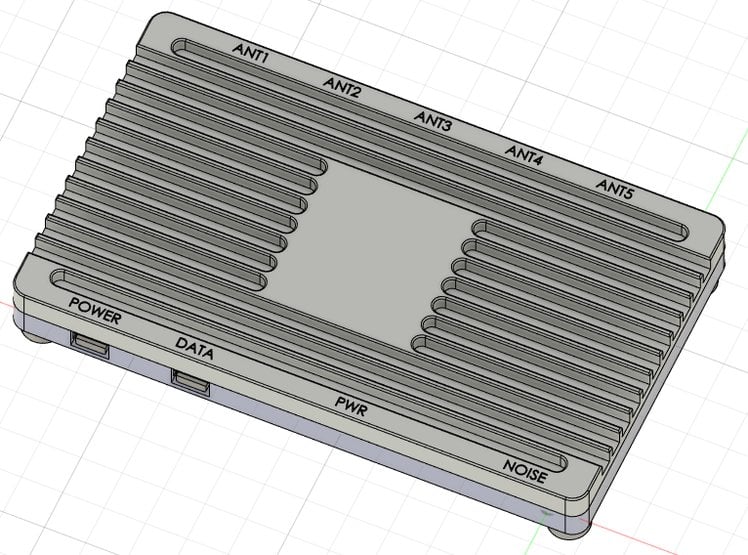
The design of the KrakenSDR enclosure is coming along nicely and we expect to be cutting the new prototype soon. The image below shows a 3D rendering (the blank space in the middle will contain the logo). The enclosure is a critical part of the KrakenSDR as it helps add thermal mass and cooling ability. Phase drift can occur when the tuner chips experience temperature fluctuations, so adding thermal mass helps to dampen ambient temperature changes significantly. The PCB is thermally connected to the enclosure via a thermal pad. The enclosure, of course, also helps block signals from directly entering via the PCB, which could skew results.
Arrow Antennas Update
Unfortunately Arrow Antennas have recently informed us that delivery of their five-element, fixed-site, dipole array we mentioned in the campaign text is going to be delayed due to the aluminum shortage crisis in the USA. We’re holding out hope this will be resolved early next year by the time we ship. Please note that this has no impact on the $99 set of five magnetic mount antennas offered directly by us through the campaign.
Support for KerberosSDR
There have been some concerns that the release of KrakenSDR means support for new developments on our previous product KerberosSDR is abandoned. We have stopped development on the older KerberosSDR code, but we want to clarify that KerberosSDR is fully supported by our new KrakenSDR code, which is a massive improvement.
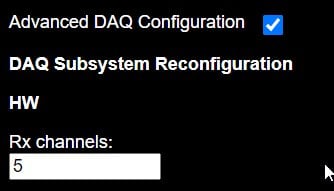
The new code is designed to be compatible with x-channel Kerberos/Kraken style receivers. So it can support the four-channel KerberosSDR and the five-channel KrakenSDR as well as any DIY system with x-channels. The only change required will be setting the RX channel count in the configuration. The main disadvantage with the older KerberosSDR hardware is that even with the new code, you still will need to manually disconnect the antennas when calibrating (e.g., at startup or frequency retune).
If you have a KerberosSDR, you can try this code out right now by cloning and installing heimdall_daq_rx and krakensdr_doa. Everything, including install instructions and documentation, is in the development branches of our GitHub repo (please note this setup may be a little involved at the moment as the code is evolving rapidly). When the code is fully released, the ready-to-use Pi4 SD card will be usable with KerberosSDR simply by changing the RX channel count.
We have also considered the Android App and are happy to announce that all our previous KerberosSDR customers will receive a license for the upgraded app when it is released too. KerberosSDR customers, please keep an eye on the email address you used with your order for updates on that in early 2022.
Testing & Development
This week, the 4.5V bias tees were put through a stress test by powering five wide-band LNAs. This is working beautifully with a 5V, 3A power supply. A 3A supply will be required if you are intending to power an LNA on each port, as the KrakenSDR itself draws 2.2A maximum load when all tuners and the noise source is active.
We have also been testing how the KrakenSDR could be coupled with a small, low power, 10dBm 433 MHz ISM band CW beacon based on the Heltec WiFi Lora 32 hardware, but modified to run the LoRaFox fox hunting beacon software. The range of this low power beacon at 10dBm seems to be roughly three kilometers/two miles with the beacon obscured inside the glovebox of a car. We plan to provide more info on these tests in the next few weekly updates as we think there is an application for similar low power beacons combined with KrakenSDR for local asset, pet, or wildlife tracking.
We are also beginning work on our network mapping solution, which will allow users to run multiple KrakenSDRs in an area with all units uploading data to a central server over the internet. The server will run a web-based version of our Android app, collecting and plotting all bearing data on the same map, and determining a likely TX position. We hope to have a working beta out by the time we ship early next year.
KrakenSDR is a five-channel, RX-only software-defined radio (SDR) based on the RTL-SDR and designed for phase-coherent applications and experiments. Phase-coherent SDR opens the door to some very interesting applications, including radio direction finding, passive radar, and beam forming. You can also use KrakenSDR as five separate radios.
KrakenSDR is an upgraded version of our previous product, KerberosSDR. It provides a fifth receive channel, automatic phase-coherence synchronization capabilities, bias tees, a new RF design with cleaner spectrum, USB Type-C connectors, a heavy-duty enclosure, upgraded open source DAQ and DSP software, and an upgraded Android app for direction finding. We are constantly working on new software and sample applications, so keep an eye out for future updates!
We expect to ship the first 1000 KrakenSDR units to backers before the end of March, 2022. And by the time that happens, we’ll have published a full range of in-depth tutorials to help you get started.
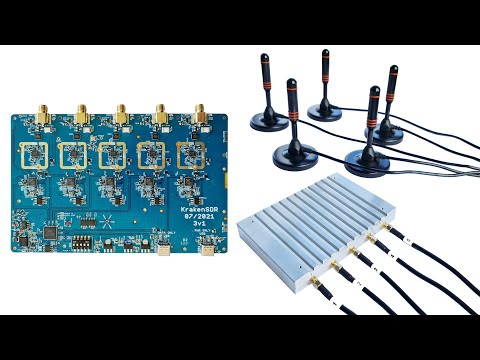
KrakenSDR Promotional Video
Some of our previous KerberosSDR and KrakenSDR posts might also be of interest.
With a 5-channel phase coherent RTL-SDR interesting applications like radio direction finding (RDF), passive radar and beam forming become possible. It can also be used as five separate RTL-SDRs for multichannel monitoring.
KrakenSDR Updates
Like many other projects we have been severely delayed by COVID work restrictions and the effects it's having on the supply chain, and I'd like to thank everyone who is keen to get a hold of a KrakenSDR for their patience. But the ball is rolling faster now and we have finally received our latest KrakenSDR prototypes! Testing has been ongoing for the last few days, and apart from a few minor issues everything is working brilliantly. At this stage we are confident in the design and are making plans to begin the crowdfunding campaign soon.
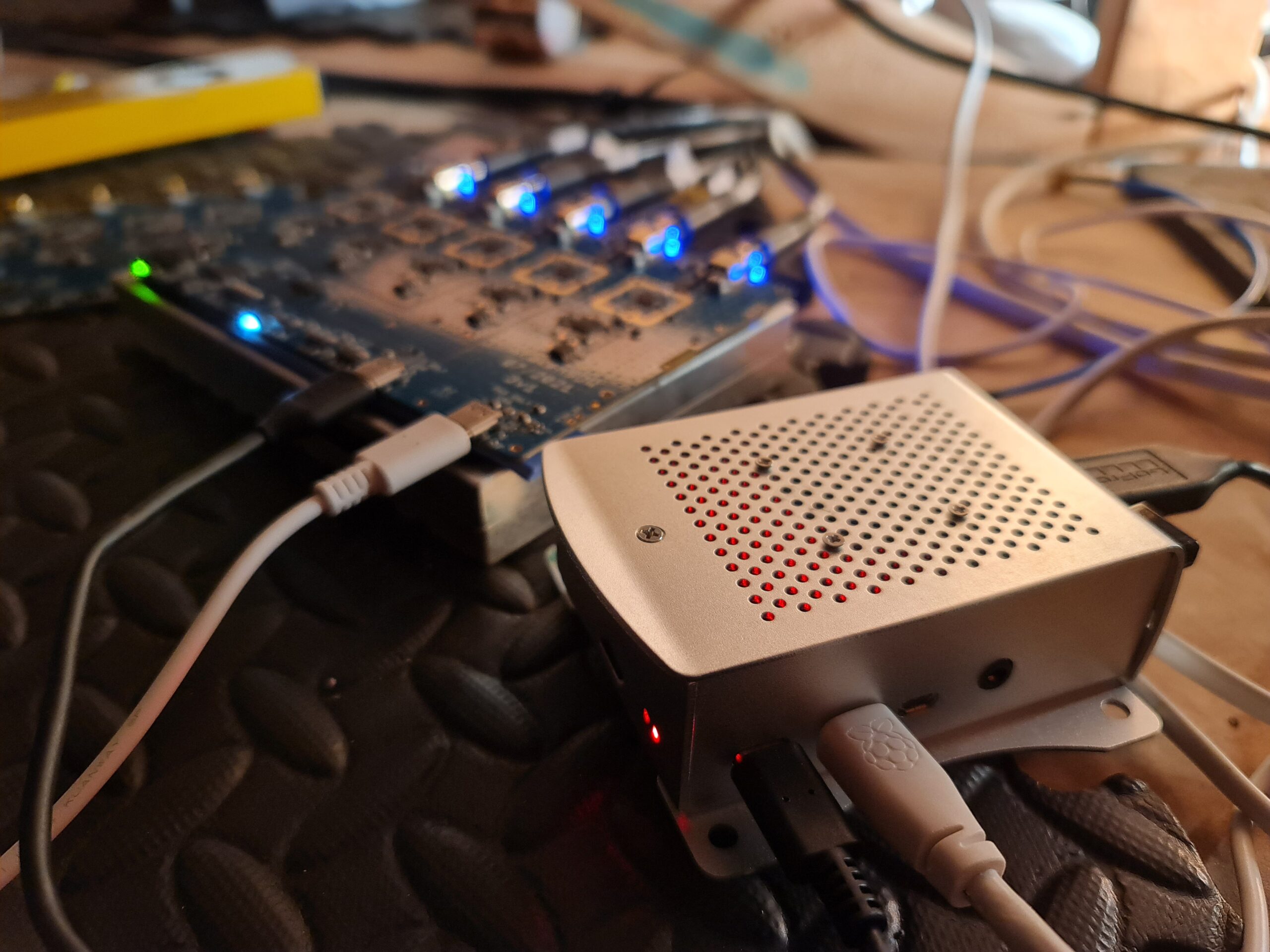
The latest KrakenSDR Prototype PCB running on a Pi 4.
Supply Chain Constraints
The first batch will unfortunately be limited to 1000 units maximum due to supply constraints and we expect this first batch to be ready 2-3 months after the campaign finishes. So if you are after a unit ASAP, please ensure you are on the CrowdSupply mailing list as we fully expect demand for the first batch to outstrip the supply.
But if you are willing to wait, batch 2 will be still be available at the campaign special price. we will have a second batch available for early preorder at a discount (sorry due to higher than expected shipping and skyrocketing component prices we can't discount the second batch at the moment). Please keep in mind that the second batch will be at least 6 months away due to the long supply chain resulting from the pandemic.
Next Steps
The next stages in hardware development will involve finalizing our custom milled aluminum enclosure, testing one last prototype, and beginning mass manufacturing when the crowd funding campaign is over.
Work on the software is ongoing, but the beta version of our new DAQ firmware and direction finding DSP software layer is stable and already available on the krakensdr GitHub at https://github.com/krakenrf. Everything resides in the development branches and there is full documentation on the code structure available in the Documentation folder. This code can also be used on the KerberosSDR by editing the configuration files to specify 4 receivers instead of 5.
By the time the units ship out we will have a ready to use SD card image for the Raspberry Pi 4 and a quickstart guide available.
KrakenSDR DAQ and DOA DSP Web Interface
Android App
We have also been working at improving the Android direction finding companion app. This app was made during the KerberosSDR release a couple of years ago, and is used to plot and log the direction finding bearings being generated by the Kerberos/KrakenSDR unit, combining it against the GPS and movement data generated by the Android phone. This Android phone + KrakenSDR combination results in a powerful multipath resistant radio direction finding tool, and once enough data has been collected (usually after a few minutes of driving) it is able to determine where the most likely transmitter location is.
The upgraded app makes use of the full 360 degrees of direction of arrival and multipath data that is generated by the KrakenSDR, resulting in a more accurate determination of the transmitter location, and a better understanding of the uncertainties. It also allows users to visualize multipath. There are also various bug fixes and improvements made overall. We are planning to transition this app into a paid app, but all KrakenSDR backers will receive a license for free and the older KerberosSDR app will remain free.
KrakenSDR Android App Improvements
KrakenSDR Antennas
To work as a radio direction finder, KrakenSDR needs five antennas. If you plan to use them in a circular array, they need to be omnidirectional antennas such as whips or dipoles. So to go along with the KrakenSDR we will be selling an optional set of five magnetic whip antennas which can be mounted on for example, the roof of a car. (Please note the magwhips shown in the photo may differ slightly from the final ones sold).
KrakenSDR Magnetic Whips on a Car Roof
We have also been working with Arrow Antennas in the USA, who are producing a KrakenSDR 5-element dipole array antenna which is great for use in fixed sites (for example on the roof of a house). The antenna will be sold by Arrow antennas (not by us), and the future link (not active yet) will be http://www.arrowantennas.com/arrowii/kraken.html. We expect them to generate this page within the next few days. This antenna has been used in all our fixed site experiments as you can see in some of the YouTube videos, and works very well. (The image below show a prototype, we're told the final version may look slightly different.)
Arrow Antenna 5-element antenna array for the KrakenSDR
Future Work
DAQ & Direction of Arrival (DOA / Radio Direction Finding) :
Work on the DAQ and DSP software is coming along well and this is mostly complete and runs stable on a Raspberry Pi 4. There are just now bug fixes and minor features being added. Intermittent 'bursty' signal handing is already working, but we are working on improving it's sensitivity to weak bursty narrowband CW signals which can still be problematic to detect. The Android app is also currently being field tested.
Passive Radar:
Work on new passive radar software is also ongoing and we expect to have something ready for experimentation and with quickstart guides before shipping. At the moment it is also still possible to use the older KerberosSDR software for passive radar, but we believe the new DAQ core software will run things much smoother. The goal for the new software is to not only plot a range-doppler map, but to combine it with direction finding and be able to plot radar detections on a map. This feature may require operation on a device faster than the Raspberry Pi 4, such as GPU based device like a NVIDIA Jetson.
Beam Forming, Interferometry:
One application we think the KrakenSDR would be great with is amateur radio astronomy via interferometry. The ability to combine multiple small hydrogen line dishes spread out over several meters of area should result in much greater radio imaging resolution, without needing to deal with a single huge dish. It may also allow for electrically steering a beam without needing to rotate the dishes.
Advanced Direction Finding + Advanced Log Management:
At the moment networked direction finding (direction finding via multiple fixed or mobile sites spread out around a city or area) is possible via the third party RDF Mapper software, but we aim to create our own advanced platform in the near future. The goal is to have software that will automatically log and alert when a signal of interest appears. For some examples we can see this being used to help coastguard locate distressed marine pleasurecraft that typically do not have AIS via their VHF radios, locate emergency beacons, for animal/wildlife/asset tracking, and monitoring for illegal/interference transmissions.
At this stage the core DAQ+DSP software will also be updated to support monitoring multiple simultaneous channels within the available 2.56 MHz bandwidth, and with a scanning and beacon ID detection feature.
Research into field applications:
One example we hope to test is the operation of KrakenSDR on a drone. With great line of sight from up in the sky, localizing a transmitter should be fast. Another example could be actually visualizing signals like light via augmented reality.
Some of our previous KerberosSDR and KrakenSDR posts might also be of interest.
Mark Jessop (@vk5qi) has recently been experimenting with a LED based hardware vehicle heads up display (HUD) that he has created to be used together with our KerberosSDR. The KerberosSDR combined with four antennas in a circular array determines the bearing towards a transmitter, and then the HUD displays this bearing visually on a circle.
The HUD is cleverly designed so that the LEDs reflect on the windshield of the car, allowing for the lights to be safely seen on the windshield while driving. More videos of the HUD being developed and used can be seen on his Twitter feed.
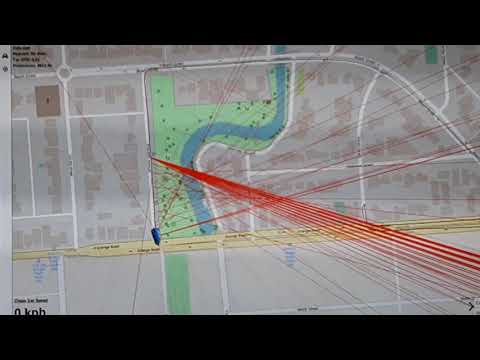
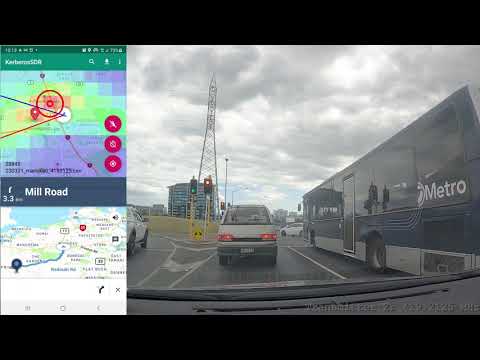
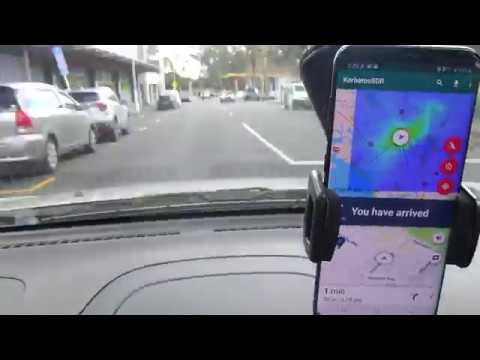
In the video below Mark also shows how he combines KerberosSDR bearing data with his Chase Mapper software, which he uses for tracking down radiosonde weather balloons.
For the last few months I've been piecing together a radio direction finding (also known as 'fox-hunting') system using a RTLSDR-Blog Kerberos-SDR, a custom-made antenna array, and my 'ChaseMapper' software. I have also recently added a 'heads up display' (HUD) box which displays the direction-of-arrival and SNR data from the Kerberos-SDR software.
I hope to put together a longer video showing how the system goes together sometime in the future, but this short clip shows how the system is used in the final approach to a radio transmitter (in this case, a 144 MHz transmitter from one of the Amateur Radio Experimenters Group organised night fox-hunts).
The antenna array consists of two 4-element nested arrays, one with 200mm antenna spacing for the 70cm band, and another with 425mm antenna spacing for the 2m band. The array is mounted to my car roof-racks, with phase-matched coax entering the car through a window-mounted bulkhead.
The red lines on the map indicate a bearing line produced by the Kerberos-SDR software. As we drive around the fox location, bearings are plotted, and we look for where they cross. There are always some inaccurate bearings due to multi-path issues, and misalignment between bearing acquisition time and the position/heading of the car, but it works well enough to be able to allow navigation to the transmitter location. The display can get fairly busy, so there are options to threshold by signal quality, and to 'age out' bearings over time.
The beeping noise you hear in the video is the signal from the radio transmitter, in this case a 144.390 MHz beacon which transmits short CW 'pips'. We were listening to the signal with an Icom IC-705 attached to an omnidirectional antenna so we knew when the transmitter started and stopped (and hence when to trust any bearings produced by the DoA system).
Towards the end of the video you can see the HUD in action, with the blue lights showing the estimated signal arrival direction, relative to the front of the car. As I slowly drive past the transmitter location (which I could see out the side of the car), the bearings swing to the right, and the SNR shows as being very strong. This is exactly what the display was intended for - it's not about getting hyper-accurate bearings, but more knowing when you need to turn left/right, or get out of the car!
Thanks to Will Anthony for capturing the video while I was driving!
Finding a Radio Fox using a Kerberos-SDR + ChaseMapper
KerberosSDR is our 4-channel phase coherent capable RTL-SDR unit that we previously crowdfunded back in 2018. With a 4-channel phase coherent RTL-SDR interesting applications like radio direction finding (RDF), passive radar and beam forming become possible. It can also be used as four separate RTL-SDRs for multichannel monitoring.
KerberosSDR is soon to be replaced with the upgraded KrakenSDR, which will begin crowd funding on Crowd Supply later this year. Be sure to sign up on the Crowd Supply page to be updated once the campaign releases as due to long supply chain crisis related lead times, only a limited amount of stock will be initially available.
Back at the end of 2018 we successfully crowdfunded KerberosSDR on Indiegogo which was our first coherent capable RTL-SDR that consisted of four RTL-SDRs on a common clock, with built in noise source and phase synchronization hardware. KerberosSDR enabled interesting experiments such as radio direction finding and passive radar to be implemented at a much lower cost.
KerberosSDR has taught us many things, and we're now working on the next iteration which will be a significantly refined version known as "KrakenSDR". KrakenSDR will be a five channel common clocked RTL-SDR, with built in noise source and automatic phase synchronization hardware.
Please sign up to the CrowdSupply KrakenSDR email list on the CrowdSupply page to be notified once crowdfunding is launched so that you will be sure to catch the early bird pricing discounts. We expect to be able to launch sometime within the next two months.
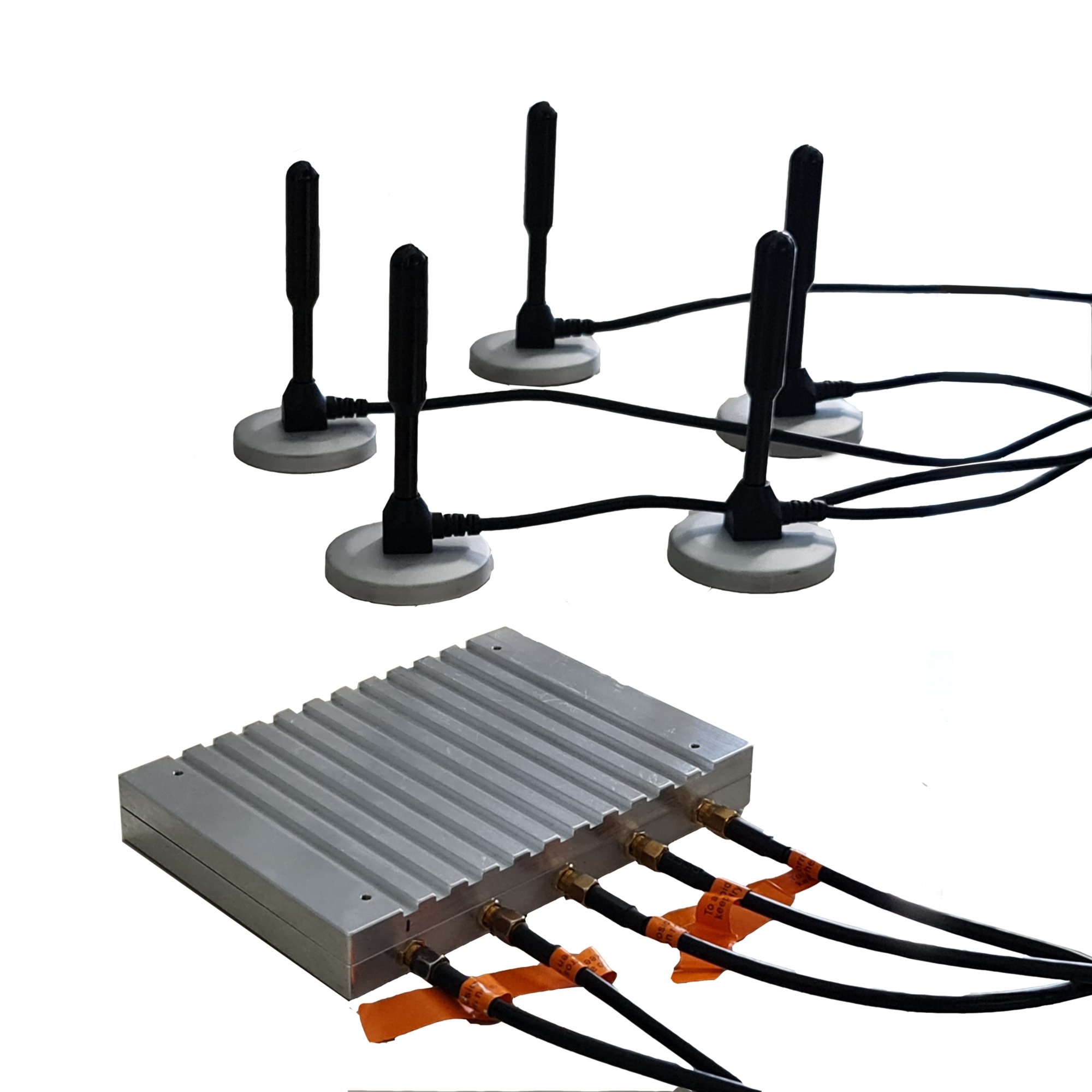
KrakenSDR Prototype with 5-Magnetic Whip Antennas
Unlike KerberosSDR, KrakenSDR has built in switching hardware that when combined with the new software, will automatically achieve sample and phase calibration without needing to manually disconnect the antennas each time the unit is powered up, or each time the frequency is changed. This allows for much easier mobile and remote use scenarios.
The addition of the fifth tuner also allows us to use a five element antenna array, which results in much improved direction finding accuracy and better multipath rejection. USB-C is also now used on both ports for greater port reliability, the PCB has been redesigned for lower noise, software controlled bias tees are present on each port, and it comes in a tough CNC milled enclosure that doubles as a heat sink.
Finally there is a new open source software base which uses the new synchronization hardware to perform auto phase calibration, allows for intermittent signals to be squelched and tracked, enables long term phase synchronization monitoring, and enables new possibilities for future code expansion especially for passive radar which we will be testing in the upcoming months.