Outernet is a relatively new satellite based file delivery service which can be received with an RTL-SDR dongle. They continuously send out useful data like weather reports, news, APRS data as well as files like Wikipeda pages, images, videos and books. Previously we posted a tutorial that shows how to set up an Outernet receiver here.
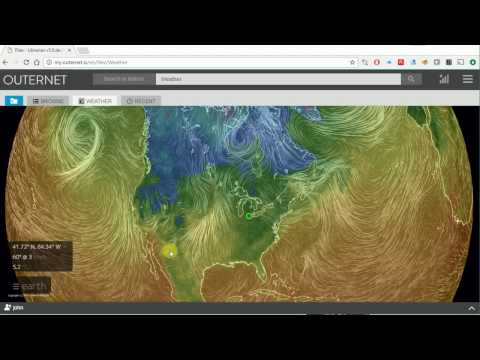
If you instead prefer video tutorials, then two YouTube channels have uploaded Outernet set up tutorials. The first tutorial is by MKme Lab. In this video they set up Outernet using a Raspberry Pi and a Lipo battery for portable operation. Once setup he shows the Outernet browser and weather app in action.
The second video is by John’s DIY Playground and is similar, but goes a bit deeper into setting up the software on the Raspberry Pi and shows how to point the patch antenna towards the satellite.
Over on YouTube user GetOffMyHack has uploaded a video that shows his development of a Mac based general purpose tuning app for the RTL-SDR, which was written in the Swift programming language. Swift is a programming language which is designed for creating apps for a wide range of smart Apple devices.
GetOffMyHack’s program currently has a spectrum and waterfall view, can tune to any frequency, demodulate NFM and AM, and it also has a built in CTCSS decoder. At the moment the software and code is unreleased, but he writes that in the future the code will be released and made open source once he reaches the next version in the development cycle. Keep an eye on his YouTube channel for any updates.
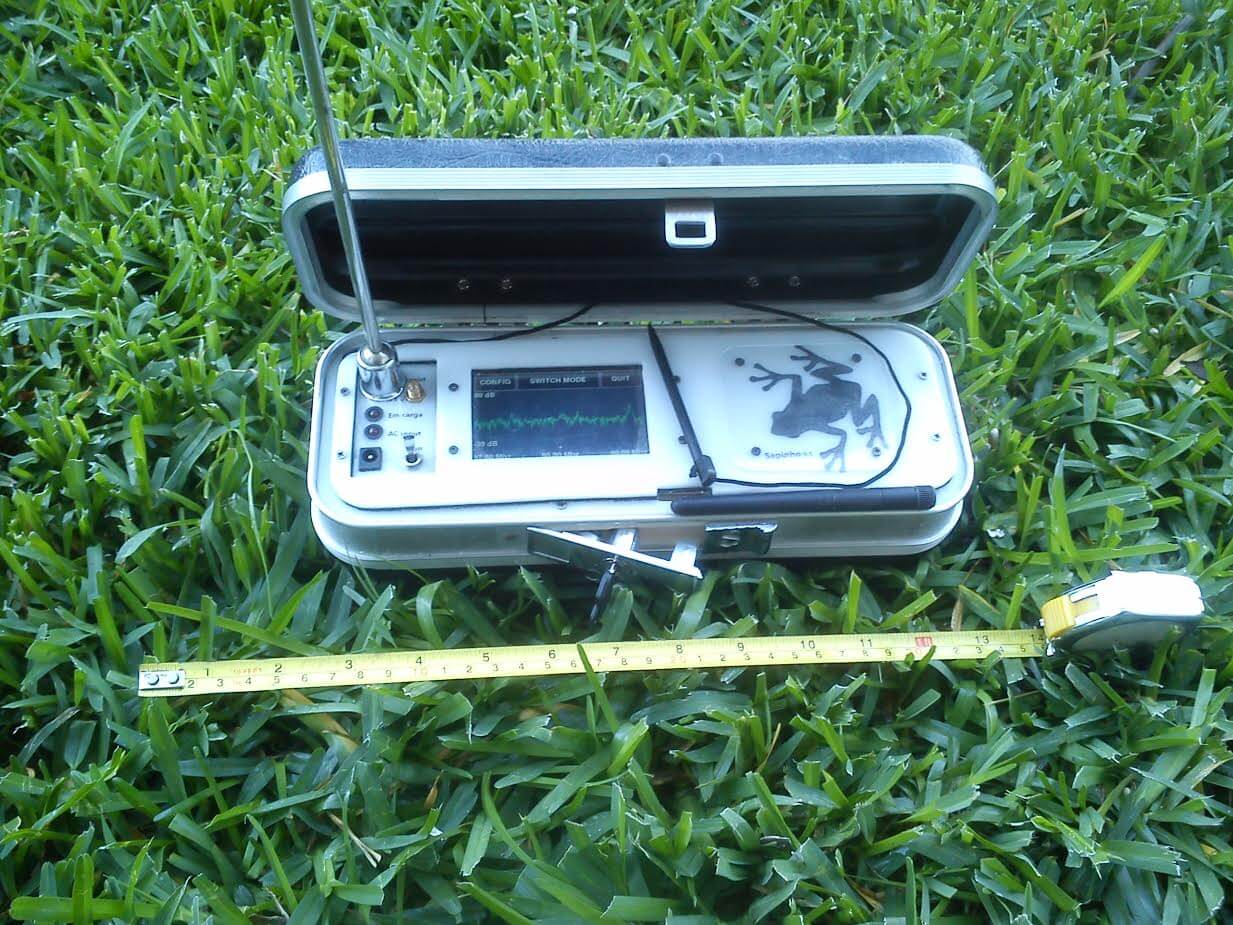
Frequent RTL-SDR.com reader Rodolfo recently wrote in to us wanting to share a portable RTL-SDR set up that he has produced. From the supplied photo the portable unit looks very robust and really well built. We hope that it will give inspiration to others wanting to make portable units as well. Rodolfo wrote:
Last year, a friend of mine in the telecommunication services industry, was talking to me regarding some kind of sporadic interferences he was getting in their devices, and asked if I can do something about it. I spend some days trying to figure a way to help him, as it was (and is) a good friend of mine. I seat in my library at home, and start to scratch some designs, based in rtl-sdr.com article published in 6 October 2014: “RASPBERRY PI RTL-SDR SPECTRUM ANALYSER SCANNER”. Some weeks later, I get the designs and get a good cup of coffee with him. After the second cup, and I get a “go” sign, and so it born a portable spectrum capture that I called “sapinho”, as my youngest son nickname. Just “for the record”, “sapinho” in Portuguese means a little frog – you can jump from place to place to scan the RF band.
So, the device is very simple, the great problem was finding the most small configuration possible, to meet the portable specifications:
Raspberry pi ver. B;
NooElec RTL Receiver;
“FreqShow” python software.
A pair of LM2596 DC-DC;
3.5 ‘’ TFT LCD Touch Screen for Raspberry Pi;
6VDc battery;
Cable;
Expandable antenna;
Enthusiasm.
Trying to get the most of it, I put a wifi dongle, so that he can connect to a nearby hotspot, or get a “had oc” connection for remote control. There is a plug for charging the batteries, and two red leds (one for the charging , and the other for operation status). All of it was install in a 100 x 300 x 100 (mm) portable aluminum box.
Stratux is an RTL-SDR based project that gives small plane pilots access to ADS-B data, without having to purchase an expensive commercial ADS-B installation. It consists of software that runs on a Raspberry Pi, and two RTL-SDR dongles to receive both 1090 MHZ ADS-B, and 978 MHz UAT. The decoded data is then streamed via WiFi to a tablet running navigation aide software with charts for pilots.
Typically Stratux kits come with two standard ‘Nano’ styled RTL-SDR dongles. However, users of the Stratux system have been reporting problems with overheating, and with the Pi struggling with the high current demands of a typical setup which includes two RTL-SDR dongles, active WiFi broadcasting, a GPS unit and an optional cooling fan. A typical RTL-SDR dongle draws 280 mA, so two dongles are already pulling 560 mA.
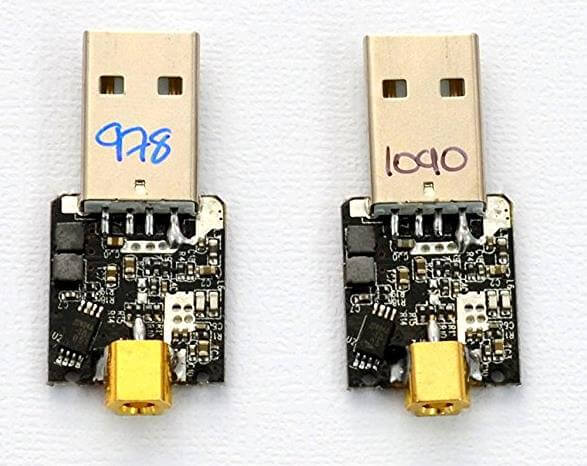
Chris, creator of the Stratux software and seller of Stratux kits has just released a new low power RTL-SDR dongle (kit with antennas). The cost is $35 USD for two dongles (one for 1090 MHz and one for 978 MHz). The dongle obtains its low power feature by using a switching regulator instead of a linear regulator as the main 3.3V power regulator on the PCB. Normally you would not want to use switching regulator for the main regulator in an RF device because they are very noisy in terms of RF interference generated. However switching regulators are much more efficient compared to linear regulators, and thus save a lot of current wastage. Other dongle manufacturers like ThumbNet have actually gone the other way, removing the secondary 1.2V switching regulator from the standard dongle design, and using a linear regulator instead. The ThumbNets end up with lower noise, but draw 400 mA of current.
With the switching regulator the new Stratux dongles only draw about 185 mA, a saving of almost 100 mA. They also generate 0.5W less heat. Users of the Stratux system have so far been impressed with them and have not noticed any appreciable difference in ADS-B performance. We think that these low power dongles might also be of interest to people using them on mobile phones or battery/solar powered remote installations.
The new Stratux low power RTL-SDR dongles.
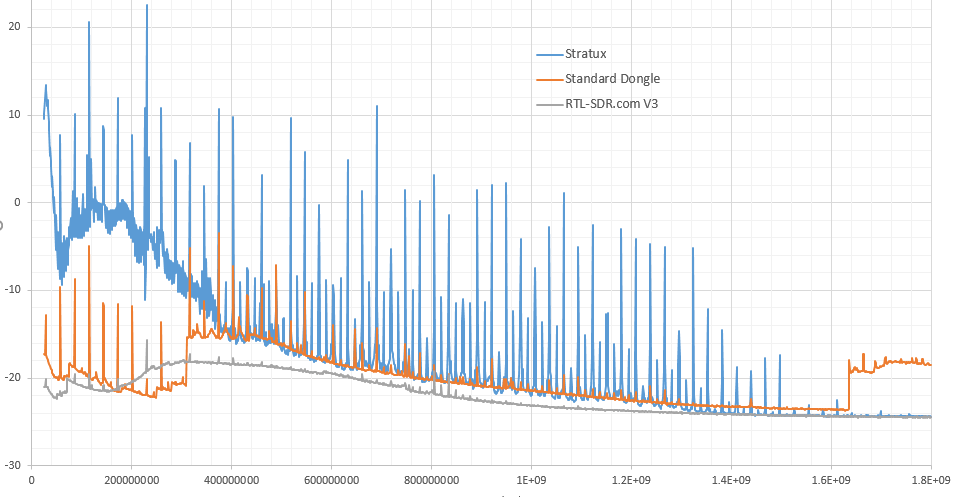
During testing, Chris found that there was no significant noise floor increase visible on the 978 MHz & 1090 MHz frequencies. Most of the switching noise increase appears to be on the lower frequencies, but those frequencies are not relevant for the Stratux use case anyway.
Chris was kind enough to send us some samples of the new low power dongles. First we ran a noise floor scan with rtl_power to determine the effect of the switching regulator. The results show that the spurs and noise floor readings have definitely increased by a significant amount, with an especially large noise floor rise below 400 MHz. In SDR# wandering switching noise spurs are also visible throughout the spectrum, but they tend to weaken in strength once an antenna is connected.
Stratux vs Standard Dongle vs V3 Dongle Noise Floor Scan
Fortunately, ADS-B is very tolerant to spurs and is generally not affected by this type of noise. We’ve only given the Stratux a quick test on ADS-B so far, but when compared against another ‘nano’ styled dongle the Stratux performed nearly identically (in fact even a little better) in terms of messages received. The two dongles were connected to the same antenna via a splitter and we logged the number of messages received in 10 minutes.
Quick ADS-B Reception Test
In conclusion the Stratux RTL-SDR set out to solve the mobile power issues suffered by people using the Stratux system. It has achieved that with an over 100mA saving in current use. The new Stratux dongle is much noisier, but the noise does not appear to significantly affect ADS-B reception as seen by our results and from the reports from Stratux users who beta tested this dongle.
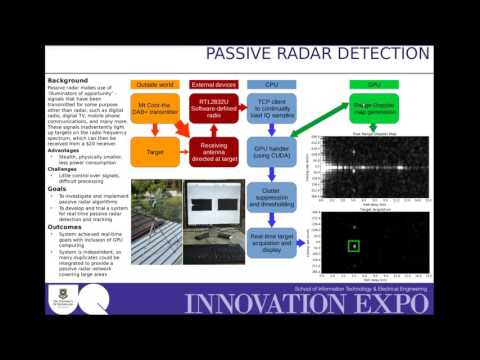
Marcus Herber is a 4th year electrical engineering student at the University of Queensland, Australia. For his final year thesis he set out to build a real time RTL-SDR based passive radar with clutter suppression and automatic target acquisition. On YouTube he’s uploaded a video that gives a quick overview and demonstration of his project. The description reads:
For my final year electrical engineering thesis, I developed a real-time passive radar system with clutter suppression and target acquisition. This was mainly able to be achieved through the use of GPU computing, with CUDA. With any slight improvement of the following hardware (especially the GPU), the system would be able to perform much faster, and increase the number of frames per second. Choosing a slightly better GPU would also allow for a better SDR, with a faster sampling rate.
All the signal processing and the algorithm was done in Python 3, with the Anaconda distribution.
Passive radar works by looking for signals being reflected off objects such as aircraft. Strong signals from broadcast towers can easily be reflected off an aircraft towards a directional antenna, then correlated with the broadcast signal received from another antenna. Then with some clever processing the relative speed and distance of the object can be determined.
Over on YouTube Adam 9A4QV has uploaded a video showing how to build a DIY bandpass filter for 137 MHz. This can help improve the reception of NOAA and Meteor M weather satellites, by blocking strong out of band signals. Adams design is a 132 MHz – 142 MHz Butterworth bandpass filter which gives about 35 dB attenuation outside of the pass band. He’s also posted a write up documenting the filter design on his website.
Lucas Teske recently went ahead and built the 137 MHz filter suggested by Adam. Lucas didn’t have the correct capacitor values so he ended up cascading several in series. His results showed that the filter did improve his reception significantly.
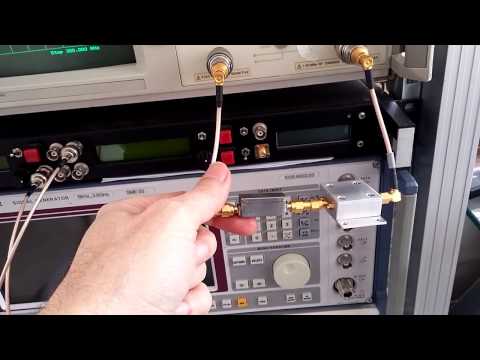
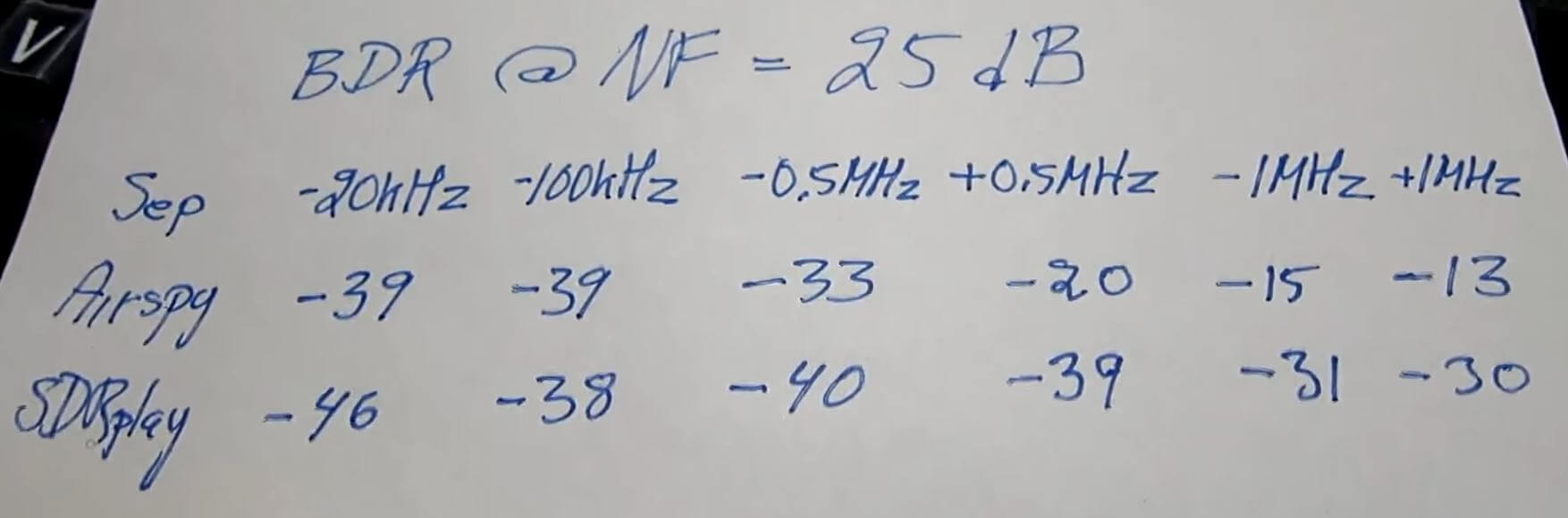
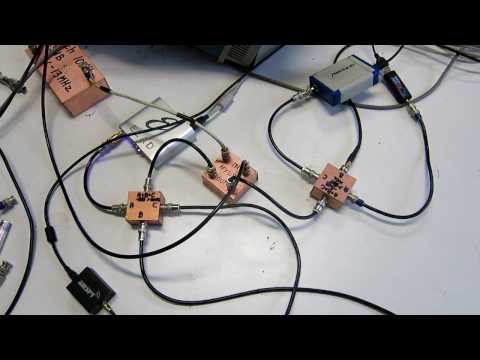
Over on YouTube Leif SM5BSZ has uploaded two new videos. The first video shows a set up that compares the Airspy and the SDRplay RSP on several lab tests that test for dynamic range performance at various frequency offsets. The Airspy definitely shows better results, but Leif notes that the differences are fairly small. The Airspy and SDRplay are two SDRs that compete in the mid range SDR price bracket.
Smaller is better. Each value represents the amount of attenuation used (in dBm) that causes a 3dB loss from reciprocal mixing
airspy-sdrplay2
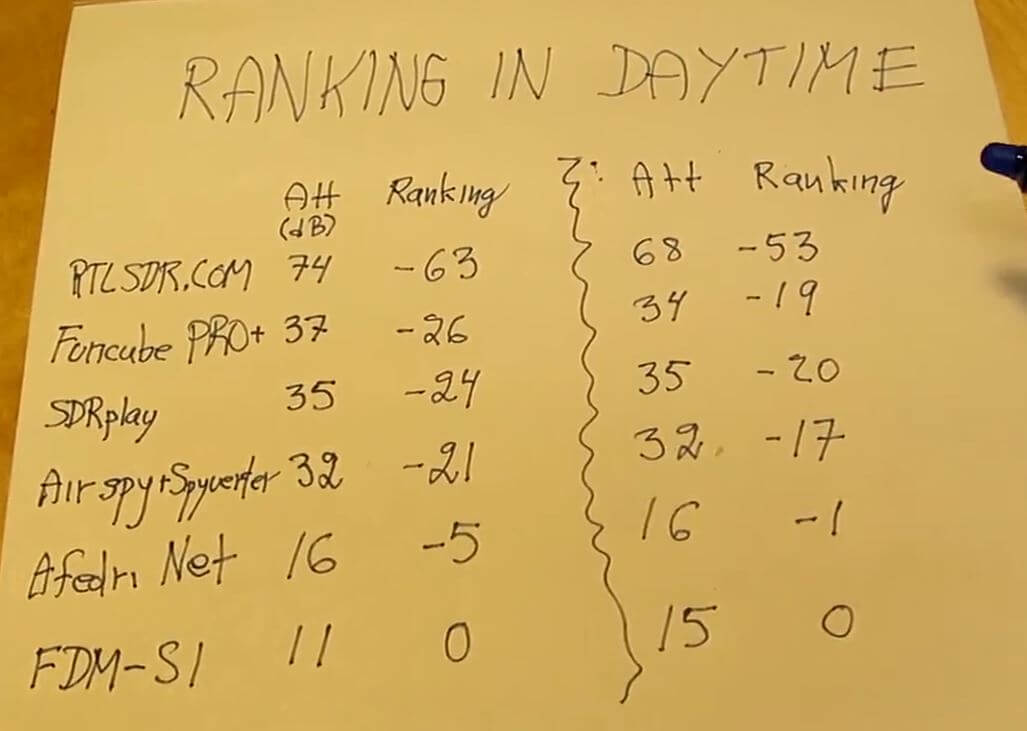
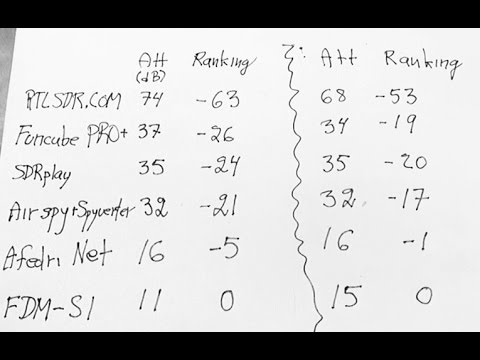
As lab tests can only approximate real world performance, in the next video Leif does a HF reception comparison on a real world antenna. In this video he compares our RTL-SDR.com V3 in the special direct sampling HF mode, a Funcube Pro+, SDRplay RSP, Airspy+Sypverter, Afedri Net, and an FDM-S1. The test injects an artificial signal and combines signals from a real antenna via an adjustable attenuator. Leif adjusts the attenuator to increase the antenna signals until the test signal strength is degraded by 3dB from reciprocal mixing/overload. That attenuation setting is then recorded.
The results for the daytime and nighttime results results rank the SDR’s in order from best to worst: FSM-S1 ($400 + shipping), Afedri ($259 + shipping), Airspy+Spyverter ($218 + shipping/$149 + shipping (mini)), SDRplay ($129 + shipping), Funcube Pro+ ($155 + shipping), RTL-SDR.com V3 direct sampling ($20 incl shipping). Interestingly the performance seems to correlate nicely with the unit cost. Of course the V3 in direct sampling mode can be significantly improved by using filtering on the front end, or just by using an upconverter and quadrature mode instead.
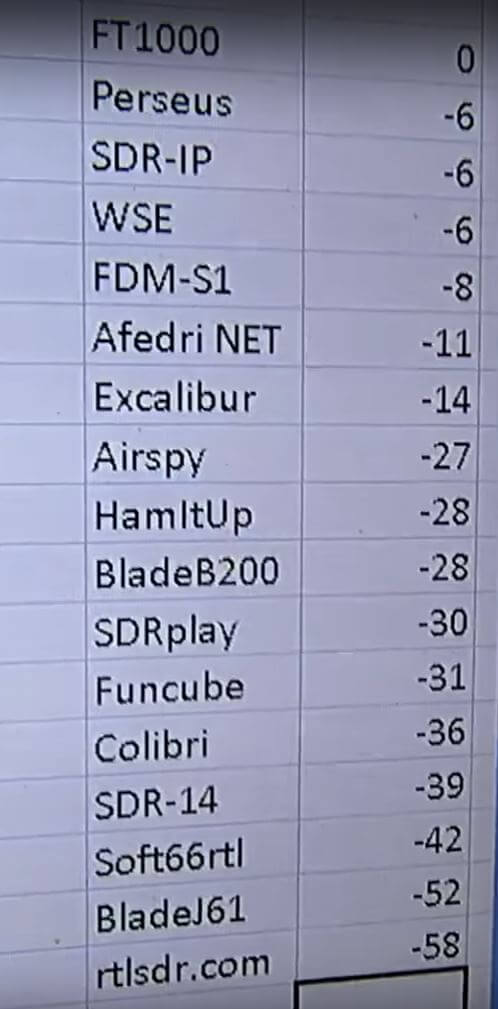
At the end of the video Leif also shows a final ranking of the HF performance of all radios tested in his previous videos.
Night time reception SDR rankingDaytime reception SDR rankingFinal Ranking
Akos from the RTLSDR4Everyone blog has recently uploaded four new articles. The first article reviews the new FlightAware Prostick Plus. The Prostick Plus is an RTL-SDR dongle optimized for ADS-B reception. It contains a LNA and 1090 MHz filter on board the dongle. In his review Akos tests the FlightAware Prostick Plus and compares it against the regular Prostick with external filtering. His results show that the Prostick Plus gets 18.45% more position reports and 5.4% extra max range in his location. His second post continues with the Prostick topic and warns customers to look out for sellers reselling, or relisting the Prostick for much higher ripoff prices.
FlightAware Prostick vs Prostick Plus
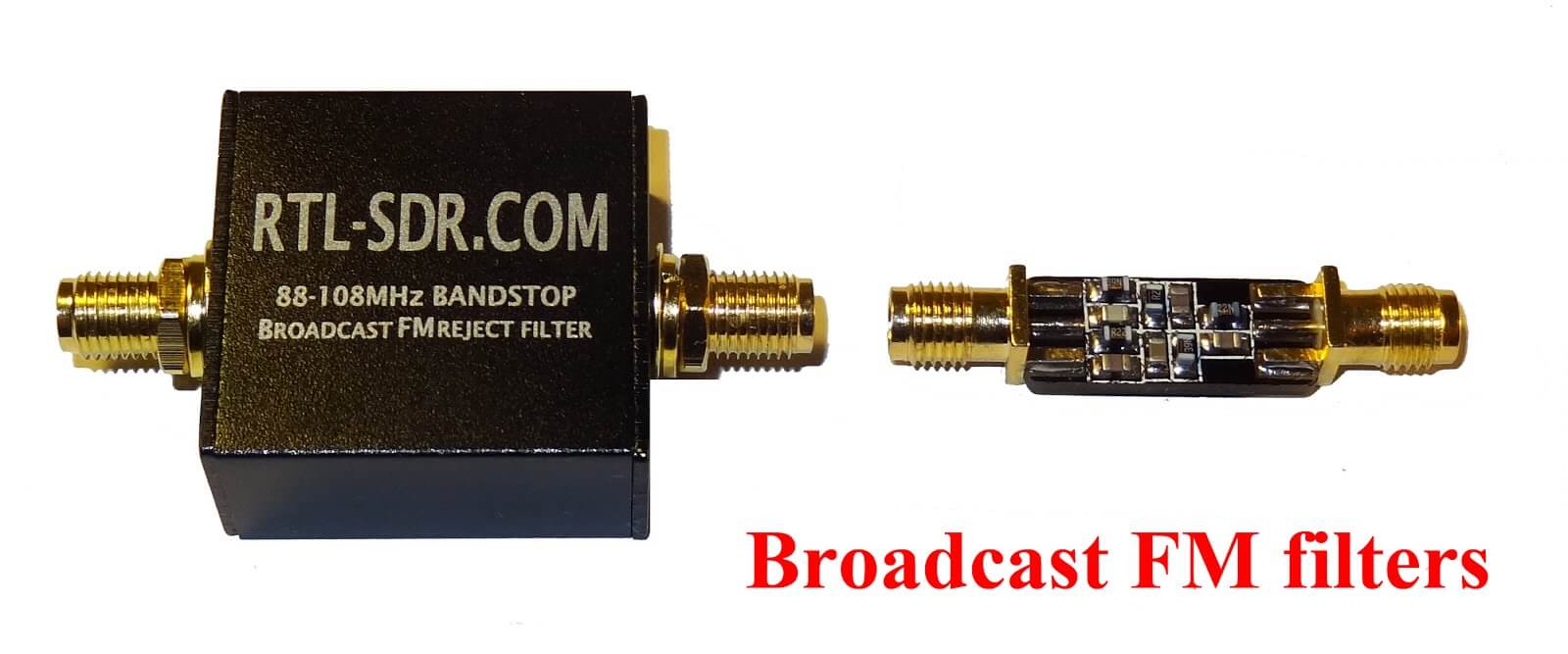
In his third post Akos reviews our RTL-SDR.com broadcast FM filter and compares it against another similar filter from another seller. His test results show that both filters can improve performace.
Two BCFM band stop filters tested by Akos.
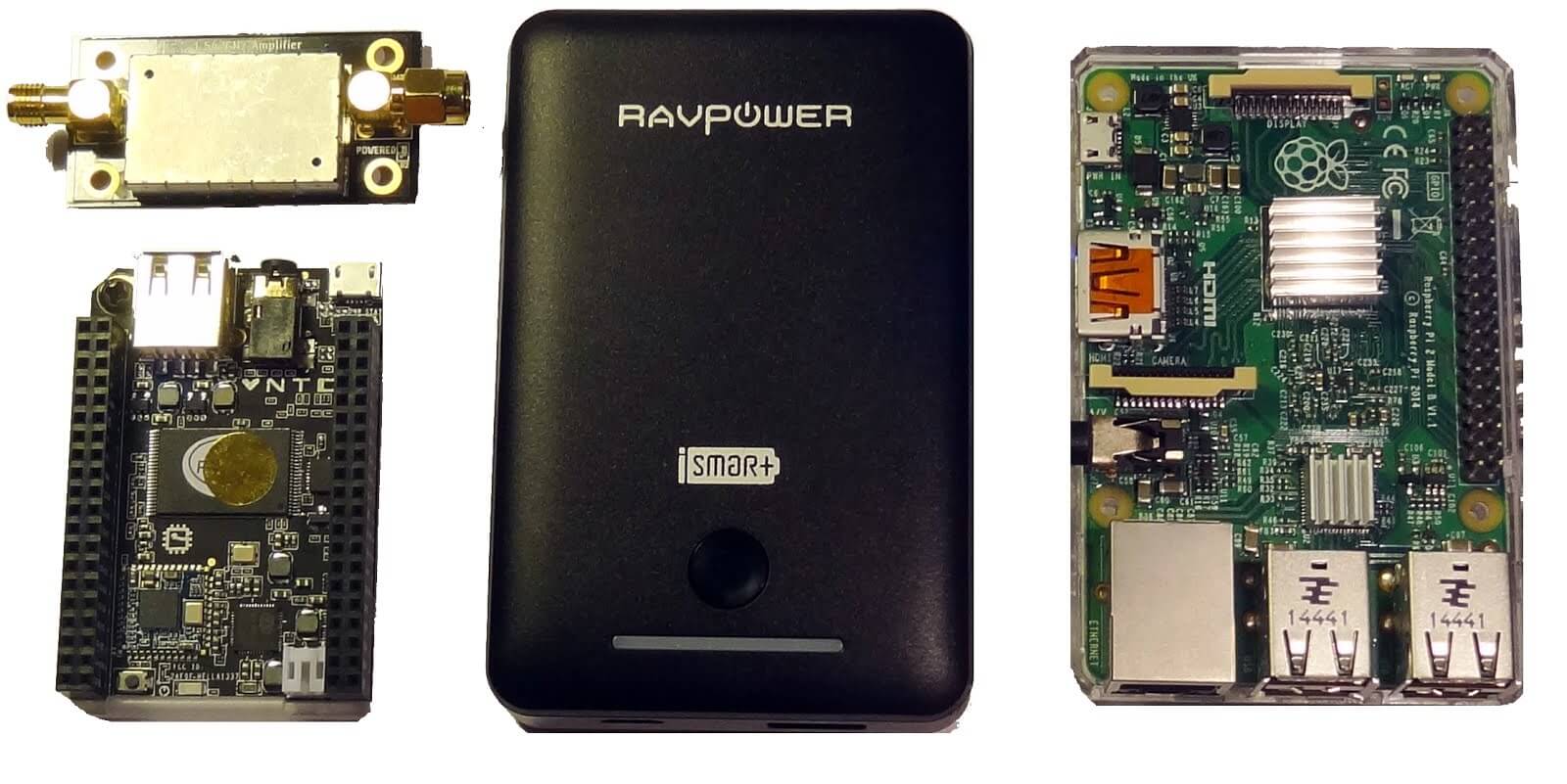
Finally in his fourth post Akos writes a tutorial on getting started with Outernet reception. He bought the full Outernet bundle which comes with a battery bank, CHIP single board computer, E4000 with bias tee RTL-SDR, LNA with filter and patch antenna. His post describes what each component is, then shows how to use them to receive Outernet. His results also seemed to show that our V3 dongle significantly outperformed the E4000 dongle at Outernet reception. The V3 received the Outernet signal with a SNR of 6.39 dB vs only 2.58 dB with the E4000.