Tagged: WWV

Setting RF Based Atomic Clocks via Computer Speakers

Over on YouTube, Jeff Geerling has uploaded an interesting video showing how RF-based atomic clocks can be set via signals generated from a computer speaker. In the USA, RF-based atomic clocks typically receive their atomic time signal from the WWVB 60 kHz longwave radio station, operated near Fort Collins, Colorado. In other countries, different time signal transmitters operate on different frequencies. However, these time signals cannot be received everywhere due to interference or geographic limitations, making RF atomic clocks useless in these situations. 

As Jeff points out, a Time Station Emulator program can be used to locally emulate the WWVB or other time signals, which, while not providing atomic time accuracy, could still make these clocks useful again.

Most interestingly, the emulator program requires no special RF transmission hardware. Instead, it simply uses your computer speakers to broadcast the time signal.

By carefully crafting a waveform at a specific audio frequency (out of normal human hearing range), the digital-to-analog converter will generate higher frequency RF harmonics, and one harmonic will match the time signal frequency required by the RF-based atomic clock. The wires running to the speakers, and the speakers themselves, will act as antennas, leaking these harmonics into the surrounding environment. This means that cheaper unshielded speakers, such as those found in phones and tablets, tend to work better.  

In the video, Jeff uses a HydraSDR and an upconverter to receive the time signal generated by the speakers. While the time signal cannot be seen on the spectrum itself, in the demodulated audio, you can hear the signal's pulses.
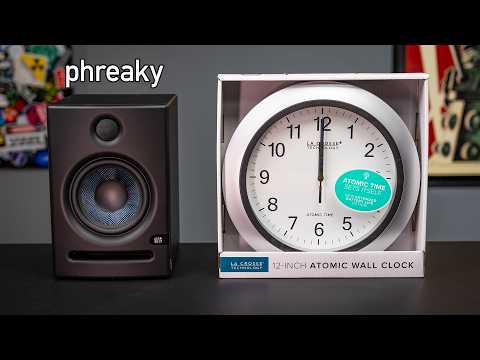
Van Eck Phreaking time to atomic clocks

WWV and WWVH Special Messages to Broadcast!

Starting from Monday September 16th and continuing through to October 1st, both WWV and WWVH shortwave time signal transmission stations will broadcast a special message from the Department of Defense to mark the centennial of WWV. These messages will be heard on 2.5, 5, 10, and 15 MHz. In addition from September 28 to October 2 a special WWV event will occur:

The world’s oldest radio station, WWV, turns 100 years on October 1, 2019, and we are celebrating!

From September 28 through October 2, 2019, the Northern Colorado ARC and WWV ARC, along with help from RMHam, FCCW, and operators from across the country, are planning 24-hour operations of special event station WW0WWV on CW, SSB and digital modes. Operations will shift between HF bands following normal propagation changes and will include 160m and 6m meteor scatter. We will be operating right at the WWV site and face a challenging RF environment.

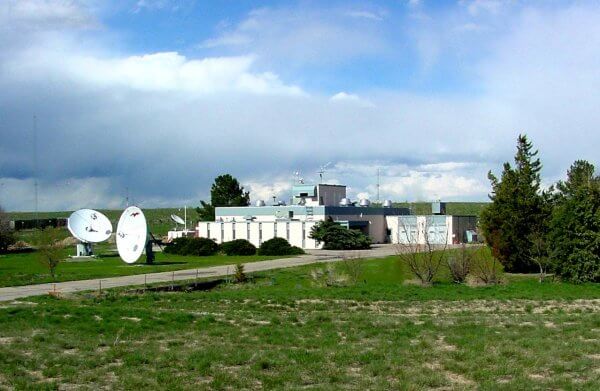
WWV is a [NIST] operated HF station based in Fort Collins, Colorado. It continuously broadcasts a continuous Universal Coordinated Time signal in addition to occasional voice announcements. It has been on the air since 1919 but began continuous broadcasts in 1945 from it’s final site in Fort Collins, Colorado. WWVH is a similar time signal, but based in Hawaii.

The WWV Transmit Building

The WWV time signal can be used to automatically set RF enabled clocks to the correct time. [Andreas Spiess] on YouTube recently uploaded a video where he emulates this signal in order to control clocks within his home. This is a great watch if you’d like to learn more about how these time signals work.

The time format itself is actually pretty simple and it’s possible to emulate with a number of devices from an Arduino to Raspberry Pi and of course Software Defined Radio.

#287 Remote Controller for Clocks (IKEA and others, DCF77, WWVB, MSF, JJY)