Category: News

RTL-SDR V3 Amazon Back in Stock + A Preview of our Upcoming Multipurpose Antenna Set

The RTL-SDR Blog V3 is back in stock in Amazon USA (Dongle + Antenna) (Dongle Only). International buyers can continue to purchase units from our store at www.rtl-sdr.com/store.

Apologies for the long out of stock period, we sold out of our remaining Amazon US stock almost immediately a few weeks ago due to a large Reddit thread which popularized the Reddit /r/rtlsdr forums (a big welcome to any new RTL-SDR users!). Amazon is currently processing the new stock and it should be ready to ship out in a few days.
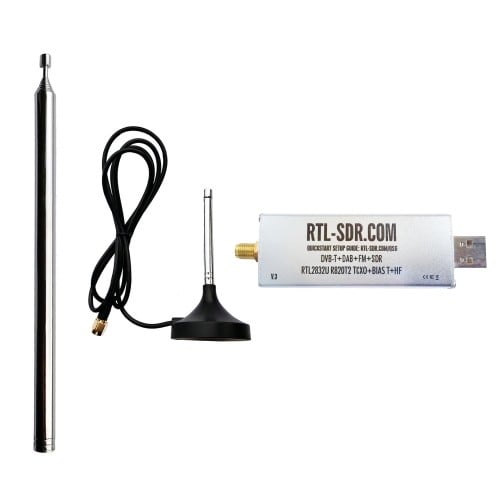
We also have a new antenna set in the works which should be ready for purchase in a few weeks. This antenna set is essentially a custom modified TV dipole with mounting kit. The kit will contain:

  • 1x Telescopic Dipole Antenna base with 20cm RG174 cable
  • 2x removable 22cm to 1M telescopic antennas
  • 2x removable 5cm to 13cm telescopic antennas
  • 1x 3M SMA RG174 extension cable
  • 1x suction cup window mount
  • 1x bendy tripod mount

Antenna Base

The telescopic antennas mount onto the antenna base via a screw, so they can easily be removed and interchanged between the large and small ones, or packed away for storage.

The dipole antenna base attaches to the suction cup or bendy tripod mounts using a 1/4″ camera screw. So any cheap camera mounting accessories like clamps, tripods etc can be used to mount the dipole as well.

The coax cable on the base also has a ferrite core choke on it to help decouple the feedline from the antenna, and there is a 100kOhm bleed resistor added to reduce static discharge.

Mounts

The included suction cup mount allows you to mount the dipole on a window (ideally outside) and orient it into a vertical, horizontal or V-Dipole position. The bendy tripod allows you to use the antenna on your desk, folded over a door, on a tree branch, pole, or anywhere that the tripod legs can be wrapped around.

Usage

The biggest problem that new RTL-SDR users face is the antenna. Most are starting off with a mag mount whip, and have no way to mount them outside where they should be for better reception. Keeping them inside can cause poor reception and increased pickup of local interference from electronics. Our dipole with the mounts aims to solve this problem.

Using a dipole generally results in better reception than with a mag mount whip, and also allows for easier outdoor mounting. The 3M coax extension cable allows you to get the antenna at least to a window in your room.

Note that although we recommend using the antenna outside, please remember to take the antenna back inside when not in use to avoid lightning/ESD/weathering problems. It is not designed for permanent outdoor mounting and please remember that any permanently mounted outdoor antenna should have good grounding to protect your radio against ESD and lightning.

For general use we recommend using the dipole in the vertical orientation as most signals are vertically polarized. The dipole can also be used in a V-Dipole configuration for excellent VHF satellite reception, such as for NOAA/Meteor weather satellites. Just extend the telescopic dipoles to be as close as possible to resonant at the frequency of interest using this calculator. Getting the length perfect is not critical, and actually using any length will still receive something.

Apart from NOAA we’ve also tested the dipole with L-band satellites. Together with an LNA and the smaller telescopic antennas it’s possible to receive Iridium and Inmarsat signals. Reception is not as good as a patch antenna, but you can still get the stronger AERO and Iridium signals quite easily. If you add a reflector made out of a small cookie tin the signals can be boosted further, and this is enough to receive the weaker STD-C and Outernet signals.

Eventually this dipole set will replace the mag mount antenna bundled with the dongles currently. Target price is between $9.95 – $14.95 for the antenna set by itself, and $25.95 for the dongle + antenna set. We expect the antenna set to be ready for shipping in 2-3 weeks, and about 3-4 weeks for the dongle + antenna set. More details and usage examples will be shown nearer to the release.
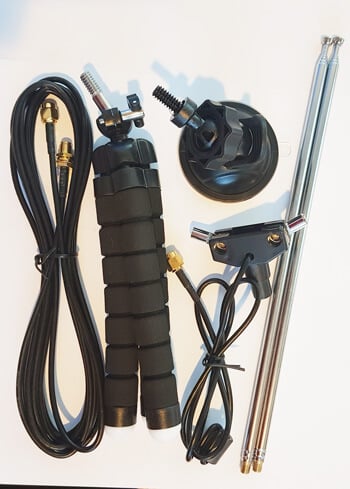
The Dipole Kit (Small antennas not shown)
The Dipole Kit (small antennas not shown)

Modded SUP-2400 Downconverters now Available at RXTXDX.com for $25

Last week we posted about KD0CQ’s interest check on his ready to go modded SUP-2400 downconverter. Interest was strong so the unit is now available for sale on a store he’s just set up at RXTXDX.com. The ready to go unit costs $25 USD including a 9V battery plug and F->SMA or MCX adapter.

Last year KD0CQ discovered that the SUP-2400 is a cheap $5 – $10 DirecTV (US satellite TV) module which can be hand modded into a downconverter for the RTL-SDR. A downconverter allows you to listen to frequencies above the maximum frequency range of the RTL-SDR by converting frequencies down into a range receivable by the RTL-SDR (or of course any other SDR). The modified SUP-2400 allows to you listen up to just over 4 GHz.

The SUP-2400 modification is moderately involved and requires soldering and desoldering SMD pieces, so this product is great for anyone who just wants a cheap and low cost downconverter which is ready to go. And at $25 USD it’s still very good value. Shipping within the USA is $7.75, and internationally it is about $13.50.

The modified SUP-2400 Downconverter

New Nano 3 RTL-SDR Available from NooElec

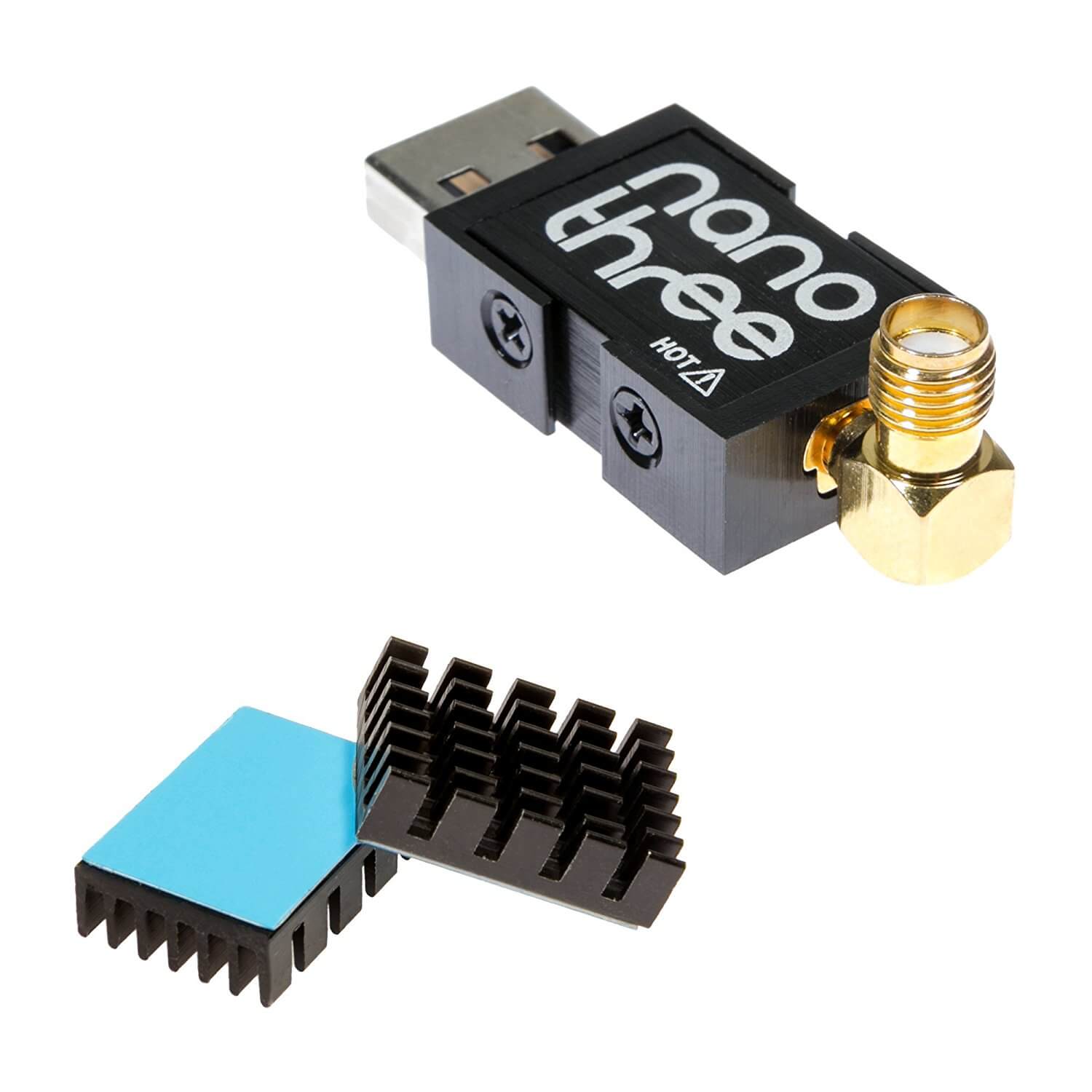
NooElec have just released their new NESDR Nano 3 RTL-SDR dongle for $27.95 USD. This is a new iteration in their line of ‘nano’ sized dongles, which are very small and suitable for use on small devices like Raspberry Pi’s and mobile phones. These nano form factor RTL-SDR dongles are also commonly used with the Stratux project which aims to bring lost cost ADS-B and UAT capabilities to small airplane pilots.

The Nano 3 appears to have a standard nano sized RTL-SDR PCB with TCXO inside, but comes with a new fully enclosed metal case with internal thermal coupling pads for cooling. A small external heatsink is also provided for optional use with the dongle. The dongle also uses a standard MCX connector, but the kit comes with an MCX to SMA F adapter. We’re not sure if the cooling from the small metal case will be enough to solve the L-band PLL lock problem, but perhaps when combined with the modified L-band driver tweak it might be enough. Failing that the external heatsink combined with slight airflow from a fan should be enough.

The NESDR Nano 3 small form factor RTL-SDR

The previous model called the Nano 2, was also redesigned from the generic nano models for better cooling and to be able to use a TCXO. However, some tests by Chris of the Stratux project seem to show that the Nano 2 is quite a bit noisier than the cheaper generic nano dongles, and actually runs about 40 degrees F hotter. Noise is a problem with these small dongles as the noisy digital and switch mode sections are much closer to the RF sensitive parts. Heat is also an issue due to the lack of PCB space for heat dissipation. Hopefully the Nano 3 resolves these issues with the metal case and improved cooling.

There are now several generations and models of these ‘nano’ RTL-SDRs available. All briefly described below:

  1. Generic Nano Dongles:
    1. $16.99 USD + shipping costs.
    2. First nano dongles designed originally for DVB-T TV use. Difficult to find now, no longer seems to be sold apart from one US seller on eBay.
    3. Still a good choice, but the lack of TCXO limits the usefulness for many applications.
  2. NooElec Nano 2:
    1.  $21.95 USD without TCXO, $23.95 with TCXO.
    2. Slight redesign of the generic dongles for better cooling and TCXO. Although cooling and noise benefits are debated.
    3. Good choice if you like the Nano form factor and want a dongle with accurate TCXO clock.
  3. Stratux Dongle (with ADS-B/UAT Antennas):
    1. Two dongles for $40 USD with antennas, or two for $35 USD without antennas. We also wholesaled a few from them and sell them on our store for intl. buyers @ 16.95 USD each incl. shipping.
    2. Redesigned for low power usage and less noise. Uses a switch mode power supply for less power wastage, but designed to be unaffected by any additional switch mode noise. Runs about 60 degrees F cooler than the Nano 2 and 16F cooler than the generic. Does not have an enclosure so is a bit more fragile. Also does not have a TCXO.
    3. Good choice for Stratux or similar projects might struggle with the power requirements of multiple dongles on a Pi3. Doesn’t have a TCXO so mainly useful for frequency insensitive applications like ADS-B.
  4. NooElec Nano 3:
    1. $27.95 USD
    2. Redesigned enclosure with thermal pad coupling and heatsinks. Comes with TCXO.
    3. Untested by us, but we think it’s probably better than the Nano 2. So a good choice if you like the Nano form factor and want a TCXO dongle.

SDRplay RSP1 Price Reduced to $99.95 USD

SDRPlay have just announced that their RSP1 unit has just been reduced in price to $99.95 USD. Their press release reads:

SDRplay are pleased to announce a price reduction for their entry-level SDR receiver, the RSP1 to $99.95 USD making it the most competitive mid-range SDR to include reception down to low frequencies without the need for an upconverter. The RSP1 provides general coverage receiver and panadapter capability from 10 kHz to 2 GHz. As well as providing SDRuno SDR software, support for popular 3rd party packages like HDSDR, SDR-Console and Cubic SDR is provided. Recent availability of an SD Card image makes for easy set up on a Raspberry Pi.

Over time we’ve seen the RSP1 reduce in price originally from $299 USD, to half price at $149 USD in March 2015 and then to $129 USD in September 2016, and now finally down to $99 USD. The newer RSP2 remains at a price of $169.95 USD.

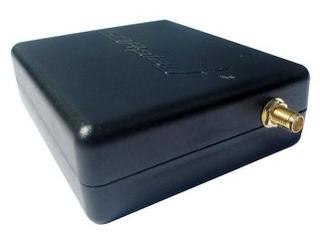
The SDRplay RSP1
The SDRplay RSP1

Android App Aerial TV Banned from Google Play – Now Available on Amazon

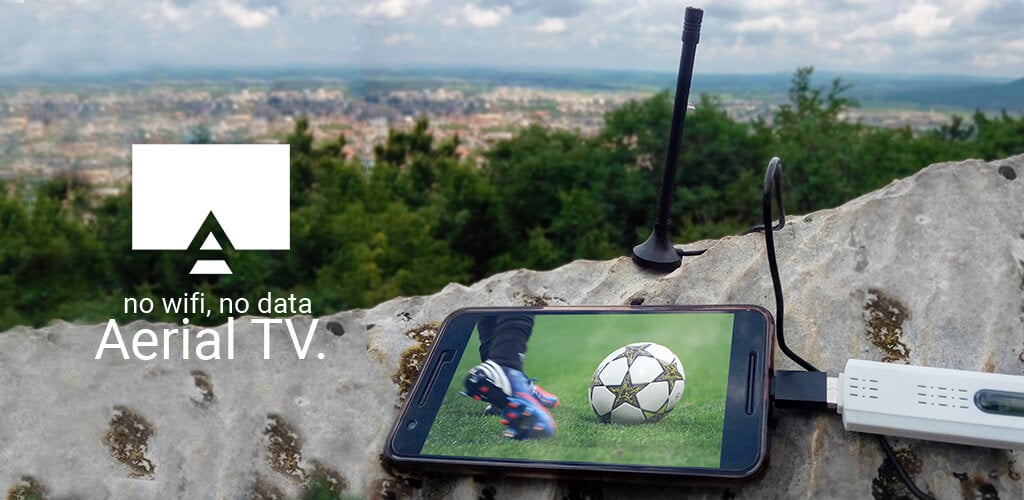
Aerial TV is an Android app that allows you to watch DVB-T TV with an RTL-SDR on a mobile device. We posted about Aerial TV back in April and it was available on the Google Play store back then. Unfortunately Aerial TV has recently been banned from the Google Play store as apparently the app can be used to display copyrighted material from TV. The author writes the following on a Facebook post:

Google Play has suspended Aerial TV due to “[Aerial TV] claims to provide copyrighted contents from TV channels”. According to Google apps that display live TV are of “questionable nature”. I am trying to clarify what they mean. I would like to apologize to all affected users. If you have any concerns, feel free to get in touch with Google directly.

This is quite odd and probably a mistake. But if you are looking for Aerial TV it is now available on the Amazon app store with a current 35% discount. If you bought the app on the Google Play store then to get new updates you will need to uninstall it, contact the developer for a refund, and then purchase it again on the Amazon store. More info about that is available on the Facebook page. Updates about it’s availability will always be provided on the official website at aerialtv.eu.

RTL-SDR.com Presentation Slides from Hamvention

During this years 2017 Hamvention convention I was invented by TAPR to present three talks about the RTL-SDR. Several people who watched the talks have requested the slides, so they are uploaded here in PDF format.

The World Of Low Cost Software Defined Radio – Presented at the TAPR Banquet. An introduction to the RTL-SDR and many of the interesting applications that it has been used for.

An Introduction to RTL-SDR – Presented at the TAPR Digital Forum. A brief introduction to the RTL-SDR and a selection of some of the most popular applications.

Introduction to Cheap SDRs for Radio Monitoring – Presented at the Digital Modes Now and In the Future Forum. A brief introduction to the RTL-SDR and a selection of some interesting digital modes that can be monitored.

The talks may be on YouTube in the future. If and when they are they will be posted here too.

A big thanks to all that came to the talks, and all the people who I met at Hamvention. It was a great event and really nice to meet everyone interested in RTL-SDRs and SDRs in general.

HackRF Receives Negative Press in the UK’s ‘DailyMail’ Newspaper

The HackRF is a $300 USD RX/TX capable software defined radio which has a wide tuning range from almost DC – 6 GHz, and wide bandwidths of up to 20 MHz. It uses an 8-bit ADC so reception quality is not great, but most people buy it for its TX and wide frequency/bandwidth capabilities.

Recently the HackRF received some negative press in the ‘Daily Mail’, a British tabloid newspaper famous for sensationalist articles. In the article the Daily Mail show that the HackRF can be used to break into £100,000 Range Rover car in less than two minutes. The exact method of attack isn’t revealed, but we assume they did some sort of simple replay attack. What they probably did is take the car key far away out of reception range from the car, record a key press using the HackRF, and then replay that key press close to the car with the HackRF’s TX function. Taking the key out of reception range of the car prevents the car from invalidating the rolling code when the key is pressed. 

Of course in real life an attacker would need to be more sophisticated as they most likely wouldn’t have access to the keyfob, and in that case they would most likely perform a jam-record-replay attack as we’ve seen with cheap homemade devices like RollJam. The HackRF cannot do this by itself because it is only half-duplex and so cannot TX and RX at the same time.

We should also mention that the HackRF is not the only device that can be used for replay attacks – potentially any radio that can transmit at the keyfob frequency could be used. Even a very cheap Arduino with ISM band RF module can be used for the same purpose.

The New England Workshop for SDR (NEWSDR) Accepting Poster Submissions

Thanks to Michael Rahaim a Postdoctoral Researcher at Boston University for letting us know about the New England Workshop for SDR (NEWSDR) which will be held on June 1 & 2 and Tufts University in Medford, MA. They write:

A few of my colleagues and I are organizing the New England Workshop for SDR (NEWSDR) next month and we are currently accepting submissions for poster presentations. The event will be held at Tufts University and is sponsored by MathWorks, Ettus/NI, MediaTek and Analog Devices. It is the 7th time we’ve held the workshop and we typically have attendance of 80-100 people from industry, academia, and government.

This seems to be mostly an academic and industry conference type event, but a few people reading this blog may be interested. Registration is free.

This year as well as the poster presentations there will be a tutorial and introduction to using the PlutoSDR, which is an (as of yet unreleased) TX & RX capable SDR that will be priced at around $149 USD. It looks to be like a way to get started with SDR TXing very cheaply. During the workshops they are also providing tutorials on using USRP SDR devices with MATLAB Simulink, and with FPGAs. In 2016 they also had some interesting presentations including “Wireless Beyond RF: From Underwater to Intra-body Ultrasonic Software Defined Radios” and a tutorial on “Identifying Mystery Waveform Using Simulink and RTL-SDR”