Category: Other

Highlighting Major Software Issues with the RX888 SDR

The RX888 is a $200 software defined radio that has a 16-bit ADC and tuning range from 1 kHz up to 1.8 GHz, with a bandwidth of up to 64 MHz between 1 KHz to 64 MHz and 10 MHz between 64MHz - 1700MHz. The design is based on the RX-666 which is turn was based on Oscar Steila's (IK1XPV) BBRF103 original open source hobby design. The product is designed and manufactured in China and is sold on Aliexpress and eBay without any official company backing it. 

While on paper, the RX888 has great specs and a great price, it appears that the software driver support from the manufacturer has been extremely poor, and no one has really been able to get this SDR working in practice without it constantly throwing errors and locking up.

@Aang245 & @Ryzerth are the developers of the popular open source SDR programs 'SatDump' and 'SDR++'. They often get queries to support the RX888, but have been unable to get much working due to broken drivers and no support from the manufacturer.

They have written up a scathing several page document about all the problems they have with the RX888, in an attempt to bring awareness to the problems, and to hopefully initiate a push on the manufacturer to properly support the device. 

In the document Aang245, author of SatDump, discusses the technical problems he's been having with the library and drivers, noting that almost all of the library drive code is broken, leaving him unable to support the device in his software.

When actually attempting to use the library on any of my machines, pretty much nothing would work reliably, and even when streaming samples would work, gain control, frequency or simply loading the firmware would fail horribly.

Later, I tried instead using the ExtIO code, maintained by the original project maintainers. By then, libsddc mentioned above had been merged into that main repo. Seemed great… Until I tried to use it. To put it simply : It was bad before, but now it relied on an entire ExtIO, segfaulted seconds after trying to do anything, and of course what worked before didn’t even anymore.

A good reason for that is that when the library was “merged”, it instead was made to rely on ExtIO internals, with barely half of the functions even implemented or working...

...In summary, it just feels like the BBRF103 hobby project commercialized without any thoughts about consequences or the ecosystem, and not even usability. Same hardware, usually sold as a premium, but really just a bunch of parts hacked together.

Ryzerth, author of SDR++ then adds the following reinforcing viewpoint:

The code quality in the library was absolutely horrendous. Functions were unimplemented, stuff was hardcoded everywhere and it was just generally hacked together. Same goes for the firmware, it seems to be a barely modified “streaming” example from Cypress (the FX3 chip manufacturer)...

...I have tried multiple times to reach back to the manufacturer on twitter but they have been radio silent since April 2022...

...Something else that bothers me is that SDR seems to be popular in the SWL community. A bunch of people recommend it when the performance can only be described as mediocre. Making a wideband HF frontend is an art, and you’re not gonna get any good result from something built down to a price like it. It’s a cool ham radio project, but not something that can be marketed as a commercial SDR. I’ve seen people claim that it has superior performance to Airspy and SDRplay SDRs, which is complete bullsh*t...

...This SDR has been unlike any other SDR I’ve had to support. Other manufacturers have clean APIs, proper drivers and libraries. It usually takes me at most a day or two to support the hardware properly. Being an “aliexpress special”, I guess I shouldn’t be surprised, you get what you pay for. All the money went into the BOM and none into the R&D and software.

This entire saga highlights the fact that software defined radios are not only about the hardware specs. The support and state of the drivers from the manufacturer is key to allowing third party developers to integrate the device into their software.

The RX-888 Software Defined Radio

SunFounder TS7-Pro Touch Screen Review: Building a Portable RTL-SDR Pi 4 System

The SunFounder TS7-Pro 7-Inch Touch Display is a portable high resolution 1024x600 7-inch touch screen with space on the back for a Raspberry Pi 4 to be mounted. It is also possible to mount an optional 2.5" SSD and 'PiPower' battery mount. The price of the TS7-Pro is currently reduced to $79.99 on Amazon and $89.99 in their direct store.

Last year in October we reviewed the 'RasPad 3.0' another SunFounder product that is a portable tablet enclosure for the Raspberry Pi 4. The RasPad is a more complete setup offering a full enclosure and built in battery. We reviewed the RasPad as we were curious to see how easy it would be to integrate a RTL-SDR on the inside. With some minor modifications we were able to successfully do this and create a portable RTL-SDR station. The RasPad 3.0 is a more costly device at US$259 on Amazon and $219 on their direct store.

This year SunFounder reached out to us again and asked if we wanted to test their TS7-Pro display, and see if it is possible to integrate an RTL-SDR.

Unboxing and General Assembly

SunFound TS7 Pro Boxed

The TS7-Pro comes packed well with foam. Inside is the manual, acrylic cover, 2x HDMI and 2x USB cables, 2x USB-USB bridge adapter (one for the Pi 4 and one for the Pi 3), 2x Micro-HDMI to HDMI bridge (one for the Pi 4 and one for the Pi 3), various M3 screws, a screwdriver and the LCD screen itself. The cables are designed for people who want to use the screen as a suppletory PC screen, so we did not end up using them.

SunFounder TS7 Pro Unboxed

The rear of the LCD screen contains all the LCD driver circuity as well as speaker and mounting points for the Raspberry Pi to connect it's GPIO header. The required HDMI and USB connections between the Raspberry Pi and LCD screen are handled by small bridge connectors.

SunFounder TS7 Pro LCD Rear PCB

The assembly process is very simple. Just mount the Raspberry Pi on the back, connect up the HDMI and USB bridge adapters, and screw on the acrylic backing plate.

There is also a very useful metal kickstand on the back which allows the screen to sit almost upright for easy viewing when placed on a surface.

RTL-SDR Modifications

The acrylic backing plate is designed to be able to mount a 2.5" SSD and/or a 'PiPower' battery module. Instead of using these accessories we decided to see if we could instead fit an RTL-SDR Blog V3 and our own USB battery pack on the back.

The acrylic plate has several screw and venting holes which we made use of to simply zip tie the RTL-SDR onto the back. We then used a short USB extension cable with a right angle connector between the RTL-SDR and Pi 4. There is plenty of space on the inside between the PCB and acrylic plate, so the RTL-SDR can be hidden away with the antenna port still easily accessible.

The USB battery pack is a bit larger, so fits on the outside of the enclosure also via zip ties.

Portable RTL-SDR with SunFounder TS7 Pro
Showing how much space is available between the PCB and acrylic plate.

After tightening down the zip ties, and hiding away the excess cabling, the whole construction is stable and not likely to fall apart easily.

Operating and Testing

Both the LCD screen and Pi 4 need to be powered separately. So you will need a battery pack that can support at least two outputs, and one that can support the required power draw of the Raspberry Pi whilst also powering the LCD screen.

We also initially connected a simple whip antenna to the RTL-SDR, but had to change that later as we will discuss.

RTL-SDR and Battery Pack Zip Tied to the TS7 Pro

For software we installed the Pi64 version of DragonOS, which is a ready to use Pi 4 image that has many RTL-SDR compatible programs built into it. A reminder that any software issues we discuss are unrelated to the SunFounder hardware.

The touchscreen works as expected, however we did notice that there is an initial bug on boot where the onscreen keyboard won't work unless you try to log in once with an empty password first. However, as we discovered in the RasPad review, most SDR programs like SDR++ are not very well suited to touch screens, so in the end we ended up connecting a wireless keyboard for ease of use. 

Using a keyboard ended up also being a requirement in our tests, because the way we mounted the RTL-SDR meant that the screen was upside down. Using the screen in this 'upside down' orientation was preferred as the kickstand makes it sit a bit more upright and keeps the antenna more vertical. To get around the upside down screen we had to flip the screen in Ubuntu settings. Unfortunately flipping the screen does not also flip the touch screen inputs, so our touch inputs became inversed. There seem to be ways to fix this but we did not look further into the issue.

One other minor annoyance is that we found that the LCD screen would not get recognized by the Pi 4 when the keyboard's USB dongle was connected at boot. This may just be a Pi 4 issue, or an issue with our power pack unable to provide enough current at boot, as we have encountered similar issues in the past with Pi 4's used in other projects. Once the first text appears on the screen, connecting the keyboard USB dongle is possible. 

With a keyboard connected, SDR++ opened and ran smoothly, and looks great on the 7 inch screen. We note that we did have to apply a small configuration fix in the Ubuntu sound settings in order to get the built in speakers to work. The fix is the same one used in the RasPad review, so please see that review for more information.

With it's somewhat open back, cooling doesn't seem to be an issue and we never noticed the Pi 4 throttling, or the RTL-SDR overheating.

RTL-SDR TS7-Pro with Wireless Keyboard

LCD Screen Interference

Again as we noted in the RasPad review, LCD screens are known to be big sources of RF interference and having the dongle and antenna this close to the screen electronics is not ideal. The image below shows what interference from the LCD screen looks like on the spectrum. Interference on the TS7 screen appears to be more pronounced when compared to the RasPad, possibly due to a different driver PCB with more exposed ribbon cables.

RF Interference from the TS-7 Pro LCD Screen

This interference is not present on all bands, and once an external antenna is used with a few meters of coax distance away from the LCD the problem reduces, but it doesn't go away fully. With an antenna disconnected there is almost no interference seen at full gain, so most of the interference appears to come through the coax cable and antenna. So we recommend using high quality shielded coax, as well as getting the antenna away from the LCD screen too.

Using a directly connected whip on a band with no LCD RFI

Conclusion

The SunFounder TS7 Pro is a nice and low cost product that allows you to easily connect a Raspberry Pi 4 to a touchscreen. Unlike the RasPad it does not come with a battery or enclosure, but this allows for a smaller form factor. The LCD screen itself is high quality, bright and  with good viewing angles.

Hacking an RTL-SDR and battery pack onto the back of the SunFounder TS7 LCD display is easily possible and does result in a very nice portable form factor. However, there are still wires hanging out the sides which make it a little less neat to carry around and store away, although all the connections seem secure. Mounting the assembly into a 3D printed enclosure could help neaten things up.

LCD interference remains an issue, but by using an external antenna with a few meters of good quality shielded coax the problem can be managed. 

Overall we think the product is an excellent starting point for any RTL-SDR Pi 4 project that requires a screen.

Disclaimer: We do not receive any compensation for this review apart from a free TS7 Pro.

A teardown of the early 2000’s Psion Wavefinder DAB SDR Receiver

The Psion Wavefinder was one of the first applications of SDR technology in consumer electronics. It was a Windows PC based USD DAB SDR radio receiver that released in the UK in October of the year 2000, for an initial price of £299. (In comparison RTL-SDR wasn't discovered until 2012).

Digital Audio Broadcast (DAB) is a digital replacement for analog broadcast FM. It provides high quality digital audio at the expense of higher cost receivers, and possibly greater difficulty with reception in weak or challenging RF environments. DAB is mostly only used in Europe and Asia Pacific regions, and is not found in the USA.

Due to the lack of popularity of DAB, combined with show stopping bugs in the official software (as seen in reviews), the Psion Wavefinder flopped as a product, and was promptly reduced to £49.99, and out of production by the year 2002.

Over on his YouTube channel backofficeshow, Andrew claims the Wavefinder as the first SDR Radio device and has filmed a teardown, and demonstration of the device working in a Windows XP virtual machine.

The main chips on the device consist of a CPLD DSP, RISC based USB controller, RAM and a fixed point DSP processor. According to some further information from a compatible third party Linux program called dabtools, the Wavefinder performs the COFDM demodulation in hardware on the DSP chips and then transfers the samples over USB for further SDR processing on the host computer.

Psion Wavefinder - The first SDR Radio Device

RTL-SDR Blog V3 Dongle and SDR# Spotted on The Secret of Skinwalker Ranch TV Show

An RTL-SDR Blog V3 dongle and multipurpose dipole antenna set has been spotted in action on the popular TV Show "The Secret of Skinwalker Ranch" in Season 3 Episode 7. Skinwalker Ranch is a History channel conspiracy theory reality TV series where a team of scientists and researchers are sent to look for various explanations for "otherworldly" activities supposedly occurring on the ranch. In the past we have also seen an SDRplay RSP software defined radio with SDRuno software featured in a previous episode.

In this episode the team are drilling into a mysterious mesa rock formation on the ranch, and are monitoring the RF spectrum with an RTL-SDR during the drill. They take note of a mysterious signal at 1.6 GHz that appears during the drilling.

Screenshots from "The Secret of Skinwalker Ranch" Season 3 Ep 7

The South Indian SDR User Group

Thank you to Balaji for writing in and sharing news about the growing South Indian SDR Users Group. The group have already held several virtual events where a variety of speakers have presented various topics on SDRs and related research. The recorded talks are available on their YouTube channel and include a variety of local Indian and international presenters.

About Us: The South Indian SDR User Group (SI-SDR-UG) was founded in January 2021, and is a community of people, from novices to experts, spanning industry, academia, and government, who are interested in the design and implementation of Software-Defined Radio (SDR) technology and systems. This includes such diverse areas such as RF, digital signal processing (DSP), wireless communications, operating systems, computer networking, software development and optimization, machine learning, and radio hardware. The mission of our community is to facilitate the exchange of ideas and enable greater collaboration within the SDR community in India. We host a regular technical workshops and gatherings, and we also run a dedicated Slack workspace for the community. We have a YouTube channel for recordings of past events, and a GitHub page for any relevant code. Our Twitter feed contains announcements about events and other news relevant to the community. We are not focused or tied to any one single software tool, hardware platform, commercial vendor, or specific technology. The SI-SDR-UG is non-profit, and the people on the organizing committee are all volunteers. We are based in Bangalore, but we invite people from all throughout India, as well as from outside India, to join our community. Please reach out to us on Slack or by email if you have any questions or comments. Thank you!

Website:https://www.softwaredefinedradio.in/
Slack:https://si-sdr-ug.slack.com/
YouTube:https://www.youtube.com/channel/UCy04XwXPMDVUucWYYvwg-Yg
Twitter:https://twitter.com/akashvani2021
Gmail: [email protected]

SOCORAD32: An ESP32 Based Walkie-Talkie with Data Communication

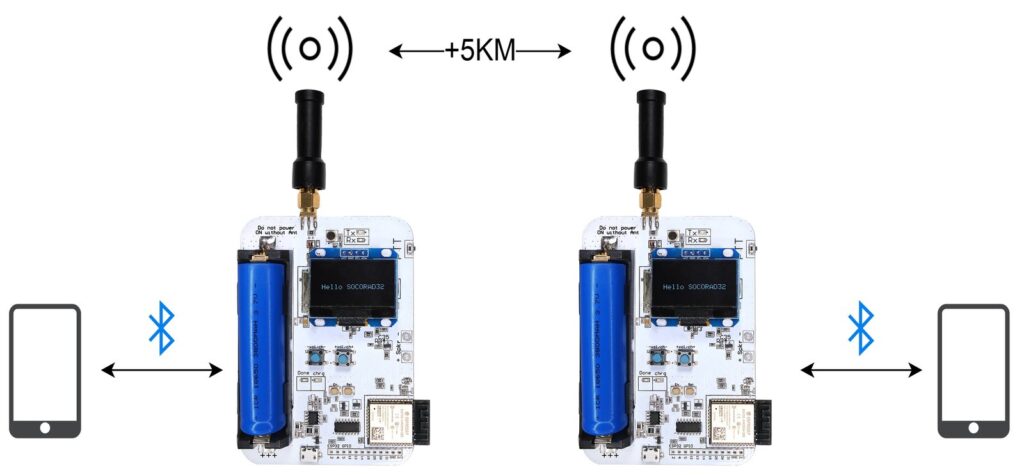
Over on Crowd Supply the SOCORAD32 project has been pre-announced for crowd funding in the future. The project is described as a "hackable, open source, ESP32 amateur radio board with walkie-talkie functionality and data communication". We note that this is not a software defined radio, rather it's a highly customizable software controlled radio.

Because it covers 400 - 470 MHz the device can be used without a license in the license free bands available in most countries. It's able to connect with a standard smartphone over Bluetooth, and can transmit and receive voice, supports voice encryption and compression, and can also transmit and receive SMS data. 

SOCORAD32, aka the ESP32Software Controlled Radio, is a professional-grade hackable walkie-talkie for amateur radio exploration, voice, and data communication using simple AT commands. Just add a speaker and a battery and you get a fully functional walkie-talkie radio. With the onboard dedicated Push To Talk (PTT) button, SOCORAD32 can be used straight out of the box without touching a single line of code!

Unlike using complicated SDR for amateur radio operation, SOCORAD32 is an amateur radio-tailored device that makes things simpler. Using uncomplicated AT commands, users can configure the audio volume, tone squelching, CTCSS, CDSS codes, etc. SOCORAD32’s frequency range covers the license-free bands for most countries.

SOCORAD32 also features all of the operations of a standard walkie-talkie. It employs a proprietary RF design featuring the RDA1846 IC. This is the same IC used in commercial walkie-talkies such as in Baofeng, Motorola and Hytera. Because of this, SOCORAD32 can communicate with commercial walkie-talkies with ease.

In addition to all of this, SOCORAD32 utilizes powerful ESP32 Bluetooth functionality. All SOCORAD32 settings can be adjusted via a connected mobile device using a serial Bluetooth app of any choice, while also being adjustable via the dedicated physical buttons. You can store as many channels as you would like in the onboard memory of the ESP32. SOCORAD32 can also communicate data, so you can explore the amateur radio frequencys for IoT or send texts. Texts can be read via the onboard OLED screen or via a Bluetooth connected mobile device.

Beyond communication SOCORAD32 is fully open source and hackable. For high level enthusiasts the RF module can be opened and tinkered with, allowing features like upgrading the power amplifier, among other adaptations.

Overall, SOCORAD32 makes it fun and interesting to explore the intricacies of amateur radio, portable two-way radio walkie-talkies, and long distance audio or data communications similar to LoRa. All done using easy to understand AT commands and the power of the ESP32 module.

SOCORAD32

Video Introduction to Scattering Parameters with Animated Examples

Thank you to Apostolos for sharing with us his educational video that introduces "scattering parameters" (aka S-Parameters), and how these parameters relate to antennas and RF networks. S-Parameters are a matrix of values that can be used to describe an electrical network. Apostolos' video explains these parameters in detail, giving good visual examples. Apostolos writes:

Here are the topics I cover:

  • What is a 'Network'?
  • Power Waves
  • Complex Impedance & Phase Angle
  • S-Matrix & S-Parameters
  • Reflection & Transmission Coefficients
  • Standing Waves
  • Example Networks
  • Designating S-Parameters
  • Reciprocity & Losslessness
  • Reflection Coefficient and VSWR
A Visual Introduction to Scattering Parameters

Nils Critiques the MH370 WSPR Aircraft Scatter Theory

For some time now there has been chatter about the possibility of using WSPR logs to help track the mysterious disappearance of flight MH370. WSPR or the "Weak Signal Propagation Reporter" is a protocol typically used on the HF bands by amateur radio operators. The properties of the protocol allow WSPR signals to be received almost globally despite using low transmit power.  Amateur radio operators use it for making contacts, or for checking HF radio propagation conditions. MH370 is a flight that infamously vanished without a trace back in 2014.

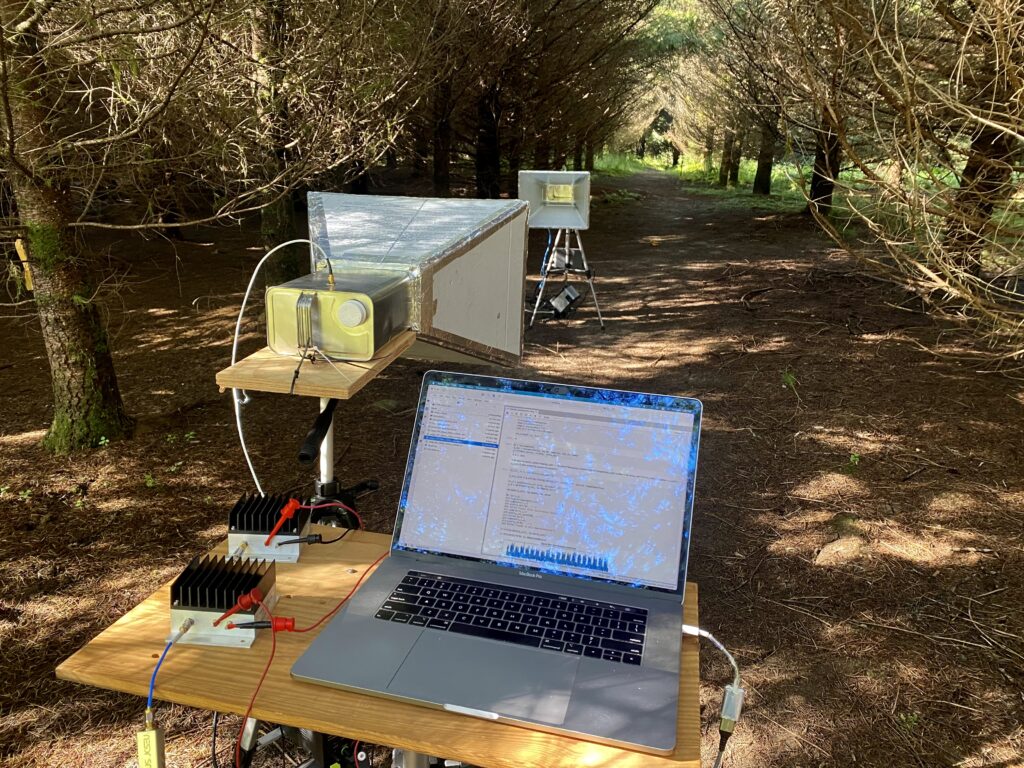
The theory proposed by aerospace engineer Richard Godfrey is to use logs of sent and received WSPR transmissions that may have intersected the potential flight path of MH370, and to look for potential reflections or 'scatter' in the signal from the metal aircraft hull. From the reflections an approximate track of the aircraft could be calculated much in the same way that bistatic over the horizon radar systems work.

While it is an exciting theory, it is unfortunately considered by most experts as highly unlikely to yield any suitable results with the main problems being WSPR transmission power too weak to detect reflections from an aircraft, and the effect of the ionosphere too difficult to account for. 

Over on his blog Nils Schiffhauer (DK8OK) has posted a thorough critique of the idea, explaining the theory, technical details and difficulties in depth, ultimately coming to the conclusion that the idea is based more in wishful thinking than in fact. Nils summarizes:

Time and again, there are news stories in the professional and popular press about the fact that log data from the WSPR data network can help locate aircraft. In particular, the effort is to determine the actual crash site of flight MH370. This effort essentially amounts to detecting "unusual" level jumps and frequency changes ("drift") in the archived WSPR log data and attributing them to reflections from specific aircraft ("aircraft scatter").

In a blog entry, Nils Schiffhauer, DK8OK, for the first time critically evaluates this theory. On the one hand, this is based on years of observation of aircraft scatter on shortwave as well as an investigation of about 30 Doppler tracks. The results of this complex analysis of more than 10,000 data in one example alone are sobering: The effects of aircraft scatter on the overall signal are almost always well below 0.3 dB.

To prove a correlation between level changes of the overall signal and aircraft scatter seems hardly possible on the basis of the WSPR data material. The reasons are manifold, but lie mainly in shortwave propagation, where level changes of 30 dB within a few seconds are the rule rather than the exception.

However, since the local and temporal state of the ionosphere is not known in previous investigations on the WSPR data material - it is recorded in parallel in professional OTH radar systems and calculated out of the received signal - level jumps can hardly be clearly assigned from the sum signal alone. This finding is supported by further arguments in the blog:
https://t1p.de/t5kr

Nils demonstrates aircraft scatter on China Radio International, a 500kW transmitter.