Kali Linux is the successor to Backtrack Linux, a popular digital forensics, security and penetration testing Linux based operating system. YouTube user NeedSec has posted a video tutorial on how he got his E4000 rtl-sdr dongle working with GNURadio and Gqrx on Kali Linux.
Luis Colunga has posted an interesting tip on his blog on how he reduced broadcast FM interference in the rtl-sdr dongle. He writes
Many people have noticed that even if there is not an antenna connected to the RTL SDR FM Stations still come strong. This is not good at all because these are signals that are getting into the PCB via another way that is not the antenna.
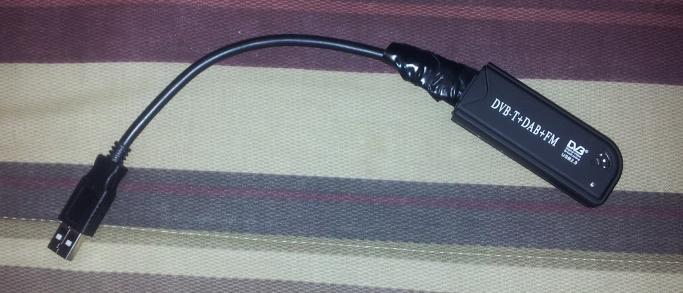
He then goes on to explain a method he used to significantly reduce the interference, which involves removing the male USB connector from the dongle PCB, and fitting your own USB cable leaving the shield floating, which he then wraps with aluminium foil.
***NOTE*** Unfortunately, the NOAA 15/18/19 satellites have now all been decommissioned as of August 2025. Therefore, it is no longer possible to receive them.
We will leave this tutorial post up for archival and historical reasons.
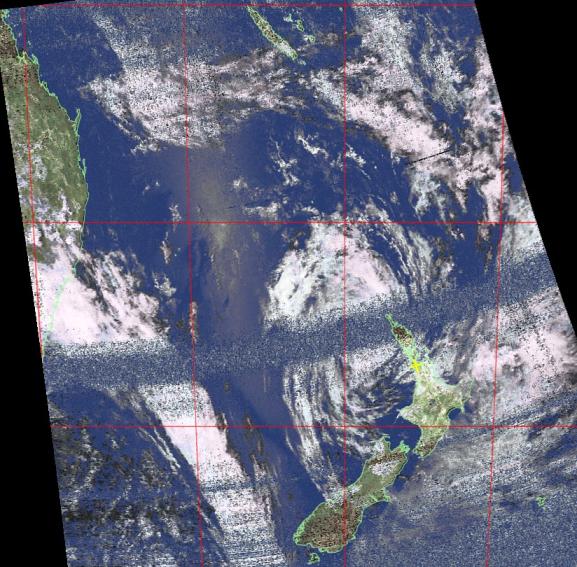
Everyday multiple NOAA weather satellites pass above you. Each NOAA weather satellite broadcasts an Automatic Picture Transmission (APT) signal, which contains a live weather image of your area. The RTL-SDR dongle combined with a good antenna, SDRSharp and a decoding program can be used to download and display these live images several times a day.
This tutorial will show you how to set up a NOAA weather satellite receiving station, which will allow you to gather several live weather satellite images each day. Most parts of this tutorial are also applicable to other software radios, such as the Funcube dongle and HackRF and Airspy, but the RTL-SDR is the cheapest option. Hardware radio scanners can also work, provided the radio has a large IF bandwidth (30 kHz +) and a discriminator tap.
Note that if you have success with this tutorial, you may also be interested in decoding Meteor M N2 weather satellites which provide much higher resolution images. Also, an alternative tutorial for decoding NOAA satellites that uses rtl_fm can be found here.
Examples
YouTube user GaitUutLiern shows an example of receiving NOAA satellite weather images with a RTL-SDR, SDRSharp, a decoding program called WXtoImg and a QFH antenna.
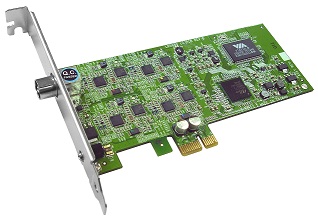
I just wanted to let you guys know that the Digital Now Quad DVB-T Receiver (http://digitalnow.com.au/product_pages/Quad.html) works. It’s a PCI-e card with 4 tuners on it, linked up internally via USB. This has pleased me no-end – I might finally be able to get DAB+ working on my media centre!
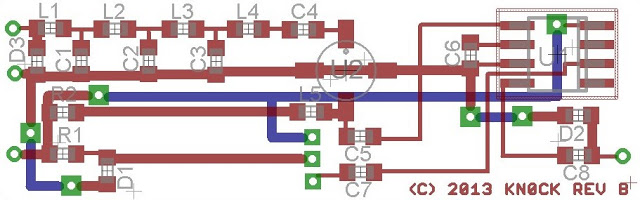
Over at KF7LZE’s Blog a post about an upcoming integrated HF upconverter using tiny surface mount components has been posted. It is made by Marty KN0CK and will be for sale on KF7LZE’s site soon.
Marty KN0CK developed a very interesting v1.0 HF converter based on surface mount technology that fits inside the casing of an RTLSDR tuner dongle. He’s recently sent me schematics for the revision, which should offer even better performance.
YouTube user 907h9879070g9790 has posted a video showing Virtual Radar Server running on a Raspberry Pi with the Raspian hardfloat image OS installed. He used Mono to allow the .NET based Virtual Radar Server to run on the Raspberry Pi. Instructions for using Virtual Radar Server with Mono can be found here.
Combined with an rtl-sdr and dump1090, ADS-B packets can be sent to Virtual Radar Server, and then the aircraft radar map can be viewed on a PC or internet enabled device via a network connection. This can allow a small self contained remote ADS-B monitoring system to be set up.
EDIT: Unfortunately the video owner has taken down the video.
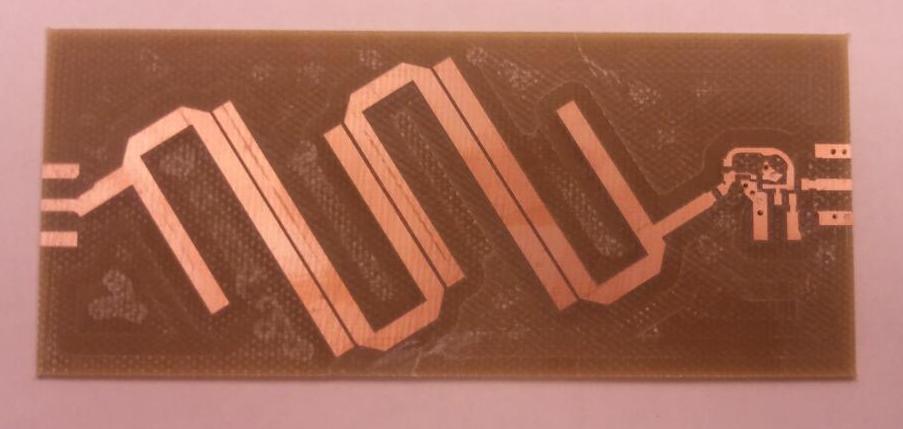
Reddit user BigReid has posted an update on his PCB based hairpin ADS-B filter. He has now added a low noise amplifier (LNA) circuit onto the same PCB board. BigReid used the LNA design written about on this page. The PCB files are here and the Reddit thread can be found here.