Category: HF

A 1961 Drake 2B Receiver using an RTL-SDR as a Panadapter

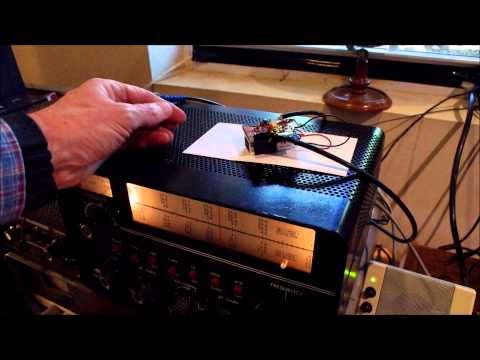
The Drake 2B is an old analogue tube based radio from 1961. Although it is so old it is still considered a decent shortwave receiver. Over on YouTube user M0HBR decided to bring his Drake into the modern age by coupling it with a panadapter made from an RTL-SDR dongle. A panadapter is a device that allows you to view the RF spectrum and waterfall of a normal radio. 

To do this he tapped into the 455 kHz IF output of the Drake and amplified it with a homebrew FET source-follower, before connecting it to the RTL-SDR. He then uses the HDSDR software to listen to and display the received signals on the waterfall.

Drake Dongle Derring-Do -- 2B Goes SDR

Sigimira Decoder now supports the RTL-SDR Directly

Sigmira is a popular free Windows software program which supports decoding of radio modes such as PSK31, RTTY, CW, STANAG 4285, Japanese Slot Machine, FSK, HFDL and M141 as well as standard modes such as NFM, AM, USB and LSB.

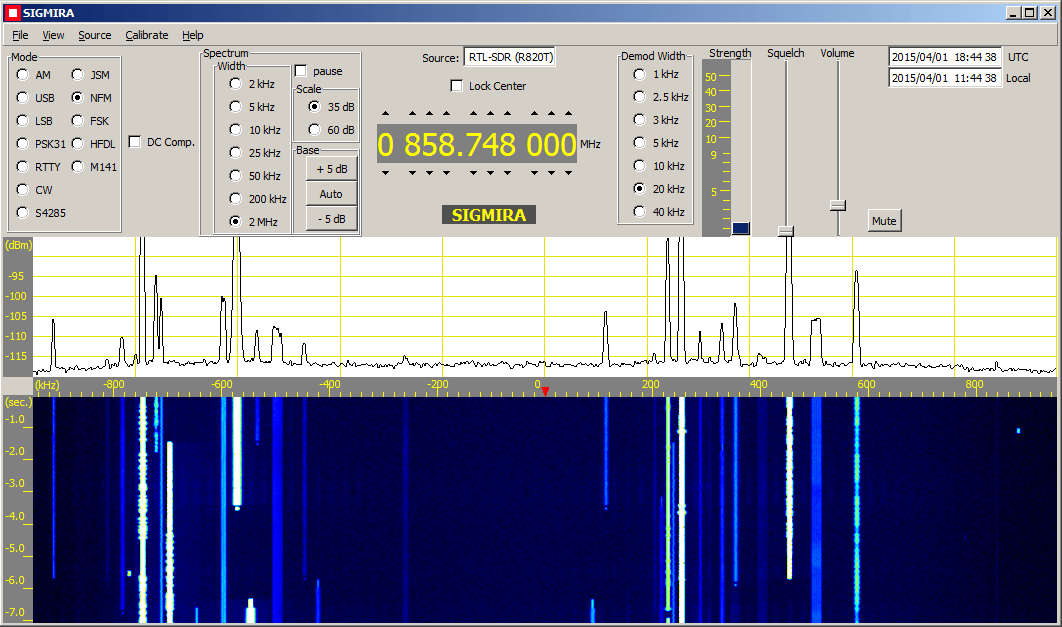
Previously Sigmira could be used with the RTL-SDR by piping audio into it from another program such as SDR#. In the latest version that was just released Sigmira now directly supports connecting to the RTL-SDR, allowing for a spectrographic display and point and click tuning. Sigmira also now includes a database with frequencies of over 2000 known signals.

Screenshot of the Sigmira decoding software which now supports the RTL-SDR directly.
Sigmira Signal Database
Sigmira Signal Database.

How to Setup CWSkimmer with an RTL-SDR and HDSDR

Over on YouTube user Brent Crier has uploaded a tutorial video showing how to set up CWSkimmer with an RTL-SDR and HDSDR. CWSkimmer is regarded as one of the best pieces of software that can be used to decode CW a.k.a Morse code.

Morse code is a communications technique still used widely by the amateur radio community in the HF bands. The RTL-SDR can receive HF frequencies and Morse code with an upconverter or direct sampling modification.

In the video Brent goes over the installation of HDSDR, Virtual Audio Cable, and a program called Virtual Serial Port (VSP) manager as well as the needed settings for each program. The set up he shows allows CWSkimmer to automatically change the frequency in HDSDR when tuning in CWSkimmer.

How to setup a CWSkimmer with a RTL SDR and HDSDR

Homemade Upconverter for the RTL-SDR Running on a Cellphone Battery

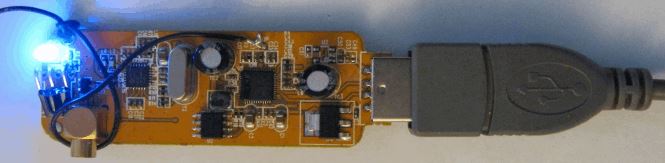
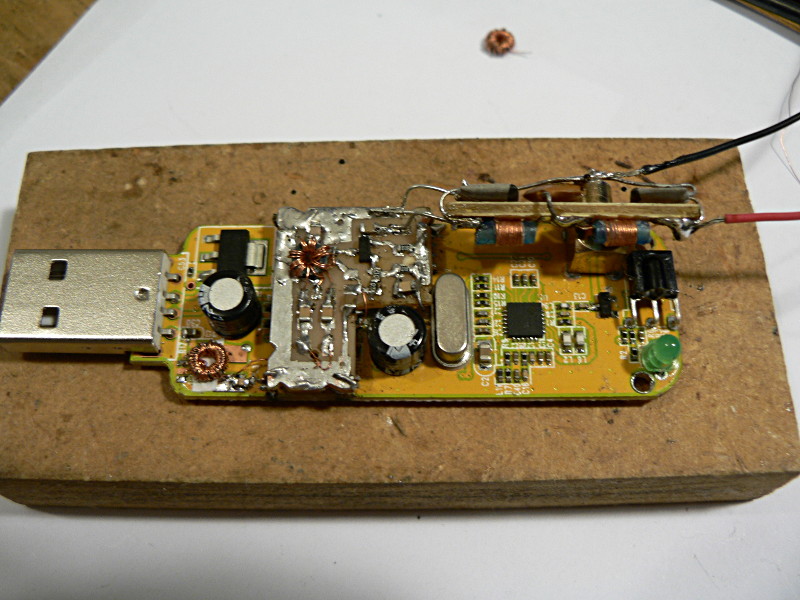
Over on YouTube user ek6rsc has uploaded a video showing his home made upconverter for the RTL-SDR. His upconverter uses a diode mixer design with a low pass filter and 40 MHz oscillator which he obtained from a USB-WIFI adapter. Usually an upconverter is powered by a power plug or USB cable, but ek6rsc has powered his with a 3.7V 860ma cellphone battery. He writes that the battery lasts a long time and helps avoid interference caused by power adapters and the PC. Ek6rsc has also uploaded a second video showing the upconverter in action.

Up-converter for RTL-SDR 40MHZ Lo. & cellphone battery

How work Up-converter for RTL-SDR 40MHZ Lo. & cellphone battery

Spyverter Sneak Preview

The Spyverter is being developed by the creators of the Airspy software defined radio to be a high performance upconverter. It is designed for use with the Airspy, but may also be compatible with other SDR devices too.

Compared to most other upconverters which use a diode ring mixer architecture, the Spyverter uses a different, as of yet undisclosed architecture. The main claimed advantages over other upconverters will be it’s low loss and high IIP3 performance, which means that the Spyverter will not saturate in the presence of strong signals as easily as other upconverters.

Recently a photo of a Spyverter alpha board was released, indicating that the Spyverter is getting close to release.

The Spyverter Alpha
The Spyverter Alpha

Also, a few months ago W9RAN posted a YouTube video about a prototype HF upconverter for the Airspy and we believe he was using an early version of the Spyverter.

Airspy HF Converter Sneak Peek by W9RAN

RTL-SDR Front End Filter Demonstration

Over on YouTube user kugellagers has uploaded a video demonstrating the effect of some front end filters he constructed in order to reduce the effects of intermodulation from strong local AM and FM broadcast radio stations.

To attenuate strong broadcast FM signals, he used a very cheap FM trap from MCM Electronics. An FM trap (aka FM bandstop filter) is designed to attenuate signals in the FM band only. However, as a single FM trap was not strong enough for him, he took two FM traps out of their original casing and connected them together in a larger box for increased attenuation.

To attenuate strong broadcast AM signals he designed and created a home made 7th order LC elliptic high pass filter. With the filter in place he is able to receive a station at 2.5 MHz, but without it he shows that is unable to receive it clearly due to broadcast AM intermodulation.

RTL SDR Front End Filter Demonstration

Teensy SDR Updates and User Interface Demo

Last year in April we posted about the Teensy SDR, which is a SDR project that involves running a SoftRock SDR on a Teensy 3.1 Microcontroller. The Teensy is a tiny microcontroller board that uses a 32-bit ARM processor and the SoftRock SDR is a HF only software defined radio kit that is capable of RX and TX. Back then the Teensy SDR has no enclosure and the user interface hadn’t been finished.

In his latest YouTube videos, creator of the Teensy SDR rheslip20 (aka VE3MKC) shows his latest improvements to the project and in the second video shows off the user interface. In the future he hopes to implement TX capability too.


Teensy SDR User Interface Demo - Tuning around the bands

Low Pass Filter for RTL-SDR Direct Sampling Mode

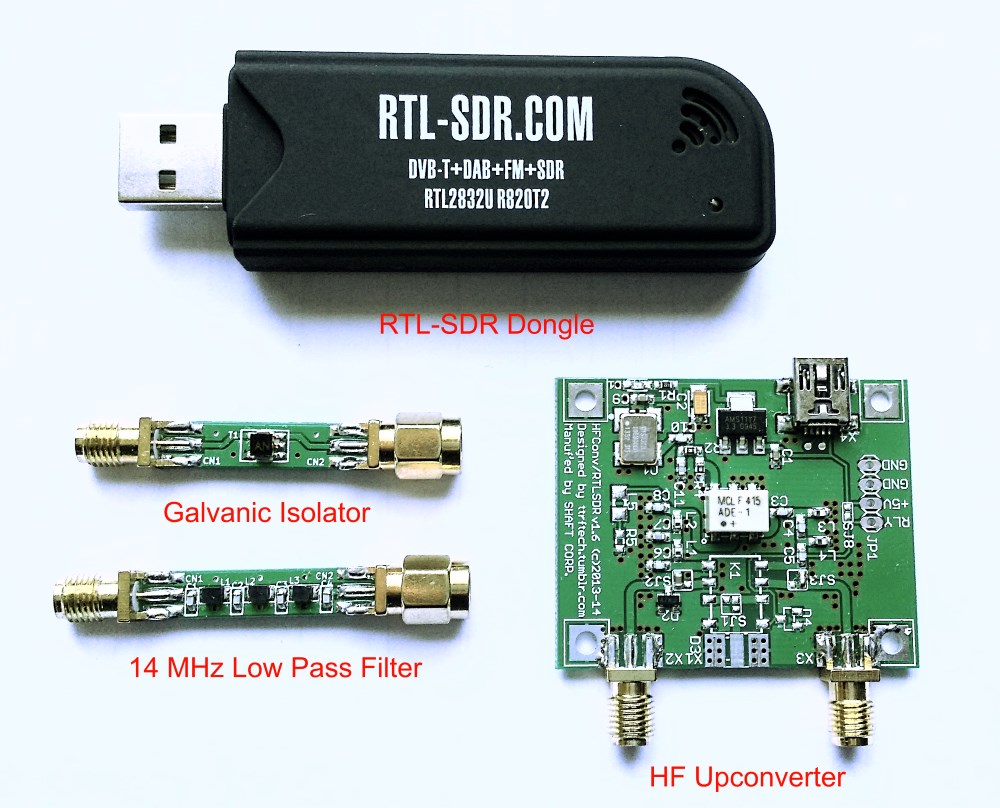
Over on his blog (in Japanese) Nobu has been working on prototyping a 14 MHz low pass filter (LPF) product for direct sampling modified RTL-SDR dongles (in Japanese, use Google Translate). Direct sampling mode is a hardware modification that allows the tuner chip in RTL-SDR dongles to be bypassed, allowing reception of signals between 0 – 14 MHz. However, after performing this mod there is no filtering and images from higher frequencies such as broadcast FM can be problematic. To fix these problems a low pass filter is required.

Another product Nobu is working on is an isolation transformer (aka Galvanic Isolator) which can be used together with an upconverter to help reduce noise generated from common ground sources such as the PC. The isolation transformer is inserted between an upconverter and antenna.

Low Pass Filter (Top), Isolation Transformer (Bottom)

In the image below Nobu shows the effect of inserting the LPF . An interfering FM broadcast band signal is removed after inserting the LPF.

Effect of inserting the Low Pass Filter

The image below shows the effect of the isolation transformer showing a clear decrease in noise floor and increase in signal strength.

Effect of an Isolation Transformer when used with an Upconverter