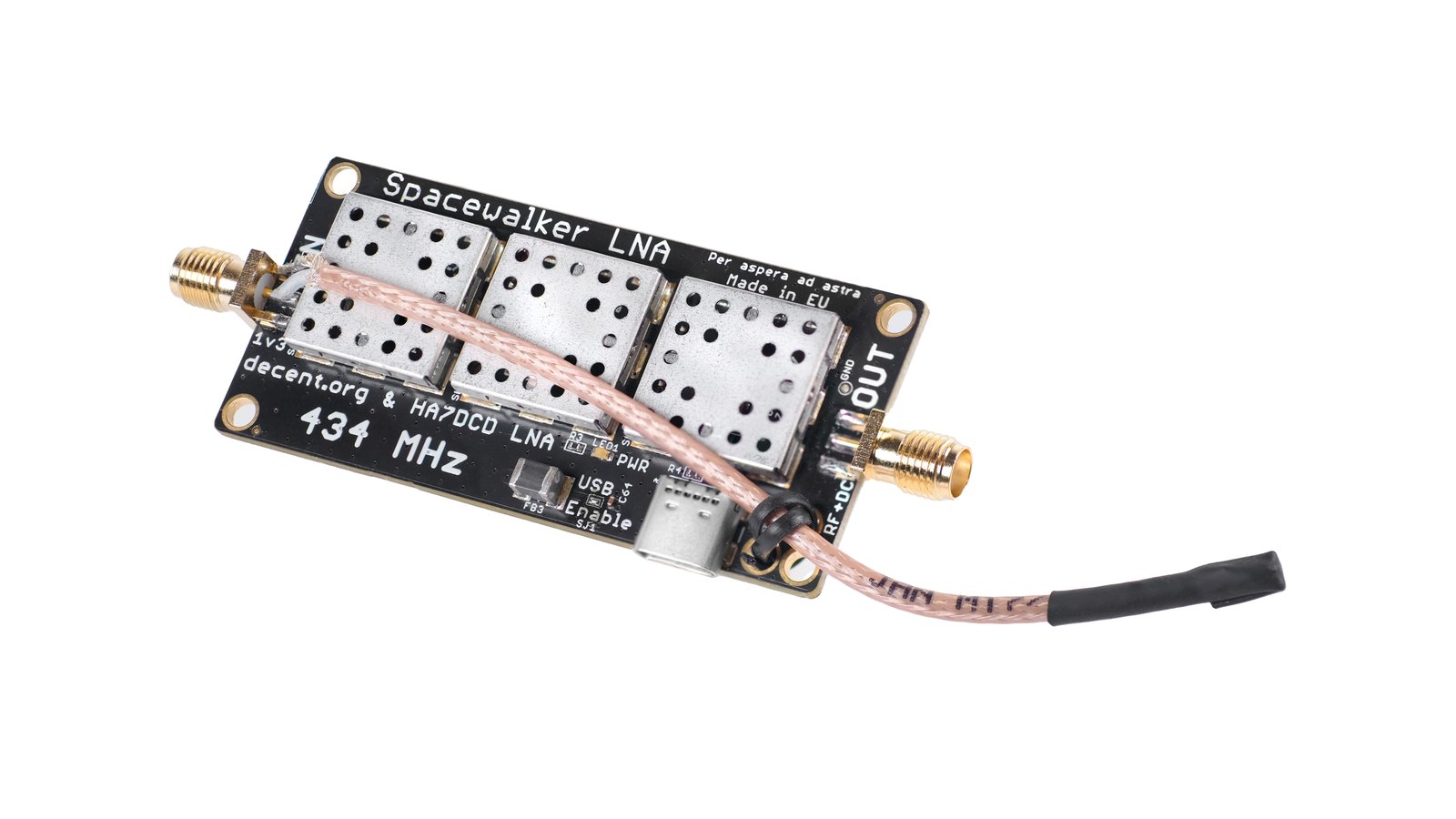
Thank you to Zoltan and team for submitting news of the prelaunch of their Spacewalker LNA 434 MHz. Spacewalker LNA is designed to improve reception of PocketSat and Cubesat satellite signals when received with SDR devices like the RTL-SDR. Often these relatively weak signals are drowned out by strong interfering terrestrial signals like DVB-T and GSM. To solve this the triple filter and dual amplification design used in the Spacewalker LNA can help to isolate the satellite signals.
The team write that prototype versions of the LNA are already successfully in use around the world with SatNOGS stations. The device uses two state of the art QPL9547 LNA with 0.2 dB noise figure and 25 dB gain at 434 MHz and three 434 MHz SAW filters. The design also uses an interesting coax stub for ESD protection. It can be powered with 5V USB-C or via bias tee.
The LNA is currently in the prelaunch stages with CrowdSupply, so it will likely be released for crowd funding within the next few months. If you are interested in being notified when the campaign launched, be sure to sign up on the Crowd Supply page for updates.
Spacewalker LNA 434 MHz. Designed for PocketSat and CubeSat signals amidst strong DVB-T, TETRA, FM, and LTE signals from densely packed transmitter towers.
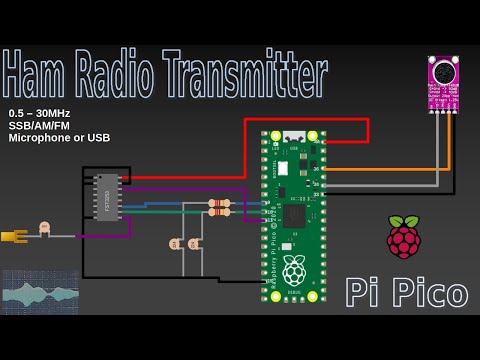
The design generates an oscillator signal using the Pico's Programmable IO. For AM/SSB it uses the PWM output pins to generate an RF envelope which gets mixed together with the oscillator using an analog multiplexor. A small microphone is also connected to the Pico for voice transmissions. The designer notes that the output power is far too low to be used on the air, but adding an output amplifier would help.
The Raspberry Pi Pico is a low cost microcontroller board, and we note it cannot run Linux like standard Raspberry Pi boards. This means that software like RpiTX cannot be used.
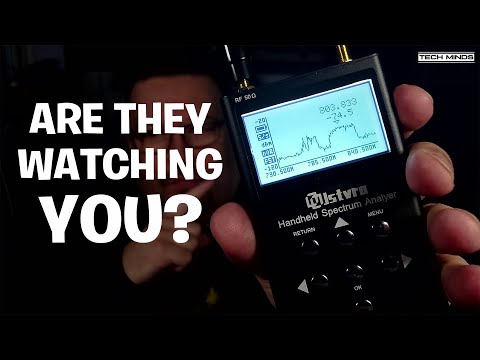
In one of his latest videos Matt from the Tech Minds YouTube channel tests out the "Jstvro" handheld spectrum analyzer which can be found on sites like Banggood and Aliexpress (the device is cheaper on Aliexpress) for about US$127.50 for the single antenna model, and US$165 for the dual antenna model including shipping. The device appears to be a clone of the RF Explorer, which is a spectrum analyzer that has been on the market for several years.
A spectrum analyzer can be used to visualize the RF spectrum and find frequencies that are active. It cannot demodulate signals like an SDR.
The Jstvro spectrum analyzer covers 240-960 MHz on the first port and 15 - 2700 MHz on the second port, with a total visible bandwidth of anywhere between 112 kHz to 600 MHz. It comes with a single color illuminated LCD screen.
In the video Matt gives an overview of the spectrum analyzer and shows it operating. He notes that the USB-C connection to the PC does not appear to be working and Matt was unable to find the PC software or firmware updates mentioned in the manual. In the rest of the video Matt demonstrates the 2.4G WiFi analyzer feature, the spectrum analyzer feature and goes over the settings.
Visualize the RF Spectrum With This Handheld Spectrum Analyzer
Having worked on RF communications systems before, Damian knew that the same concepts apply no matter what the physical layer of communication is. His system called SDU-X uses two ultrasonic transducers mounted on 3D printed parabolic dish's to increase the directional gain, and an Arduino Nano with amplifiers and a Digital to Analog (DAC) converter for the ultrasonic transmission.
His post explains the hardware and protocol implementation, as well as explaining the Arduino code that he's released for free. The code and 3D printer models can be found on Thingiverse.
SDU-X: A software defined ultrasonic communications system.
Videos of talks from the Software Defined Radio Academy 2023 (SDRA23) conference have recently been uploaded to YouTube. SDRA23 was held during the HAMRadio World Fair in Friedrichshafen, Germany during June 2023.
The talks appear to be slowly releasing on YouTube and currently about eight talks have been released with more to follow. Make sure you subscribe to their YouTube channel to be notified when more talks are released.
Some currently released talks of interest include:
Andreas Spiess, HB9BLA: SDR-A Keynote. SDR: What is next ?
Laurence Barker, G8NJJ: Completion of the Saturn SDR
G3ZIL & G4HZX: Propagation path analysis on HF, using SDR and FST4W
Rob Robinett, AI6VN: Creating a LCHP FST4W/WSPR beacon using RFzero or QPR Labs QDX
Gerhard Häring, DK6RH: Selfmade Portable HF-TRX with Hermeslite2 and Rasp Pi
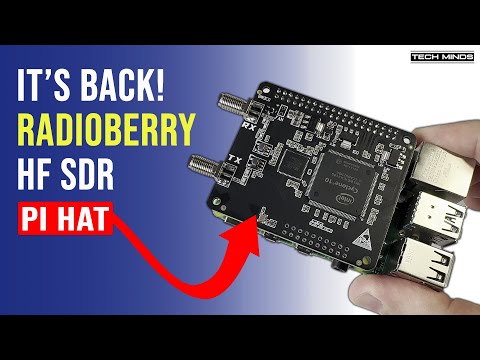
Back in July 2021 we posted about the RadioBerry HF SDR Transceiver Raspberry Pi Hat which is an open source project by PA3GSB. It is based on the AD9866 chip which gives it a 12-bit ADC with one RX and one TX channel, a maximum bandwidth of up to 384 kHz, and an operating frequency range of 0 to 30 MHz.
Because of FPGA component shortages, the device has been out of stock and stagnant for a long time. However, recently a new version has been released by well known SDR hardware cloner Justin Peng and is now available for sale on Aliexpress for US$155. As the design for this project is open source, Justin's new version is legal and he has released the redesigned open source files on his GitHub.
In his latest video, Matt from the TechMinds YouTube channel tests out this new board. He starts by explaining the history of the RadioBerry, and shows how to set it up and install the software. He goes on to demonstrate it receiving some HF signals, transmitting on 3 kHz and 5 kHz, and how to run it standalone on a Raspberry Pi 4 with screen.
Thank you to Stéfane Perraud, Aram Kebabdjian and team for submitting news that they have recently launched an art project in Lausanne, Switzerland called "Hystérésia". The installation is technical art, which consists of an autonomous satellite receiving station designed to receive beacons from old "zombie" satellites, and then broadcast their signals audibly. A description of the ground station can be seen here.
Zombie or Dead satellites are satellites that are officially decommissioned and powered down, but have unintentionally reactivated. This often happens as over time the batteries on these satellites can undertake a chemical reaction from thousands of solar recharge cycles which eventually results in a short circuit. Hence the satellites reactivate when in sunlight. If you are interested we have an old post on this phenomena back from 2014.
The system is based on an antenna rotator with two Yagi's that tracks the zombie satellites as they pass over the sky. A QFH antenna has also been spotted in their images. Based on the waterfall images, an SDRplay RSP is used as the receiver, and some computing device is used to demodulate the signal into audio. Stefan adds:
Technically we are using a double yagi 137 and 145 plus a 777 antenna from diamond to catch 200 mHz
We developed a python based software that’s controlling a sdr software based on gnu radio.
We update TLE everyday, our azimuth and élévation rotor follow the satellites and we catch the signal with a sdr uno, plus a switch that choose antenna with the good satellite.
The machine is monitored by a bench of sensors , wind, humidity, temp. It can be control by internet via the website
The machine search for peaks around the chosen frequency, Also the sound is processed by max/msp, we denoise it and we make music out of it
The 3 metallics pavillons blows the sound noise to the audience Each time a satellite shows up, the machine sends a story told by one of our recording, a woman actors voice , it tells a specific history that’s tells a narrative about the satellite that’s on air … but in French
If you are unable to visit the installation in person, it appears that their website also broadcasts the last received satellite's sound. The website also shows photos of the history of the zombie satellites.
If you're interested in other art based on satellites and software defined radios, have a look at our previous post on the open weather project, and the "signs of life" project. Another SDR art project was 'Holypager', an art installation that continuously prints out pager messages received by a HackRF, and "ghosts in the air glow" project which used the HAARP antenna array to broadcast an art project.
The DeepSDR 101 V1 was a handheld software defined radio with built in LCD screen, a tuning range of 100 kHz - 149 MHz, and a bandwidth of 192 kHz. It appears to be an original design by Chinese company Hangzhou Minghong Electronic Technology Co., Ltd.
Currently the DeepSDR 101 Version 1 has been discontinued while they work on Version 2. However, recently clones called the "SDR 101" have begun appearing on various marketplace sites.
In his YouTube video, Matt from the TechMinds video checks out one of these SDR 101 clones. Matt shows some HF reception, however has some issues with the PC USB connection. Ultimately Matt does not recommend the device, being a clone, having USB connection issues, and having mediocre performance for the price. Instead Matt would consider a Malachite-SDR instead.
SDR 101 - DSP Receiver That's Cloned More Than Dolly