Analyzing the Radio Spectrum in Hong Kong with an RTL-SDR

Over on his blog, Gough Liu has made a post showing an analysis of the Hong Kong radio spectrum that he made while he was on a trip. In his analysis Gough used a locally bought DMB-T TV dongle (not RTL-SDR) for receiving digital TV and DAB+, a Dengen DE1103 for receiving AM and FM Broadcast and an RTL-SDR dongle for all other signals.

In his post Gough first talks about how he received DTM-B digital TV broadcast (similar to DVB-T and ATSC), and he does a full analysis of this service in another post. Next Gough talks about the Hong Kong digital radio DAB+ service and his finding where he saw that there was significant multipath selective fading in the DAB+ signal. He also found out that the HK DAB+ service broadcasts still images along with the audio.

Next Gough received the broadcast FM band and found that it was extremely crowded, providing poor distorted audio quality. He also attempted shortwave listening, but massive amounts of local interference prevented him from doing so.

Finally Gough took advantage of his harbour view hotel room to use his RTL-SDR to receive marine AIS transmissions. He used AISMon and OpenCPN to plot the boat positions on a map.

DAB+ Multipath Selective Fading in Hong Kong

New Airspy Review from Radio User Magazine

Update: Note that we also now have our own comprehensive review available here which compares the Airspy, SDRplay RSP and HackRF.

A new review of the Airspy (store) software defined radio has been published by Mike Richards in the March 2015 edition of the Radio User magazine. Although the magazine is for sale, the publishers have allowed the Airspy team to release the review for free. The review goes over the Airspy architecture, features, use of the software and presents a favourable tone towards the Airspy.

The Airspy is an software defined radio that costs $199 USD and comes with a 24 – 1800 MHz tuning range, 10 MHz of bandwidth and 12-bit ADC.

Previously Mike Richards also reviewed the SDRPlay, a competitor to the Airspy in Radio User and that review is also available for download.

Airspy diagram from the Radio User magzine review.

Fingerprinting Aircraft with Aircraft Scatter

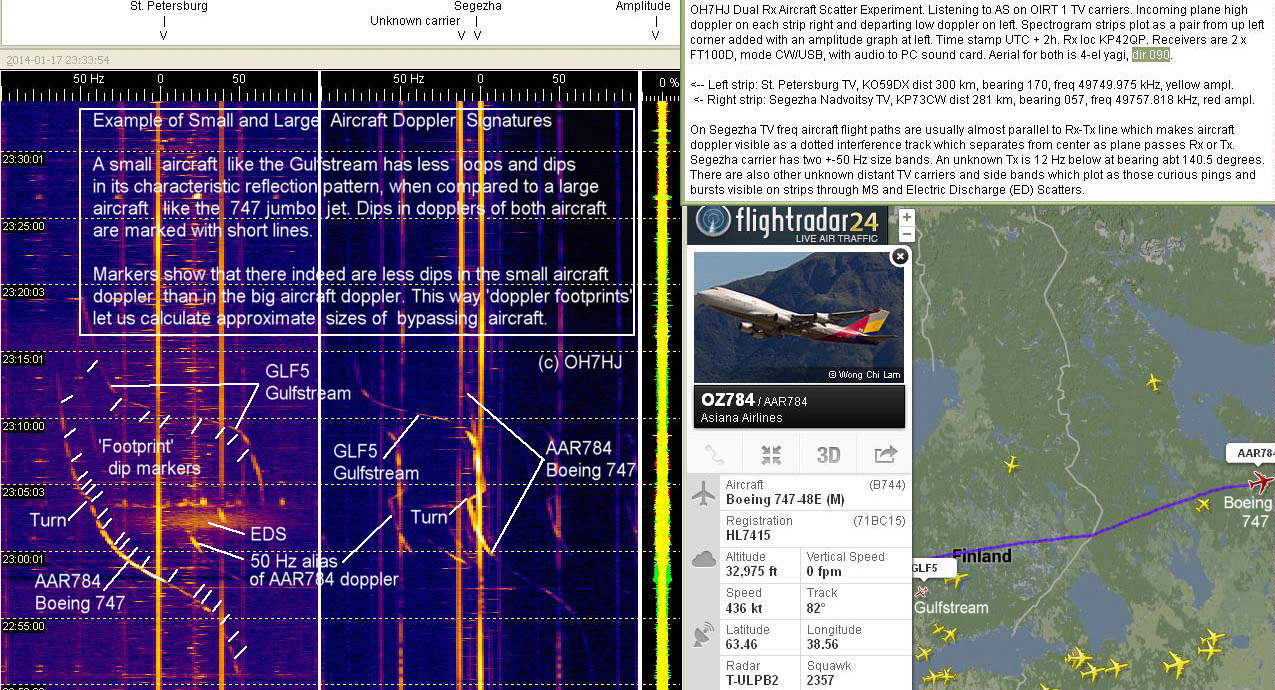
Over on a Finnish aircraft spotting forum, one poster OH7HJ has been using the “Aircraft Scatter” technique to fingerprint individual aircraft (in Finnish, use Google Translate to read in English). Aircraft scatter is a method that can be used to detect aircraft via strong radio signals that are reflected by the aircraft body. OH7HJ shows that each different type of aircraft will present a different reflection intensity at different points of the reflection, allowing each aircraft to be uniquely identified.

In the thread the original poster used a standard hardware radio, but an RTL-SDR dongle or other software defined radio could also be used. He tuned to a strong analogue TV carrier and plotted the audio spectrograph in Spectrum Lab. If analogue TV is no longer available in your country other strong signals such as amateur radio beacons or radar signal carriers could also be used for aircraft scatter.

Below we show a small selection of some of the interesting images from page 9 of the thread, please see the actual thread for the rest. There is also more information and images contained in the other pages of the discussion thread too.

Fingerprinting a Boeing 777 with Aircraft Scatter
Fingerprinting a Boeing 777 with aircraft scatter
Comparing Aircraft Scatter Intensity Profiles
Comparing aircraft scatter intensity profiles
Comparing large and small aircraft with aircraft scatter

RTL-SDR Live Discussion Net at 8pm EDT Tonight

Over on Reddit amateur radio hobbyist K2RWF has posted about a live discussion and QA session that he and some others will be having on a amateur radio net about RTL-SDR dongles. The discussion begins at 8PM EDT (about 2 hours from time this is posted) and will run for about an hour. For non-hams the discussion can be streamed live from http://rfissel.no-ip.biz:8080/stream.m3u. On the post K2RWF writes:

We had a pretty successful net last week regarding the RTLSDR sticks that are now widely available. We’ve decided to make the net a weekly occurrence for the time being, every Wednesday at 8 pm.

Tonight, we will be covering basic setup and configuration of the sticks from a software and hardware perspective, answering any questions you may have about getting up and running.

The net originates on W2LI, and tonight, we will be linked to the W2NJR repeater network, covering NJ and parts of NYC. This includes Echolink (21005) and IRLP (4935) capabilities for those wishing to participate from outside the area. The net beings at 8 pm EDT, and is expected to run for about one hour.

All are welcome, from newbies through advanced users. For non hams wishing to participate, you may stream the net using the link provided below. We will also be monitoring this thread to yield and answer questions from the r/rtlsdr community.

http://rfissel.no-ip.biz:8080/stream.m3u

Update: Recording of the net can be downloaded here (mp3)

Listening to an NFC Polling Signal from a Nexus 7 with an RTL-SDR

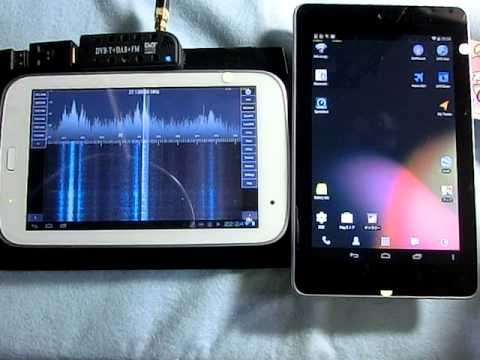
Over on YouTube user 2e26tenW has uploaded a video showing reception of the second harmonic of an NFC polling signal with his RTL-SDR. NFC stands for “Near Field Communication” and is a technology that enables smartphones and other devices to communicate with one another and some smart cards simply by bringing the two devices together.

In his experiment he uses a Nexus 7 tablet to poll an NFC enabled transportation card. As the RTL-SDR cannot receive the NFC frequency of 13.56 MHz directly without an upconverter or hardware or software direct sampling modified dongle, 2e26tenW instead tunes to the second harmonic at 27.12 MHz which allows him to receive the signal.

Nexus 7 NFC polling signal (2nd harmonic)

Teensy SDR Updates and User Interface Demo

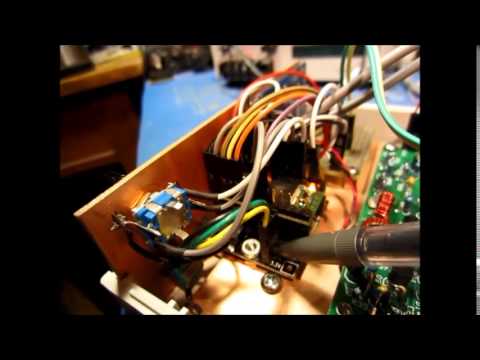
Last year in April we posted about the Teensy SDR, which is a SDR project that involves running a SoftRock SDR on a Teensy 3.1 Microcontroller. The Teensy is a tiny microcontroller board that uses a 32-bit ARM processor and the SoftRock SDR is a HF only software defined radio kit that is capable of RX and TX. Back then the Teensy SDR has no enclosure and the user interface hadn’t been finished.

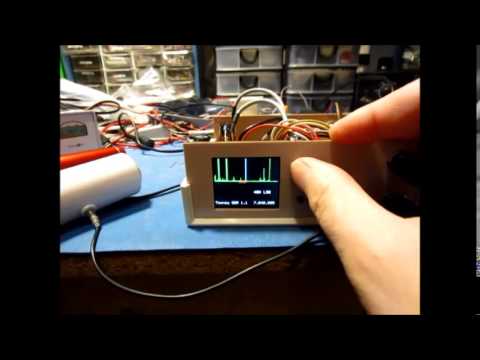
In his latest YouTube videos, creator of the Teensy SDR rheslip20 (aka VE3MKC) shows his latest improvements to the project and in the second video shows off the user interface. In the future he hopes to implement TX capability too.


Teensy SDR User Interface Demo - Tuning around the bands

Low Pass Filter for RTL-SDR Direct Sampling Mode

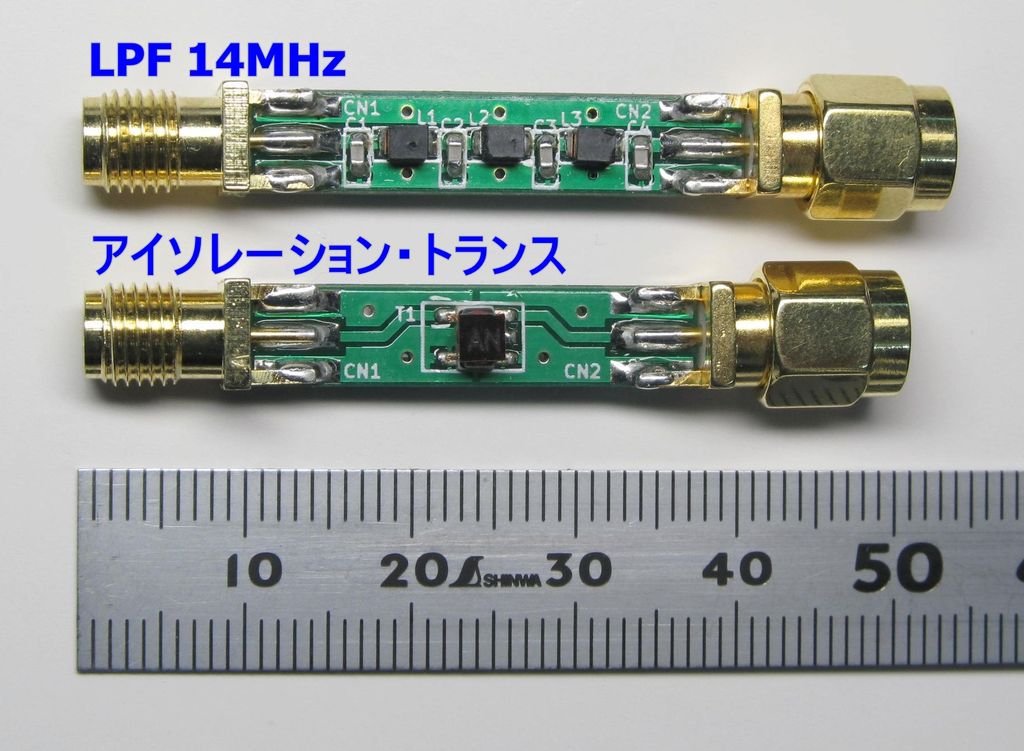
Over on his blog (in Japanese) Nobu has been working on prototyping a 14 MHz low pass filter (LPF) product for direct sampling modified RTL-SDR dongles (in Japanese, use Google Translate). Direct sampling mode is a hardware modification that allows the tuner chip in RTL-SDR dongles to be bypassed, allowing reception of signals between 0 – 14 MHz. However, after performing this mod there is no filtering and images from higher frequencies such as broadcast FM can be problematic. To fix these problems a low pass filter is required.

Another product Nobu is working on is an isolation transformer (aka Galvanic Isolator) which can be used together with an upconverter to help reduce noise generated from common ground sources such as the PC. The isolation transformer is inserted between an upconverter and antenna.

Low Pass Filter (Top), Isolation Transformer (Bottom)

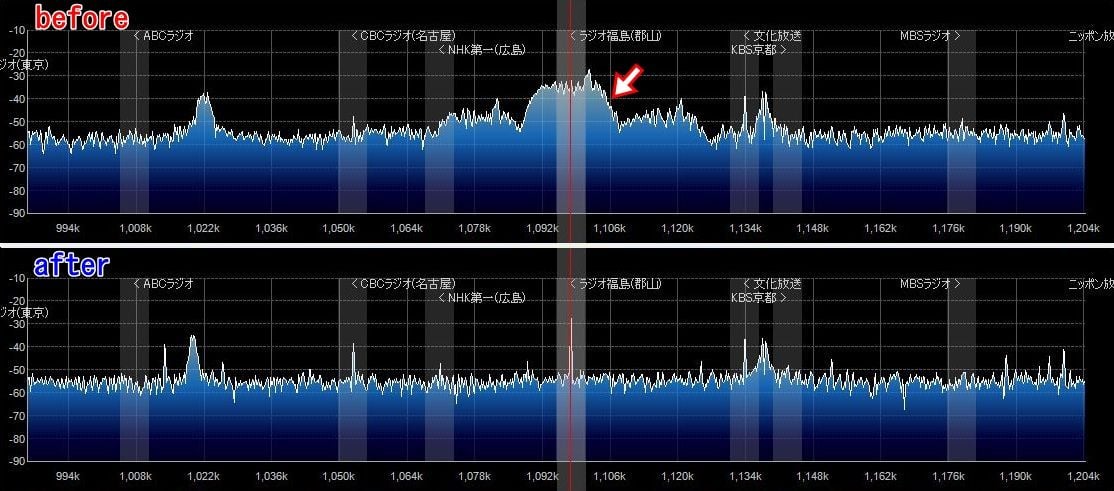
In the image below Nobu shows the effect of inserting the LPF . An interfering FM broadcast band signal is removed after inserting the LPF.

Effect of inserting the Low Pass Filter

The image below shows the effect of the isolation transformer showing a clear decrease in noise floor and increase in signal strength.

Effect of an Isolation Transformer when used with an Upconverter

Video Showing Decoding of DGPS Beacons with SDR# and MultiPSK

Following on from our last post where dewdude showed how to decode DGPS signalsFrank K2NCC has uploaded a video on YouTube showing DGPS decoding in action. In his video Frank uses an Airspy plus ham-it-up upconverter, a Sirio discone antenna and for software he uses SDR# with audio piped into MultiPSK for decoding.

In the video you can clearly see the decoded DGPS messages showing the pseudorange corrections and station numbers. To decode DGPS with MultiPSK you will need to use the paid version which costs approximately $50 USD, however in the free version the DGPS will run for 5 minutes each time MultiPSK is opened before expiring.

Below is an example of a decoded message.

24/03/2015 02:06:09
Message type        : 9 (GPS partial correction set)
Station number      : 172 (Appleton WA USA 300.0 Khz TXID 871 100bps)
Z-count             : 4215 ( 42 mn 9.0 s )
Sequence count      : 2le factor=0.3)

Sat. ID|SF|UDRE|Pseudorange corr.  |Range rate corr.|IOD|CRC
25     |0 |1-4m|      -7.68 m      |   0.000 m/s    |62 |OK
31     |0 |1-4m|       1.54 m      |   0.000 m/s    |27 |OK
32     |0 |1-4m|       0.70 m      |   0.000 m/s    |99 |Error