Tagged: airspy HF+

Several new Airspy HF+ Reviews

The new Airspy HF+ SDR receiver has now been shipped to multiple customers and reviewers, and new reviews are coming online fast. If you weren't already aware, the Airspy HF+ was a hotly anticipated low cost, but high performance HF speciality SDR receiver. The claims are that it can compete with the high end $500 US+ units. We have our own review of an early model here. Below are some new reviews that we are aware of.
Nils DK8OK's photo of the Airspy HF+.

Nils Schiffhauer - DK8OK

On his blog Nils presents us with a comprehensive set of audio recordings comparing the $525 US Elad FDM-S2 with the $199 US Airspy HF+. He compares the two receivers on various shortwave broadcast stations, time stations, and an airport VOLMET. The recordings are identical, with the two radios recording the same signals simultaneously via a splitter.

Both receivers produce excellent results so you will probably need headphones and keen ears to be able to tell the difference.

Mile Kokotov

In this review YouTube video Mile Kokotov presents a comparison of the Airspy HF+ vs. the ColibriNANO, a similarly specced SDR dongle. He writes:

In this video I am comparing two high quality SDR Receivers: Airspy HF+ and ColibriNANO. They both have 16 bit Analog-to-Digital Converter. Comparison was made with the same overall conditions.

For example, both receivers was set with equal size spectrum windows, with the same amount of decibels in their scale, and the same high of the spectrum windows.
ColibriNANO has LNA gain slider which was set to maximum SNR.

Airspy HF+, on the other hand, has no LNA gain control.
The SV2HQL/Beacon was chosen as a test signal on 3579.32 kHz (on 80m band)

Antenna is half-wave resonant Dipole (40 meters long) for 80m band.

In the second part of the video I was inserted 27 dB external Attenuator on both receivers. ColibriNANO automatically increased the LNA gain and sets itself to maximum SNR. With this amount of attenuation, The Airspy HF+ noise floor level was at about the same place in spectrum window like ColibriNANO, Unlike in the first part of the video, when no external attenuator was used.

Both SDR-receivers are very good! Which is better? I leave on you to judge...
Airspy HF+ vs ColibriNANO Comparison on 3.579 MHz

Mile also does a second test with his HF+ and an active Mini-Whip antenna. He writes:

Airspy HF+ is superb High-Dynamic HF and VHF SDR-receiver and I am impressed with it. In order to minimize possible negative effect on signal path from antenna connector to tuner input, Airspy HF+ has no internal attenuator. Developers takes in account that this SDR-receiver has enough dynamic range that is very difficult to overload it. Actually it is true for most cases. But, if we want to use some type of active antenna (with internal amplification) like Mini-Whip Active Antenna for example, it is good idea to add an external attenuator between antenna and receiver HF-input connector, in order to have opportunity to lower the signal level from the active antenna, and to avoid possible overload issues. In this video I am presented some scenario (receiving MW AM band) when my homemade external step-attenuator is more than welcome! By the way, the external step-attenuator is very easy to made in almost no money. All you need is 9 resistors, three switches and one metal box) I have 5.5 dB switch, 10.5 dB switch and 22 dB switch. It can be set for 8 various combinations: 0, -5.5 dB, -10.5 dB, -16 dB, -22 dB, -27.5 dB, -32.5 dB and -38 dB.

You can see on this video that the AM Broadcast signal from Macedonian Radio on 810 kHz is very strong. The Antenna is about 30 km from my house. It is self standing huge 185 meters high vertical antenna, radiating enormous RF-power, so I have to use my homemade attenuator I mentioned it before.
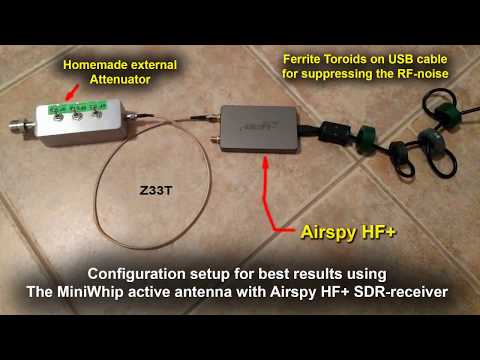
Airspy HF+ SDR Receiver with Mini-Whip Active Antenna and External Attenuator

The SWLing Post Blog

Here Thomas of the SWLing post blog has posted a brief review of his HF+ unit. He notes how the HF+ is very compact, with a durable enclosure and how easy it was to set up with it being completely plug and play. So far Thomas hasn't fully evaluated the performance, but his first impressions are good.

Adam 9A4QV

In his two videos Adam doesn't directly review the Airspy HF+, but he does show some pretty impressive reception with his Skyloop antenna.
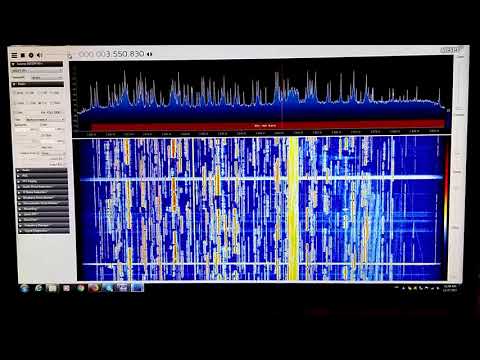
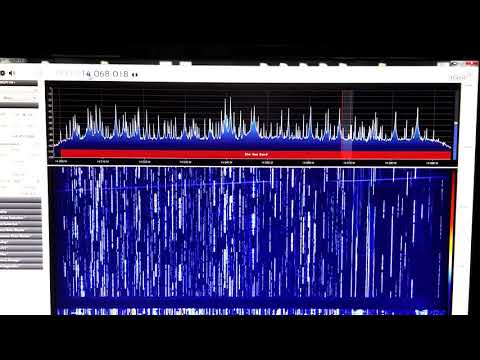
CQWW-2017 the end of the contest AirspyHF+

CQWW-2017 using AirSPY HF+ and 250 feet long skyloop antenna

RadioHobbyist (Update: 8 Dec 2017)

This review by RadioHobbyist just came online shortly after this post went out. It compares the HF+ against the expensive $1449 US NetSDR using sound samples from both radios. The difference between the two radios is almost undetectable.
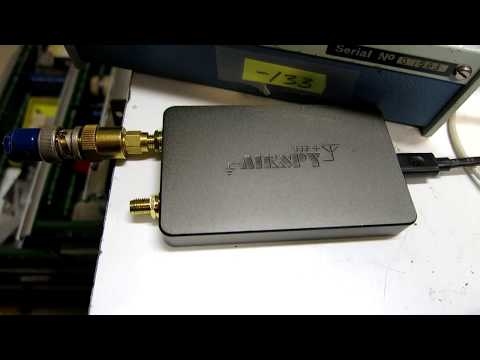
Leif Compares various SDRs including the RSP1, Airspy with SpyVerter, Airspy HF+, FDM-S1, IC706, Perseus

Over on YouTube Leif 'sm5bsz' has uploaded a video that does a lab comparison of various SDRs on the market now including the new Airspy HF+. Leif is known for providing excellent lab based technical reviews of various SDR products on his YouTube channel.

The first video compares the Airspy HF+ with the Perseus SDR. The Airspy HF+ is a new high performance yet low cost ($199 USD) HF/VHF specialty SDR. The Perseus is an older high performance direct sampling HF only SDR, although it comes at the high price of about $1000 USD.

In his tests Leif tests both units at 14 MHz and finds that the HF+ has about 15 dB better sensitivity compared to the Perseus (NF = 7dB vs 22dB). On the other hand the Perseus has about 23 dB better dynamic range compared to the HF+ (Dynamic Range = 127 dBc/Hz vs 150 dBc/Hz), although he notes that a blocking transmitter needs to have a very clean signal to be able to notice this difference which would be unlikely from Amateur transmitters. 

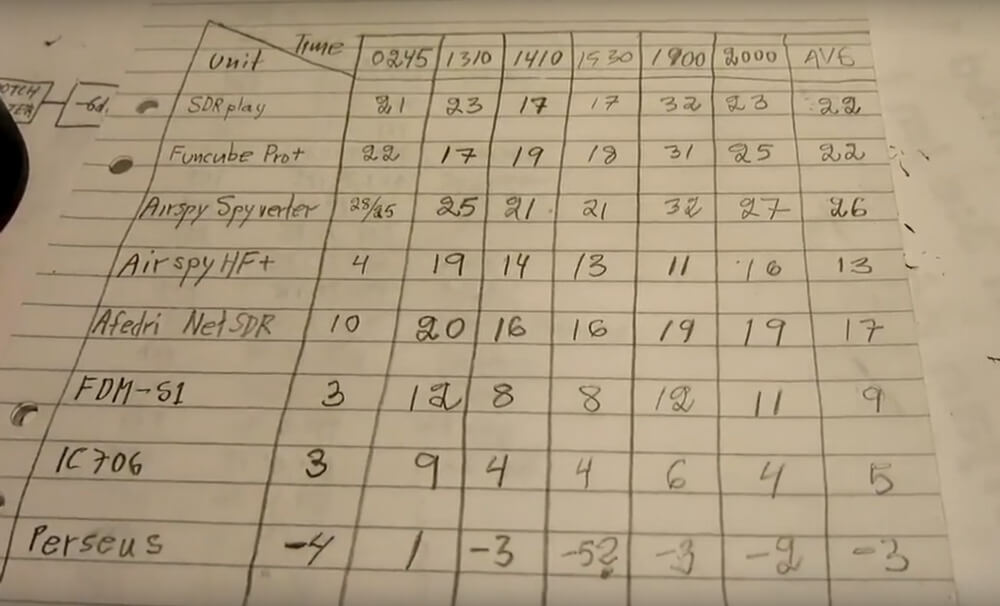
In the next two videos Leif compares multiple SDRs including the SDRplay RSP1, FUNcube Pro+, Airspy with Spyverter, Airspy HF+, Afedri SDR-Net, ELAD FDM-S1, ICOM IC-706MKIIG and Microtelecom Perseus at 7 MHz.

In the RX4 video Leif compares each SDR on dynamic range at 7 MHz. If you want to skip the testing parts, then the discussion of the results in the RX4 tests start at 1:03:00. A screenshot of the results is also shown below. The SDRs are ranked based on their average results over multiple measurements at different times which is shown in the last column. A lower value is better, and the value represents how much attenuation needed to be added to prevent the SDR from overloading and causing interference in his setup.

Dynamic Range Test Rankings

In the RX5 video the results start at 54:20:00. In this video he compares the SDRs with real signals coming in from his antenna at 7 MHz. He tests with the antenna signal wide open, with a 4.5 MHz LPF (to test out of band blocking performance), and with a bandpass filter at 7 MHz. Again lower values are better and the values indicate the amount of attenuation required to prevent overload. The Perseus is used as the reference benchmark. He also tests reciprocal mixing later in the video.

RX5 Results
RX5 Results

Airspy HF+ Released!

The much anticipated Airspy HF+ has just been released for sale. The cost is $199 USD plus shipping from the manufacturer iTead in China which costs about $6 for a registered air mail parcel or $19 for DHL express delivery to the USA. There was a coupon available via this tweet, but it ran out within hours.

The HF+ is also available for preorder for US/Canada customers over at the airspy.us reseller. Currently there is a last chance $50 coupon available for US/Canada residents purchasing from airspy.us by using the code provided in the link. We don't know how long that coupon will last though.

Note that we believe that these are preorders, with shipping expected to commence in early December.

If you didn't know already the Airspy HF+ is a HF/VHF RX only SDR which has extremely high dynamic range and excellent sensitivity. The high dynamic range means that the SDR is unlikely to ever overload on strong signals meaning that no external filtering which can reduce SNR/sensitivity is required. The minimum discernible signal (MDS) measurements are also excellent meaning that sensitivity to weak signals is excellent too. With high dynamic range, great sensitivity and low cost combined, this SDR blows most of the current offerings out of the water by being able to 'just work' without the need to fiddle around with gain sliders, filters or attenuation.

Airspy HF+: Why Linearity Matters

The only disadvantage to similar offerings like the Airspy R2/Mini or SDRplay is the reduced frequency range and bandwidth specs. On the HF+ the frequency range tops out at 260 MHz and the bandwidth at 680 kHz. The Airspy R2/mini/SDRplay units have frequency ranges that go up to 1.8 - 2 GHz, and have bandwidths of up to 10 MHz. But this is an SDR designed for DXing or pulling in those weak signals, so wideband operation is not a major concern for that application.

We have a review of a prototype version of the Airspy HF+ that we received earlier in the year available here. It's one of the most impressive low cost SDRs that we've seen to date. (We consider sub $300 USD as low cost, and $20 RTL-SDRs as ultra-low cost). You can also freely test some publicly available Airspy HF+ units that were provided to reviewers and developers over the internet.

Technical specifications

  • HF coverage between 9 kHz .. 31 MHz
  • VHF coverage between 60 .. 260 MHz
  • -140.0 dBm (0.02 µV / 50 ohms at 15MHz) MDS Typ. at 500Hz bandwidth in HF
  • -141.5 dBm MDS Typ. at 500 Hz bandwidth in FM Broadcast Band (60 – 108 MHz)
  • -142.5 dBm MDS Typ. at 500 Hz bandwidth in VHF Aviation Band (118 – 136 MHz)
  • -140.5 dBm MDS Typ. at 500 Hz bandwidth in VHF Commercial Band (136 – 174 MHz)
  • -140.0 dBm MDS Typ. at 500 Hz bandwidth in the upper VHF Band (> 174 MHz)
  • +15 dBm IIP3 on HF at maximum gain
  • +13 dBm IIP3 on VHF at maximum gain
  • 110 dB blocking dynamic range (BDR) in HF
  • 95 dB blocking dynamic range (BDR) in VHF
  • 150+ dB combined selectivity (hardware + software)
  • 120 dB Image Rejection (software)
  • Up to 660 kHz alias and image free output for 768 ksps IQ
  • 18 bit Embedded Digital Down Converter (DDC)
  • 22 bit! Resolution at 3 kHz channel using State of the Art DDC (SDR# and SDR-Console)
  • +10 dBm Maximum RF input
  • 0.5 ppm high precision, low phase noise clock
  • 1 PPB! frequency adjustment capability
  • Very low phase noise PLL (-110 dBc/Hz @ 1kHz separation @ 100 MHz)
  • Best Noise reduction of the market using state of the art algorithms
  • 2 x High Dynamic Range Sigma Delta ADCs @ up to 36 MSPS
  • No Silicon RF switch to introduce IMD in the HF path
  • Routable RF inputs with simple modification
  • Wide Band RF filter bank
  • Tracking RF filters
  • Sharp IF filters with 0.1 dB ripple
  • Smart AGC with real time optimization of the gain distribution
  • All RF inputs are matched to 50 ohms
  • 4 x Programmable GPIO’s
  • No drivers required! 100% Plug-and-play on Windows Vista, Seven, 8, 8.1 and 10
  • Industrial Operating Temperature: -45°C to 85°C
  • Full details at https://airspy.com/airspy-hf-plus/
The Airspy HF+
The Airspy HF+

Airspy HF+ Real World Performance Examples by the Author of GQRX up on YouTube & Twitter

Alexander Csete (OZ9AEC) is the programmer behind the popular GQRX software. Recently Alexander has received a review sample of the upcoming Airspy HF+ and has been uploading videos showing it in action to his YouTube channel.

The Airspy HF+ is a soon to be released low cost (expected price $149 USD) yet high performance HF/VHF receiver designed for DXing with exceptional performance in the presence of strong overloading signals. If you are interested we also have our own review of the HF+ available here.

In the video below Alexander demonstrates the HF+ on SSB and CW modes in his GQRX software. See his YouTube channel for the rest of the videos. Currently there are about 7 videos demonstrating the HF+ on his channel.

Over on his Twitter account @csete Alex has also been uploading several images of the HF+ in action as well as some screenshots of it being compared against the RFSpace Cloud-IQ which is a $629 USD SDR. So far his impressions of the HF+ seem very high.

Testing the Airspy HF+ with Gqrx, then a pirate comes by...

Simon Brown Compares the Airspy HF+ against the RFSpace NetSDR on SDR-Console V3

Simon Brown who is the author of the popular SDR-Console V2/V3 software has received an early review version of the Airspy HF+ and has uploaded some screenshots comparing it with the RFSpace NetSDR. The NetSDR is a high performance 16-bit DDC SDR with frequency range of 10 KHz – 32 MHz, and a bandwidth of up to 1.6 MHz. The base price of the NetSDR is US $1449.

The Airspy HF+ on the other hand is based on a polyphase harmonic rejection mixer design with 18-bit DDC and has a frequency range of DC – 31 MHz and 60 – 260 MHz, with a maximum bandwidth of up to 660 kHZ. It is not yet released, but is expected to be about US $149 shipped from China.

Simon’s screenshots show that despite its low cost the HF+ seems to perform just as well as the more expensive NetSDR.

If you’re interested in the HF+ we also have our own review available here.

New HF+ photo, with black metal enclosure.

New Airspy HF+ Pics and Sensitivity Test

The Airspy HF+ is an upcoming product from the Airspy team that is intended to be a high performance HF/VHF receiver at a low price. Its frequency range will be DC to 31 MHz, and 60 to 260 MHz and the bandwidth will be about 660 kHz. So why choose the HF+ over the Airspy R2, Mini or SDRplay which all have larger frequency ranges and bandwidths? It seems the focus of the HF+ is to be an extremely high dynamic range receiver. This means that strong signals should almost never overload the receiver making it very good for DXing weak signals (listening to weak signals from very far away). On other receivers once you turn the gain up strong signals can block reception of the weaker ones.

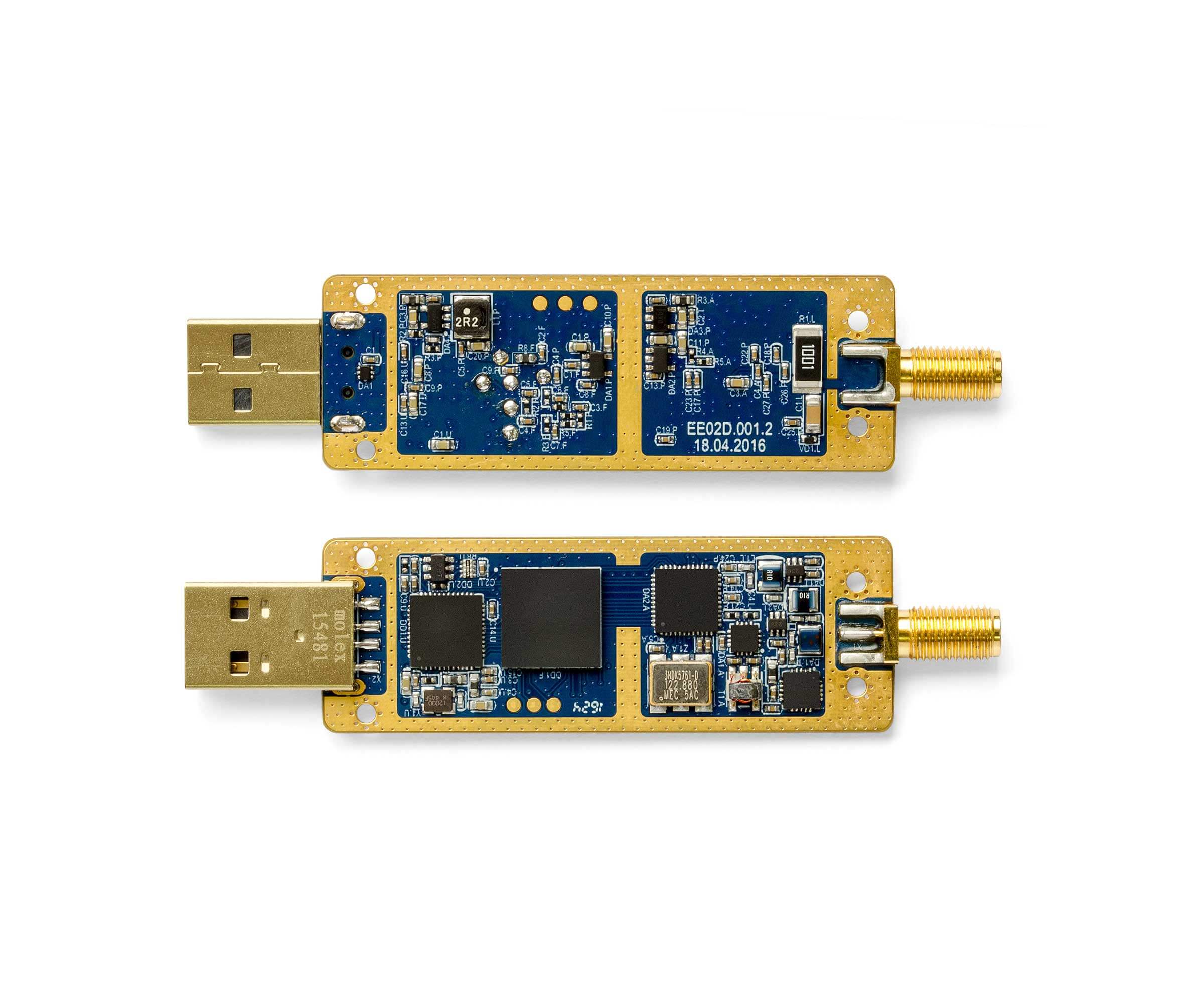
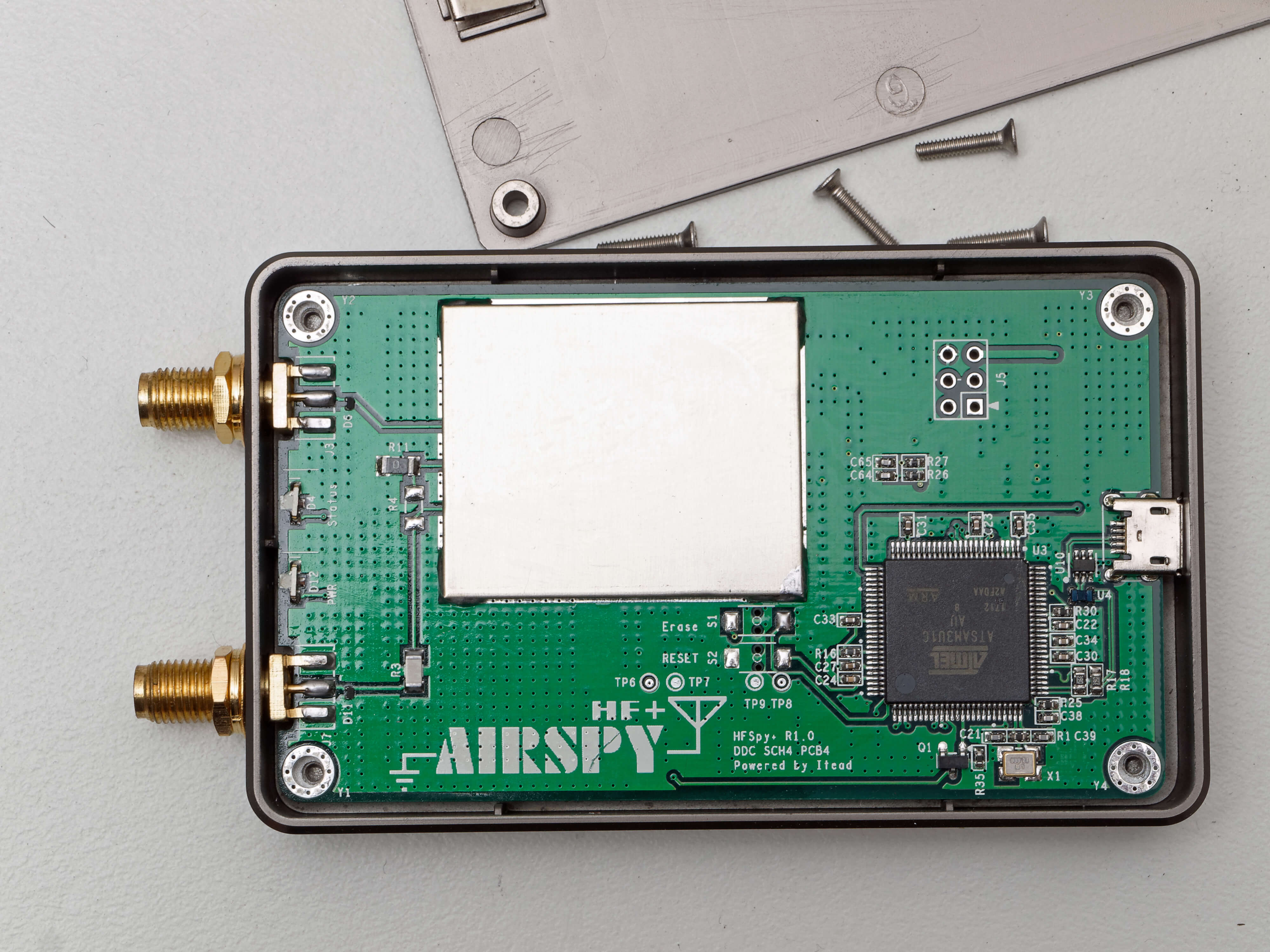
Recently we saw the release of some of the first 3D renderings of the product. Now finally we have a photo of the actual PCB which is shown below. The RF sensitive innards are hidden away within a shielding can, but we know from the product page that inside are the switches, filters, tuner, ADC and 18-bit DDC.

The Airspy HF+ PCB
The Airspy HF+ PCB

Also, over on Twitter, @lambdaprog, lead creator of SDR# and of the Airspy HF+ has uploaded some sensitivity tests. It seems that sensitivity will be at least -136 dBM at 20 meters, as a -136 dBm signal still comes in with 21 dB of SNR. Similar sensitivity results are obtained on the FM Band.


The Airspy team have sent us a sample unit from an early manufacturing test and we hope to have a full review available a few weeks after we receive it.

First Renderings of the Airspy HF+ Revealed

Back in February of this year we first heard about the Airspy HF+, which is an upcoming product from the Airspy team that is intended to be a high performance HF receiver at a low price. Over on the Airspy HF+ website the first (rendered) image of the unit has recently been released. We’ve also managed to get some additional renderings from the Airspy team which we show in the image slider below.

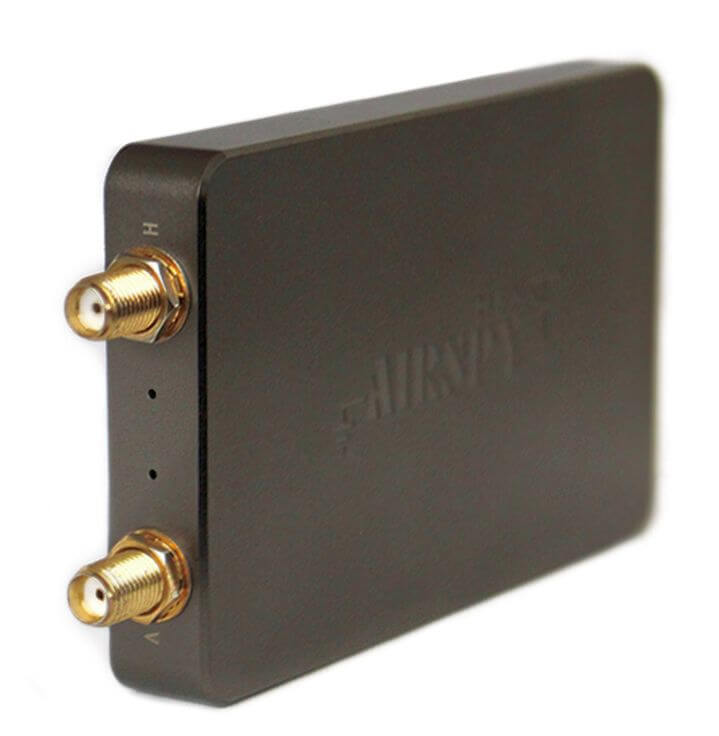
The enclosure is CNC carved aluminum with two SMA ports on one side, and a USB port on the rear. Since the HF+ actually has the capability to tune up to 260 MHz it uses two SMA inputs, one for an HF antenna and one for a VHF antenna. Inside the RF circuit is shielded again with a shielding can to protect it from USB noise.

Airspy HF+ First Render

The tweet below also appears to show some grounding improvements made to reduce USB noise.

Other recent tweets from prog (the creator of the Airspy HF+) indicate that the hardware is ready, and show that streaming from with SpyServer from a RPi3 is functional. Hopefully we should be seeing this unit release for sale soon.

Several new Airspy HF+ Reviews

The new Airspy HF+ SDR receiver has now been shipped to multiple customers and reviewers, and new reviews are coming online fast. If you weren't already aware, the Airspy HF+ was a hotly anticipated low cost, but high performance HF speciality SDR receiver. The claims are that it can compete with the high end $500 US+ units. We have our own review of an early model here. Below are some new reviews that we are aware of.

Nils DK8OK's photo of the Airspy HF+.

Nils Schiffhauer - DK8OK

On his blog Nils presents us with a comprehensive set of audio recordings comparing the $525 US Elad FDM-S2 with the $199 US Airspy HF+. He compares the two receivers on various shortwave broadcast stations, time stations, and an airport VOLMET. The recordings are identical, with the two radios recording the same signals simultaneously via a splitter.

Both receivers produce excellent results so you will probably need headphones and keen ears to be able to tell the difference.

Mile Kokotov

In this review YouTube video Mile Kokotov presents a comparison of the Airspy HF+ vs. the ColibriNANO, a similarly specced SDR dongle. He writes:

In this video I am comparing two high quality SDR Receivers: Airspy HF+ and ColibriNANO. They both have 16 bit Analog-to-Digital Converter. Comparison was made with the same overall conditions.

For example, both receivers was set with equal size spectrum windows, with the same amount of decibels in their scale, and the same high of the spectrum windows.
ColibriNANO has LNA gain slider which was set to maximum SNR.

Airspy HF+, on the other hand, has no LNA gain control.
The SV2HQL/Beacon was chosen as a test signal on 3579.32 kHz (on 80m band)

Antenna is half-wave resonant Dipole (40 meters long) for 80m band.

In the second part of the video I was inserted 27 dB external Attenuator on both receivers. ColibriNANO automatically increased the LNA gain and sets itself to maximum SNR. With this amount of attenuation, The Airspy HF+ noise floor level was at about the same place in spectrum window like ColibriNANO, Unlike in the first part of the video, when no external attenuator was used.

Both SDR-receivers are very good! Which is better? I leave on you to judge...

Airspy HF+ vs ColibriNANO Comparison on 3.579 MHz

Mile also does a second test with his HF+ and an active Mini-Whip antenna. He writes:

Airspy HF+ is superb High-Dynamic HF and VHF SDR-receiver and I am impressed with it. In order to minimize possible negative effect on signal path from antenna connector to tuner input, Airspy HF+ has no internal attenuator. Developers takes in account that this SDR-receiver has enough dynamic range that is very difficult to overload it. Actually it is true for most cases. But, if we want to use some type of active antenna (with internal amplification) like Mini-Whip Active Antenna for example, it is good idea to add an external attenuator between antenna and receiver HF-input connector, in order to have opportunity to lower the signal level from the active antenna, and to avoid possible overload issues. In this video I am presented some scenario (receiving MW AM band) when my homemade external step-attenuator is more than welcome! By the way, the external step-attenuator is very easy to made in almost no money. All you need is 9 resistors, three switches and one metal box) I have 5.5 dB switch, 10.5 dB switch and 22 dB switch. It can be set for 8 various combinations: 0, -5.5 dB, -10.5 dB, -16 dB, -22 dB, -27.5 dB, -32.5 dB and -38 dB.

You can see on this video that the AM Broadcast signal from Macedonian Radio on 810 kHz is very strong. The Antenna is about 30 km from my house. It is self standing huge 185 meters high vertical antenna, radiating enormous RF-power, so I have to use my homemade attenuator I mentioned it before.

Airspy HF+ SDR Receiver with Mini-Whip Active Antenna and External Attenuator

The SWLing Post Blog

Here Thomas of the SWLing post blog has posted a brief review of his HF+ unit. He notes how the HF+ is very compact, with a durable enclosure and how easy it was to set up with it being completely plug and play. So far Thomas hasn't fully evaluated the performance, but his first impressions are good.

Adam 9A4QV

In his two videos Adam doesn't directly review the Airspy HF+, but he does show some pretty impressive reception with his Skyloop antenna.

CQWW-2017 the end of the contest AirspyHF+

CQWW-2017 using AirSPY HF+ and 250 feet long skyloop antenna

RadioHobbyist (Update: 8 Dec 2017)

This review by RadioHobbyist just came online shortly after this post went out. It compares the HF+ against the expensive $1449 US NetSDR using sound samples from both radios. The difference between the two radios is almost undetectable.
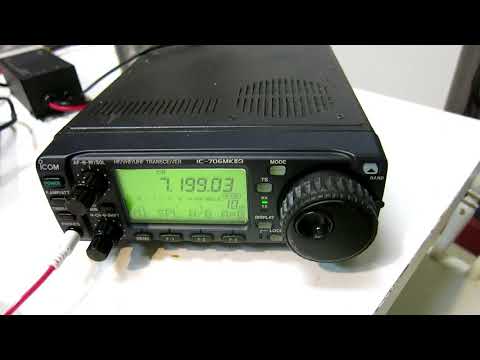
Leif Compares various SDRs including the RSP1, Airspy with SpyVerter, Airspy HF+, FDM-S1, IC706, Perseus

Over on YouTube Leif 'sm5bsz' has uploaded a video that does a lab comparison of various SDRs on the market now including the new Airspy HF+. Leif is known for providing excellent lab based technical reviews of various SDR products on his YouTube channel.

The first video compares the Airspy HF+ with the Perseus SDR. The Airspy HF+ is a new high performance yet low cost ($199 USD) HF/VHF specialty SDR. The Perseus is an older high performance direct sampling HF only SDR, although it comes at the high price of about $1000 USD.

In his tests Leif tests both units at 14 MHz and finds that the HF+ has about 15 dB better sensitivity compared to the Perseus (NF = 7dB vs 22dB). On the other hand the Perseus has about 23 dB better dynamic range compared to the HF+ (Dynamic Range = 127 dBc/Hz vs 150 dBc/Hz), although he notes that a blocking transmitter needs to have a very clean signal to be able to notice this difference which would be unlikely from Amateur transmitters. 

In the next two videos Leif compares multiple SDRs including the SDRplay RSP1, FUNcube Pro+, Airspy with Spyverter, Airspy HF+, Afedri SDR-Net, ELAD FDM-S1, ICOM IC-706MKIIG and Microtelecom Perseus at 7 MHz.

In the RX4 video Leif compares each SDR on dynamic range at 7 MHz. If you want to skip the testing parts, then the discussion of the results in the RX4 tests start at 1:03:00. A screenshot of the results is also shown below. The SDRs are ranked based on their average results over multiple measurements at different times which is shown in the last column. A lower value is better, and the value represents how much attenuation needed to be added to prevent the SDR from overloading and causing interference in his setup.

Dynamic Range Test Rankings

In the RX5 video the results start at 54:20:00. In this video he compares the SDRs with real signals coming in from his antenna at 7 MHz. He tests with the antenna signal wide open, with a 4.5 MHz LPF (to test out of band blocking performance), and with a bandpass filter at 7 MHz. Again lower values are better and the values indicate the amount of attenuation required to prevent overload. The Perseus is used as the reference benchmark. He also tests reciprocal mixing later in the video.

RX5 Results
RX5 Results

Airspy HF+ Released!

The much anticipated Airspy HF+ has just been released for sale. The cost is $199 USD plus shipping from the manufacturer iTead in China which costs about $6 for a registered air mail parcel or $19 for DHL express delivery to the USA. There was a coupon available via this tweet, but it ran out within hours.

The HF+ is also available for preorder for US/Canada customers over at the airspy.us reseller. Currently there is a last chance $50 coupon available for US/Canada residents purchasing from airspy.us by using the code provided in the link. We don't know how long that coupon will last though.

Note that we believe that these are preorders, with shipping expected to commence in early December.

If you didn't know already the Airspy HF+ is a HF/VHF RX only SDR which has extremely high dynamic range and excellent sensitivity. The high dynamic range means that the SDR is unlikely to ever overload on strong signals meaning that no external filtering which can reduce SNR/sensitivity is required. The minimum discernible signal (MDS) measurements are also excellent meaning that sensitivity to weak signals is excellent too. With high dynamic range, great sensitivity and low cost combined, this SDR blows most of the current offerings out of the water by being able to 'just work' without the need to fiddle around with gain sliders, filters or attenuation.

Airspy HF+: Why Linearity Matters

The only disadvantage to similar offerings like the Airspy R2/Mini or SDRplay is the reduced frequency range and bandwidth specs. On the HF+ the frequency range tops out at 260 MHz and the bandwidth at 680 kHz. The Airspy R2/mini/SDRplay units have frequency ranges that go up to 1.8 - 2 GHz, and have bandwidths of up to 10 MHz. But this is an SDR designed for DXing or pulling in those weak signals, so wideband operation is not a major concern for that application.

We have a review of a prototype version of the Airspy HF+ that we received earlier in the year available here. It's one of the most impressive low cost SDRs that we've seen to date. (We consider sub $300 USD as low cost, and $20 RTL-SDRs as ultra-low cost). You can also freely test some publicly available Airspy HF+ units that were provided to reviewers and developers over the internet.

Technical specifications

  • HF coverage between 9 kHz .. 31 MHz
  • VHF coverage between 60 .. 260 MHz
  • -140.0 dBm (0.02 µV / 50 ohms at 15MHz) MDS Typ. at 500Hz bandwidth in HF
  • -141.5 dBm MDS Typ. at 500 Hz bandwidth in FM Broadcast Band (60 – 108 MHz)
  • -142.5 dBm MDS Typ. at 500 Hz bandwidth in VHF Aviation Band (118 – 136 MHz)
  • -140.5 dBm MDS Typ. at 500 Hz bandwidth in VHF Commercial Band (136 – 174 MHz)
  • -140.0 dBm MDS Typ. at 500 Hz bandwidth in the upper VHF Band (> 174 MHz)
  • +15 dBm IIP3 on HF at maximum gain
  • +13 dBm IIP3 on VHF at maximum gain
  • 110 dB blocking dynamic range (BDR) in HF
  • 95 dB blocking dynamic range (BDR) in VHF
  • 150+ dB combined selectivity (hardware + software)
  • 120 dB Image Rejection (software)
  • Up to 660 kHz alias and image free output for 768 ksps IQ
  • 18 bit Embedded Digital Down Converter (DDC)
  • 22 bit! Resolution at 3 kHz channel using State of the Art DDC (SDR# and SDR-Console)
  • +10 dBm Maximum RF input
  • 0.5 ppm high precision, low phase noise clock
  • 1 PPB! frequency adjustment capability
  • Very low phase noise PLL (-110 dBc/Hz @ 1kHz separation @ 100 MHz)
  • Best Noise reduction of the market using state of the art algorithms
  • 2 x High Dynamic Range Sigma Delta ADCs @ up to 36 MSPS
  • No Silicon RF switch to introduce IMD in the HF path
  • Routable RF inputs with simple modification
  • Wide Band RF filter bank
  • Tracking RF filters
  • Sharp IF filters with 0.1 dB ripple
  • Smart AGC with real time optimization of the gain distribution
  • All RF inputs are matched to 50 ohms
  • 4 x Programmable GPIO’s
  • No drivers required! 100% Plug-and-play on Windows Vista, Seven, 8, 8.1 and 10
  • Industrial Operating Temperature: -45°C to 85°C
  • Full details at https://airspy.com/airspy-hf-plus/
The Airspy HF+
The Airspy HF+

Airspy HF+ Real World Performance Examples by the Author of GQRX up on YouTube & Twitter

Alexander Csete (OZ9AEC) is the programmer behind the popular GQRX software. Recently Alexander has received a review sample of the upcoming Airspy HF+ and has been uploading videos showing it in action to his YouTube channel.

The Airspy HF+ is a soon to be released low cost (expected price $149 USD) yet high performance HF/VHF receiver designed for DXing with exceptional performance in the presence of strong overloading signals. If you are interested we also have our own review of the HF+ available here.

In the video below Alexander demonstrates the HF+ on SSB and CW modes in his GQRX software. See his YouTube channel for the rest of the videos. Currently there are about 7 videos demonstrating the HF+ on his channel.

Over on his Twitter account @csete Alex has also been uploading several images of the HF+ in action as well as some screenshots of it being compared against the RFSpace Cloud-IQ which is a $629 USD SDR. So far his impressions of the HF+ seem very high.

Testing the Airspy HF+ with Gqrx, then a pirate comes by...

Simon Brown Compares the Airspy HF+ against the RFSpace NetSDR on SDR-Console V3

Simon Brown who is the author of the popular SDR-Console V2/V3 software has received an early review version of the Airspy HF+ and has uploaded some screenshots comparing it with the RFSpace NetSDR. The NetSDR is a high performance 16-bit DDC SDR with frequency range of 10 KHz – 32 MHz, and a bandwidth of up to 1.6 MHz. The base price of the NetSDR is US $1449.

The Airspy HF+ on the other hand is based on a polyphase harmonic rejection mixer design with 18-bit DDC and has a frequency range of DC – 31 MHz and 60 – 260 MHz, with a maximum bandwidth of up to 660 kHZ. It is not yet released, but is expected to be about US $149 shipped from China.

Simon’s screenshots show that despite its low cost the HF+ seems to perform just as well as the more expensive NetSDR.

If you’re interested in the HF+ we also have our own review available here.

New HF+ photo, with black metal enclosure.

New Airspy HF+ Pics and Sensitivity Test

The Airspy HF+ is an upcoming product from the Airspy team that is intended to be a high performance HF/VHF receiver at a low price. Its frequency range will be DC to 31 MHz, and 60 to 260 MHz and the bandwidth will be about 660 kHz. So why choose the HF+ over the Airspy R2, Mini or SDRplay which all have larger frequency ranges and bandwidths? It seems the focus of the HF+ is to be an extremely high dynamic range receiver. This means that strong signals should almost never overload the receiver making it very good for DXing weak signals (listening to weak signals from very far away). On other receivers once you turn the gain up strong signals can block reception of the weaker ones.

Recently we saw the release of some of the first 3D renderings of the product. Now finally we have a photo of the actual PCB which is shown below. The RF sensitive innards are hidden away within a shielding can, but we know from the product page that inside are the switches, filters, tuner, ADC and 18-bit DDC.

The Airspy HF+ PCB
The Airspy HF+ PCB

Also, over on Twitter, @lambdaprog, lead creator of SDR# and of the Airspy HF+ has uploaded some sensitivity tests. It seems that sensitivity will be at least -136 dBM at 20 meters, as a -136 dBm signal still comes in with 21 dB of SNR. Similar sensitivity results are obtained on the FM Band.


The Airspy team have sent us a sample unit from an early manufacturing test and we hope to have a full review available a few weeks after we receive it.

First Renderings of the Airspy HF+ Revealed

Back in February of this year we first heard about the Airspy HF+, which is an upcoming product from the Airspy team that is intended to be a high performance HF receiver at a low price. Over on the Airspy HF+ website the first (rendered) image of the unit has recently been released. We’ve also managed to get some additional renderings from the Airspy team which we show in the image slider below.

The enclosure is CNC carved aluminum with two SMA ports on one side, and a USB port on the rear. Since the HF+ actually has the capability to tune up to 260 MHz it uses two SMA inputs, one for an HF antenna and one for a VHF antenna. Inside the RF circuit is shielded again with a shielding can to protect it from USB noise.

Airspy HF+ First Render

The tweet below also appears to show some grounding improvements made to reduce USB noise.

Other recent tweets from prog (the creator of the Airspy HF+) indicate that the hardware is ready, and show that streaming from with SpyServer from a RPi3 is functional. Hopefully we should be seeing this unit release for sale soon.

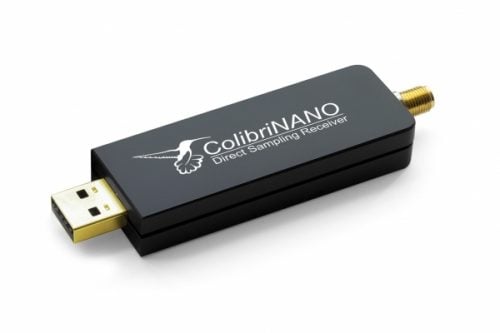
ColibriNANO: A New 10 kHz to 500 MHz Direct Sampling Receiver

The ColibriNANO is a new software defined radio that is currently available for pre-order and is expected to be ready for delivery by the end of April 2017. The specs show that it is a direct sampling receiver (no tuner), which can receive from 10 kHz to 500 MHz in oversampling mode, and from 10 kHz to 55 MHz in standard mode. It uses a 14 Bit ADC which provides up to 110 dB’s of blocking dynamic range, and can run with a sampling rate of up to 3 MHz. The press release given to us reads:

New ColibriNANO SDR USB Receiver with a 14-bit ADC .01-500MHz

Kirkland, WA, USA —March 27 th , 2017 –

Vasily Vasiliev, Chief Hardware Engineer of Expert Electronics is pleased to announce availability of new ColibriNANO 0.01-500 MHz receiver in late April, 2017.

Notable features include the blocking dynamic range (BDR) ~110dB, native .01-55 MHz coverage with up to 500 MHz in oversampling mode, low pass filter (LPF) <60 MHz, full compatibility with HDSDR, legacy SDR#, and ExpertSDR2 software.

Supported platforms are Windows® XP-10, Linux and Web-client for HTML5 browsers.

No existing USB SDR receivers combine high sensitivity and broad dynamic range. Remote operation (TCP/IP) interface is built-in and offers plug-and- play solutions for Amateur, Commercial and Government applications.

For further information call (800)977-0448 or email [email protected]

https://www.nsiradio.com

Currently we see that the ColibriNANO is selling for $249.95 USD on the nsiradio.com website. We’ve also seen the following description on the sunsdr.eu website:

With the new ColibriNANO you will be able to enjoy LF, MW and Shortwave listening in many different ways. For example you can record the entire medium wave band using 1.5 MHz sampling rate, decode CW using CW skimmer, remote control the ColibriNANO by plugging it into our RPI server. There are an endless range of applications for this small SDR. All this in a tiny USB stick!

The ColibriNANO features a Texas Instruments ADS4145 14 bit direct sampling ADC and a built in low 55 MHz pass filter that can be bypassed to receive signals up to 500 MHz (external filters  like the our 2m filtered preamp recommended).

CW skimmer and Skimmer With the external ExtIO library the ColibriNANO can be used with third party software like HDSDR etc.

This is not a cheap USB dongle found on Ebay, this high quality SDR receiver is developed by Expert Electronics and features a sturdy aluminium chassis, ESD protection, USB 2.0 interface and a quality SMA antenna connector.

Best of all, the ColibriNANO travels in your pocket and only needs your computer and an antenna! Its the ultimate portable SDR receiver!

Software support

  • ExpertSDR2
  • CW Skimmer
  • Skimmer Server
  • Third party software using ExtIO library

Specifications

  • Receiving bandwidth: 0.1 – 55 MHz
  • Oversampling receiving: 0.1 – 500 MHz
  • Blocking Dynamic Range (BDR): 110 dB
  • Sensitivity: 0.05 uV at 20M band, preamp = 0
  • IMD3 Dynamic Range: 95 dB
  • ADC resolution: 14-bit @ 122.88 MHz
  • Sample rate: 48, 96, 192, 384, 768 kHz and 1.5, 3.0 MHz
  • IQ resolution: 24 bit (16 bit at 1.5 and 3 MHz sample rates)
  • RF Input: (SMA connector, up to 15kV ESD protection)
  • Preamp range: from 31.5 up to +6 dB with 0.5 dB steps
  • Operating temperature: -10°C to 60°C
  • Dimensions: 90х25х17mm
  • Weight: 0.043kg

It looks like that this receiver may compete somewhat with the also upcoming Airspy HF+. The Airspy HF+ claims similar specs including a frequency range of 0 – 270 MHz, 14 Bit ADC and 108 dB blocking dynamic range. But the target price for the HF+ is below $200 USD.