Tagged: gnu radio

Decoding Multiple Pager Transmissions Simultaneously with GNU Radio

A few weeks ago we posted about "LikWidChz"'s work on using GNU Radio to channelize multiple NRSC-5 HD-Radio transmissions for simultaneous decoding with GNU Radio and an RTL-SDR. He has now also submitted a way to channelize pager traffic. He writes:

Quite a while ago I wanted to decode pager traffic, specifically Flex. When I started doing some basic poking around I figured out that there were multiple pager transmissions going on at once. Thinking about GnuRadio and its ability to chop up signal.. I was curious if anyone tried to decode them all at once.. I didn't get a whole lot of answers on the subject and It didn't seem like people used GnuRadio to pass MultiMonNG data.. I had my work cut out for me.

In my area all of the flex transmissions were between 928Mhz and 932Mhz and quite strong... You don't need much of an antenna to RX these transmissions. A simple wire of appropriate length will do nicely.

My plan was to design a graph and tune into the center of the range I was interested in and somehow channelize it. The remaining steps are required to format the data to allow MultiMonNG to process that audio stream. This is done a couple times depending on how many you want to decode in parallel. Have fun!

This this zip file we have uploaded his GRC file, and his full PDF description of the flowgraph. Again we note that to get in touch with the author you can log on #gnuradio and ##rtlsdr on freenode IRC and fine him under the nickname "LikWidChz".

Channelizing Pager Signals in GNU Radio

Decoding NRSC5 HD Radio with GNU Radio and a HackRF

Thank you to "LikWidChz" for submitting his tutorial on receiving and decoding multiple NRSC5 (HD Radio) channels with the help of GNU Radio, a HackRF and the NRSC5 decoder. He writes:

I wanted a way to utilize GnuRadio for working with HD radio. There are no decoder blocks from within GnuRadio to perform this decoding without an external application. This write up is how I was able to split up some signal and supply NRSC5 what it requires to perform the decode.

My goal was to capture some slice of spectrum and "channelize it" so I can perform multiple HD radio decodes at once.

In this linked zip file we have uploaded his GRC file, and his tutorial PDF, which fully explains each GNU Radio block used, and how to use the NRCS5 decoder along with the flowgraph. He also notes that if anyone wants to get in touch with him he is idling on IRC in #gnuradio and ##rtlsdr on freenode under the nickname "LikWidChz".

Channelizing NRSC5 in GNU Radio

GNU Radio Amateur Radio Meeting: A Look at Project 25 (P25) Digital Radio

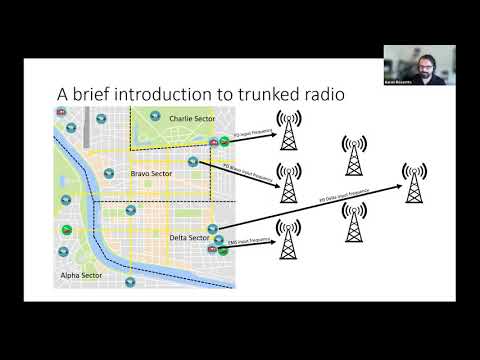
Over on their YouTube channel GNU Radio have uploaded a recent talk by Aaron Rossetto titled "A Look at Project 25 (P25) Digital Radio". The talk explains the North American public safety P25 system in great depth, and is a good watch for anyone looking into details on how the system works in a deeply technical way. He later shows some examples of his P25 decoding and recording setup. Slides can be found here, and the video is posted below.

Agenda: In this presentation, I will introduce Project 25 digital radio, with a strong emphasis on its use in North American public safety trunked radio systems, and to describe experiments monitoring and decoding P25 traffic using GNU Radio code.

  • What is Project 25?
  • A brief introduction to trunked radio
  • Diving into the P25 protocol
    • Modulation
    • Packet framing and encapsulation
    • Packet types
  • GNU Radio and P25 decoding experiments
Amateur Radio Meetup: P25 Trunked Radio

Building an 11.2 GHz Radio Telescope with an Airspy and 1.2m TV Satellite Dish

In the past we've posted several times about how 1.42 GHz Hydrogen Line amateur radio telescopes used with RTL-SDRs or other SDRs for Hydrogen line observations of the galaxy. Recently Hackaday ran a post highlighting a project from "PhysicsOpenLab" describing an 11.2 GHz radio telescope that uses an Airspy SDR as the receiver.

Celestial bodies emit radio waves all across the radio spectrum and typically observations can be made anywhere between 20 MHz to 20 GHz. Choosing an optimal frequency it is a tradeoff between antenna size, directivity and avoiding man made noise. For these reasons, observations at 10-12 GHz are most suitable for amateur radio telescopes.

The posts by PhysicsOpenLab are split into two. The first post highlights the hardware used which includes a 1.2m prime focus dish, and 11.2 GHz TV LNB, a wideband amplifier, a SAW filter, a bias tee, and the Airspy SDR. The LNB converts the 11.2 GHz signal down to 1.4 GHz which can be received by the Airspy. Once at 1.4 GHz it's possible then to use existing commercial filters and amplifiers designed for Hydrogen line observations.

The second post explains the GNU Radio based software implementation and the mathematical equations required to understand the gathered data. Finally in this post they also graph some results gathered during a solar and lunar transit.

Finally they note that even a 1.2m dish is quite small for a radio telescopic, but it may be possible to detect the emissions from the Milky Way and other celestial radio sources such as nebulae like Cassiopeia A, Taurus A and Cygnus A a radio galaxy.

A 11.2 GHz 1.2m Amateur Radio Telescope with GNU Radio and Airspy

GNU Radio 3.9.0.0 Released

GNU Radio is an open source digital signal processing (DSP) toolkit which is often used in cutting edge radio applications and research to implement decoders, demodulators and various SDR algorithms. Version 3.9.0.0 has recently been released. Below is part of the release text, but please see the official release post for the full list of changes

The future is not set, there is no fate but what we make for ourselves. In this very spirit, GNU Radio 3.9 packs a whole bunch of power when it comes to transforming the way GNU Radio and its ecosytem can be developed in the future.

You’ll find the release tags and signed tarballs now on github, and later on gnuradio.org/releases/gnuradio.

Not only did we have great progressions from old dependencies that proved to be all too problematic (SWIG, Python2), but also did we see an incredibly influx of people actively working on how maintainable this code base is. This will nurture the project for years to come.

All in all, the main breaking change for pure GRC users will consist in a few changed blocks – an incredible feat, considering the amount of shift under the hood.

Talks and Tutorials from GNU Radio Days 2019 Now on YouTube

GNU Radio Days is a yearly European conference all about GNU Radio and its applications with software defined radios. GNU Radio is an open source digital signal processing (DSP) toolkit which is often used in cutting edge radio applications and research to implement decoders, demodulators and various SDR algorithms.

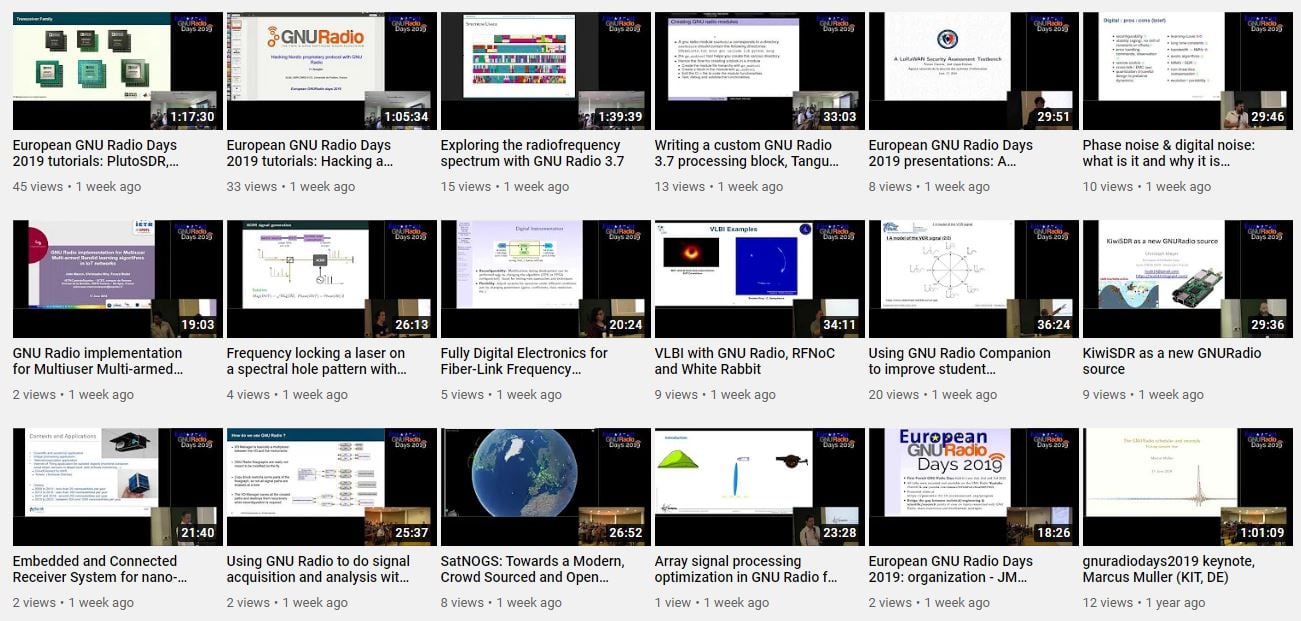
Over on YouTube talks and tutorials from the 2019 GNU Radio Days event have recently been uploaded. There are some interesting talks available including talks about SatNOGS, KiwiSDR, very long baseline interferometry radio astronomy, phase noise & digital noise explanations, as well as several tutorials with topics such as how to write a GNU Radio block and how to hack a proprietary protocol.

GNU Radio Days 2019 Talks

Introducing the Radio Resilience Competition

Thank you to Matt Knight for submitting news about the Radio Resilience Competition which is all about finding ways to building the best wireless PHY layer via SDR. Anyone around the world can participate from the comfort of their own home, as the competition is run entirely via a GNU Radio RF simulator system. Matt writes:

The Radio Resilience Competition is a community-focused Software Defined Radio competition that is all about building the most interference-resistant, highest-performance waveforms possible.  Inspired by DARPA's Spectrum Challenges, it goes back to basics by focusing on the foundational layer of all wireless communications -- the PHY.  Registration is open now on our homepage!

For your readers, IMO the most exciting dimension of the Radio Resilience Competition is that it takes place entirely on virtual infrastructure.  We decided to design the competition this way to set the lowest possible barrier to entry, and to draw the biggest competitor pool possible.  DARPA's challenges relied on big expensive RF emulators built on real radios and supercomputers which, despite being immensely cool, capped the total number of competitors and had some material drawbacks.  Furthermore, we open sourced our RF simulator so competitors can run it locally and rapidly iterate on their designs.  We hope the simulator will have uses beyond the competition as well.

The Radio Resilience Competition is organized by Sytse Sijbrandij, who in an entirely separate capacity from running this competition is also the CEO of GitLab.  Sid envisioned the competition after learning about unlicensed spectrum and becoming an SDR hobbyist himself.

We presented the Radio Resilience Competition at GNU Radio Conference on Monday.  Here's a link to our talk if you are interested -- it goes into more detail about the conception of the competition, as well as the infrastructure we built for it.

GNU Radio Conference 2020 - Monday September 14th

Screenshot of the Radio Resilience RF Simulator

The SETI Institute and GNU Radio Join Forces

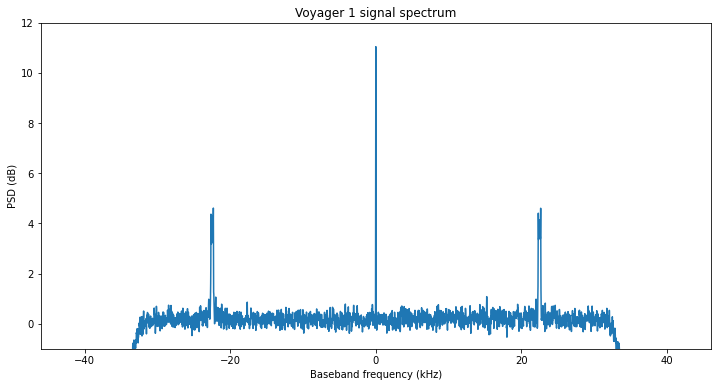
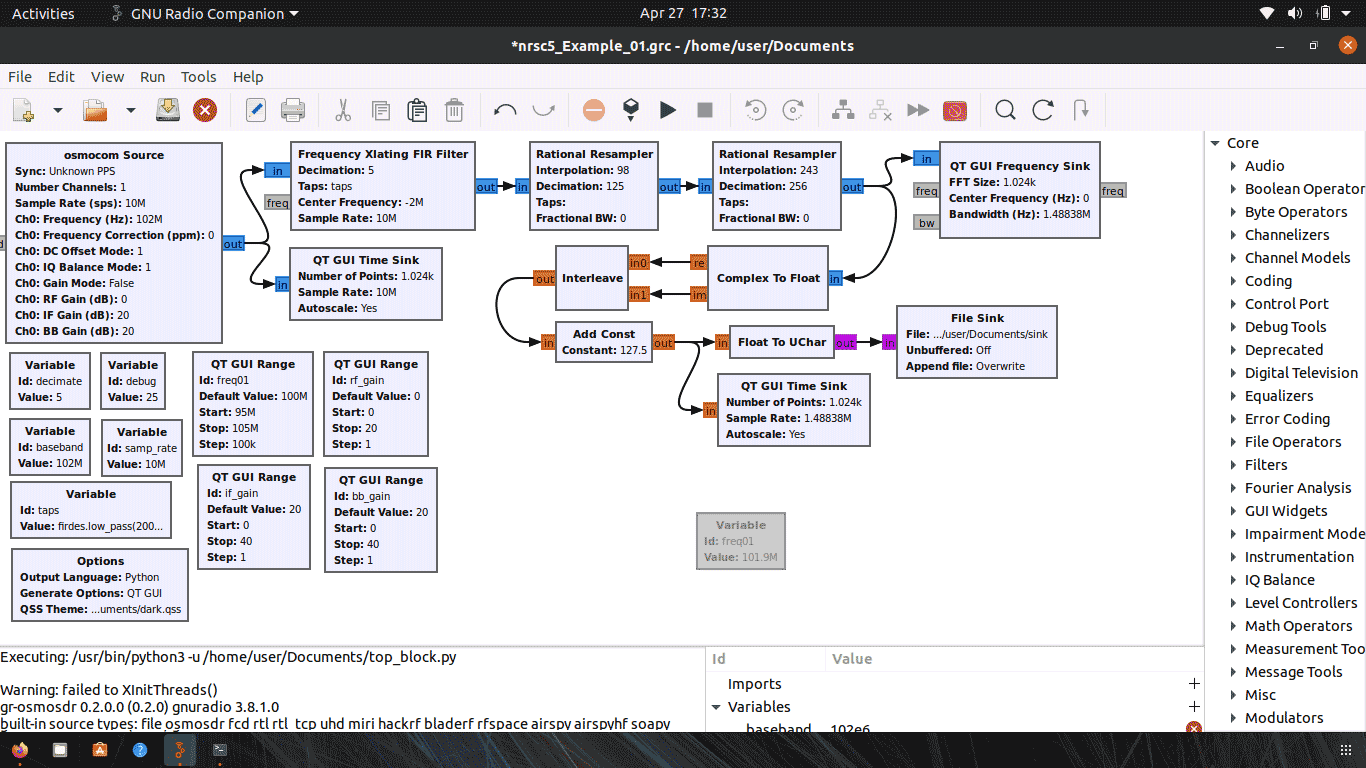
The institute for the Search for Extraterrestrial Intelligence (SETI) and GNU Radio are joining forces. SETI are an organization that uses radio telescopes to search for radio signals that may have been generated by extraterrestrial intelligence. As part of a transition from proprietary hardware to cheaper more capable off the shelf hardware such as USRP SDRs and GPU processors, SETI are beginning to make more use of the open source GNU Radio DSP processing suite. The use of GNU Radio will also allow other researchers and hobbyists at home to possibly help with their own analysis.

In the Zoom meeting below SETI and GNU Radio leaders discuss the partnership, also noting the importance RTL-SDRs have played in the advancement and popularisation of GNU Radio, as well in the general advancement of radio education.

SETI Institute and GNU Radio Join Forces