FliteGrid: A Crowdsourced Drone Detection Network That Pays Feeders US$50 A Month
Thank you, Chris, for writing in and sharing news about the recent launch of FliteGrid's hex claiming scheme. FlightGrid is a crowdsourced drone-tracking network that will pay feeders in an eligible hex grid $50 a month to run a drone-detection sensor. Chris explains:
The US government is building out Unmanned Traffic Management (UTM), which will be the equivalent of air traffic control for drones. This will make it possible to automate things like shipping, emergency response, infrastructure inspections, and more all over the country. To do that, they'll need awareness of every drone in the sky just like they have for every plane today, and FliteGrid is our solution to providing it.
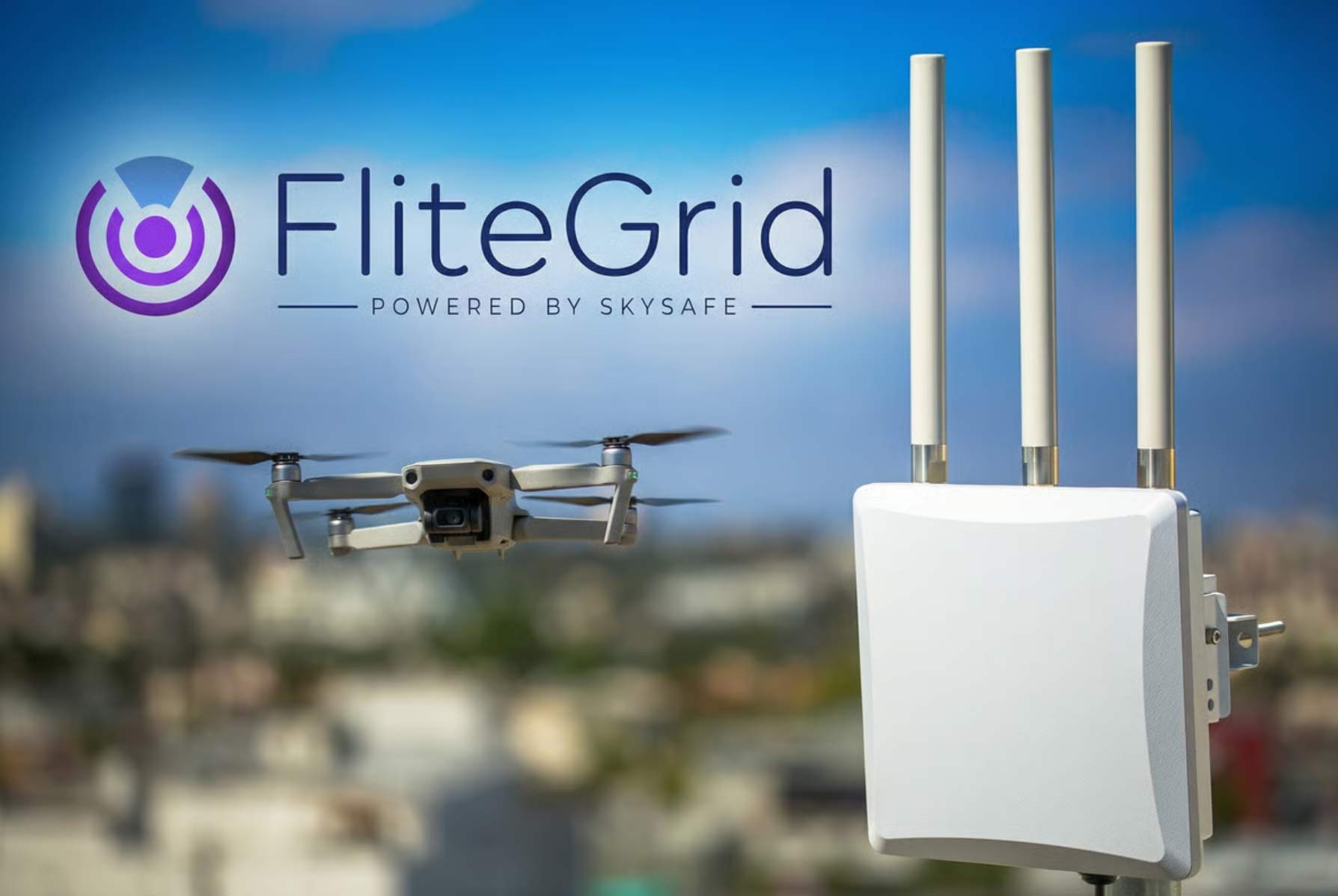
The devices themselves are custom sensors that receive Remote ID transmissions. That's the standard the FAA created for drones to transmit identifying information, which it now requires all drones in America to broadcast. Serial number, location, altitude, operator location, etc. Remote ID can be broadcast on four different protocols, so we've got four receivers in each piece of hardware; two WiFi and two Bluetooth. That data is then uploaded onto the SkySafe platform, which provides a realtime map of every drone in the sky.
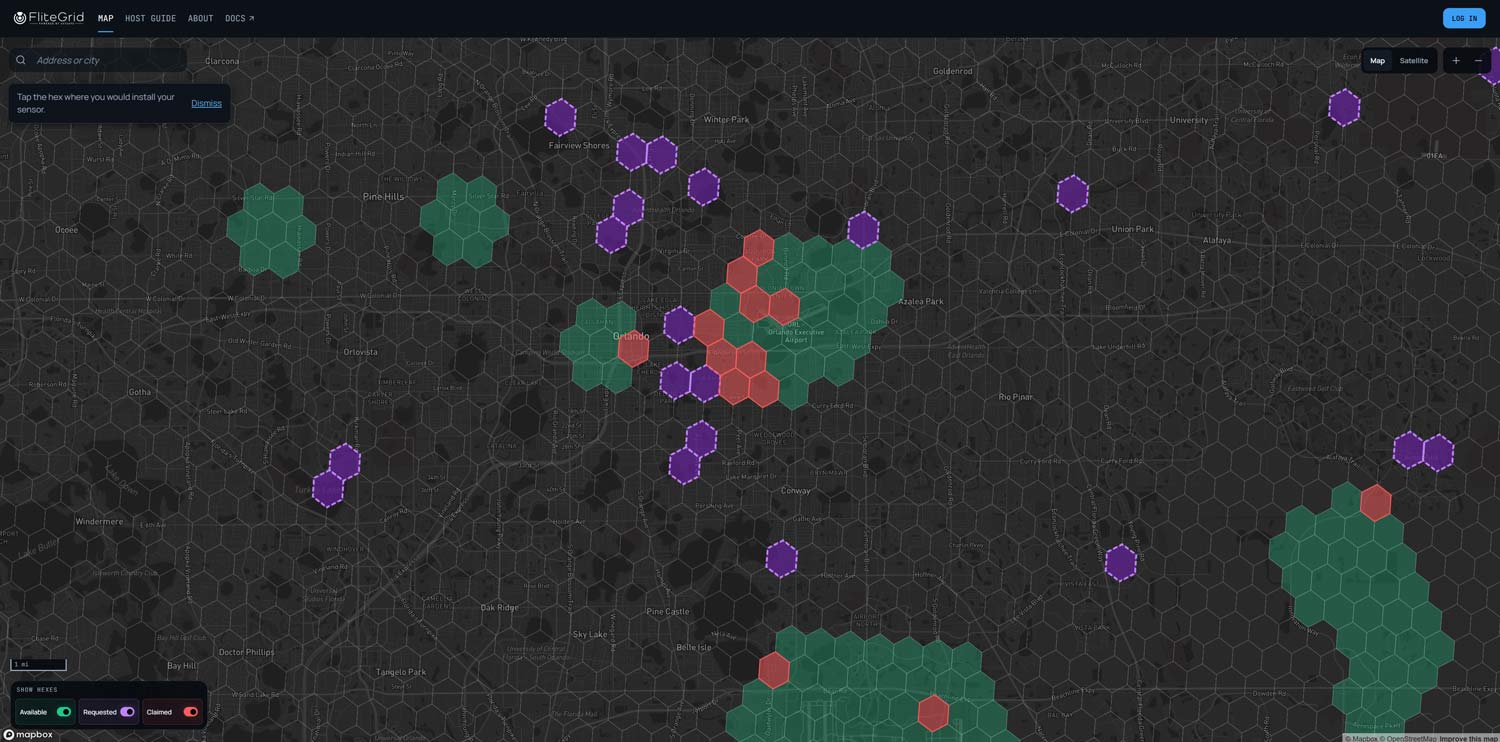
The catch to getting paid is that you need to 1) pay a $100 refundable deposit to receive their hardware, and 2) place and run it in a hex grid that offers to pay. The paying hex grids are mostly around US airports and critical infrastructure right now, so you'd need to live in, or have access to a roof in those areas to host the device. Payment is given in USDC, a stablecoin cryptocurrency pegged to the US dollar.
FliteGrid/SkySafe is able to pay users because operators of critical infrastructure and large facilities such as airports, universities, energy infrastructure, the US military, DHS, and the DOD will pay for real-time awareness of the airspace above them. SkySafe has been around since 2015, has raised around $50M in funding, and has contracts with many of the previously listed organizations. Chris notes that the service has already been used successfully in operations like busting gangs smuggling drugs into prisons via drones.
The FliteGrid sensor appears to be a computing device with WiFi and Bluetooth radios repurposed to detect Remote ID, with each radio connected to a higher-gain external antenna. Recently, on the blog, we have seen DIY Remote ID detectors made from ESP32s and other commodity Bluetooth hardware.
Since a 2024 mandate, drones over 249 g in the USA must transmit Remote ID signals for tracking and identification purposes, similar to how ADS-B is used for larger aircraft. For ADS-B, flight aggregation services such as FlightAware/FlightRadar24/ADS-B Exchange etc. already exist, with volunteer feeders setting up stations that can cover up to 400km. However, unlike ADS-B, Remote ID is transmitted with single-digit milliwatts of power, compared to a minimum of 70W for ADS-B, so its reception range is limited, making a dense distributed reception network like SkySafe for Remote ID very important. Individual SkySafe hex grids cover just under 1km of area.
FliteGrid cannot detect drones that are not transmitting Remote ID, though Chris mentions that government infrastructure and facilities may use normal radar to detect these. A radar detection that does not correlate with a SkySafe detection would confirm that a drone is a potential threat.