Tagged: rtl-sdr

New Web Based RTL-SDR Remote Control Software: YouSDR

Recently Kristian, a reader of our blog wrote in to let us know about a new software project he found that allows you to use your RTL-SDR remotely through a web interface. The web interface runs on Linux and uses mysql and the Apache server to work. Currently it can be used to access options for rtl_fm, rtl_tcp, dump1090 and can also be used to create an icecast audio stream.

The software can be downloaded from its Git at https://github.com/sixuniform/yousdr. The instructions on the GitHub page show how to set it up on a Raspberry Pi running Raspbian, but the instructions should also be valid for other Linux distributions. As the software is new the authors are welcoming any improvements and feedback.

Some similar web based RTL-SDR remote control software that you may be interested in includes WebRadio and rtl_fm_python.

The YouSDR web interface.

Direct Sampling 14 MHz Low Pass Filter and Galvanic Isolator for the RTL-SDR now for sale in Japan

Previously we posted about Japanese RTL-SDR experimenter Nobu and his work in prototyping a new 14 MHz low pass filter and galvanic isolator for use with the RTL-SDR. The low pass filter improves reception when using the RTL-SDR in direct sampling mode by reducing out of band interference and the galvanic isolator (isolation transformer) reduces computer and other noise when using the RTL-SDR with an upconverter.

The products can be bought from the Japanese Amazon store [Galvanic Isolator] [Low Pass Filter], however to purchase from outside of Japan you will need to use a third party shopping service available at http://agent.jzool.com/.

If you are interested in Nobu’s products, he also has direct sampling modified RTL-SDR dongles and dongles with 10 ppm crystals available, as well as his own upconverter for sale in Japan.

Galvanic Isolator
Galvanic Isolator
14 MHz Low Pass Filter

Decoding and Plotting VOR Signals with an RTL-SDR: Part 4

Previously we posted about Will’s (aka hpux735) project [1] [2] where he has been using an RTL-SDR dongle to help understand and decode aircraft navigation VOR signals. VOR is an acronym for VHF Omni Directional Radio Range and is an older method of navigation used by aircraft which is used to provide a heading towards a VOR transmitter.

In his latest video, Will has been able to finish his code which allows him to actually plot some VOR data that he obtained from a flight on a map. In the video the VOR data is used to draw a heading line between three recorded VOR transmitters and the aircraft. The video clearly shows the accuracy of the VOR signals (about 1 degree) and shows what happens to the heading accuracy when reception is bad.

VORs and SDRs Part 4: Fusion!

Some E4000 RTL-SDR Noise Figure Measurements

Over on Avian’s blog author Tomaz has posted about some noise figure measurements he has done with an E4000 RTL-SDR dongle. To do the measurements he used a vector signal generator and used the “Y-factor” and “twice-power” measurement methods with the output measured in GNU Radio.

In his results Tomaz saw some odd peculiarities as the twice-power and Y-factor measurements disagreed, coming out with noise figure values of 17.0 dB and 13.6 dB’s respectively. He isn’t sure what could be causing this disagreement but speculates that there must be some sort of physical process within the dongle causing these differences. He was also concerned about the larger than expected noise figure values, since the E4000 datasheet specifies a noise figure of 4 dB, though he points out that these datasheet values may be best case values only.

Measuring the noise figure of an E4000 RTL-SDR.
Measuring the noise figure of an E4000 RTL-SDR with a vector signal generator.

RTL-SDR Front End Filter Demonstration

Over on YouTube user kugellagers has uploaded a video demonstrating the effect of some front end filters he constructed in order to reduce the effects of intermodulation from strong local AM and FM broadcast radio stations.

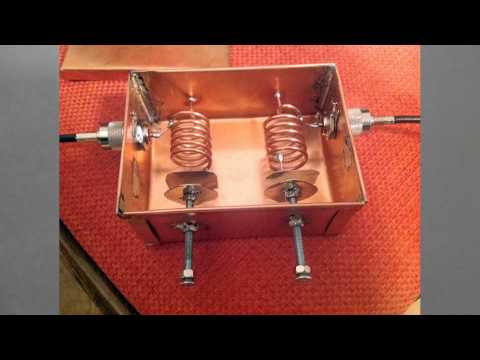
To attenuate strong broadcast FM signals, he used a very cheap FM trap from MCM Electronics. An FM trap (aka FM bandstop filter) is designed to attenuate signals in the FM band only. However, as a single FM trap was not strong enough for him, he took two FM traps out of their original casing and connected them together in a larger box for increased attenuation.

To attenuate strong broadcast AM signals he designed and created a home made 7th order LC elliptic high pass filter. With the filter in place he is able to receive a station at 2.5 MHz, but without it he shows that is unable to receive it clearly due to broadcast AM intermodulation.

RTL SDR Front End Filter Demonstration

Analyzing the Radio Spectrum in Hong Kong with an RTL-SDR

Over on his blog, Gough Liu has made a post showing an analysis of the Hong Kong radio spectrum that he made while he was on a trip. In his analysis Gough used a locally bought DMB-T TV dongle (not RTL-SDR) for receiving digital TV and DAB+, a Dengen DE1103 for receiving AM and FM Broadcast and an RTL-SDR dongle for all other signals.

In his post Gough first talks about how he received DTM-B digital TV broadcast (similar to DVB-T and ATSC), and he does a full analysis of this service in another post. Next Gough talks about the Hong Kong digital radio DAB+ service and his finding where he saw that there was significant multipath selective fading in the DAB+ signal. He also found out that the HK DAB+ service broadcasts still images along with the audio.

Next Gough received the broadcast FM band and found that it was extremely crowded, providing poor distorted audio quality. He also attempted shortwave listening, but massive amounts of local interference prevented him from doing so.

Finally Gough took advantage of his harbour view hotel room to use his RTL-SDR to receive marine AIS transmissions. He used AISMon and OpenCPN to plot the boat positions on a map.

DAB+ Multipath Selective Fading in Hong Kong

RTL-SDR Live Discussion Net at 8pm EDT Tonight

Over on Reddit amateur radio hobbyist K2RWF has posted about a live discussion and QA session that he and some others will be having on a amateur radio net about RTL-SDR dongles. The discussion begins at 8PM EDT (about 2 hours from time this is posted) and will run for about an hour. For non-hams the discussion can be streamed live from http://rfissel.no-ip.biz:8080/stream.m3u. On the post K2RWF writes:

We had a pretty successful net last week regarding the RTLSDR sticks that are now widely available. We’ve decided to make the net a weekly occurrence for the time being, every Wednesday at 8 pm.

Tonight, we will be covering basic setup and configuration of the sticks from a software and hardware perspective, answering any questions you may have about getting up and running.

The net originates on W2LI, and tonight, we will be linked to the W2NJR repeater network, covering NJ and parts of NYC. This includes Echolink (21005) and IRLP (4935) capabilities for those wishing to participate from outside the area. The net beings at 8 pm EDT, and is expected to run for about one hour.

All are welcome, from newbies through advanced users. For non hams wishing to participate, you may stream the net using the link provided below. We will also be monitoring this thread to yield and answer questions from the r/rtlsdr community.

http://rfissel.no-ip.biz:8080/stream.m3u

Update: Recording of the net can be downloaded here (mp3)

Listening to an NFC Polling Signal from a Nexus 7 with an RTL-SDR

Over on YouTube user 2e26tenW has uploaded a video showing reception of the second harmonic of an NFC polling signal with his RTL-SDR. NFC stands for “Near Field Communication” and is a technology that enables smartphones and other devices to communicate with one another and some smart cards simply by bringing the two devices together.

In his experiment he uses a Nexus 7 tablet to poll an NFC enabled transportation card. As the RTL-SDR cannot receive the NFC frequency of 13.56 MHz directly without an upconverter or hardware or software direct sampling modified dongle, 2e26tenW instead tunes to the second harmonic at 27.12 MHz which allows him to receive the signal.

Nexus 7 NFC polling signal (2nd harmonic)