Due to various human activities causing the environmental destruction of it's habitat, the Orangutan is now classed as a critically endangered species. In addition to being endangered, Orangutans face another problem in that they are often captured and sold as pets due to their intelligence and cuteness.
To combat these problems, NGOs, charities and rescue centers have been using RF tags on rehabilitated Orangutans that have released back into the wild. The RF tag regularly transmits a data-less pulse at VHF frequencies which is then typically tracked using direction finding equipment such as a directional Yagi antenna. The range is only approximately 200-400m.
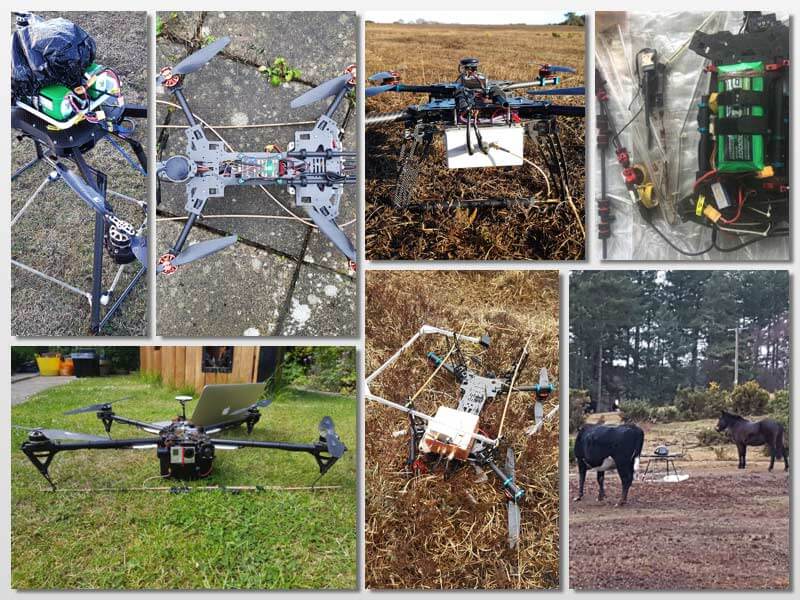
In order to try and alleviate the range issue Dirk Gorissen has been working on creating a drone based system that could detect the VHF transmission and create a heatmap of Orangutan positions. The first iteration of his system uses an RTL-SDR, Odroid and lightweight loop antenna. A simple Python script then monitors the spectrum and logs the drones current location, altitude, speed and heading when a pulse is detected. Tests confirmed that the signal was able to be detected from the sky, but unfortunately the drone was eventually crashed and lost before it could be properly used.
In his second try a few years later, Dirk used a larger drone and switched SDRs to an Airspy Mini with preamp. The pulse detection code was also improved by using GNU Radio to create a DSP algorithm combining peak detection, cross correlation with a known template of the signal, and a phase locked loop. Visualization and data transfer is achieved through react.js and a Flask web server running on the drones WiFi hotspot. This time with the new drone and system Dirk was able to successfully detect and locate several Orangutan's on various flights, despite noting that some RF tags appeared to be glitchy.
Orangutan Detected with Drone, Airspy Mini and GNU Radio.Drone used in the experiment
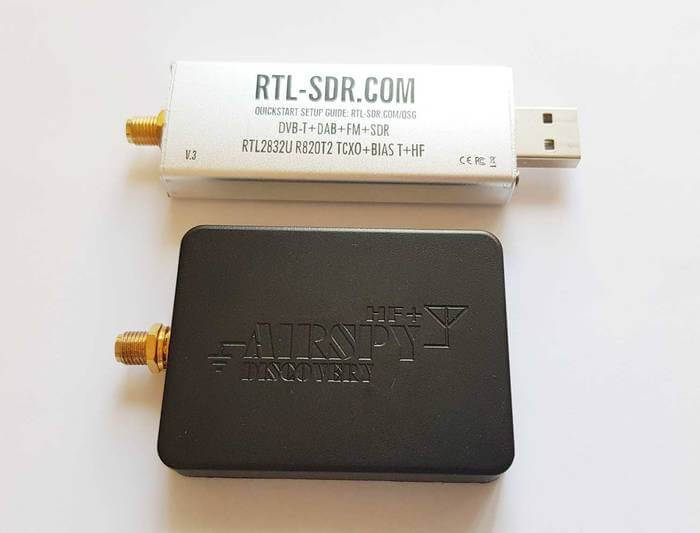
The Airspy team have recently announced the release of their new "Airspy HF+ Discovery". The Discovery is a smaller, lighter and improved version of the Airspy HF+. The frequency range, bandwidth and bit depth and specs all remain the same, but there are some improvements to the dynamic range due to the addition of preselectors. The original Airspy HF+ was released back in mid-2017 and it still is in our opinion one of the best low cost HF DX SDRs because of its very high dynamic range design, so strong interfering signals are not much of a problem. We have a previous review of the Airspy HF+ available here were we compare it against a number of other HF SDRs.
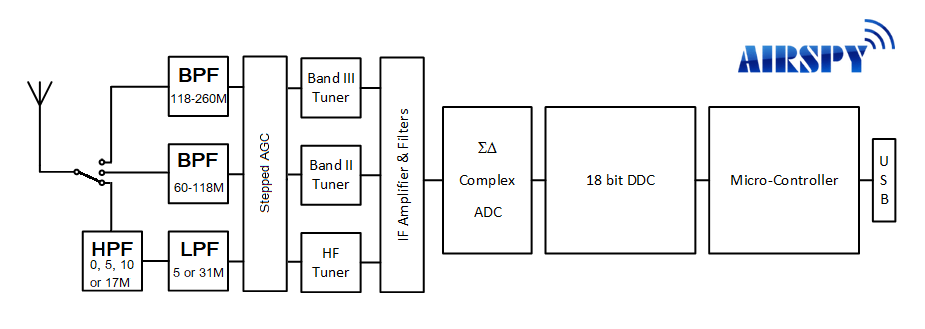
Although the dynamic range was very high, some users reported that extremely strong signals could still desensitize the HF+. So in response the new HF+ Discovery improves on the dynamic range even further by including multiple low insertion loss preselectors built in to the front end. For HF there is are 0, 5, 10 or 17 MHz High Pass Filter corners, and 5 or 31 MHz Low Pass filter corners in series which can provide filtering for a number of bands. For VHF, there are 60-118 MHz and 118-260 MHz filters. The designer boasts that the inclusion of these filters bring the HF+ Discovery up to the performance level of expensive new SDR based ham rigs like the Icom 7300.
Airspy HF+ Discovery Block Diagram
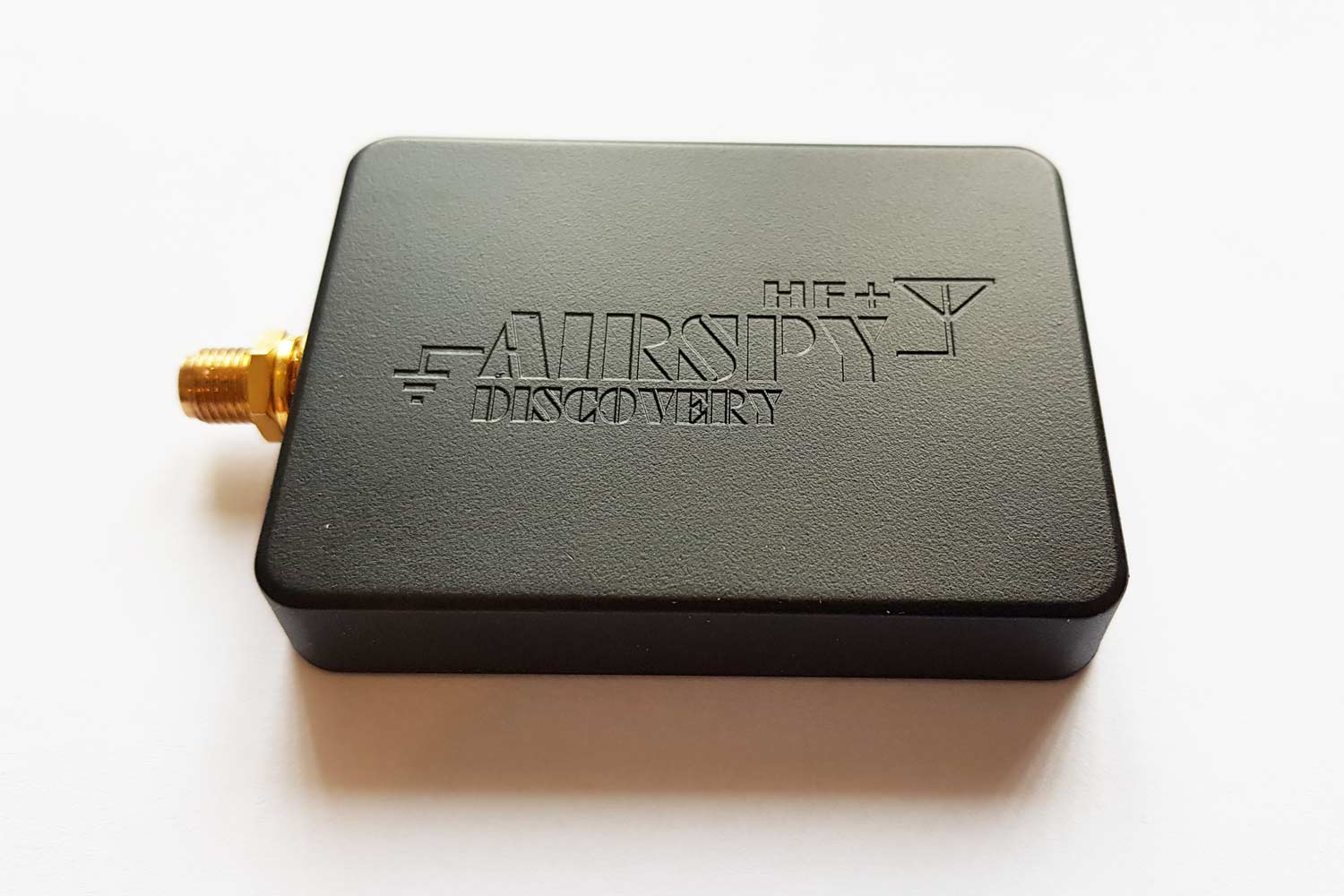
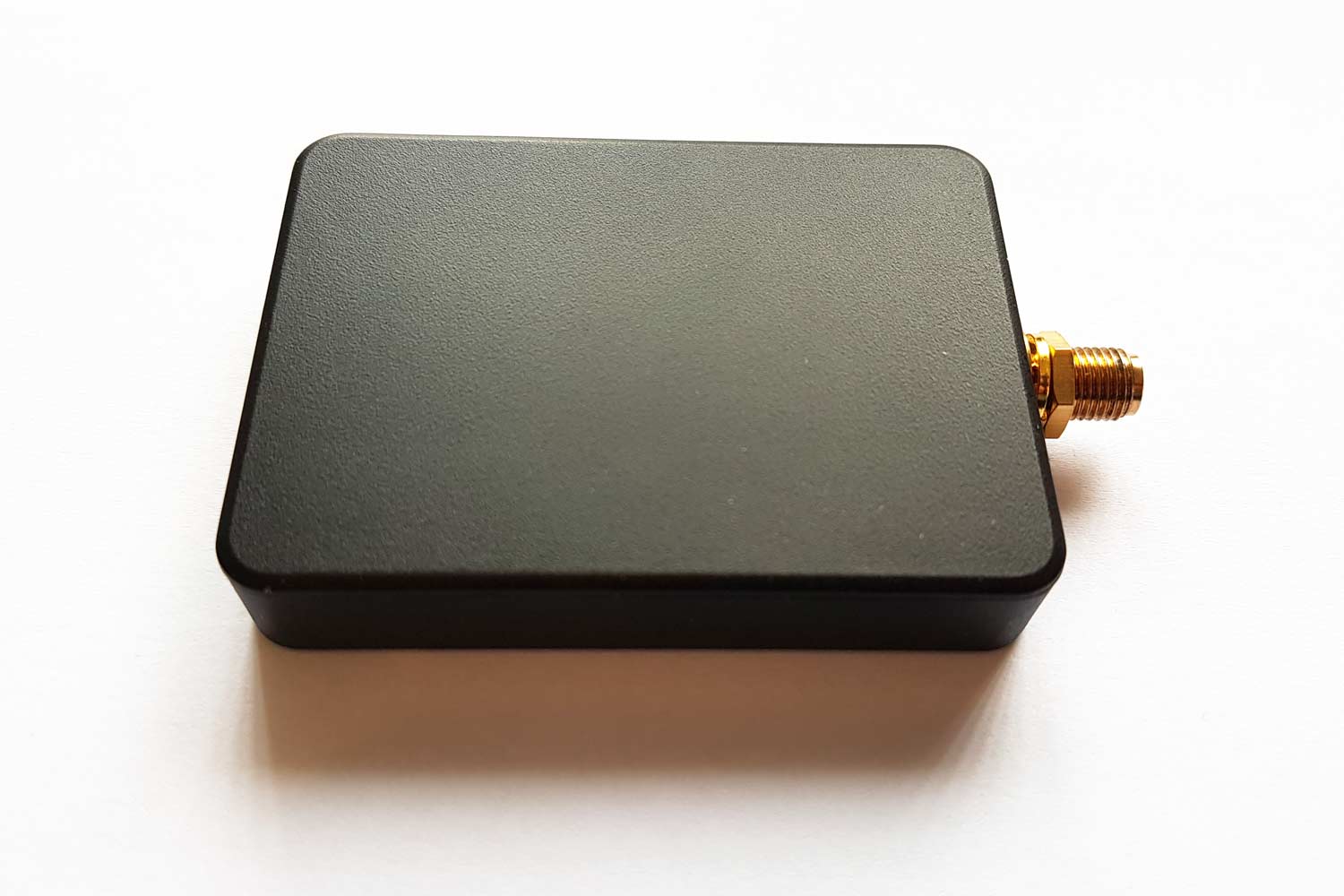
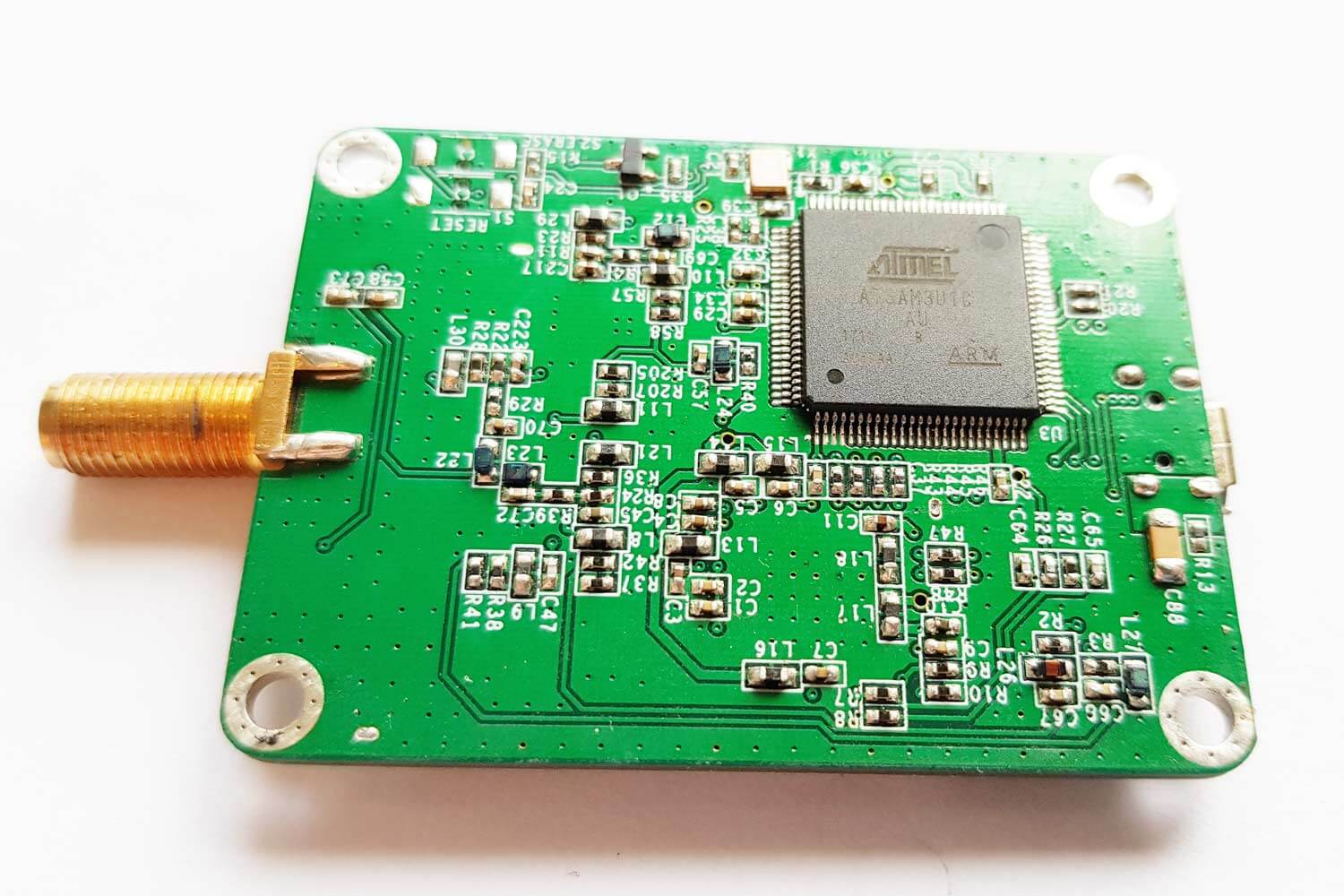
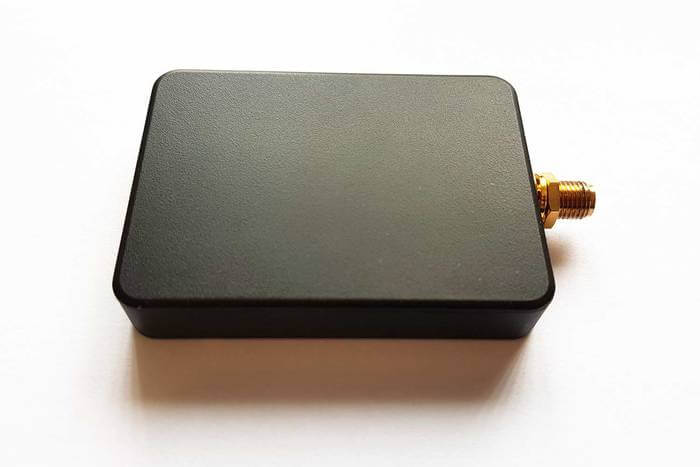
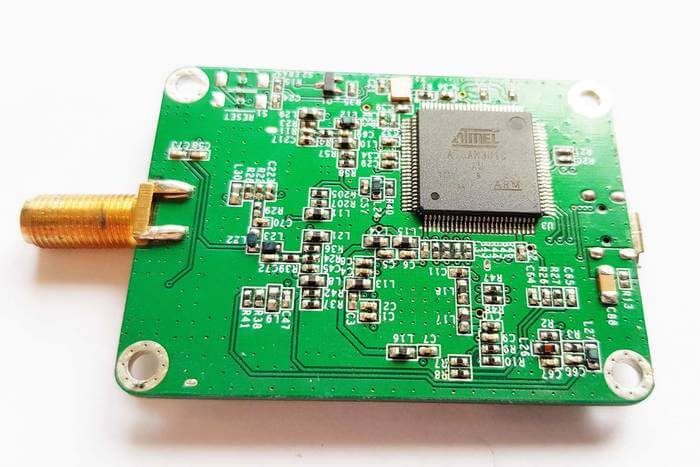
As for the physical design, the enclosure is now much smaller (60 x 45 x 10 mm) and made from plastic. These changes make the SDR very light at only 28 grams (1 oz). Although the case is plastic, local interference doesn't seem to be an issue as the PCB itself is fully shielded. The plastic case is rugged and will withstand a beating. Also, the original HF+ had two input ports, one for HF and one for VHF whereas the HF+ Discovery only has one input port which covers all bands.
Despite the improvements and additional circuitry, the Airspy HF+ Discovery is actually priced cheaper than the original. The original HF+ costs US$199, but the Discovery is only US$169. So unless you require the two input ports, the HF+ Discovery should be the way to go. Currently the HF+ Discovery is in preorder status, and can be ordered internationally from the manufacturer iTead, or within the US from airspy.us. As far as we can see no expected shipping date has been given yet, but we expect that it would ship soon.
Initial Testing
We were sent a prototype sample of the Airspy Discovery HF+ a few weeks ago. We note that the version we received was an early prototype and does not yet implement the 10 MHz and 17 MHz HF filters.
From our test on real world signals we find that it performs at least as good as the original Airspy HF+, if not better due to the additional filtering. The signals in our area were not strong enough to really overload the original Airspy HF+, so any benefit from the additional filtering may not be too apparent. Insertion loss from the filters seems to be not noticeable, as we saw no differences to SNR levels between the two units.
In our VHF tests we saw no differences between the two units, but as with HF we note that it would take some fairly strong signals to make a difference.
In a future post we'll follow up with some tests by injecting strong signals into the SDR, and seeing how well it can performs with the additional filtering compared to the original.
TOP: Airspy HF+ Discovery, BOTTOM: Original Airspy HF+
Conclusion
If you have an HF+ and were still troubled by really strong out of band interferers, the HF+ Discovery might be a good upgrade. Newcomers to SDR looking for high a performance DX SDR for HF and VHF should also strongly consider the HF+ Discovery. The original HF+ is still one of the best low cost DX SDRs we've tested, and the Discovery only makes it better.
As far as we can see regarding the choice between the original HF+ and HF+ Discovery, the only reason to really consider the original HF+ would be if you prefer to have separate HF and VHF antenna ports. The plastic case brings no real disadvantage, and the preselectors improve dynamic range and have no noticeable insertion loss.
On March 14 the Soyuz MS-12 spacecraft mission was launched and this carried three astronauts to the International Space Station (ISS). Back on the ground, YouTube creator Tysonpower was able to receive the voice communications of Russian cosmonaut Alexey Ovchinin while the Soyuz spacecraft was approaching the ISS. To do this he used an Airspy SDR and home made QFH antenna, and he notes that reception could just have easily been achieved with an RTL-SDR.
Tysonpower has uploaded a video explaining what he received along with a subtitled and translated recording of the communication. More information also available on his blog post.
[EN subs] Empfang von Cosmonaut Alexey Ovchinin im Soyuz MS-12
USA-Satcom is the programmer of XRIT Decoder, which is a popular (paid) Windows decoding application for GOES weather satellites. With a WiFi grid dish antenna, LNA and SDRplay, Airspy or even an RTL-SDR, high resolution full disk images of the earth can be downloaded from these geosynchronous satellites. Browse through our previous GOES posts for ideas and various tutorials about setting up a receiver.
USA- Satcom has just released version 1.4.6985 of the XRIT Decoder software package. New features include:
1) Improved image clarity. 2) An antenna Align Mode feature. 3) And a Viterbi and Eb/No (Energy per Bit to Noise Power Spectral Density Ratio akanormalized SNR) graph over time feature.
The improved image clarity reduces image artifacts at the Earth-space boundary of the image and improves the overall aesthetics of the colorization of the full disk images. The images are quite amazing. The resolution is far better than what can be shown here due to image size limitations for this site. Below is a full disk GOES 16 image from February 17, 2019 and a corresponding zoomed in portion to get an idea of the resolution and clarity (the actual full disk images are approximately 40MB PNG images each which are much greater resolution than the below image)
The antenna Align Mode is a great new feature that allows users to view the Signal Quality, Viterbi FEC, and Eb/No from a distance using large numeric values. This mode enables users to better view these values when fine tuning adjustments to GOES receiving antennas. The Eb/No and Viterbi graphing enables users to see how well their receiving system is doing throughout the day (e.g., over temperature and while the sun is in alignment with the receiving path).
GOES 16 Received by RSP2User
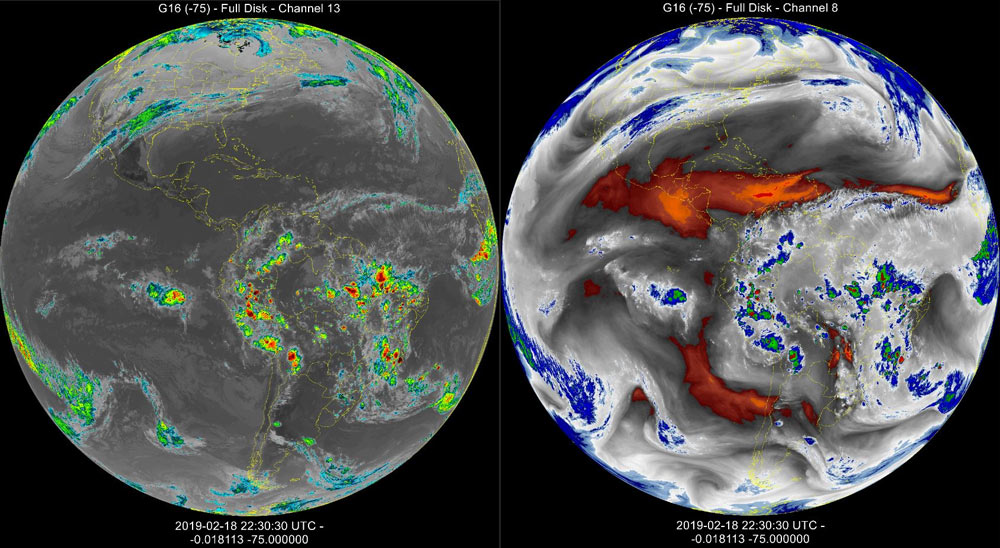
More updates from USA-Satcom to the XRIT Decoder software with a new patch from today. The XRIT file manager now provides IR image enhancements for GOES Bands 8 and 13. Here are some examples:
G16 CH13 & G16 Band8 Enhancements . Images received by RSP2user.
Over on YouTube user TheGazLab has uploaded a video that reviews the Airspy HF+, and also shows how to use the HF+ with SDR# and WSJT-X in order to create a FT8 monitor. The Airspy HF+ is high dynamic range HF/VHF receiver designed for DXing.
In the video TheGazLab demonstrates to us the decoding in real time, and explains the CAT control SDR# plugin that he's using. The CAT control plugin when combined with a virtual serial port driver allows the WSJT-X program to automatically tune SDR# to the FT8 frequency selected in WSJT-X.
Later in the video he also discusses the SpyServer network which allows SDR# users to connect to remote public Airspy and RTL-SDR units over the internet. He demonstrates connecting to a public server in the UK, and decoding FT8 via the remote server. The video also shows the new SpyServer interface by @zakhttp which nicely lays out the world SpyServer network on a map, making it easy to choose a desired location to listen to.
Airspy HFPlus, SDR# and WSJT-X with full CAT control decoding FT-8
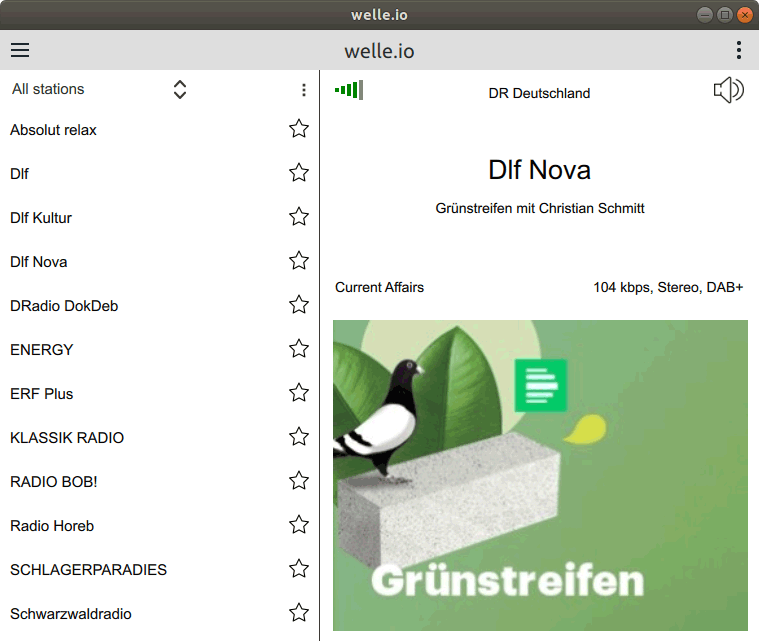
Welle.io is a Windows/Linux/MacOS/Android/Raspberry Pi compatible DAB and DAB+ broadcast radio decoder which supports RTL-SDR dongles, as well as the Airspy and any dongle supported by SoapySDR. It is a touch screen friendly software which is excellent for use on tablets, phones and perhaps on vehicle radio touch screens.
Thank you to Albrecht Lohofener, the author of welle.io for writing in and sharing his news about the release on welle.io version 2.
welle.io 2.0 Beta 1 released
I’m happy to announce the version welle.io 2.0 Beta 1. Since the first rtl-sdr.com post roughly two years ago (Mar 2017) welle.io became the leading open source DAB/DAB+ SDR. Many people are using welle.io in their daily life and gave a lot of feedback.
With all this feedback we started developing the version 2.0. Apparently, the biggest change is the complete redesign of the user interface (GUI). It changed from a dark design to a bright design and handles easily different screen resolutions and orientations.
Many users asked for a favorite list, automatic playing of last station and a mute button. Now these features are ready to test with the 2.0 Beta 1!
Another new feature is the settings menu where users can set the hardware receiver with all the necessary settings. This is more user friendly than the command line parameters.
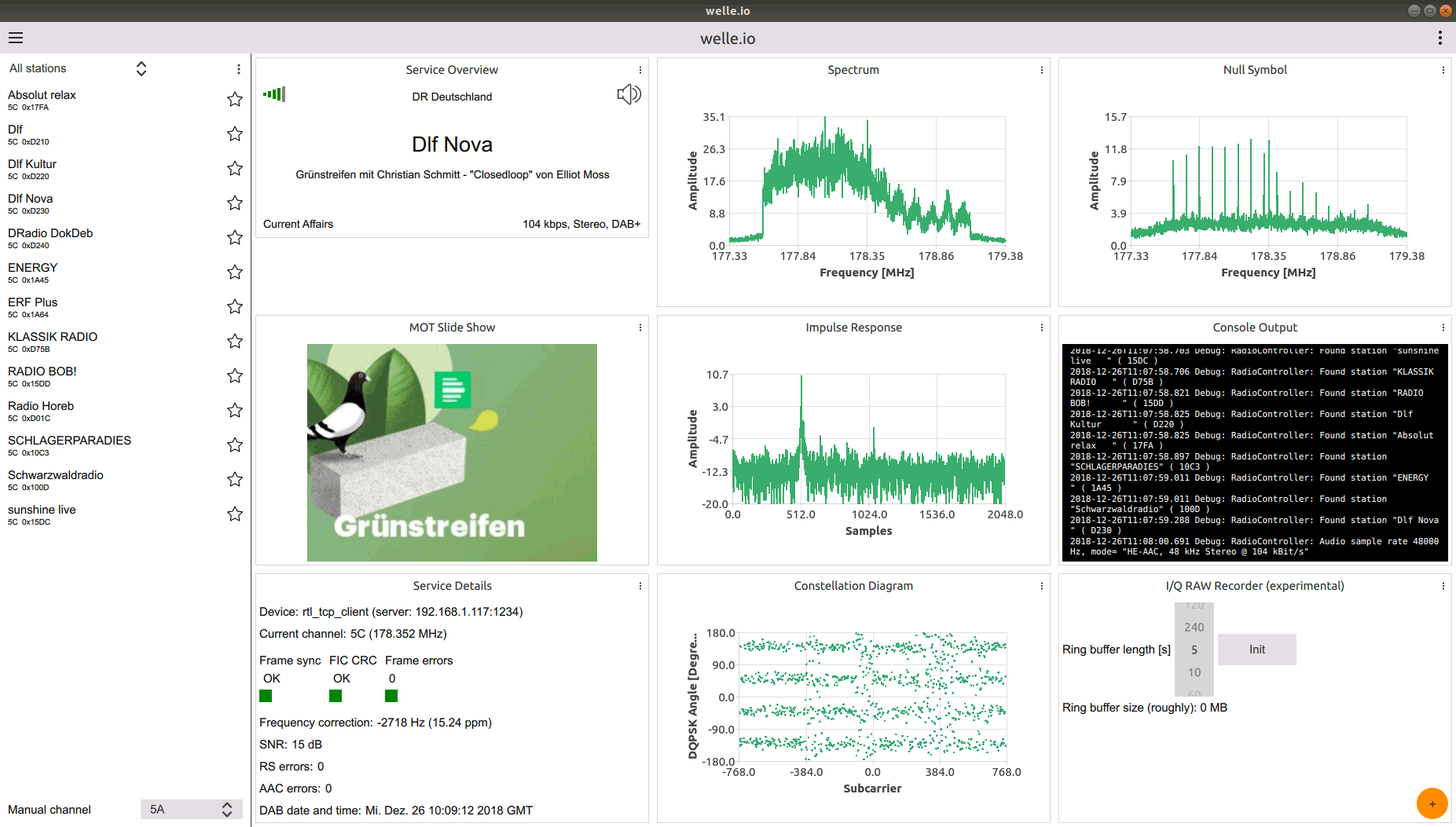
For people with a deep technical interest we improved the expert mode a lot. In addition to the spectrum users can also view the impulse response, null symbol and constellation diagram, even at the same time! An experimental I/Q RAW file recorder as well as a debug output window is available for systems without a text console.
In the back-end we improved the multi-path behavior and started a source code refactoring to allow the code to be easily maintained. Great thanks to the people from the Opendigitalradio association (http://www.opendigitalradio.org/) which are actively contributing to this project.
Now it is possible to build a complete DAB/DAB+ system (transmitter and receiver) with open source!
As a result from this collaboration welle-cli is available. The main use case is to monitor DAB/DAB+ transmitters networks over the internet. Thus it has a HTTP API and includes a basic Web page which shows the features.
Everyone is invited to test the new version and to report issues. For reports we recommend to open an issue at the welle.io Github page (https://github.com/AlbrechtL/welle.io/issues).
We are also looking for people who would like to contribute to welle.io (translations, web page, documentation and development).
Over on YouTube SignalsEverywhere (aka Corrosive) has uploaded a tutorial video showing how to use TempestSDR with an Airspy SDR. Back in November 2017 we posted about how we were able to get TempestSDR to run with an RTL-SDR, Airspy and SDRplay, and showed some results. Since then several people have managed to repeat our results, but many have also had trouble understanding how to make TempestSDR work and what all the settings are for.
TempestSDR is an open source tool that allows you to use any SDR that has a supporting ExtIO (such as RTL-SDR, Airspy, SDRplay, HackRF) to receive the unintentional signal radiation from a screen, and turn that signal back into a live image. This can let you view what is on a screen without any physical connections.
Corrosive's tutorial video shows us how to tune the signal in the TempestSDR software in order to receive a clear image as well as showing the software in action.
How to Spy on Computer Monitors | TempestSDR Tutorial (with an Airspy)
The World Radio TV Handbook (WRTH) is a directory book (or CD) of world radio stations on LW, MW, SW and FM. In addition to the directory they also do reviews of radios/SDRs, and recently they reviewed the Airspy HF+ (pdf). The Airspy HF+ is high dynamic range HF/VHF receiver designed for DXing.
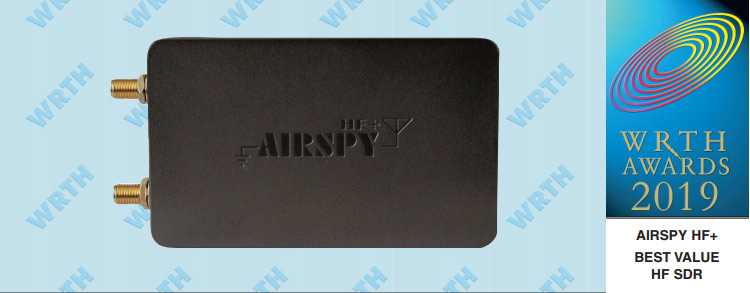
According to the review, WRTH give the Airspy HF+ the award of being the best value HF SDR for 2019. The review takes note of the HF+'s excellent dynamic range and then goes on to validate the manufacturers claimed specifications. Finally they write how they tested it during a contest at 7 MHz, and found no overloading or spurious responses apart from a minor noise floor increase when an extremely strong local CW station was encountered.





![[EN subs] Empfang von Cosmonaut Alexey Ovchinin im Soyuz MS-12](https://www.rtl-sdr.com/wp-content/plugins/wp-youtube-lyte/lyteCache.php?origThumbUrl=https%3A%2F%2Fi.ytimg.com%2Fvi%2FX5yiix8LB5g%2F0.jpg)