Back in 2018 we posted about someone who had combined an ultrasonic piezo speaker and an SDRPlay RSP1A in order to create a device that can detect the ultrasonic sonar sound from bats.
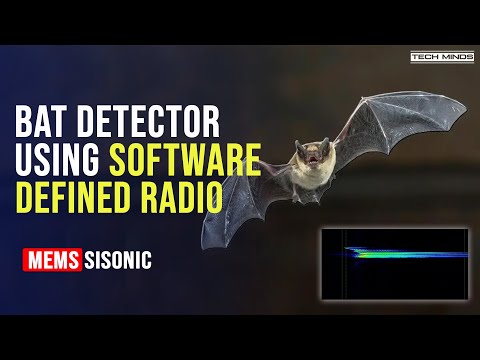
Recently on YouTube Matt from the TechMinds YouTube channel was able to create a similar system using a MEMS microphone from Knowles which can receive audio in the 100 Hz ~ 80 kHz range. He connects the microphone to a 3.3V supply and connects the output of the microphone to his SDRplay RSPDx.
The system was then able to successfully hear the sound of bat sonar at his home location in the UK.
Ultrasonic BAT Detector Using Software Defined Radio
Over on dereksgc's YouTube channel we've discovered a few more recent interesting videos from his satellite decoding series that people may be interested in. One from two weeks ago shows how it's possible to receive voice transmissions on navigation satellites such as GPS.
Many navigational and meteorological satellites carry a search and rescue (SAR) repeater which is intended to receive UHF emergency locator beacons and rebroadcast them in the L-band or higher. However the repeaters appear to be picking up all sorts of other signals from the ground, including voice transmissions. Dereksgc notes that the theory is that there are some land based communications systems in some countries that are sharing frequencies that emergency locator beacons use, or that malicious pirates may be actively using these SAR repeaters for their own communications.
Dereksgc shows examples of retransmitted signals on the Beidou, GLONASS and Elektro-L satellite downlinks at 1.5442 GHz and at 2.226 MHz for the GPS satellites. He also shows what sort of satellite dish and feed setup you need. In the video he uses a HackRF as the SDR, but you could also use an RTL-SDR for the satellites that transmit at 1.5442 GHz.
Receiving voice transmissions from GPS satellites || Satellite reception pt.10
Thank you to RTL-SDR.com reader André for submitting and sharing with us his QO-100 ground station setup. The setup also includes antennas and equipment to receive HF and VHF/UHF. His setup can serve as an example of a well set up permanent installation.
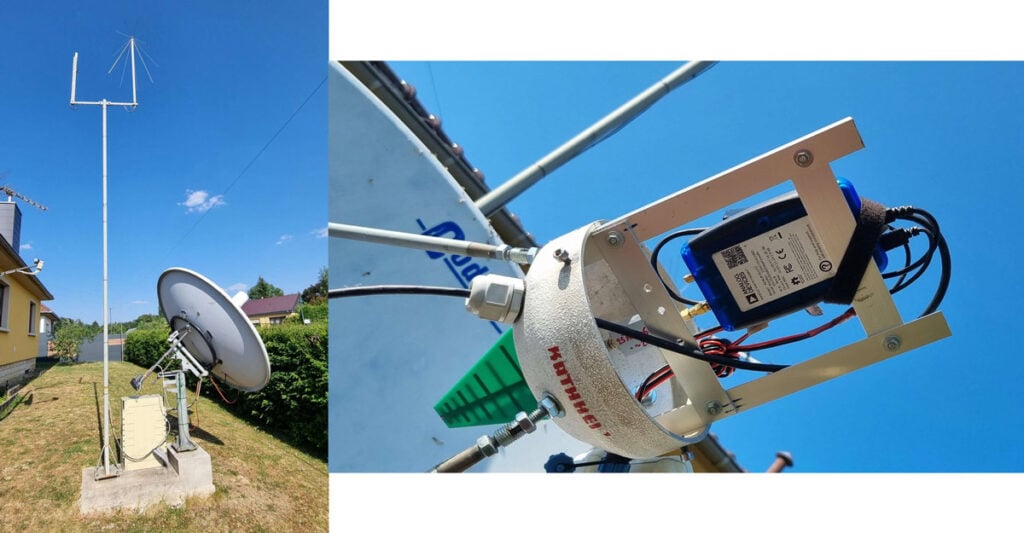
André's set up consists of a 1.8 meter prime focus dish, Raspberry Pi 4, GPIO connected relay, Airspy R2, Ham-it-up upconverter, coaxial relay for switching between Mini-Whip and Discone Antenna, and FM bandstop filter and a power terminal rail block. The Airspy R2 is used for HF/UHF/UHF reception and the antennas and upconverter are all controlled via a web connected relay system. All equipment is enclosed in an outdoor rated box, and André notes everything has been working well from temperatures range from -10C to 35C.
Inside the satellite dish feed is housed an Adalm Pluto SDR, and a wideband LNA and a USB to LAN converter with power over Ethernet. A small log periodic Yagi serves as the feed. In order to work the wideband DATV band on Qo-100, André' swaps out this feed for a custom feed and brings the PlutoSDR indoors where it is connected to a 120W Spectran Amplifier and modulator.
A few days ago we posted about the successful launch and deployment of the latest Russian Meteor M2-3 weather satellite. The satellite is currently actively transmitting LRPT weather images.
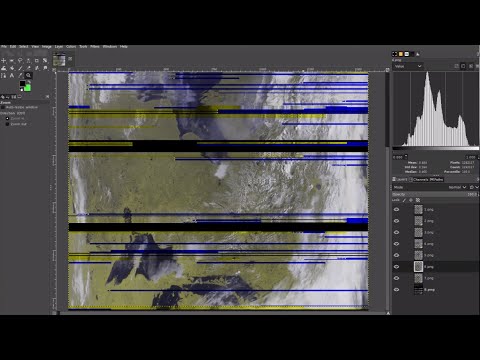
Over on his YouTube channel, "saveitforparts" has uploaded a video showing how he received images from the new satellite using his RTL-SDR. His method involves first recording the signal pass on a Raspberry Pi with rtl_fm, and then passing that wav file into SatDump for decoding and image generation.
We note that it is also possible to directly live decode the pass using SatDump, however a Raspberry Pi may be a little too slow to run the GUI version of SatDump. Instead you could use rtl_tcp on the Pi and run SatDump on a networked PC, or simply run the RTL-SDR and SatDump on the PC or a more powerful device like an Orange Pi 5.
Ultimately he experiences some unresolved problems with the decoding process, but is able to end up with a decent image.
Grabbing Images From New Russian Satellite (Meteor M2-3)
If you weren't already aware, KrakenSDR is our 5-channel coherent radio based on RTL-SDRs, and it can be used for applications like radio direction finding. KrakenSDR is in stock and can be purchased from CrowdSupply or Mouser. More information is also available on our website at krakenrf.com.
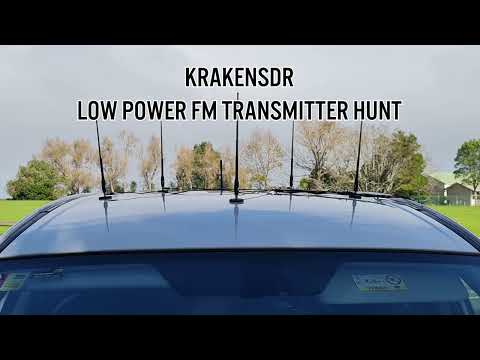
In this video we are using a KrakenSDR to hunt for the location of a low power FM transmitter (LPFM) station at 106.7 MHz. These low power FM transmitters are legal as unlicensed transmitters as long as they operate under certain restrictions, the main one being that they transmit at under 1 watt EIRP. LPFM stations are typically operated by local communities or niche radio stations.
Because they are unlicensed, there is no official record and their location doesn't show up in the radio spectrum management database. A requirement of LPFM is that the station broadcast the contact information of the owners regularly, but it can be difficult to locate non-compliant stations that don't do this. But the KrakenSDR makes finding them easy.
The array is 45cm in radius, which is about the maximum that my RAV4 car roof can fit. Some of the antennas sit on a slight curve on the roof, but this appears to have negligible effect. The spacing factor is about 0.19 (optimal is 0.5 - a much larger radius), but even 0.19 is sufficient to find the transmitter fairly easily.
Meteor-M satellites are Russian owned weather imaging satellites that are in polar orbit. They transmit images to earth in the LRPT format at 137 MHz, making them almost as easy to receive as the older NOAA APT satellites. Unfortunately all prior Meteor M satellites have suffered an early ending or partial ending to their mission from technical faults or micro-meteorite collisions.
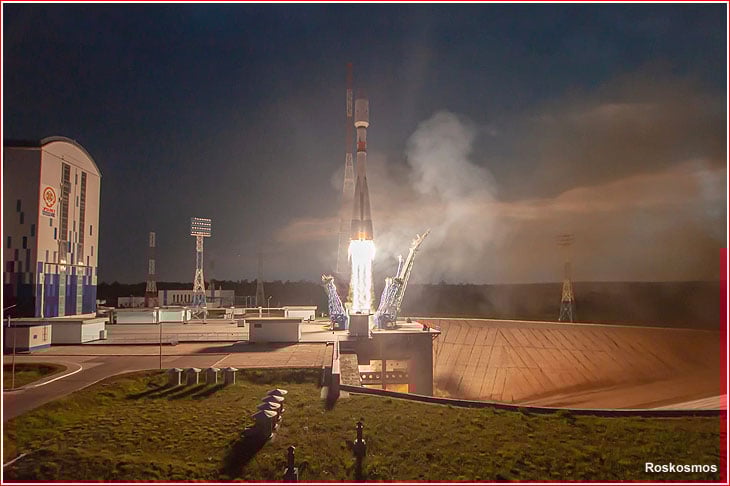
However, on June 27th 2023 the latest Meteor M2-3 satellite was successfully launched on a Soyuz-2 and has been reported to be already transmitting LRPT images of the earth.
Soyuz-2 Launch of Meteor M2-3 and 42 Cubesats
To receive images from the Meteor M2-3 satellite you will need an appropriate 137 MHz satellite antenna such as a v-dipole, Turnstile or QFH. An RTL-SDR or any similar SDR can be used as the receiver.
These days, the easiest software to use to receive Meteor M2-3 is probably SatDump, whose Windows and Android binary releases can be downloaded from the GitHub Releases page. Linux users can follow the build guide in the SatDump Readme. We note that we've found the SatDump GUI to run well on an Orange Pi 5, which makes this a good portable solution too.
To determine when the satellite is over your location you can use satellite tracking software such as Gpredict on Linux and Mac, or Orbitron on Windows. (For Orbitron, remember to run the software as Administrator, and to update the TLEs so that the Meteor M2-3 weather.txt TLE tracking data is downloaded).
Over on Twitter we've already seen various Tweets about successful reception.
1st try w/ 137 MHz LRPT from the new METEOR-M N2-3 1500utc. So nice to have a higher resolution weather sat back on VHF! Images from I/Q replay in SatDump (https://t.co/A7V0MeqeGE) pic.twitter.com/OMs1zjpKb4
Second pass of the newly launched Meteor-M 2-3
This time all worked like a charm and the picture is superb. I tried dual band to compare both LRPT in 137.900 and HRPT in 1700. Although decoded shown picture is from the HRPT stream.
@aang254, the author of SatDump has also noted that he is working on finalizing projections for Meteor M2-3 and this should be ready to use in SatDump shortly.
METEOR-M 2-3 is active, and I have added initial support including projections in SatDump already.
We also note that a Meteor Demodulator has also now just been added to SDR++.
The OQPSK mode has been added to the #Meteor demodulator to decode Meteor M N2-3. Enable it when receiving said satellite. It will be available for download in a few minutes when the nightly build is done building.
Note that some more tuning will be done in the coming days.#SDRpic.twitter.com/DB307Q5ObD
Another interesting fact is that along with Meteor M2-3 the UmKA cubesat was launched will transmit astronomical images at 2.4 GHz. To receive this, you will most likely need a 2.4 GHz WiFi dish, and also a motorized tracking system to track the satellite as it fly's overhead. Decoding of this is already supported in SatDump according to the programmer.
METEOR-M 2-3 is launching tomorrow, and with it UmKA that @HRPTEgor worked on.
It will transmit astronomical imagery on amateur bands 2.4Ghz. As such, I have added support for it in SatDump just now :-)
Thank you to the team from DXing.org for submitting their video where they compare the DAB decoding performance of SDRAngel and Welle.io using an RTL-SDR Blog V3 dongle.
Digital Audio Broadcast (DAB) is a digital replacement for analog broadcast FM. It provides high quality digital audio at the expense of higher cost receivers, and possibly greater difficulty with reception in weak or challenging RF environments. DAB is mostly only used in Europe and Asia Pacific regions, and is not found in the USA. SDRAngel and Welle.io are both RTL-SDR compatible programs with DAB decoding capabilities. Both can run on Android, PC, MacOS and Linux devices.
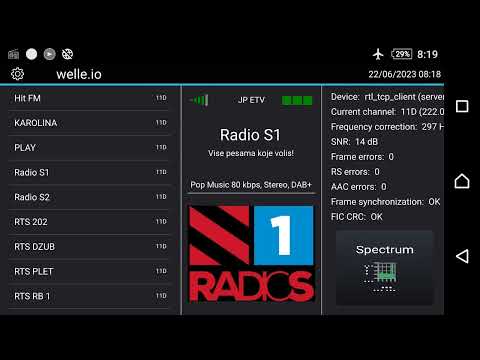
In their tests they find that the Welle.io DAB decoder works perfectly without issues, however the SDRAngel DAB decoder struggles and has difficulty with decoding. Given that Welle.io is a dedicated DAB decoder, and SDRAngel is a multipurpose tool this could be expected. But we are unsure what is wrong with the DAB implementation in SDRAngel.
The team note that the test was carried out in Sofia, Bulgaria, Europe, using a Serbian DAB+ signal from Yastrebac, with a distance of 175km.
Test android apps with DAB+ signal Welle.io vs. SDRangel, receiver rtl-sdr v.3
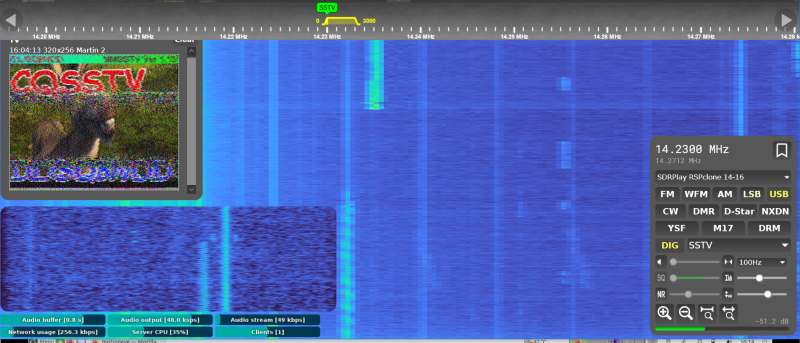
Back in March of this year we posted about an OpenWebRX fork called OpenWebRX+, which adds multiple built-in and ready to use decoders such as SSTV, AIS, CW and RTTY. OpenWebRX+ is a fork of the OpenWebRX project which is now officially maintained by DD5JFK.
Since our last post OpenWebRX+ has progressed in development further, and now includes a HFDL decoder via dumphfdl, various ISM band equipment decoders via rtl_433, FLEX pager decoding via multimon-ng, and a SELCALL decoder has also been added. Many other improvements and changes to the software have also been added, and the full changelog can be viewed here.
OpenWebRX+ is software for Linux. If you want to install OpenWebRX+, an easy path is to use the ready to use Raspberry Pi 4 image available on the releases page, or to use their PPA.
SSTV Image received by the luarvique fork of OpenWebRX. Credit: Neil Howard