Category: HF

RTLSDR4Everyone: Review of the Soft66RTL3

Over on his blog Akos has posted a review of the Soft66RTL3. The Soft66RTL3 is an RTL-SDR which is retrofitted with an upconverter, filters and HF RF amp. It is produced by Kazunori Miura (JA7TDO) who is based in Japan and it sells for $40 USD shipped, or $46 USD shipped with registered air mail. Previously we posted Mike Ladds review of the Soft66RTL3 here.

In his review Akos shows us the features of the Soft66RTL3 which include the switch for selecting between several HF filters, as well as a trimmer pot for adjusting the amount of gain on the HF RF filter. He shows that inside is a nano sized RTL-SDR dongle soldered on to an upconverter board.

Unfortunately it seems Akos discovered some flaws with the unit. He discovered odd frequency drift behavior and poor performance on VHF and UHF. HF performance on the other hand was decent, but still not as good as with an upconverter.

Inside the Soft66RTL3

Receiving the SAQ VLF Signal with an Airspy + Spyverter and SDRplay RSP

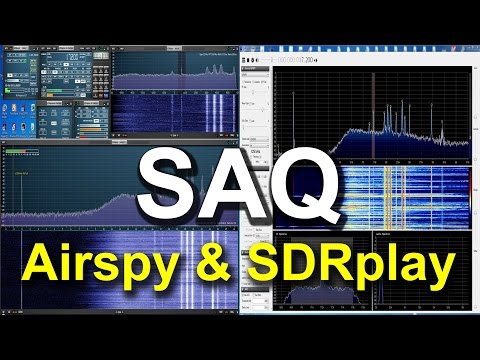
Over on YouTube user Mile Kokotov has uploaded a video showing his reception of the SAQ very low frequency (VLF) signal. The SAQ transmitter is based in Grimeton, Sweden and transmits at 17.2 kHz, which is well below the frequency of most radio communications. SAQ only transmits its beacon on certain days, and last Sunday July 3rd 2016 the SAQ beacon activated to celebrate Alexanderson day, which is named after Swedish radio pioneer Ernst Frederick Werner Alexanderson.

In the video both the Airspy + Spyverter and the SDRplay RSP appear to receive the SAQ VLF signal equally well. In the video description Mile writes:

“SAQ”- Radio Station at Grimeton is a VLF transmission facility at Grimeton, Sweden. It has the only working Alexanderson alternator rotating armature radio transmitter in the world and is classified as a World Heritage Site.

The transmitter was built in 1922 to 1924 to operate at 17.2 kHz. The antenna is a 1.9 km wire aerial consisting of eight horizontal wires suspended on six 127-metre high freestanding steel pylons in a line, that function as a capacitive top-load to feed energy to six grounded vertical wire radiating elements.

Until the 1950s, the Grimeton VLF transmitter was used for transatlantic radio telegraphy to Radio Central in Long Island, New York, USA. From the 1960s until 1996 it transmitted orders to submarines in the Swedish Navy.

The Alexanderson transmitter became obsolete in 1996 and went out of service. However, because it was still in good condition it was declared a national monument and can be visited during the summer.

On July 2, 2004, the Grimeton VLF transmitter was declared a World Cultural Heritage site by UNESCO. It continues to be used on special occasions such as Alexanderson Day to transmit Morse messages on 17.2 kHz. Its call sign is SAQ.

Recent transmissions from SAQ on 17.2 kHz with Alexaderson 200 kW alternator, was on Alexanderson day (Sunday, July 3rd 2016) at 09:00 UTC.

Distance between SAQ transmitter in Grimeton, Sweeden and Macedonia where the signal was received is about 1850 km.

Receiving with:
1. AIRSPY R2 – SDR + Spyverter and SDRsharp software.
2. SDRplay RSP1 and SDRuno software.

Both SDR receivers settings were previously set for maximum S/N ratio.

Antenna is Mini-Whip 10cm homemade active antenna on 6.5 meter plastic pole.

The LPF filter (fc=535 kHz) is used also.
SAQ VLF Receiving with Airspy+Spyverter and SDRplay

Videos showing the LimeSDR in Action on HF with GQRX

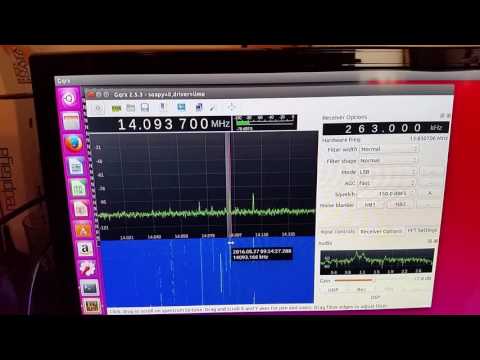
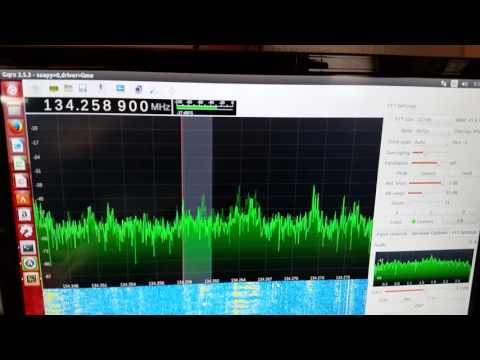
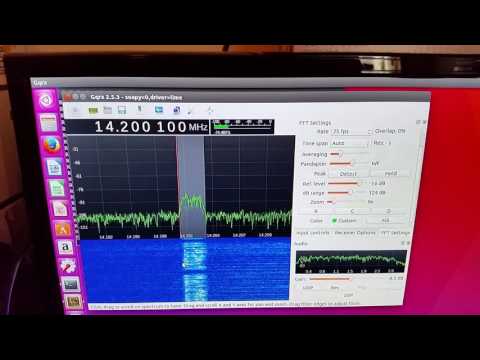
Over on YouTube LimeSDR beta tester Marty Wittrock has uploaded several videos showing the LimeSDR receiving HF frequencies. In the first video Marty shows it receiving the USB voice on the 20m band during the 2016 ARRL field day. The second video shows reception of PSK31 signals. More videos are available on his channel if you are interested.

In the videos he uses GQRX and his own KN0CK HF upconverter. The LimeSDR should be able to receive HF on its own without an upconverter, but at the moment the HF capabilities have not been programmed into the drivers yet, so during this beta testing period an upconverter is required.

Marty also wrote in to us to make some comments on his experiences with the LimeSDR. He believes that the LimeSDR is amazing and writes:

The quality of the receive and audio [of the LimeSDR] is incredible against other SDRs I have in the house (Flex 5000A, RTL-SDR, HackRF, Red Pitaya – and soon SDRPlay).

Marty also writes that he will soon have more videos of the LimeSDR operating in Windows with SDRConsole in the near future, and we will post those videos too when they are ready.

LimeSDR Receiving 20m Voice on USB

LimeSDR Receiving PSK31 on the 20m Band

Testing out the SDRplay with SDRuno and Characterizing RF HF Filters

Over on YouTube user Mile Kokotov has uploaded a video showing him using the SDRplay on the recently released official software SDRuno. In the video he first shows reception of some HF signals, then goes on to show how he can characterize some HF filters using a noise source.

Mile also wrote in to use to expand on his video. We quote:

“SDRuno” is new specialized software for SDRplay – RSP1 receiver. Besides many others excellent features, the new one is 10 MHz spectrum span on the window screen. The 10 MHz frequency span you can use it for characterize the HF Band-pass, Low-pass, High-pass or Notch filters. All you need is one noise source (noise generator) which you can find on eBay for about 20 USD.

With addition of directional coupler (for another 20$ USD), you can using SDRplay and SDRuno for HF antenna analyzer, measuring SWR like poore-man`s HF Vector Network Analyzer!

An RF filter is an electrical circuit designed to have specific characteristics with respect to the transmission or attenuation of various frequencies that may be applied to it.

There are three general types of RF filters:

1. A high-pass filter (HPF) similarly has a cut-off frequency, above which there is little or no loss in transmission, but below which there is considerable attenuation. Its behavior is the opposite of that of the low-pass filter.

2. A low-pass filter (LPF) is one that will permit all frequencies below a specified one called the cut-off frequency to be transmitted with little or no loss, but that will attenuate all frequencies above the cut-off frequency.

3. A band-pass filter (BPF) is one that will transmit a selected band of frequencies with substantially no loss, but that will attenuate all frequencies either higher or lower than the desired band.

The Filter connected in the front end of the receiver can be very much useful and it can improve the reception of the weak signals rejecting all others unwanted signals that can produces interference, intermodulation and as a results, the weak signals can not be copied !

With bandpass filter for particular frequency band, Receiving weak signals on that band is much easier, without problems from out of band strong sugnals.

73,
Mile Kokotov

SDRplay with SDRuno Using to characterize RF HF filters

Using the SDRplay and SDRTouch on an Android Mobile Phone

A few months ago the popular SDRTouch software for Android added support for the SDRplay RSP. The RSP is a $149 USD software defined radio with a tuning range of 100 kHz to 2 GHz and a 12 bit ADC.

Over on YouTube user Mile Kokotov has uploaded a video showing the SDRplay RSP running in SDRTouch. He uses it to listen to the 14 MHz ham band in SSB mode and finds that reception is clear and that it is fairly easy to tune around.

In order to use the RSP with an Android device you will need a fairly modern phone and a USB OTG cable. Ideally try to get a USB OTG cable with an external power port as the battery can drain quite fast when using the SDR. SDRTouch also supports the RTL-SDR.

SDRplay running with Android mobile phone

Receiving WSPR with a Direct Sampling Modified RTL-SDR

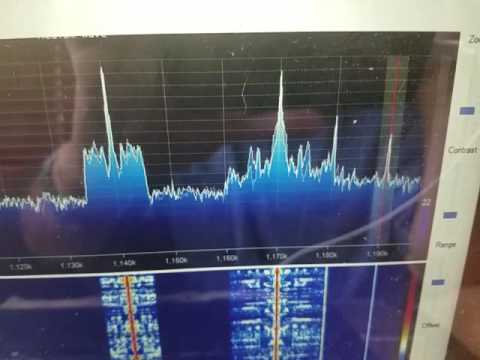
Over on YouTube user Veryokay has uploaded a video showing how he was able to receive WSPR (Weak Signal Propagation Report) signals at 14 MHz with his direct sampling modified RTL-SDR. WSPR is a HF mode designed to be received even if the signal is very weak. It is used to help determine radio propagation conditions. Direct sampling mode allows you to receive HF signals on an RTL-SDR without the need for an upconverter, but it is more difficult to implement and get good results with. To get the best results Veryokay built an add on PCB that fits onto the RTL-SDR which contains and LNA and single ended to differential operational amplifier to amplify and get correct impedance matching on the input.

His video mainly shows how to calibrate the receiver correctly to receive WSPR as incorrect calibration is the most common error when trying to receive WSPR for the first time. In the video he also explains that he is transmitting WSPR himself using his Raspberry Pi and a QRPi WSPR filter shield for use with Rpitx.

Receiving WSPR with the RTL-SDR in direct sampling mode and WSPR-X.

Receiving WSPR mode at 20m with RTL-SDR dongle in direct sampling

SDRplay receiving a WPX CW CQ Contest

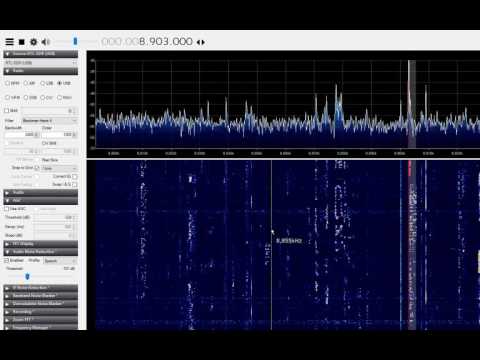
Over on YouTube user Mile Kokotov has uploaded a video showing him receiving a WPX CQ CW (morse code) contest on his SDRplay RSP. The SDRplay RSP is a $149 USD software defined radio with a tuning range of 0.1 – 2000 MHz, 8 MHz maximum bandwidth and 12-bit ADC.

In the video Mile shows that the SDRplay is capable of receiving many strong closely spaced CW signals at the same time as weaker ones without overloading. He uses the HDSDR software and a large 43.1m long delta loop antenna strung up in his backyard.

SDRplay receiving WPX CW Contest 2016

Monitoring Ionosondes and Creating Ionograms with a USRP and GNU Chirp Sounder

In the HF region between about 0 – 30 MHz it is common to see and hear “chripers” – signals which quickly sweep through the HF frequency band and produce an audible chirp. These chirps are actually signals from Ionosondes which is a type of radar system used to monitor the Ionosphere. The Ionosphere exists about 50km above the surface of the earth and is the atmospheric layer responsible for a large part of long range HF communications. In a previous post by Mario Filippi we also discussed Ionosondes.

Usually it is scientists who transmit and monitor these Ionosondes, however if you have wide band radio that can cover a majority of the HF spectrum then you can also monitor these chirpers yourself. Over on his blog Fabrizio Francione has created a post showing how to use a USRP, together with a GNU Radio Program called GNU Chirp Sounder to create his own amateur Ionogram monitoring station. The USRP is a fairly expensive SDR with a bandwidth of 25 MHz, but we add that we think that next generation of low cost wide band SDRs like the up and coming LimeSDR should also be able to do the same job.

The Ionograms show at what frequencies HF propagation is currently optimal for a specific distance (or number of signal bounces from the Ionosphere). Below is an example Ionogram animation showing the reception of Ionosondes taken over time. Video from the GNU Chirp Sounder page.