The SatNOGS project aims to provide low cost satellite ground stations (where one critical component is currently an RTL-SDR dongle) along with free networking software in order to create a crowd sourced satellite coverage network. The SatNOGS project was also the grand prize winner of the 2014 Hackaday prize which saw them take away almost $200k US dollars of prize money.
Recently the SatNOGS team announced the release of their new satellite database which can be used to look up satellite transmitter information such as downlink frequencies. It is described as “an effort to create an hollistic, unified, global transmitter database for all satellite transmitters”. The database is open to everyone and requires contributions in order to grow.
DSD+ stands for Digital Speech Decoder Plus and is a software program that can allow you to decode digital voice signals such as P25 and MotoTRBO/DMR. DSD+ is under continual development, and in their last public update they began offering early access to the latest DSD+ features in development through their fast lane subscription. The fast lane subscription costs $10 USD for one year and $25 for unlimited early access. Information about joining the fast lane service can be found in the readme file of the latest DSD+ 1.074 public release.
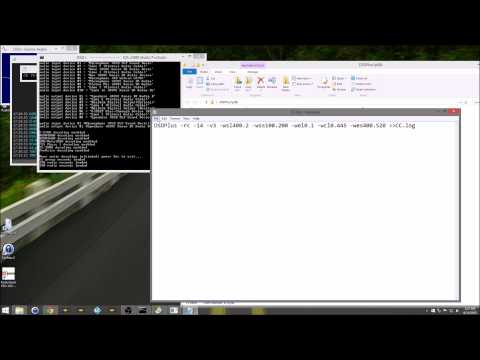
Over on YouTube user John Miller has been testing the latest early access version DSD+ 1.08t. This new version adds trunking support which allows you to follow conversations. Previously other software like Unitrunker was required to follow the trunking signal. On YouTube John has uploaded a video first showing trunking in action, and a second video showing how to set up DSD+ 1.08t for trunking.
Back in December of last year we posted about the Indiegogo campaign for the HackRF Blue, a lower cost clone of the HackRF One software defined radio. They were able to achieve a lower cost by better component sourcing and manufacturing choices, thus reducing the cost from $299 to $200. The HackRF Blue Indiegogo campaign was successful and most of the HackRF Blue’s have now been shipped and delivered to backers. If you need help getting started with the HackRF Blue see http://hackrfblue.com/getting-started/. To get started on Windows, simply use Zadig like with the RTL-SDR, and use SDR# which has built in HackRF support.
The specs of the official HackRF One (and by extension the HackRF Blue) have also recently been changed. They now officially acknowledge that the HackRF One is capable of operating at a frequency down to about 1 MHz. They write:
Now that we’ve seen consistent low frequency performance across multiple manufacturing runs, we’re comfortable changing the official specification: HackRF One operates from 1 MHz to 6 GHz. Try attaching a long wire antenna to listen to shortwave radio!
Recently some people have been considering which mid priced SDR to upgrade to from their RTL-SDR. Our opinion is this: The HackRF has pretty poor RX performance, probably the same as, or even worse than the RTL-SDR, so we suggest you buy it only if you want TX capabilities or need operation above 1.7 – 2 GHz. If you only need RX then we suggest you choose the Airspy or SDRPlay as they have much better RX performance. See our list of SDRs for more possible options.
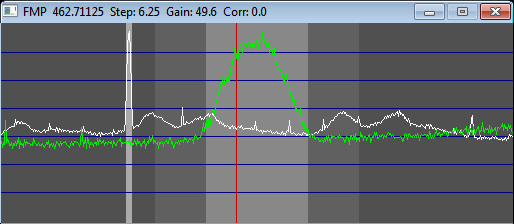
The latest version of Digital Speech Decoder+ (DSD+) has just been released, bringing it up to version 1.071. There appears to be no changelog, so we are unsure as to what is new, but one obvious change is that they now include a new program called FMP which is a simple NFM demodulator, similar to rtl_fm, although it does have a GUI with point and click tuning. FMP can be used as a replacement for SDR# or similar software, and is especially useful to use on low end devices such as netbooks.
An active discussion on the latest release of this software can be found in this thread on the RadioReference.com forums.
The FMP NFM demodulator tuned to a MotoTRBO signal.
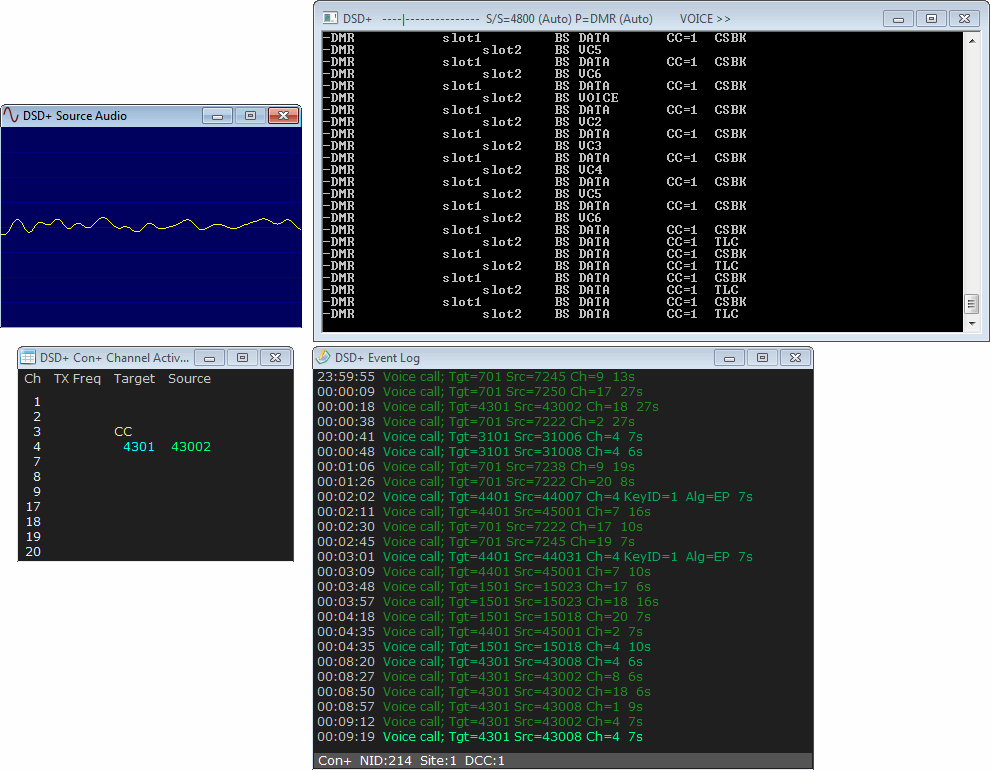
DSD+ is a Windows program which can be used to decode and listen to digital voice protocols such as D-STAR, NXDN4800, NXDN9600, DMR/MotoTRBO, P25 Phase 1, X2-TDMA and ProVoice with an RTL-SDR or other radio. On some DMR systems you may also be able to use the included LRRP software, which allows you to view the GPS locations of broadcasting radios. The last major release was version 1.05.
DSD+ GUI
The DSD+ team are now also offering a “fast lane” early access program, which for a small donation will allow you to have early access to new and upcoming DSD+ features. They aim to release a new update to donators every 7 to 30 days, while stable public releases will continue to be released every 4 to 6 months. The donation costs $10 for one year of early access, and $25 for lifetime updates. Some features they are currently working on include:
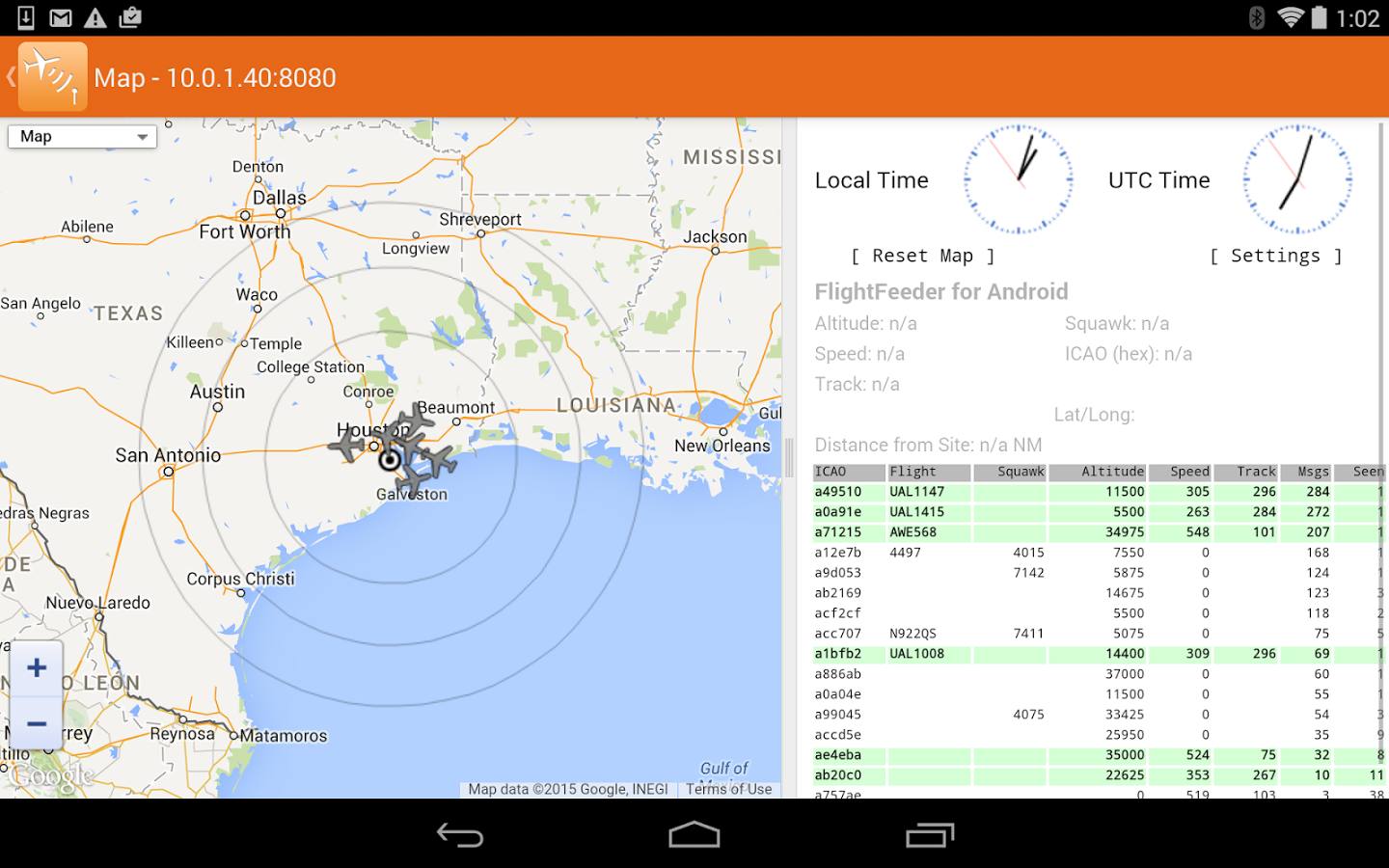
In most of the world aircraft use the ADS-B standard for location tracking which transmits at a frequency of 1090 MHz. However, in the USA there is the option for aircraft to instead use the Universal Access Transceiver (UAT) protocol which transmits at 978 MHz.
UAT has some extra features for pilots compared to ADS-B. In addition to location information UAT provides a Traffic Information Service (TIS/B) which allows pilots to see what ground control sees on their traditional RADAR system. It also provides a Flight Information Service-Broadcast (FIS/B) which includes weather and other information. It seems that most small aircraft in the USA prefer to use the UAT system due to it’s lower cost and additional features.
Previously we posted about Japanese RTL-SDR experimenter Nobu and his work in prototyping a new 14 MHz low pass filter and galvanic isolator for use with the RTL-SDR. The low pass filter improves reception when using the RTL-SDR in direct sampling mode by reducing out of band interference and the galvanic isolator (isolation transformer) reduces computer and other noise when using the RTL-SDR with an upconverter.
The products can be bought from the Japanese Amazon store [Galvanic Isolator] [Low Pass Filter], however to purchase from outside of Japan you will need to use a third party shopping service available at http://agent.jzool.com/.
The Radio Spectrum Processor (RSP) by SDRPlay is a receive only software defined radio with a 100 kHz to 2 GHz range (with a small gap at 380 MHz to 430 MHz), a 12-bit analogue to digital converter (ADC) (~10.4 ENOB), 8 MHz bandwidth and a bank of several switched front end filters.
Previously the SDRPlay RSP was priced at $299 USD, however they have just halved this price down to $149 USD plus tax and shipping. At this price point we think the SDRPlay is a very good competitor to the Airspy SDR which seems to be the more popular option priced at $199 USD, especially if you are interested in listening to the HF bands without the need for an upconverter.
Recently we posted about some SDRPlay reviews which are all favourable.
Recently the commonly used frequency manager plugin for SDR# was updated to version 1.6. The latest version can be downloaded from http://www.sdrsharpplugins.com/. The updates are as follows:
The Frequency Description is now displayed in the upper-right corner of the spectrum analyzer, along with the indicator for multiple database entries for that frequency.
As a result of moving the above information to the spectrum analyzer, the Frequency Manager panel is now 35% smaller.
The Clipboard Monitor now optionally watches the clipboard for frequencies you might have copied from the internet; and if that can be converted to a MHz value it tunes the radio to that frequency.
Function Keys F1-F10 can now be used to tune to a preset frequency.
Scanner
A new Minimum Signal Strength Line is displayed on the spectrum display. This, along with real-time display of the current signal’s strength when the scanner is running, let you see at a glance how that signal compares to your scanner settings. In addition you can use customize the line with one of 6 line patterns.
Current Signal Strength in dB is displayed in the upper right corner of the spectrum analyzer, just after the Frequency Description.
Timeout and Watchdog timers’ indicators are now displayed in the upper right corner of the spectrum analyzer.
Also, on the SDR# Yahoo group discussion mailing list user Andy Pritchard has released a beta version of his new RDS Data Logger plugin for SDR#. This plugin can be used to log Radio Data System (RDS) data on a single frequency or on multiple frequencies by using the scan function. It can be a very useful tool for FM DXers. The plugin is still in beta but can be downloaded now directly from http://www.apritch.myby.co.uk/rdsdataloggerBeta4.zip. Later versions may be released on the SDR# Yahoo group.