Category: Other

50 Units of a $199 Nuand bladeRF x40 for Sale: 1-Day Only

Nuand is the company responsible for the bladeRF software defined radio. The bladeRF x40 is a SDR that usually costs $420. It uses a LimeMicro LMS6002D chip, which has a 12-bit ADC and a tuning range of 300MHz – 3.8GHz.

For one day only they have released a special price for the bladeRF x40 of $199 USD, for the first 50 customers only. At the time of this post the deal still seems to be active, and the coupon code of “MHZ” is still working. Of note is that the recently successfully crowdfunded LimeSDR uses the newer and better LimeMicro LMS7002M chip, so Nuand may be testing the waters for a lower price point on their bladeRF. However, one thing to note is that the bladeRF is proven hardware with active software applications, whereas the LimeSDR is not yet proven. 

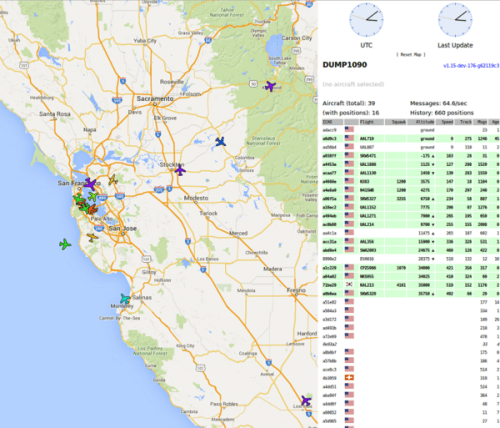
Nuand also recently released an update which saw the source released for an ADS-B decoder that can be run on the bladeRF’s onboard FPGA, and also an update which allows the bladeRF to display up to 124 MHz of bandwidth at any one time. The large bandwidth display appears to work in a similar way to rtl_power or SpectrumSpy for the Airspy, by quickly switching between multiple chunks of frequency. The difference is that the bladeRF can do this by using onboard HDL accelerators which allow it retune extremely fast at several thousand times a second.

bladeRF displaying 96 MHz.

First tests of the LimeSDR with GQRX

The LimeSDR is a new SDR $299 USD currently seeking crowdfunding over on CrowdSupply. At the time of this post the LimeSDR is currently 60% funded, with 29 days left to go. The LimeSDR is a RX/TX capable device, with a 100 kHz – 3.8 GHz frequency range, 12-bit ADC and 61.44 MHz bandwidth. From the price and specs, we consider it to be a potential next generation HackRF type device which will have vastly improved RX performance.

Over on the MyriadRF blog, Alexandru Csete has received a demonstration unit, and has written about his first thoughts on the LimeSDR. Alexandru was able to easily set the device up by using SoapySDR and GQRX on Linux. He first did the “hello world” of SDR and was able to successfully receive broadcast FM signals. Next he tried to receive Amateur Satellite signals and was successful in receiving the FO-29 satellite. Finally he was also successful in receiving NOAA weather satellite images.

From a quick judge of the waterfall images it looks as though the LimeSDR has a very clean spectrum with a low noise floor, which looks good for RX. In future posts Alexandru hopes to test out the transmit capabilties of the LimeSDR, as well as its shortwave RX performance.

LimeSDR receiving the FO-29 satellite on GQRX.

Building a Tuning Knob for SDR#

If you love using SDR’s on the PC but miss the old feeling of tuning the frequency with a knob then 19max63 has a solution for you. On his blog he’s posted about how he built his own tuning knob by using a USB mouse PCB circuit and replacing the mouse wheel with a rotary encoder with no detents. Detents are the little clicks or steps that you can feel in some knobs, but for accurate frequency tuning you don’t want those.

His post shows the exact parts he bought (knob, mouse, buttons), the mods he made to the knob and mouse PCB, and how he put it all together. He writes that parts can all be found cheaply on eBay or Aliexpress and the total cost to produce a single knob was only about $4 (though he had to buy some parts in lots of 5 to 10).

The finished tuning kob for RTL-SDR and SDR#.

KiwiSDR Kickstarter Successfully Funded

Last month KiwiSDR started their fundraising campaign on Kickstarter. The kickstarter has now completed. The goal was to raise $50,000 USD and they have well surpassed that mark by reaching $70,757 USD. If you missed out on the Kickstarter then it is still possible to preorder by directly emailing the KiwiSDR team.

The KiwiSDR is a software defined radio with 30 MHz of bandwidth and a tuning range that covers 0 – 30 MHz (VLF to HF). It is intended to be a low cost web based SDR that can be accessed from all over the world via a browser interface. It is designed as a cape for the BeagleBone Black mini embedded computer, and uses a LTC 14-bit 65 MHz ADC and Xilinx Artix-7 A35 FPGA. It also has an integrated SDR based GPS receiver which is used to automatically compensate for any frequency drift from the main 66.6 MHz oscillator. It runs on the OpenwebRX web based software, which many RTL-SDR users have already been using to stream live radio to the web.

Right now the team is beta testing some sample boards and appears to be getting ready for the large production run.

In a previous post we mentioned that the KiwiSDR project had some ethical issues attached to it. The creator of the OpenWebRX software, Andreas, was upset over the fact that the KiwiSDR had forked his open source project and had said that they would not share any profits. However, it appears that KiwiSDR have now struck a deal with Andreas, with both sides being happy, thus resolving any ethical issues.

The latest KiwiSDR Board

Massdrop: Group Software Defined Radio Purchasing

Over on the r/rtlsdr subreddit forum many users are attempting to combine their purchasing power to initiate a ‘massdrop’ for a higher end software defined radio. Massdrop is a service that allows for large group purchases to be made. When a large group comes together to buy the same product the product manufacturer will often be able to offer better wholesale prices due to the increased sales volume.

The Massdrop service also allows for the group to vote on the most desired product. Currently the group is voting for several SDR’s including the SDRplay, HackRF, BladeRF, Airspy, USRP, Red Pitaya, Apache Labs and Perseus SDRs. Currently winning the vote at the time of this post going live is the SDRplay, with the HackRF coming in a close second. Once 200 total votes are reached a representative from Massdrop will contact the manufacturer of the most desired SDR and try to work out a deal for the group buy. There are 147 total votes at the moment, so they are almost at the threshold of being able to initiate negotiations.

If you want to take part in the Massdrop sign up to their website at www.massdrop.com and then visit the SDR voting link at https://www.massdrop.com/vote/Software-Defined-Radios1 (you must be logged in to see the SDR voting page).

If you’re interested in learning more about these higher end radios then we have a list of several SDR’s available here, and a review of the Airspy, SDRplay and HackRF here.

Current voting at the time of posting for the Massdrop.
Current voting at the time of this post for the Massdrop.

New Book out by the Author of the RTLSDR4Everyone Blog

Akos, the author of the rtlsdr4everyone blog has recently released a new Kindle book on Amazon which sells for $5 USD. It is titled “RTL-SDR for Everyone: Second Edition 2016 Guide including Raspberry Pi 2”. Akos writes that the book is intended for beginners and anyone wishing to maximise their RTL-SDR dongle’s performance. The blurb reads:

Chapters cover all you need to know for the best reception with $10 RTL-SDR dongles. Wideband and specialist antennas, modding and noise reduction tips aided with images and diagrams.

My blog at http://rtlsdr4everyone.blogspot.com is only a fraction of the know-how in this book – if you want to take performance to the next level, or simply have no time to waste searching for information on the Internet, then this book is for you.

Readable on all platforms: Windows and Mac, Android and iPad, iPhone and Ipod touch.

Chapter 1 begins with Akos explaining some of the theory and jargon used in the radio world. Chapter 2 of the book talks about the hardware such as the RTL-SDR dongles, coax cabling, connectors and preamplifiers. Chapter 3 talks about the software and includes installation guides for programs like SDRsharp, SDRConsole, Virtual Audio Cable, as well as tutorials for receiving signals such as weather satellites and ADS-B. Chapter 4 goes on to talk about the different types of antennas and Chapter 5 discusses how to maximise the performance of the RTL-SDR. Finally Chapter 6 discusses the Raspberry Pi and it’s links to the RTL-SDR.

A preview of the first few pages in the book is available on Amazon and remember that there is no risk with buying Kindle books as they can easily be fully refunded within the first seven days of purchase.

rtlsdr4everyone_book

An article about all the different types of Coax Connectors

Over on Hackaday author Jenny List has written a useful article that shows and discusses many of the various types of coax cable connectors that exist in the radio world. Over the years many different types of coaxial cable connectors have appeared and it is often difficult to know which of them is the best for your application.

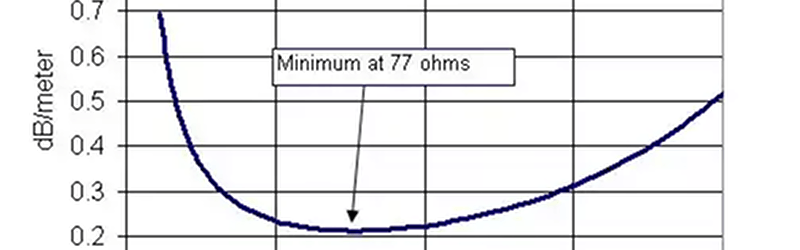
Jenny first explains a bit about the impedance theory behind the design of coax connectors, before going on to introduce several coax connectors starting from the Belling-Lee connector which first came about back in the 1920’s and ending at the more modern SMA and MCX connectors. She then goes on to discuss how you should choose an appropriate coax connector for your application.

An assortment of various coax connectors.

Talks from the 2015 Software Defined Radio Academy Conference

The software defined radio academy is a sub-conference held during the HAMRADIO conference at Friedrichshafen, Germany. HAMRADIO is the largest Amateur Radio yearly convention held within Europe. This years conference has completed and now several SDR related talks have been uploaded to YouTube. Many of the talks discuss the latest developments in SDR technology and projects. An example of some talks we enjoyed are shown below, but we encourage you to check out the YouTube link and watch any of the talks that interest you.

Bastian Blössl, DF1BBL: Signals Analytics with Radio Controlled Key Systems

In this talk we will go through the complete process of reverse engineering an unknown digital signal. Although a widespread car key fob from Hella will serve as an example, the aim is to provide a generally applicable walk-through. To decode the signal we will user different tools to determine its frequency, modulation, encoding, and finally its frame format. More specifically, we will use fosphor, baudline, gqrx, and audacity to study the signal in time and frequency domain. Even though we will just have a quick glance at the different applications, the goal is to show they capabilities and more importantly how they can be combined. Once we figured out the waveform and its parameters, we will go ahead an build a receiver in GNU Radio. GNU Radio is a real-time signal processing framework that already provides all means to demodulate the signal and produce a bit stream. At this point we will use command line tools and simple python scripts to study the bit stream to derive the frame format. Finally, we add a small technology specific block to GNU Radio that decodes and parses the frames to build a complete receiver. Hopefully, this will provide some hands-on experience and give an overview over the various tools that are available to study and decode the signals out there.

Bastian Blössl, DF1BBL: Signals Analytics with Radio Controlled Key Systems

Dr. Howard White, VE3GFW: Four Generations of SDR Architectures and Products

In the Past Year, a new 4th Generation SDR Architecture has emerged that not only bests Legacy Radios with better performance but has ergonomic advantages so that Contesters and DXer’s can finally make SDR’s their first choice. The talk will cover the rapidly accelerating pace of evolution of SDR Technology through Four Generations of SDR Architectures with examples of Amateur Radio products using each architecture.

SDR Technology has captured the imagination of Amateur Radio Operators who increasingly chose SDR’s when buying a new radio. This trend has become so dominant in the USA that Legacy Radio Manufacturers have started to mislabel Legacy Radios as SDR’s to try to recapture lost sales from the uninformed. The presentation will define what is an SDR and show where Legacy technology is not an SDR.

There are now Four Generations of SDR Architectures. First Generation SDR Architectures became economically and technologically feasible for amateur radio applications around 2000. Since then the pace of evolution of Amateur Radio SDR Architectures has begun to accelerate rapidly with Second Generation Architectures emerging in 2009, Third Generation Architectures in 2012 and most recently the very exciting Fourth Generation SDR Architectures in 2014. The presentation will define each of these architectures, explain how technological developments have caused them to happen and review the strengths and weaknesses of each architecture.

In order to make the presentation relevant to Amateur Radio Operators, the presentation will include products (with relative pricing where practical) currently on the market that are representative of each of the SDR architectures. Perhaps the most exciting development for amateur radio operators in the past year has been the emergence of a new 4th Generation SDR Architecture that not only bests Legacy Radios with better performance but has ergonomic advantages so that Contesters and DXer’s can finally make SDR’s their first choice.

Dr. Howard White, KY6LA: Four Generations of SDR Architectures and Products

Martin Dudok van Heel, PA1SDR: Passive Radar at home

This talk is about using the reflections of FM-radio and GPS satellites signals to do passive radar.

With passive radar you can analyze everything that reflects radiowaves without transmitting anything yourself. The airplanes, cars, buildings, amount of rainfall, the condition of the atmosphere layers, ionized gases, landscape layout, ocean waves, meteorites or individual humans or machines moving inside or outside buildings. Even most stealth airplanes can be detected by passive radar when the signals of distant transmitters are reflected down to the receiving passive radar station.

With the building blocks, normally used for implementing Software Defined Radio Systems you can also do very interesting signal analysis. You can use the opensource toolkits GNU Radio (SDR) + Octave (math) + your own code to analyze the direct path and reflections of any kind of wireless signal. You can use this to do passive radar, which is the art of generating a radar image by analyzing the reflections of signals you have not transmitted yourself. You need to be able to somehow obtain an estimate of the original transmitted signal without reflections, and compare/correlate that to the signal with reflections. Then use the time of arrival, phase, Doppler shift and direction of arrival to determine the exact location, speed and strength of (the source of the) refection, and thus generate a passive radar image.

Martin Dudok van Heel, PA1SDR: Passive Radar at home

András Retzler, HA7ILM: OpenWebRX, a Multi-User, Web-Based SDR Receiver Application

Software Defined Radio technology is getting more and more popular among amateur radio operators and hobbyists, as several different universal SDR receiver devices have become available recently. OpenWebRX is a software made for those who want to set up remote SDR receiver stations accessible from the web. It has been developed with open-source codebase, multi-user access and easy setup in mind, to be an alternative to other similar projects (WebSDR, ShinySDR, WebRadio, etc.) It also supports cheap RTL2832U based tuners. Basically, OpenWebRX is an on-line communications receiver for analog modulations (AM/FM/SSB/CW), with a web UI on which real-time waterfall display is available. Users can select a channel within the bandwidth of the sampled signal acquired from the SDR hardware. The selected channel is demodulated on the server and the resulting audio is streamed to the browser of the user, where it is played back. Users can set receiver parameters (channel frequency, modulation mode, filter envelope) independently. OpenWebRX was written in python and JavaScript. The web interface supports multiple browsers and uses modern browser features introduced in HTML5. The digital signal processing functions were placed in a separate library, libcsdr, which has been implemented in C and can also be considered useful as a standalone package. It can perform digital downconversion, filtering and demodulation tasks on I/Q data.

András Retzler, HA7ILM: OpenWebRX, a Multi-User, Web-Based SDR Receiver Application