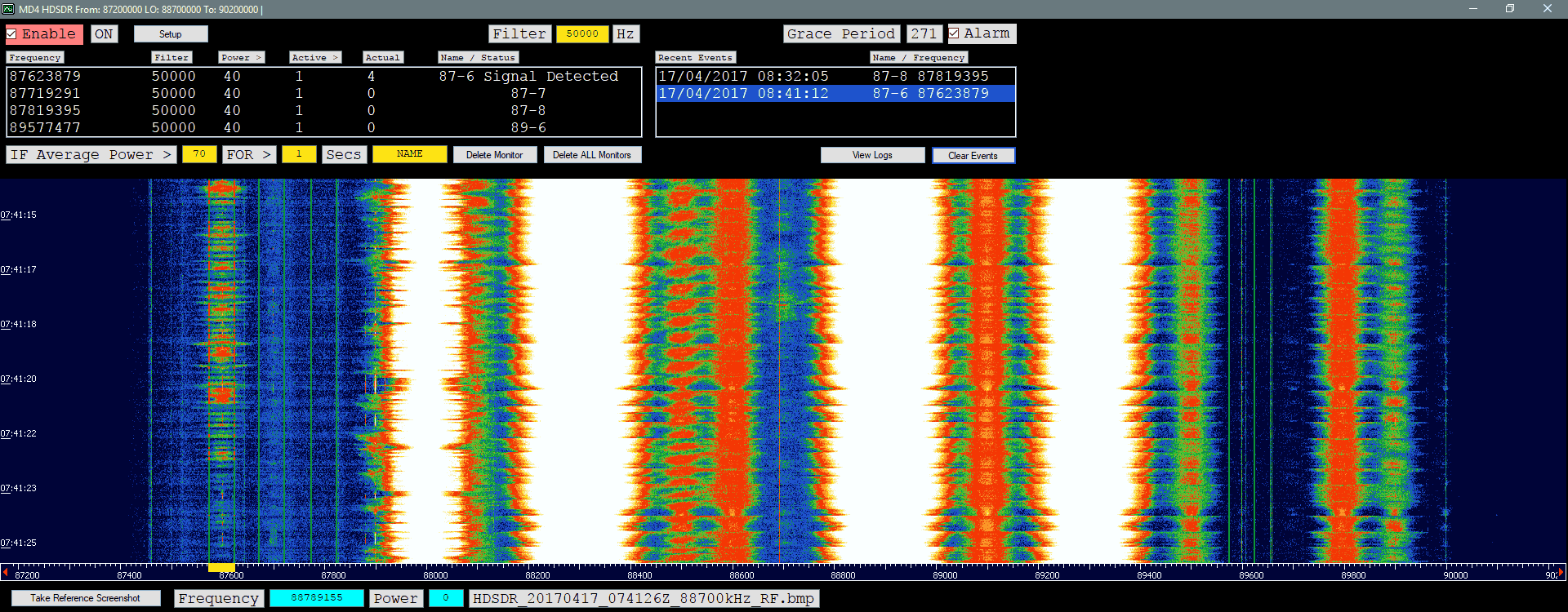
Over on our forums Andy (M0CYP) has posted about his new meteor scatter detection program which works with HDSDR and any supported SDR like an RTL-SDR. It works in an interesting way, as instead of analyzing sound files for blips of meteor scatter activity it analyzes screenshots of the HDSDR waterfall. The software automatically grabs the screenshots and determines if a signal is present on any given frequency. You can set a preconfigured detection frequency for a far away transmitter, and if the waterfall shows a reflection it will record that as a meteor.
Meteor scatter works by receiving a distant but powerful transmitter via reflections off the trails of ionized air that meteors leave behind when they enter the atmosphere. Normally the transmitter would be too far away to receive, but if its able to bounce off the ionized trail in the sky it can reach far over the horizon to your receiver. Typically powerful broadcast FM radio stations, analog TV, and radar signals at around 140 MHz are used. Some amateur radio enthusiasts also use this phenomena as a long range VHF communications tool with their own transmitted signals. See the website www.livemeteors.com for a livestream of a permanently set up RTL-SDR meteor detector (although that site does not use Andy’s software).
Andy writes that his meteor scatter detection software is still in beta so there might be some bugs. You can write feedback on the forum post, in the comments here, or contact Andy directly via the link on his website.
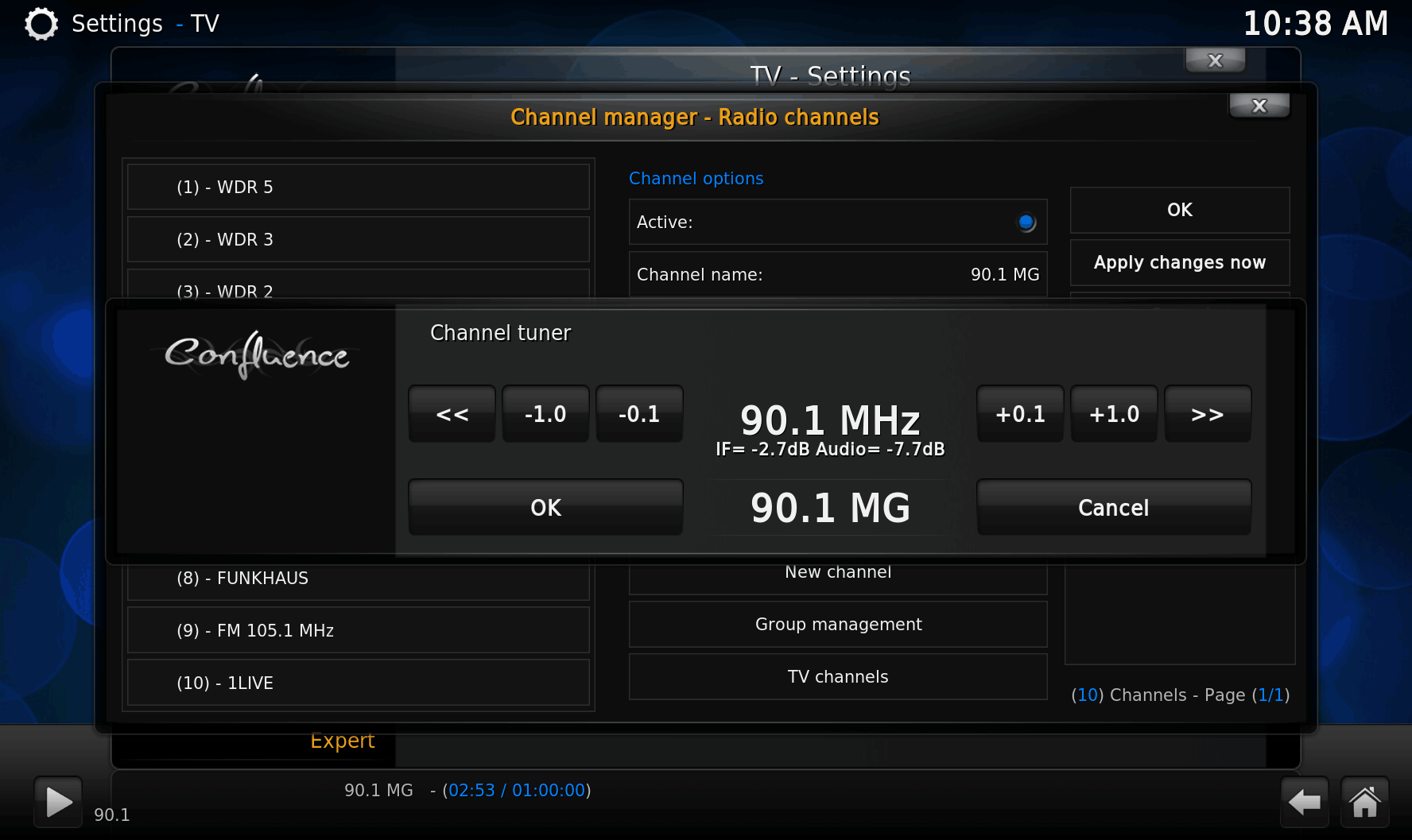
Kodi is a media player and entertainment hub program that is used to manage digital video collections and music. It is used mostly on TV’s together with a home theater PC, or Raspberry Pi 3, but also runs on Android and iOS. It can be thought of as more fully featured smart TV software.
Over on Tom’s Radio Room Show (TRRS) on YouTube Tom has uploaded a video showing how to use SDR# together with Vasili’s Fast Scanner plugin. Fast Scanner is a plugin for SDR# that allows you to use SDR# as a wide band scanner. Essentially this quickly scans through multiple ~2 MHz chunks of bandwidth, and automatically tunes to any active signals.
In his video Tom shows the Fast Scanner plugin in action, shows how to use it, discusses a bit about how it works and also shows what all the features are.
Earlier in April we posted about Hannes Fasching (OE5JFL)’s work in detecting pulsars with an RTL-SDR. Thanks to Steve Olney (VK2XV), administrator of the Neutron Star Group for pointing out that there are actually several amateur radio astronomers who are using RTL-SDR dongles for pulsar detection.
A pulsar is a rotating neutron star that emits a beam of electromagnetic radiation. If this beam points towards the earth, it can then be observed with a large dish antenna and a radio, like the RTL-SDR. Pulsars create weakly detectable noise bursts across a wide frequency range. They create these noise bursts at precise intervals (milliseconds to seconds depending on the pulsar), so they can be detected from within the natural noise by performing some mathematical analysis on the data. Typically a few hours of data needs to be received to be able to analyze it, with more time needed for smaller dishes.
One problem is that pulsar signals can suffer from ‘dispersion’ due to many light years of travel through the interstellar medium. This simply means that higher frequencies of the noise burst tend to arrive before the lower frequencies. Mathematical de-dispersion techniques can be used to eliminate this problem enabling one to take advantage of wideband receivers like the RTL-SDR and other SDRs. The more bandwidth collected and de-dispersed, the smaller the dish required for detection.
Over on the Neutron Star Group several amateur pulsar detection projects are listed, and entries denoted with the “^” symbol make use of the RTL-SDR. Below we show a brief overview of those projects:
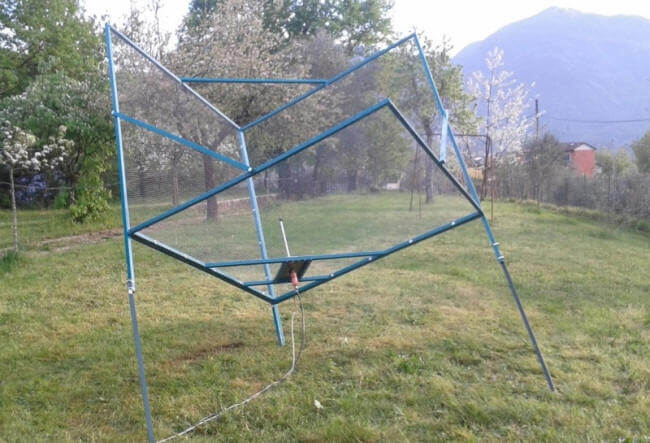
Andrea Dell’Immagine (IW5BHY)– Based in Italy Andrea often uses a 3D corner reflector antenna which is equivalent to a 2.5 meter diameter dish to observe pulsars in the 70cm band (~420 MHz). The antenna is in a fixed position so he can only detect pulsars that drift into the beam width of the antenna. With this antenna, a 0.3dB NF LNA, an RTL-SDR and de-dispersion techniques he’s been able to detect the Pulsar B0329+54 which is 2,643 light years away with an integration time of about 3 hours.
Andrea (IW5BHY)’s 3D Corner Reflector Pulsar Detection Antenna.
Hannes Fasching (OE5JFL) – Based in Austria Hannes has a 7.3M dish that he uses for pulsar detection with his RTL-SDR. With this large dish he’s been able to receive 22 pulsars at both 70cm (424 MHz), and 23cm (1294 MHz) frequencies. With such a large dish, detecting a strong pulsar like B0329+54 only needs less than a minute of integration time.
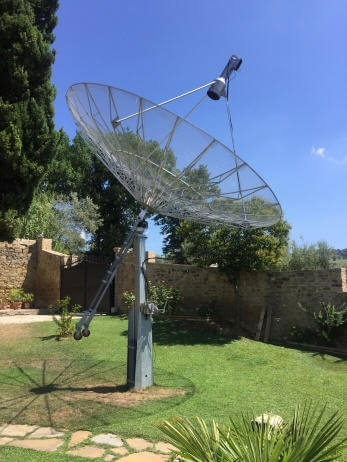
Mario Natali (I0NAA) – Based in Italy Mario uses a 5M dish to observer pulsars at both 409 MHz and 1297 MHz. Combined with a low noise figure LNA and his RTL-SDR he’s been able to receive the B0329+54 pulsar with an integration time of about 2 – 2.5 hours.
Mario Natali (I0NAA)’s 5M Dish
Michiel Klaassen – From the Dwingeloo Radio Observatory in the Netherlands Michiel has used their large 25M dish and an RTL-SDR to detect B0329+54 at 419 MHz.
Peter East & Guillermo Gancio–Peter and Guillermo have used the large 30M dish at El Instituto Argentino de Radioastronomía (IAR) in Argentina and an RTL-SDR to detect the Vela pulsar (B0833-45) at 1420 MHz.
In terms of hardware required, from the above projects we see that you’ll need an RTL-SDR dongle (other more costly SDR’s could also be used), a dish as large as you can get (along with some sort of dish pointing system), a low noise figure amplifier (0.5dB or less is desired) to be placed right by the dish, a few line amps if the cable run is long and perhaps a filter if you are seeing interference from terrestrial signals.
An overview of software for detecting pulsars with the RTL-SDR can be found over on the Neutron Star Groups software page. Essentially what you need is an analysis program which can work on the raw IQ data that is collected by the RTL-SDR and dish antenna. This software ‘folds’ the data, looking for the regular noise bursts from the pulsars. The output is data that can be used to create a graph indicating the spin period of the pulsar, and thus confirming the detection.
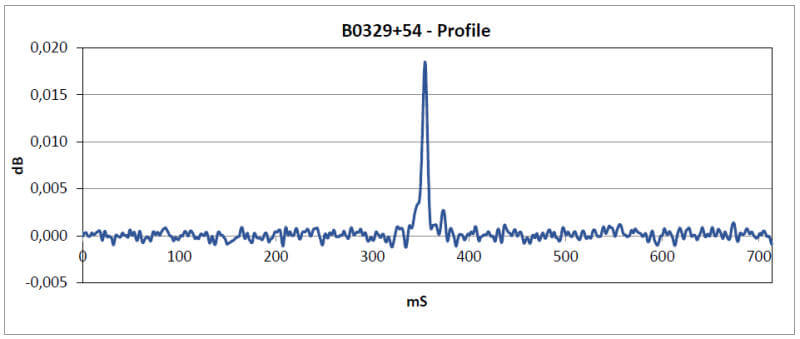
Graph showing the half-period of B0329+54. 350 * 2 = 700 ms which is about what matches on the B0329+54 Wikipedia page.
RadarBox.com is an ADS-B aggregator which is very similar to other aggregators like FlightAware.com and FlightRadar24.com. These services use ADS-B data provided from volunteers all around the world to create a live worldwide snapshot of current air traffic. The data is then used by airlines, airports, aerospace companies, as well as enthusiasts and regular people to track aircraft and estimate arrival times.
Typically contributors to these services use an RTL-SDR combined with a Raspberry Pi as the receiver. Some sites also use their own proprietary hardware, but they seem to be slowly falling out of favor as the RTL-SDR solution tends to be cheaper and more effective.
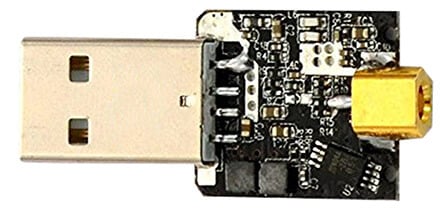
Over on our store we now have a limited amount of “Low Power V2” RTL-SDR dongles available for sale for $16.95 USD incl. free international shipping. These are dongles that were produced for the Stratux project which aims to provide a very low cost ADS-B and UAT receiver for small airplane pilots. These Stratux kits typically consist of a Raspberry Pi, two nano RTL-SDR dongles, a GPS dongle and a Android or iOS tablet. The two RTL-SDR dongles receive both 1090 MHz ADS-B and 978 MHz UAT which are decoded on the Raspberry Pi. The Raspberry Pi then sends the decoded aircraft position and weather data to the tablet via WiFi which is running commercial navigation software.
A full Stratux setup including: Raspberry Pi, two RTL-SDR nano dongles, GPS module, fan, and 1090 + 978 MHz antennas.
One issue that Stratux users continually run into, is that the Raspberry Pi is sometimes unable to power two or more RTL-SDR dongles. When running a Pi with two RTL-SDR dongles, a GPS dongle, and cooling fan the total power draw is above 1A which can cause power supply problems and glitching. By using a low power RTL-SDR these problems can be avoided by keeping the total current draw under 1A.
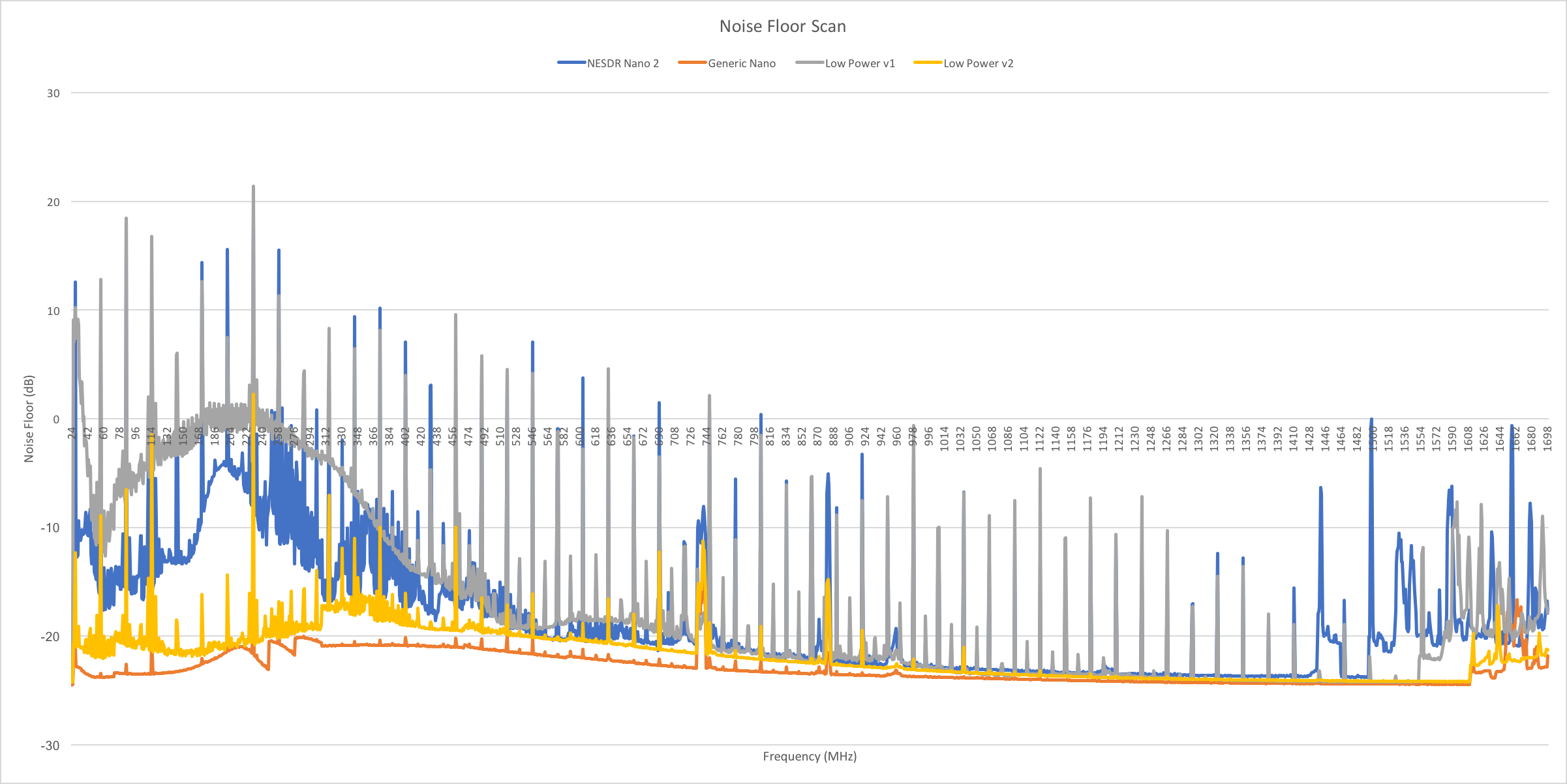
The Low Power V2 Stratux RTL-SDR’s draw about 160-170 mA, whereas standard dongles draw about 260 mA, so that’s a saving of almost 100 mA. On battery power this current saving can mean a few hours more of operation. The Low Power RTL-SDR dongle achieves its lower current consumption by using a switch mode power supply instead of a linear regulator which is commonly used on most other RTL-SDR dongles. The trade off is that switch mode supplies are inherently RF noisy, so increased noise can be seen on the spectrum. Despite the increased noise, most applications like ADS-B are not significantly degraded. We have seen switch mode supplies used on some other RTL2832U dongles sold in the HDTV market as well. For example all the R828D based DVB-T2 dongles that we have seen use switch mode supplies as well, and also draw about 170 mA.
We think that these low power RTL-SDRs could be useful in other non-stratux related applications too. For example, they could be used on mobile Android devices. One of the key problems with Android usage is that RTL-SDR dongles tend to drain the battery quickly. They could also be used on solar and battery powered installations to help achieve longer run times. Or like with Stratux they could be used on a Raspberry Pi running other applications, to ensure that multiple dongles can be attached.
Currently we are selling these dongles for $16.95 USD with free international shipping included. Note that these dongles do not come with an enclosure (just a bare PCB), and they do not have a TCXO. Below is more information about these dongles.
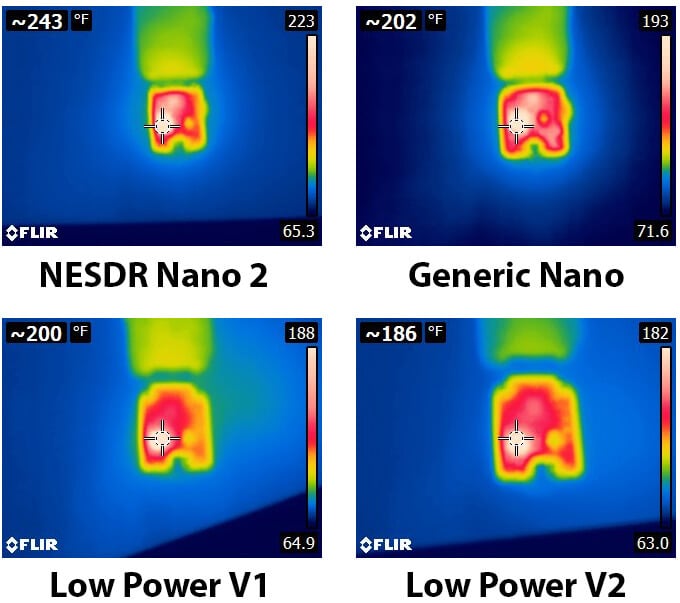
Back in November 2016 we posted a review on the Low Power V1 dongles. Since then Chris (the man behind producing these dongles) has brought out the Low Power V2 models which improves upon V1 significantly. By switching to a 4-layer PCB the dongle is now much quieter in terms of RF noise produced from the switch mode power supply, and it also now runs significantly cooler. The dongle also now uses even less power and is more sensitive compared with V1.
Noise Floor Comparisons between four Nano styled dongles. NESDR Nano 2 (Blue), Generic Nano (Orange), Low Power V1 (Gray), Low Power V2 (Yellow).
In terms of heat produced and power used, the NESDR Nano 2 is the hottest and most power hungry, followed by the Generic Nano, the Low Power V1 and then the Low Power V2. For comparison the NESDR Nano 2 draws 1.362W of power, the generic nano 1.318W, the Low Power V1 1.003W, and the new Low Power V2 draws only 0.933W.
Last month we posted about Aerial TV, a new Android based DVB-T decoder that works with RTL-SDR dongles. Back then the app was still in beta testing and had a few operational bugs. Now the Aerial TV app has been officially released.
UPDATE: Due to Google policies Aerial TV has been removed from the Google Play Store. It is claimed that Aerial TV could be used for copyright violation. It is now available on the Amazon store. Official information will always be available on the new official website at aerialtv.eu.
The app is based on the new Android DVB-T driver for RTL2832U devices which is written by Martin Marinov who is also the programmer of Aerial TV. The DVB-T driver is open source, and currently supports RTL2832U devices with the R820T, E4000, R828D, FC0012 and FC0013 tuner chips. Of note is that the R828D also has DVB-T2 support.
Aerial TV is free to download and test, but requires a $7.99 licence to use for more than 30 minutes. To use it you will need an OTG (On-the-go) cable adapter and an RTL-SDR dongle with antenna.
Just watch TV – no data plan or wifi connection required. Aerial TV works by picking up digital TV channels off the air with a regular TV antenna.
You will need a low cost USB TV tuner. You can grab one online for less than €10. Make sure to get an RTL2832 tuner. When it arrives, just connect the provided antenna and start watching. You may need a USB OTG cable to plug the tuner in your Android device. USB OTG cables are inexpensive and easy to find.
Note that your Android device must support USB OTG. If unsure, do a quick search online or consult your Android device manual. Also check that there is DVB-T/DVB-T2 service in your local area by doing a quick search online. Signal needs to be strong enough for Aerial TV to pick it up. For best results use an outdoor aerial.
You get free unlimited access to radio forever. You also get to watch all TV channels and experience all features of Aerial TV during the trial period for free. After the trial period ends you can make a one-off purchase and watch as much TV as you want. Remember: you can keep listening to radio even if the trial has ended!
Q: How do I find a supported dongle? A: All major RTL2832 (rtl-sdr) dongles are supported. These dongles can be easily purchased online. Just type in “RTL2832” or “RTL2832U” in the search box of your favourite online store.
Q: What tuner do I need to watch DVB-T2? A: If your country has DVB-T2 broadcasts (such as Freeview HD in UK) you will need a DVB-T2 compatible receiver dongle such as R828D in order to watch DVB-T2 with Aerial TV.
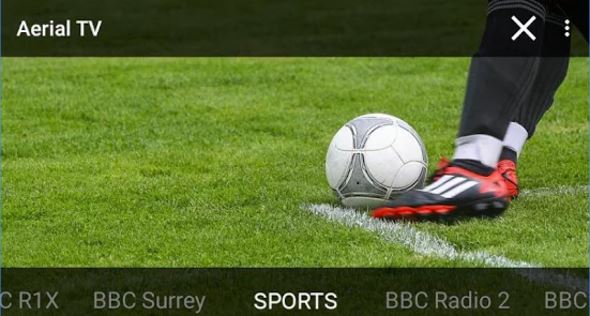
Aerial TV Screenshot
Test a android program "Aerial TV (Unreleased)" ver. 1.1 with usb dongle with R820T2 chip
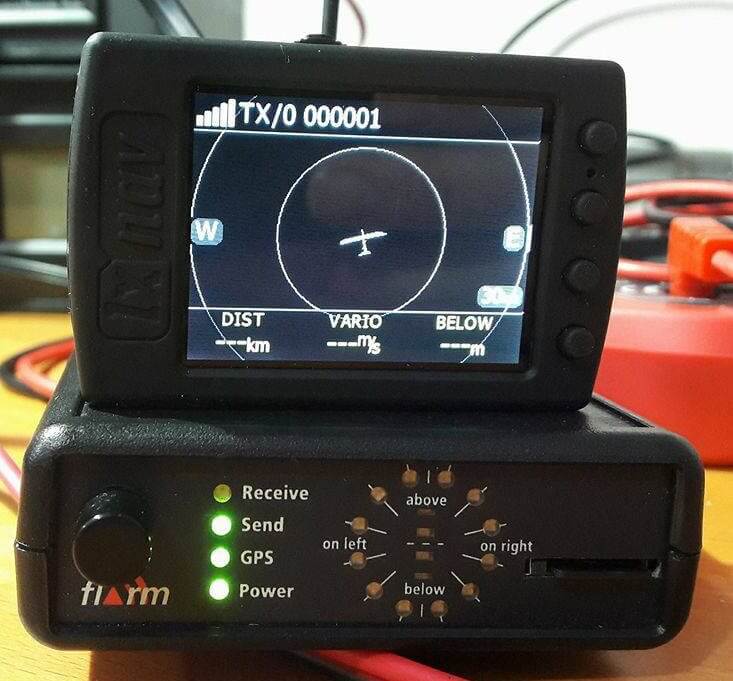
Most people already know about ADS-B aircraft tracking, but few know about FLARM (FLight AlaRM). FLARM is a low cost and low power consumption ADS-B alternative which is often used by small aircraft such as gliders and helicopters for collision avoidance. It is used all over the world, and is especially popular in Europe, however it is almost non-existent within the USA.
Back in 2014 we posted about FLARM reception with the RTL-SDR, and also about the Open Glider Network (OGN). The OGN is an online FLARM aggregator that is similar to sites like flightaware.com and flightradar24.com which aggregate ADS-B data.
Łukasz’s tutorial uses an Orange Pi Zero which is a very cheap (~$7 USD) Raspberry Pi embedded computing device. He also uses an RTL-SDR dongle and an antenna tuned to the FLARM frequency of 868 MHz. The tutorial goes over the Linux commands for installing the decoder, calibrating the RTL-SDR and setting up the Open Glider Network feeder.
Remember that FLARM is typically 10-100 times weaker than ADS-B so a good tuned antenna is required, and the OGN recommend building (pdf) a collinear coax antenna tuned to 868 MHz.