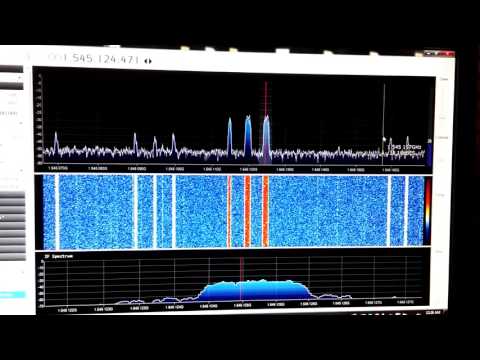
A few days ago we posted a review on the Outernet LNA which can can be used to help receive their new L-band service signal. Their LNA uses a filter which restricts the frequency range from 1525 – 1559 MHz as this is the range in which the Outernet signals are located.
Additional Note Regarding the Downconverter: Also, it appears that the Outernet downconverter prototype that we posted about back in May has unfortunately been discontinued indefinitely and will not enter mass production. For now the LNA is the best option for receiving their signal.
The Geostationary Operational Environmental Satellite (GOES) is a weather satellite placed in geosynchronous orbit (same position in the sky all the time) which is used for weather forecasting, severe storm tracking and meteorology research. It transmits full disk images of the earth on its Low Rate Information Transmission (LRIT) signal, and weather data images and text on its Emergency Managers Weather Information Network (EMWIN) signal. EMWIN is a service for emergency managers that provides weather forecasts, warnings, graphics and other information in real time.
In his post devnulling writes about receiving GOES:
GOES LRIT runs at 1691.0 MHz , EMWIN is at 1692.7 MHz and is broadcasted from GOES-13 and GOES-15. GOES-14 is currently in a backup position to take over in either fails.
For the hardware side, it is recommended to use roughly a 1.2m or larger dish, depending upon how far north you are, you may need a 1.8m dish (larger the better). Repurposed FTA or C-band dishes are easy to come by and work well.
I made a 5 turn helical feed with some 12ga copper wire and a piece of copper plate, and used this calculator to design it – https://jcoppens.com/ant/helix/calc.en.php
I have a short run of coax into the LNA/Filter box. The first LNA is a TriQuint TQP3M9037 which has a very low noise figure (0.3 dB NF and 22 dB gain at 1.7 GHz).
That is ran into a Lorch 1675 MHz filter (150 MHz pass band), then a LNA4ALL and another Lorch before going over a 30ft run of RG-6 to the SDR.
I am using @usa_satcom (twitter.com/usa_satcom, usa-satcom.com)’s LRIT Decoder and that feeds into XRIT2PIC to produce the images and other data streams. By default the decoder only works with the Airspy, but with a custom GNU Radio UDP block, it can be fed with other SDRs like the BladeRF/USRP/SDR Play. A regular R820T(2) RTL probably won’t work because of the higher frequency (rtls tend to not work above 1.5 GHz) and 8 bit ADC. I’m going to try and use the Outernet e4k to see if I can pickup the EMWIN signal in the near future.
EMWIN is broadcasted on 1692.7 MHz, along with being encoded in the LRIT stream at 1691 MHz. The 1692.7 MHz signal is stronger and narrower, so it is easier to pickup. For decoding EMWIN I used @usa_satcom’s EMWIN decoder that piped data into WxEmwin/MessageClient/Weather Message Server from http://weathermessage.com.
LRIT will contain the full disk images from GOES-15, and relayed images from GOES-13 and Himawari-8. It will also included zoomed in pictures of the USA, and northern/southern hemispheres. The images will be visible light, water vapor and infrared. The full disk images are transmitted every 3 hours, with the other images more often. EMWIN will contain other weather data, text, charts, and reports.
It seems as though it may be possible to receive LRIT and EMWIN signals with an RTL-SDR since the signals are at 1690 MHz, which should be covered by cooled R820T2 and E4000 dongles. The only hardware requirements would be a 1m+ dish, 1690 MHz L-band feed, and an LNA + filter.
In 2017 these satellites are due to be replaced by new ones that will use a HRIT signal, which will be about 1 MHz. New software to decode this signal will be required then, but we assume the same hardware could still be used as the frequency is not due to change significantly.
Please note that the decoding software is only available by directly contacting usa-satcom, and devnulling writes that you must have the proper equipment and be able to show that you can receive the signal first before attempting to contact him.
GOES Full Disk ImageOne of several received EMWIN images
Recently we posted news that Outernet had released their 1.5 GHz LNA, Patch Antenna and E4000 Elonics RTL-SDR + E4000/LNA Bundle. When used together, the products can be used to receive the Outernet L-band satellite signal, as well as other decodable L-band satellite signals like AERO and Inmarsat STD-C EGC. Outernet is a new satellite service that aims to be a free “library in the sky”. They continuously broadcast services such as news, weather, videos and other files from satellites.
EDIT: For international buyers the Outernet store has now started selling these products at http://store.outernet.is.
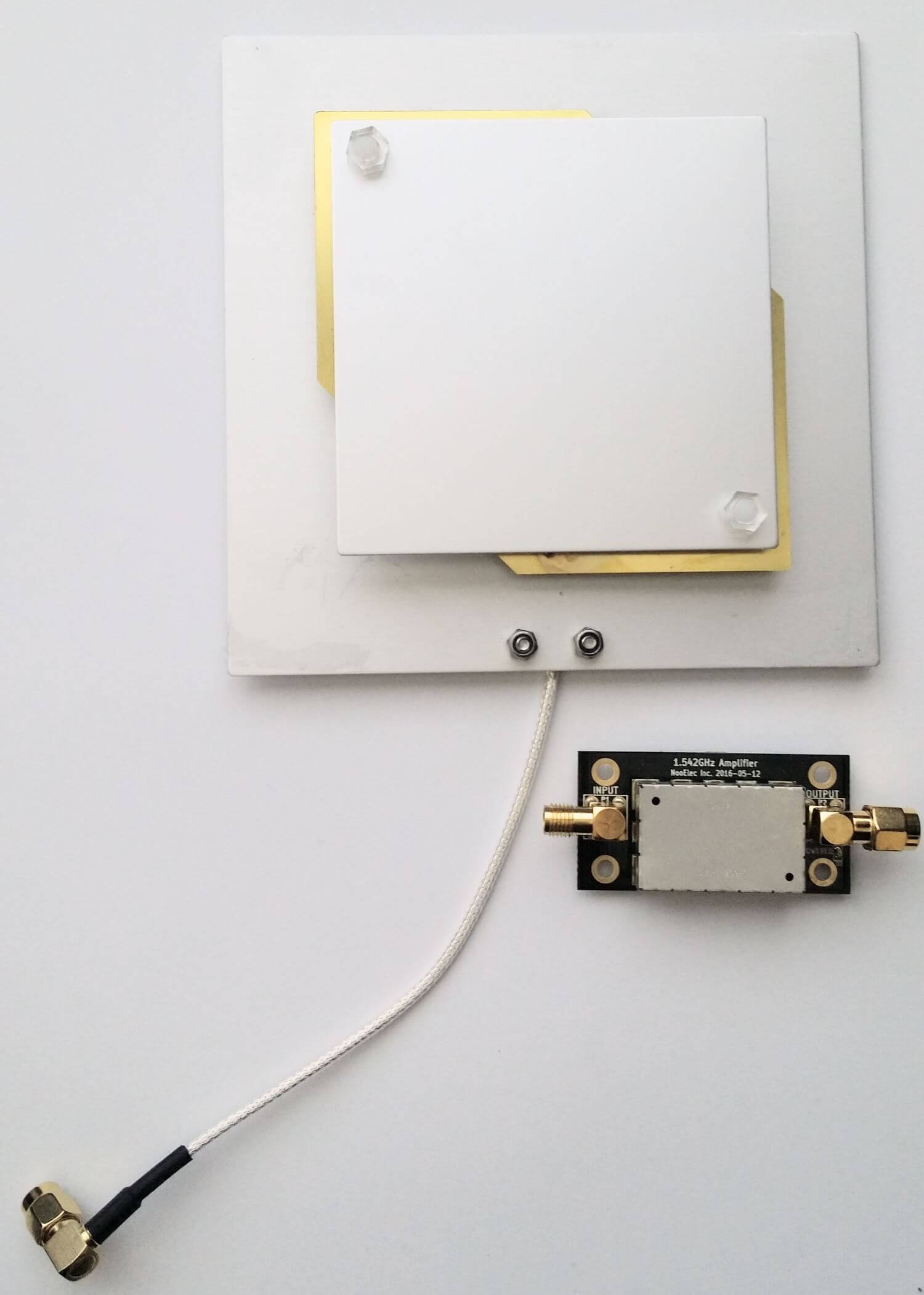
A few days ago we received the LNA and patch antenna for review. The patch antenna is similar to the one we received a while ago when writing our STD-C EGC tutorial, although this one is now slightly larger. It is roughly 12 x 12 cm in size, 100g heavy and comes with about 13 cm of high quality RG316 coax cable with a right angled SMA male connector on the end. The coax cable is clamped on the back for effective strain relief.
The Outernet patch antenna and LNA
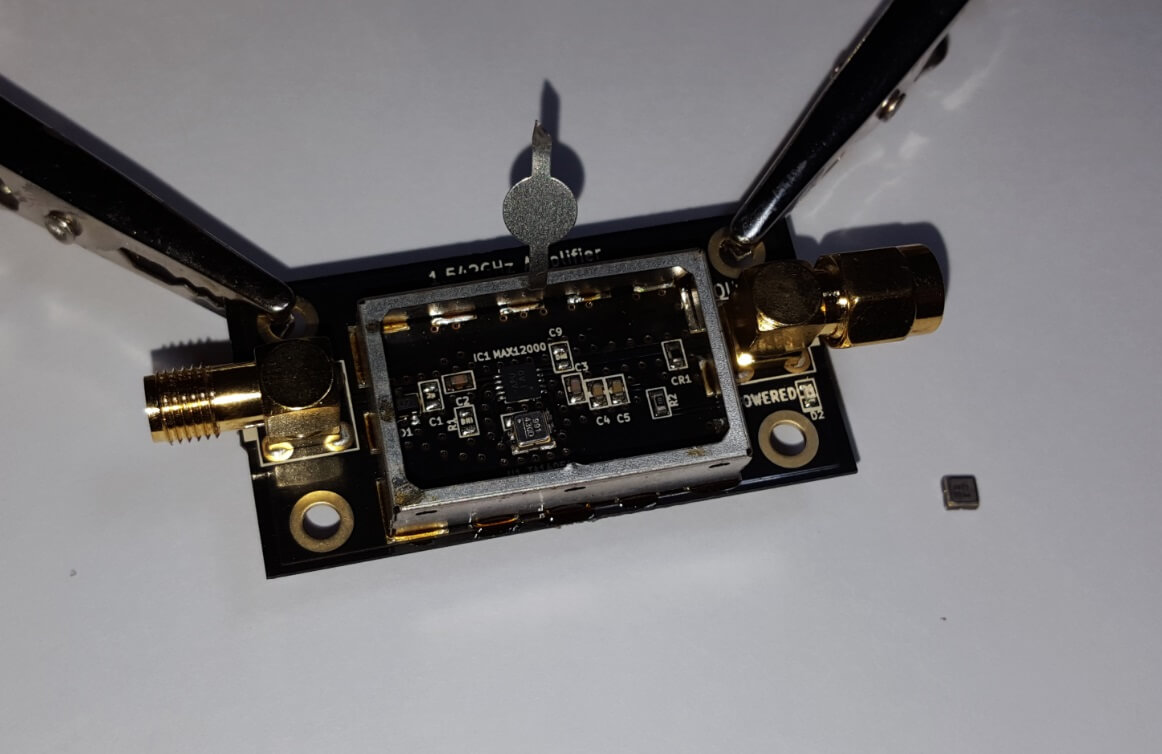
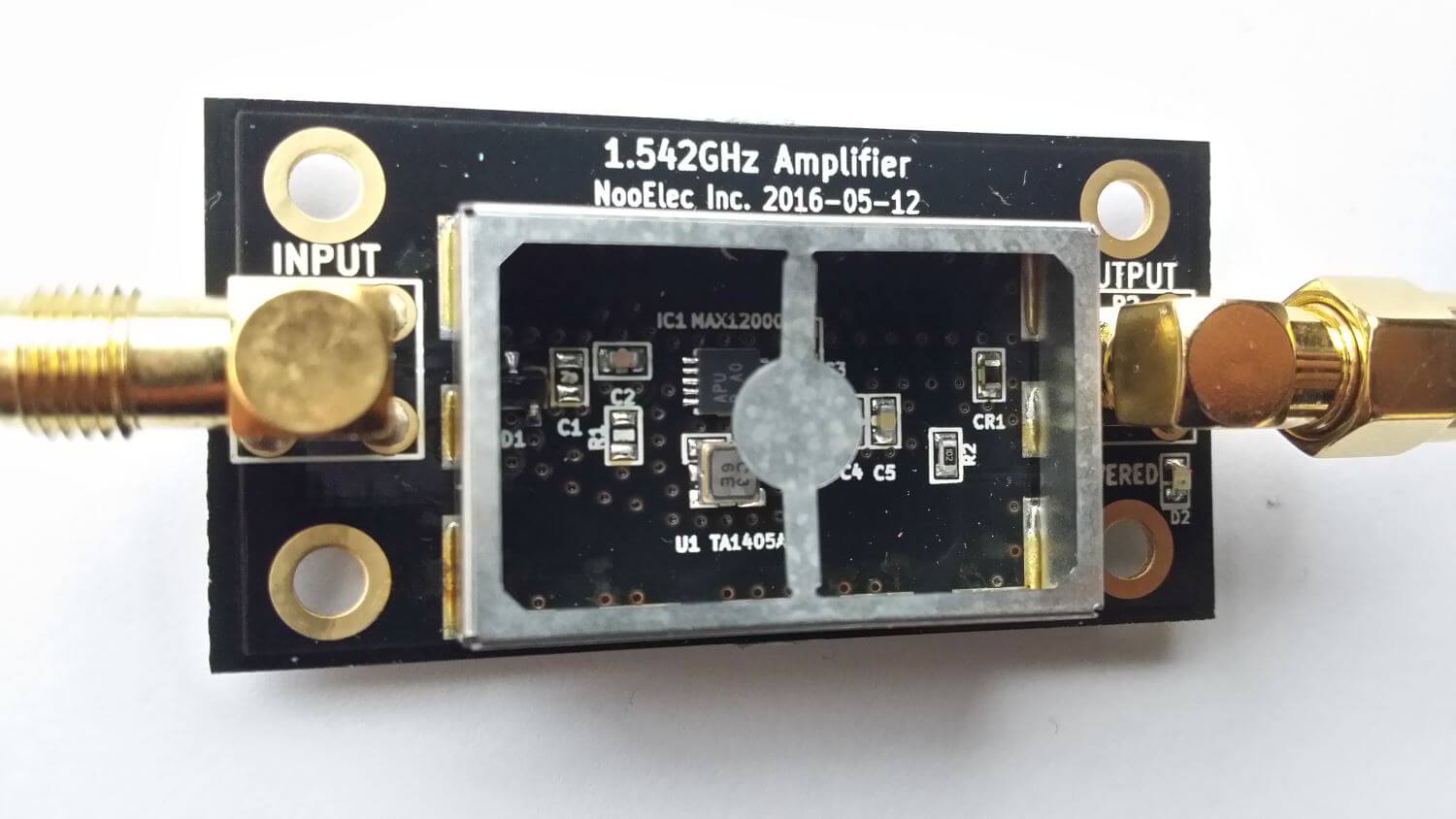
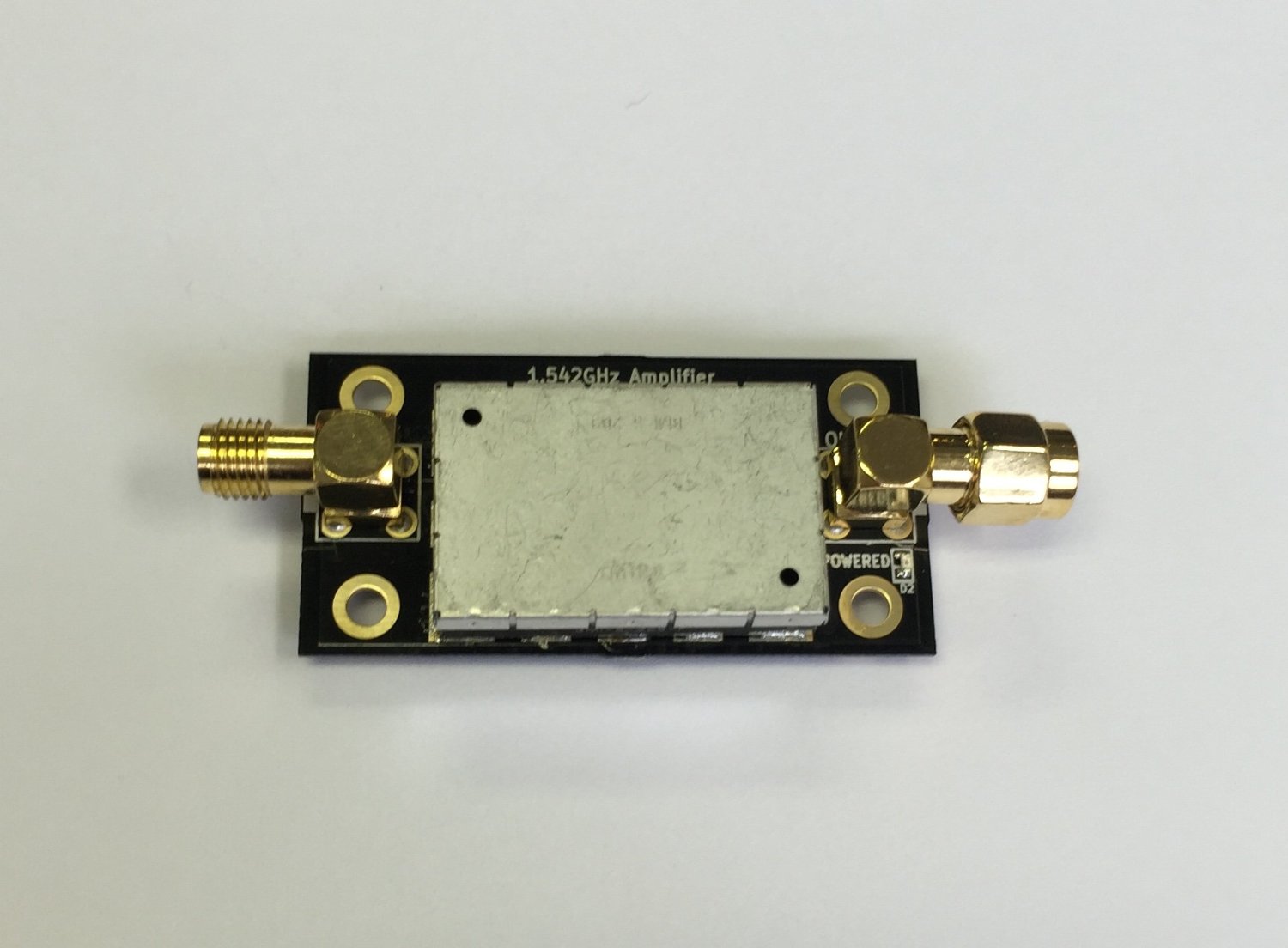
The LNA is manufactured by NooElec for Outernet. It amplifies with 34 dB gain from 1525 – 1559 MHz, with its center frequency at 1542 MHz. It must be powered via a 3 – 5.5V bias tee and draws 25 mA. The package consists of a 5 x 2.5 cm PCB board with one female and one male SMA connector. The components are protected by a shielding can. Inside the shielding can we see a MAX12000 LNA chip along with a TA1405A SAW filter. The MAX12000 (datasheet here) is an LNA designed for GPS applications and has a NF of 1 dB. It has a design where there are two amplifiers embedded within the chip, and it allows you to connect a SAW filter in between them. The TA1405A SAW filter appears to be produced by Golledge (datasheet here), and it has about a 3 dB insertion loss.
The Outernet L-Band LNAInside the Outernet LNA
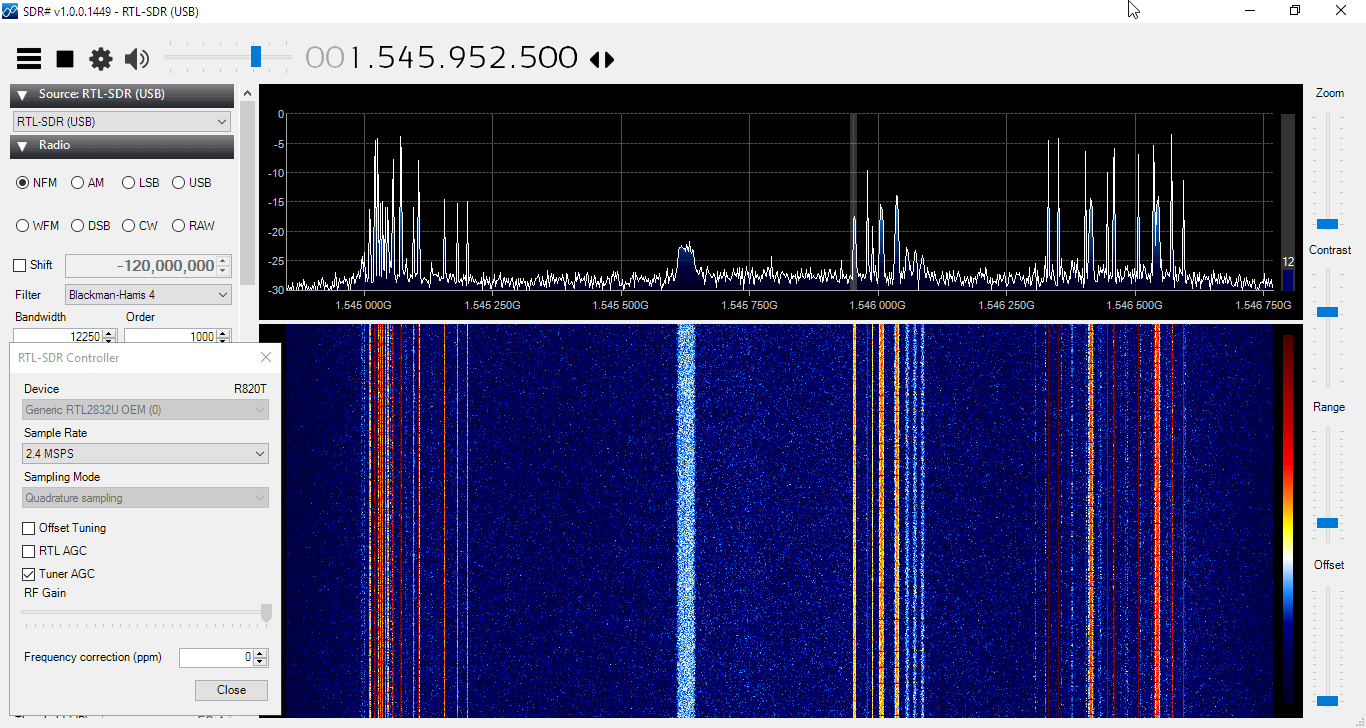
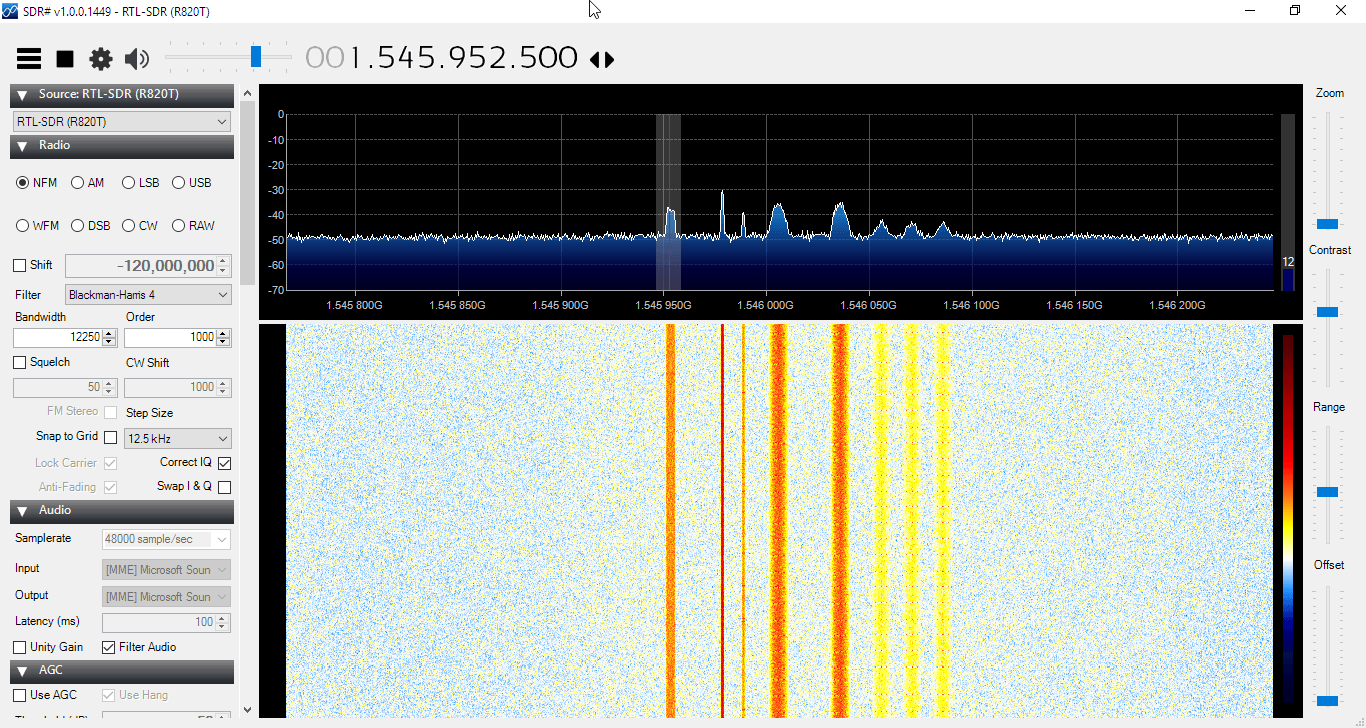
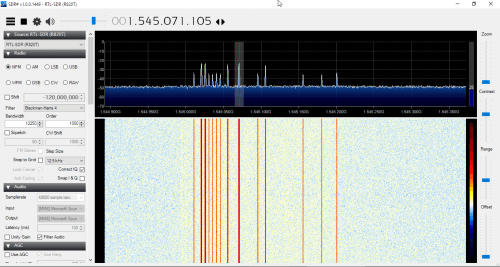
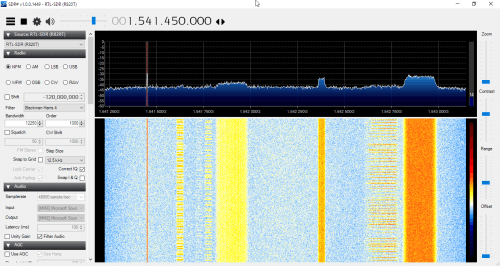
We tested the patch and LNA together with one of our V3 RTL-SDR Blog dongles, with the bias tee turned on. The LNA was connected directly to the dongle, with no coax in between. The patch antenna was angled to point towards the Inmarsat satellite. A 5 meter USB extension cord was then used to interface with a PC. The images below demonstrate the performance we were able to get.
The Outernet team writes that a SNR level of only 2 dB is needed for decoding to work on their signal. With the patch and LNA we were able to get at least 12 dB so this is more than good enough. Other signals such as AERO and STD-C EGC also came in very strongly. Even when not angled at the satellite and placed flat on a table it was able to receive the signal with about 5 dB’s of SNR.
In conclusion the patch and LNA worked very well at receiving the Outernet signal as well as AERO and STD-C EGC. We think these products are great value for money if you are interested in these L-Band signals, and they make it very easy to receive. The only minor problem with the patch antenna is that there is no stand for it, which makes it difficult to mount in a way that faces the satellite. However this issue can easily be fixed with some sellotape and your own mount.
In the future once the Outernet Rpi3 OS and decoder image is released we hope to show a demonstration and tutorial on receiving Outernet data.
Outernet is a new satellite service that aims to be a free “library in the sky”. They continuously broadcast services such as news, weather, videos and other files from satellites. Their aim is to provide up to date information to users in locations with little to no internet (rural, third world and sea), or in countries with censored internet. It may also be of interest to disaster preppers. Currently they have an active Ku (12 – 18 GHz, though due to be discontinued shortly) and C-band (4 – 8 GHz) satellite service, and now recently have their L-band (1.5 GHz) service active. The L-band signal is currently broadcasting at 1539.8725 MHz over the Americas, 1545.525 MHz over Europe/Africa/India and 1545.9525 MHz over Asia/Pacific.
To receive their L-Band service you will need an RTL-SDR capable of receiving 1.5 GHz, like a R820T/2 RTL-SDR (preferably at least passively cooled like our RTL-SDR Blog models as some R820T/2 units tend to fail at 1.5 GHz without cooling) or an E4000 dongle. You will also need an appropriate L-Band antenna and L-Band amplifier.
To help with these hardware requirements, Outernet have just released for sale an E4000 RTL-SDR with bias tee enabled ($39), an L-band satellite patch antenna ($24) and an L-Band LNA ($19). There is also a E4000 + LNA bundle ($49) available. The E4000 comes in a metal case, and has the bias tee always on. The LNA requires bias tee power and is also compatible with our RTL-SDR Blog units that have the bias tee. The patch antenna is tuned for 1525 – 1559 MHz and is the production version of the prototype antenna we used in our Inmarsat STD-C tutorial. Combined with an LNA we found that the patch antenna gives good performance and can also be used to receive other services such as Inmarsat STD-C and AERO. Currently shipping is only available within the USA, but they write that they will have international shipping available shortly.
EDIT: For international buyers the Outernet store is now started selling these products at http://store.outernet.is.
The L-Band Outernet signal decoders aren’t finalized yet, but we expect them to be released in a matter of days to weeks. They will have decoders available for the $9 CHIP computer and Raspberry Pi 3 platforms. They way it works is that you plug your RTL-SDR with L-band LNA and patch antenna connected into the CHIP or Raspberry Pi 3 which is running their customized image. The CHIP/Pi3 then broadcasts a WiFi access point which you can then connect to with any device, and access the files as they are downloaded. Once these decoders are released we’ll do a full tutorial on receiving the Outernet L-Band service with an RTL-SDR.
The Outernet L-Band Patch AntennaThe Outernet L-Band LNAThe Outernet E4000 RTL-SDR in metal case with bias tee.
Mario Filippi, a regular contributor to our blog and to the SDR community recently wrote in with an article showing how he built an S-Band (2 – 4 GHz) antenna for use with the HackRF. Of course the antenna can be used with any other SDR that can receive in this range, or with an RTL-SDR and downconverter. We post his article below.
S -Band Antenna for use with the HackRF One Author: Mario Filippi, N2HUN
Ever since purchasing a HackRF One, which receives from 1 MHz – 6.0 GHz I’ve always wanted to explore the world above 1 Gig, specifically the 2.0 – 2.7 GHz portion of the S-band. This portion of the band is populated with satellite communications, ISM, amateur radio, and wireless networks. A good, homebrew antenna for S-band was needed, so with parts mostly from the junk box, a 2250 MHz S-band right hand circularly polarized omni-directional antenna was built. Below is a step by step tutorial on building this antenna. Plans were from UHF-Satcom’s site.
Over the last few weeks Adam 9A4QV has been testing L-Band Inmarsat reception with his LNA4ALL low noise amplifiers. In a previous post he tested reception with two LNA4ALL and found that he got an improved SNR ratio over using just one LNA4ALL. In his latest video he tests Inmarsat reception with three LNA4ALL’s and two L-band filters. His results show that the SNR is improved over using two LNA4ALL’s, and can almost match the results obtained by a commercial L-band front end which he also demonstrated in a previous video.
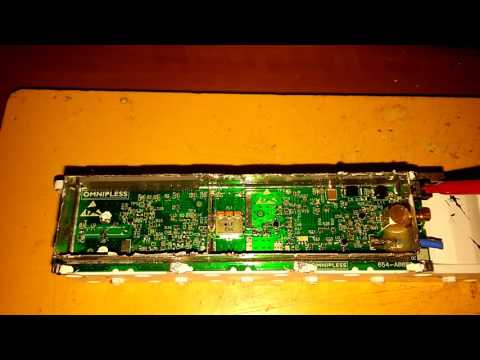
Over on his YouTube channel Adam 9A4QV has uploaded a video showing a commercial Inmarsat front end which he reverse engineered to use with his RTL-SDR. The front end is a duplexor, which allows both receive and transmit to occur on the same channel, but to use with the RTL-SDR Adam only uses the receive part. Inside the front end is a large cavity filter, ceramic filter, and about 60 dB of total L-band gain from MMIC amplifiers.
In the second video Adam hooks up the Inmarsat front end to his RTL-SDR and home made patch antenna. The results show that the signals are very strong when using the commercial front end. In a previous post we showed Adam’s results with two LNA4ALL amplifiers. The commercial front end seems to give much stronger signals, but the results with one or two LNA4ALL are adequate enough for decoding.
The GOMX-3 is a CubeSat which carries an experimental ADS-B repeater. Since it is a satellite the experimental receiver hopes to be able to receive ADS-B from orbit, then beam it back down to earth at a frequency of about 437 MHz using a GFSK at 19200 baud high data rate transmission protocol. From space the GOM3-X satellite can see many aircraft at one time and space based tracking allows for aircraft tracking over oceans.
Recently the creators of the satellite, GomSpace released a complete decoder for the ADS-B downlink, and now it has also been turned into a GNU Radio flowgraph by Daniel Estevez which can output decoded aircraft position data directly to a KML file which can then be opened in Google Earth or similar. This blog by DK3WN shows several logged decodes of the satellite and shows what the signal looks like in SDR#. Some of his posts also curiously shows what looks to be a Windows decoder, or logger, though we were unable to find a download for it.
Decoding the downlink should give you real time ADS-B data in your area, but the full log of stored stored data is apparently only downloaded when the satellite passes over the GomSpace groundstations which are mostly located in the EU.