A Browsable Archive of Historical Weather Satellite Data

Thank you to Meti for writing in and sharing his browsable archive of historical weather satellite data (further information here). The archive is designed to store weather satellite data, whether in baseband IQ format, frames, or images, for scientific, educational, or preservation purposes.

With NOAA POES now fully shut down, the archive could be useful for individuals who didn't have the opportunity to decode a NOAA satellite for real, or perhaps for those who will want to relive their old hobby one day. Meti writes:

I've been working on setting a weather satellite data archive up; a lot of these incredible satellites are lost to time because people didn't save the data or had it deteriorate over the years, as has been proven with the ongoing POES decommissioning!

My goal is to create a browsable archive of historical satellite data that is downloadable and re-decodable by others who didn't and/or don't have the opportunity to catch the satellites in question themselves for scientific, educational, or just preservative purposes.

I've been working hard asking around various people and groups for the possibility of them keeping some data from as many different satellites as possible, but still have large gaps in several satellites. I was wondering if it were possible to try to publish this archival effort on the blog to try to get more outreach than word of mouth?

The archive currently stands at 430 gigabytes of data with about 100 more awaiting processing due to missing pipelines, already spanning more than 4 decades!

The archive currently stores a variety of different satellites and their data products, and some in the archive even have the raw IQ data, which occupies a significant amount of hard drive space.

However, Meti notes that many satellites are still missing from the archive, and he would like to reach out to the community for submissions. If you have any data from the following, please reach out to Meti.

GEO:
- Meteosat wefax
- Meteosat xRIT (Only have very limited data)
- GOES-N LRIT/MDL/GVAR/Sounder SD (Before it became EWS-G! So over the US)
- Elektro-L1 xRIT/RDAS

LEO:
- NOAA APT older than NOAA 12
- NOAA HRPT from any sat besides 15/18/19
- Seastar (OrbView-2) HRPT
- MetOp LRPT !!! (Metop-A transmitted for a few days) - Meteor M1 HRPT
- Meteor 3M APT/HRPT
- Meteor 1/Priroda/2 APT (other than Meteor 2-21. NOT M2!)
- FengYun 2A/B/C/D/E/F (S-)VISSR (Or LRIT)
- Fengyun 1 CHRPT

Catch-all
- Any L-band prior to ~2000
- Any VHF prior to ~1990
- Any anomalies - instrument failures leading to strange receptions (i.e. NOAA 17 failing APT broadcasts). THIS IS EXCLUDING NOAA-15 post 2020 and any user-side issues (weak reception, sample drops etc.)

You can find more information about the project and how to contribute on this linked page.

Satellite Archive. Currently over 430 GB Archived.

Amateur Weather Satellite Reception Beyond NOAA POES

With the recent decommissioning of NOAA POES (NOAA-15, NOAA-18, NOAA-19), many amateur weather satellite hobbyists might be asking themselves if the hobby is now dead.

While NOAA POES satellites were the easiest stepping stones into amateur weather satellite reception, the hobby has seen massive strides in enabling easier reception of other satellites over the past few years. Furthermore, in the near future, various new satellites are scheduled for launch, which should be receivable by amateurs.

Over on his blog, Jacopo has created a detailed post showing what satellites amateur hobbyists can still receive on the L-band and S-band. Some receivable satellites include Meteor-M,  Metop, Arctic Weather Satellite (AWS), STERNA, Elektro-L, GOES, EWS-G, Jason-3, UVSQSat-NG, DMSP, HINODE, ISS DATV and Proba 2.

While almost all of these satellites (apart from Meteor-M's LRPT 137 MHz signal) require a satellite dish and L-band, S-band, or X-band feed, recent products like our Discovery Dish can make setting up an L-band or S-band system significantly easier.

The Meteor-M series of satellites

Moving SatDump Towards V2.0.0

Over on the SatDump blog developers Aang23 and Lego11 have recently uploaded a post discussing their plans to move SatDump towards Version 2.0.0. SatDump is currently the most comprehensive and popular software for SDR users wanting to decode images and data from satellites. 

The developers note that their update frequency has slowed down recently due to their focus on V2.0.0. The new version introduces significant under-the-hood changes that will make SatDump easier to manage and develop in the future, and also focuses on improved documentation.  

Users of SatDump will also see an improved GUI, new functionality such as crop, an SSTV decoder, support and improvements for a wide range of satellites, any many other improvements discussed in the post. 

We note that V2.0.0 has not yet been released. The post notes that at some point in the near future they will begin merging the new V2.0.0 branch into master, followed by frequency alpha releases, before finally releasing an official V2.0.0. 

SatDump V2.0.0 ALPHA with new GUI

RadioSport SDR: Portable Receiver Software for RTL-SDR

Thank you to Richard (9G5AR) for writing in and sharing with us a program he's developed called "RadioSport SDR". RadioSport SDR is a portable, no-install-required SDR program compatible with RTL-SDR devices. Richard writes that it is small and fast enough to be run off a USB stick.

The software supports demodulation of wideband FM, narrowband FM, AM, USB, and LSB modes. It also has a noise reduction feature.

The software can be downloaded from its GitHub release page here.

RadioSport SDR. Portable SDR Software for RTL-SDRs.

Saveitforparts: Receiving NOAA-15 One Last Time

Over on YouTube Gabe from the saveitforparts channel has uploaded a new video discussing the decommissioning of NOAA-15 and NOAA-19. We also previously posted about this topic a few days ago, if you are interested.

NOAA-15 was scheduled to shut down on August 12, 2025, but due to anomalies with NOAA-19, the decommissioning date of NOAA-15 has been extended by a few days until the week of August 18th. NOAA-19 has recently been experiencing transmitter failures, and it may be impossible to receive signals from it at the moment, despite its expected decommissioning date of August 19, 2025.

In the video, Gabe also rushes to try and receive signals from all transmitters on NOAA-15 one last time, setting up VHF, L-Band, and S-Band receivers. He experiences some issues with weak signals, interference, and recording failures, but ultimately succeeds in capturing all three signals during one of the final passes of NOAA-15.

US Government Shutting Down More Weather Satellites

Tech Minds: Testing out Discovery Dish for Inmarsat and Hydrogen Line Radio Astronomy

Over on YouTube Matt from the Tech Minds YouTube channel has recently uploaded a new video where he tests out our Discovery Dish antenna. Discovery Dish is designed to be a low-cost, portable solution for receiving L-band and S-band weather satellites, Inmarsat satellites, conducting amateur hydrogen line radio astronomy, and more.

In the video, Matt unboxes the Discovery Dish and provides an overview of the build process before demonstrating its use in decoding AERO and STD-C messages on Inmarsat. He then shows the dish and Inmarsat feed being used to receive Iridium satellites, and how they can be decoded using iridium-extractor with a HackRF or Airspy R2.

Finally, Matt swaps out the Inmarsat feed for the Hydrogen Line feed. Using SDR#, the IF AVG plugin, and Stellarium, he was able to obtain a clear hydrogen line peak.

This Discovery Dish Is The ONLY Satellite Dish You Will Need!

SETI ARISE: Comprehensive Educational Program in Radio Astronomy

A few months ago, the SETI (Search for Extraterrestrial Intelligence) Institute published their ARISE project at https://agiseti.com. This is a comprehensive curriculum for students all about radio astronomy topics. The topics include labs and lectures on searching for technosignatures, data science in radio astronomy, and radio astronomy fundamentals, as well as an introduction to electromagnetic waves.

While the program is meant for in-person instruction at community colleges, if you are interested in radio astronomy (perhaps with our Discovery Dish and H-line feed), the lecture notes and slides are still a great introduction to the broader topic for anyone.

Flipper Zero DarkWeb Firmware Bypasses Rolling Code Security

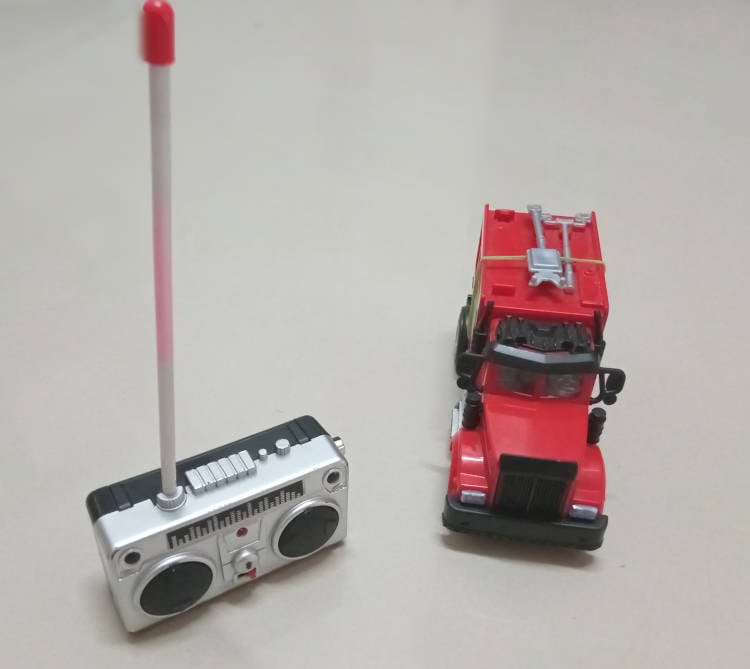
Over on YouTube Talking Sasquach has recently tested custom firmware for the Flipper Zero that can entirely break the rolling code security system used on most modern vehicles. Rolling code security works by using a synchronized algorithm between a transmitter and receiver to generate a new, unique code for each transmission, preventing replay attacks and unauthorized access.

In the past we've discussed an attack against rolling code security systems called RollJam, which works by jamming the original keyfob signal so the vehicle cannot receive it, and at the same time recording it for later use. However, this attack is difficult to perform in reality.

For this new attack to work, all that is needed is a single button-press capture from the keyfob, without any jamming. Just from that single capture, it is able to emulate all the keyfob's functions, including lock, unlock, and unlock trunk. A consequence of this is that the original keyfob gets out of sync, and will no longer function.

According to the Talking Sasquatch, the attack works by simply reverse engineering the rolling code sequence, either through sequence leaks or prior brute forcing of the sequence from a large list of known codes. However, another article mentions that the firmware is based on the "RollBack" attack, which works by playing back captured rolling codes in a specific order to initiate a 'rollback' of the synchronization system.

Regardless of the method, videos demonstrating the attack show that only a single capture is needed to emulate a keyfob completely.

Affected vehicles include Chrysler, Dodge, Fiat, Ford, Hyundai, Jeep, Kia, Mitsubishi and Subaru. As of yet, there appears to be no easy fix for this, other than mass vehicle recalls.