GNURadioCon17 CyberSpectrum Special Meetup Now Live

Live right now is CyberSpectrum #22, currently being held at the GNU Radio Convention in San Diego. Cyberspectrum is an often monthly meetup where SDR enthusiasts come from around the world to share their work. The video will be available offline once the stream is over too. But if watched live you can use the #cyberspectrum hashtag on Twitter, or join the #cyberspectrum on Freenode IRC to discuss the presentations live.
Cyberspectrum Special: GNU Radio (San Diego)

Speakers include:

• The Phil Karn (@ka9q

Low-cost general coverage/HAM receiver for Raspberry Pi & FUNcube dongle, or other cheap SDR.

• Clayton Smith (@argilo

By day, Clayton is a security researcher at ecommerce company Shopify, and by night a GNU Radio enthusiast and amateur radio operator (VE3IRR). He’s worked on projects such as gr-dsd (digital voice), gr-qam (digital television), gr-elster (utility metering), gr-rds (radio data) and sdr-examples. Tonight he’ll tell you about his recent work on HD Radio. 

• Josh Blum (@pothosware

Interesting features in Pothos framework, how we pull in GNU Radio project, and proposed additions to the GNU Radio project. 

• Alexander Chemeris (@chemeris

The first public demo of XTRX – a tiny high-performance miniPCIe SDR for the real world. Up to 120MSPS for simultaneous 2×2 MIMO receive/transmit. 
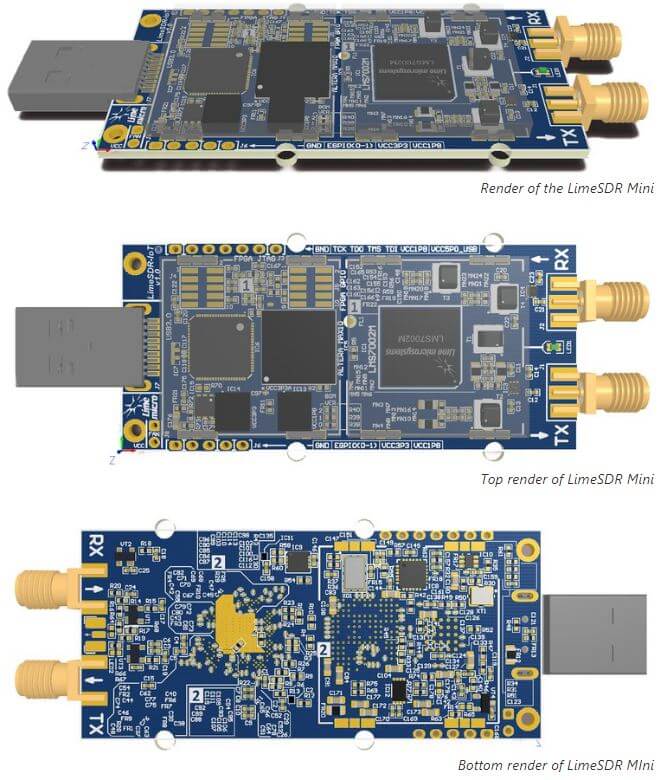
LimeSDR Mini Crowdfunding: $99 Early Bird RX/TX, 12-Bit, 10 MHz – 3.5 GHz SDR

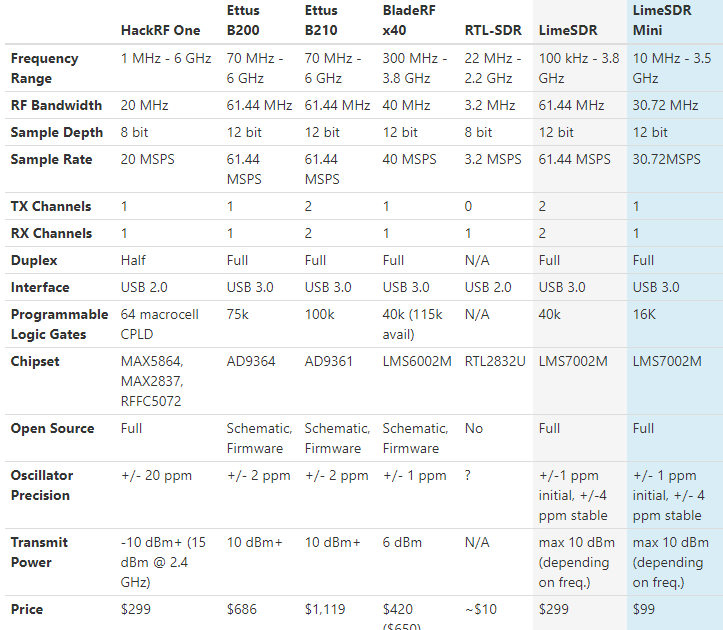
Back in June 2016 the first LimeSDR crowdfunding campaign completed raising over a million dollars in pre-orders at a cost of $249 – $299 per LimeSDR unit. THe LimeSDR is a RX and TX capable SDR with a frequency range of 100 kHz – 3.8 GHz, bandwidth of up to 61.44 MHz, 12-bit ADC and 2×2 RX/TX channels.

Recently LimeSDR have begun crowd funding for their latest product called the ‘LimeSDR Mini’. This is a smaller and cheaper unit with slightly reduced specifications. The main changes are the slightly restricted frequency range of 10 MHz – 3.5 GHz, and half the maximum bandwidth at 30.72 MHz. The mini also only has 1×1 TX/RX channels.

LimeSDR Comparison

Currently the LimeSDR Mini is being sold on the crowdfunding site CrowdSupply for $139, but the first 500 early bird backer can get the lower price of $99. Accessories such as an acrylic enclosure and set of whip antennas are also available for $40. Crowdfunding is due to end on October 30 and the units are expected to ship on Dec 31, 2017. Note that in the last few minutes that it took to write this article the number of pledges went up by 5 (started at 41), so we’d suggest being quick to claim the early bird if you are interested.

The LimeSDR Mini looks like it could compete favorably with the PlutoSDR, which is another recently released $99 SDR with TX capabilities. Both the PlutoSDR and LimeSDR Mini are 12-bit devices, but the LimeSDR Mini has the larger 30 MHz bandwidth available, and can tune lower. In contrast the PlutoSDR only has a stable bandwidth of about 4 MHz, although it can be pushed higher with dropped samples. The PlutoSDR also has a tuning range (with hack) of 70 MHz – 6 GHz, vs the 10 MHz – 3.5 GHz of the LimeSDR Mini. Another plus of the LimeSDR products is that they are fully open source.

These are exciting times for SDR enthusiasts with cheap TX capable radios now starting to proliferate on the market!

LimeSDR Mini Renderings

Decoding Amateur Radio Digital Voice with an RTL-SDR and the QRadioLink Android App

Thank you to Adrian for submitting his video about using the Android App called QRadioLink and an RTL-SDR to decode digital amateur radio voice transmissions. Adrian writes that in the video the RTL-SDR connects to the Android phone with a USB OTG cable and uses a sample rate of 1 MSPS. He also writes the following about QRadioLink:

QRadioLink is a building platform which allows experimenting with VHF-UHF SDR transceivers using different modulation schemes for digital data transmissions. So far digital voice and text transmission is supported, using either a narrow band modem and Codec2 or a high bandwidth modem and Opus. Supported hardware includes the RTL-SDR, Ettus USRP, HackRF, BladeRF and in general all devices supported by libgnuradio-osmosdr.

QRadioLink running on Android (Debian chroot) with RTL-SDR

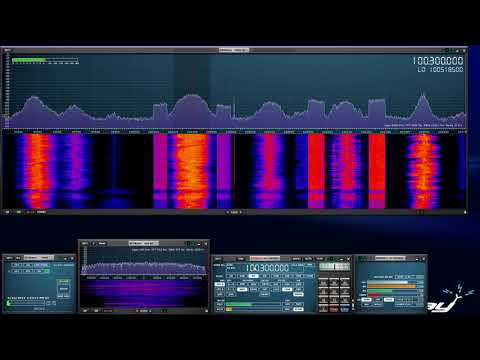
Using the SDRuno EXTIO Edition with an RTL-SDR and other SDRs

Over on YouTube Mike from the SDRplay team has created a tutorial video that shows how to use the SDRuno EXTIO edition. SDRuno is the official software of the SDRplay line of products and can be freely downloaded from the SDRplay website. The EXTIO edition allows other non-SDRplay SDR units to freely be used with SDRuno. The only restrictions are that the maximum bandwidth is artificially restricted to 2.5 MHz and some DSP filters are missing.

In the video Mike shows how to set up the SDRuno workspace to work with an RTL-SDR dongle and demos reception of some signals. Note that the EXTIO dll file for the RTL-SDR mentioned in the video is the same one required for HDSDR, and can be downloaded from the dll table on the HDSDR website.

If you’re interested in more, Mike has a full SDRuno tutorial series available on the SDRplay YouTube channel which mostly focuses on usage with the SDRplay units, but could be applicable to the EXTIO version as well.

SDRuno EXT/IO Edition for a range of SDRs and dongles

Opening a Car and Garage Door With PlutoSDR

Over on his YouTube channel Tysonpower (aka Manuel) has uploaded a video showing how he was able to use his PlutoSDR to perform some simple replay attacks that open his garage and car doors. To do this he records the signal from the wireless keyfobs with the PlutoSDR, and then uses a GNU Radio program to replay that signal again at a later time. From the tests he concludes that the PlutoSDR can be a great cheaper alternative to a HackRF, with the PlutoSDR coming in at $100 vs $300 for the HackRF.

To get around the rolling code security on his car he records the keyfob with the PlutoSDR while it’s out of the wireless range of his car, so that the rolling code will not be invalidated. Then later closer to the car the PlutoSDR is used to replay the car keyfob signal which opens the door.

Note that Tysonpower’s video is narrated in German, but English subtitles are available through the YouTube interface.

[EN subs] Hacken eines Autos und Garagentors - AdalmPluto Replay Attacke

ARRL QST Review of the SDRplay RSP2Pro with Independent Lab Measurements

In the latest version of the ARRL QST magazine editor Steve Ford (WB8IMY) has released a comprehensive review and set of measurements for the SDRplay RSP2 / RSP2Pro. The review is also freely available online in pdf format from the SDRplay website (pdf warning).

The review initially focuses on the differences between the RSP1 and the RSP2 units, explaining how most differences occur in the front end circuitry. WB8IMY then goes on to review SDRuno, the official software package of SDRplay units. The review is fairly brief, but the most interesting part is the lab test results which are displayed throughout the review.

WB8IMY performed several benchmark lab measurements such as frequency coverage, MDS (minimum discernible signal) levels (note MDS measured at 400 Hz instead of the standard 500 Hz for some reason), noise figure, AM and FM sensitivity, blocking gain compression dynamic range, two tone IMD tests, second order intercept points, FM adjacent channel selectivity and more. The results can be useful for comparing against other SDRs.

ARRL RSP2 Lab Measurement Results
ARRL RSP2 Lab Measurement Results (see the PDF for the full set of results)

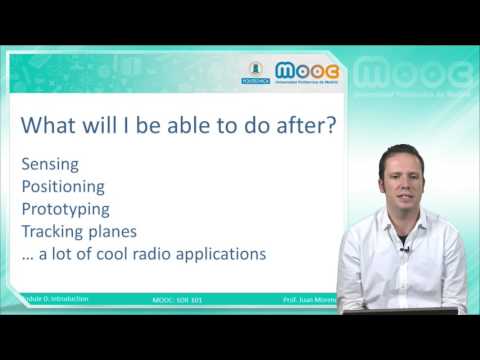
Online 101 Course on RTL-SDR, DSP and MATLAB Starting Soon

Thanks to Juan Moreno for letting us know that his online MOOC (massive open online course) on RTL-SDR is starting on September 25. The course is presented by Juan and three of his colleagues from the Technical University of Madrid. It will focus on SDR 101 knowledge such as digital signal processing with the aide of an RTL-SDR to help with practical learning. In their video they also mention that MATLAB and Simulink will be required and used for most of the course, so it will probably be a fairly technical beginners course at a University level of learning. Their description of the course reads:

SDR is a reality around us. It is present in a lot of systems everywhere and is a versatile technology which can be used for many things (not only academics and industrial). The purpose of this course is to introduce students into general-purpose SDR tools. The SDR hardware platform chosen for this course is the RTL-SDR. It is worldwide available, it’s cheap ($15) and there is a lot of help in the Internet. But, as far as we know, there is no other MOOC focused on an introduction to SDR as this MOOC. Here we will not only learn about SDR but also a lot of related areas like antennas, digital signal processing, radio frequency and communication electronics.

The website and registration forms seem to all be in Spanish or Portuguese, but the course will be presented in entirely in English. Google Translate can easily be used to help with the signup process. The course is completely free and students that complete 75% of assignments will receive a free participation certificate. A more official accomplishment certificate can be obtained for a 50 Euros.

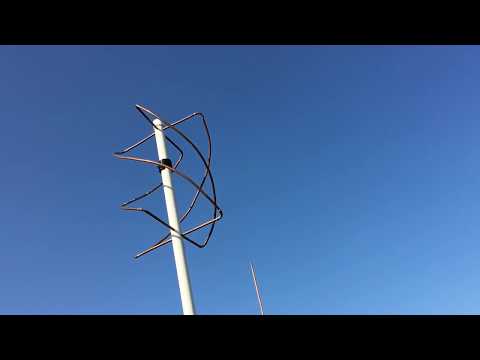
A Solar Powered Raspberry Pi + RTL-SDR NOAA Weather Satellite Receiver

Over on YouTube user Fuzz has uploaded a video showing his solar powered NOAA weather satellite receiver.

The system is based on a Raspberry Pi connected to an RTL-SDR.com dongle. The front-end input of the RTL-SDR dongle consists of an LNA and FM reject filter, and this is all connected up to a QFH antenna in his front yard. The electronics are completely solar powered, with the solar system consisting of solar panel, solar controller and four 12v batteries used for energy storage. A 12V to 5V step down converter is used to power the Raspberry Pi, with the 12V LNA being powered directly by the batteries. The system is able to be accessed remotely via the Raspberry Pi’s WiFi connection.

Over on his Facebook page Fuzz has uploaded some additional photos, and some of the images he’s receiving.

Fuzz's solar powered NOAA weather satellite receiver.
Fuzz’s solar powered NOAA weather satellite receiver.
UPDATED Raspberry Pi NOAA satellite setup running off of solar

Raspberry Pi NOAA setup with QFH antenna with LNA. Powered by solar panels