Tagged: kiwisdr

Echo – A Native iOS Client for KiwiSDR & OpenWebRX

Thank you to Mark Garrison Jr. for writing in and sharing with us a new iOS app he's developing called "Echo". Echo is an app designed to provide a streamlined mobile companion for the KiwiSDR and OpenWebRX ecosystems. Note that the app is currently not yet released, but Mark is planning a TestFlight beta in February. Follow his Twitter/X @SDRecho for updates, and sign up to the beta tester waiting list if you are interested.

OpenWebRX is a piece of server software that allows you to access and share SDRs over a network connection, such as the internet, via a web browser interface. OpenWebRX is a core component of the KiwiSDR, an SDR designed to operate as a shared receiver over a network connection. Around the world, many people have set up public KiwiSDR, RTL-SDR, and other SDR systems that can be accessed via OpenWebRX. Echo is designed to make searching for and viewing public OpenWebRX receivers easy on iOS devices.

Mark writes:

[Echo] is a native iOS app built entirely in SwiftUI, designed to provide a streamlined mobile companion to the KiwiSDR and OpenWebRX ecosystems.

The goal is to offer a modern interface optimized for iPhone, making it easier to explore the spectrum on the go.

Key Features:

Global Connectivity: Access any public KiwiSDR or OpenWebRX server via a live global map with 500+ active stations.

Smart Scans: Station scanner with presets for Shortwave, Ham, and Military bands.

Audio Intelligence: Integrated recording with speech-to-text transcription for logging signals.

Native Performance: 100% SwiftUI for smooth waterfall rendering and low battery impact.

The app is currently in active development. I am sharing progress updates and will be announcing the upcoming TestFlight beta over on Twitter at @SDRecho. I’m planning to launch a beta in February.
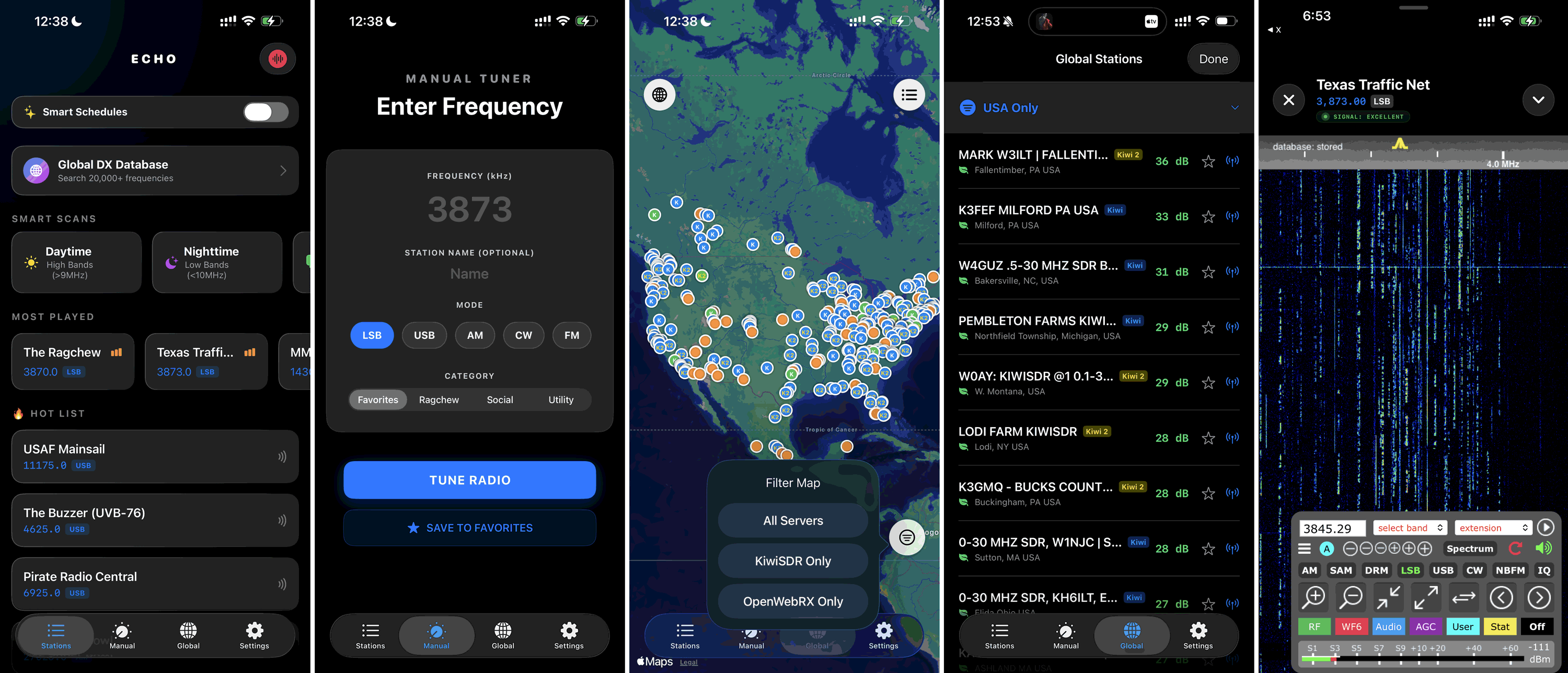
Echo iOS App for KiwiSDR and OpenWebRX
Echo for iOS: The Native SDR Experience

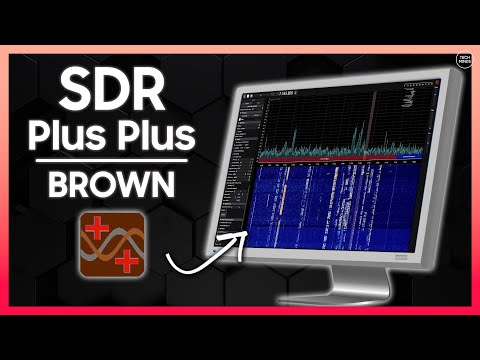
TechMinds: Testing the SDR++ Brown Fork with Built-In DSD and Remote KiwiSDR Support

Over on YouTube, Matt from Tech Minds has uploaded a video in which he demonstrates and tests an unofficial fork of the popular SDR++ software called "SDR++ Brown."

SDR++ Brown has some unique features such as the ability to connect to remote KiwiSDR WebSDRs directly within the UI, built-in FT8 and FT4 decoders with PSK reporter, a built-in DSD decoder allowing for DMR, P25 and NXDN to be decoded directly in the software, Hermes Lite 2 support, and various Android UI improvements for small screens.

Matt also notes a few bugs with the software, such as PSK Reporter and Multi-WebSDR waterfall display features being broken.

Over on X, Alexandre Rouma, creator of the original SDR++, has expressed concern about this fork. He notes that this is an unofficial fork that is not up to his standards and that support requests for SDR++ Brown should not be made to him. Instead, support requests should be made directly to the fork owner, Sanny Sanoff.

SDR Plus Plus - Brown Edition Adds New Features Including DSD!

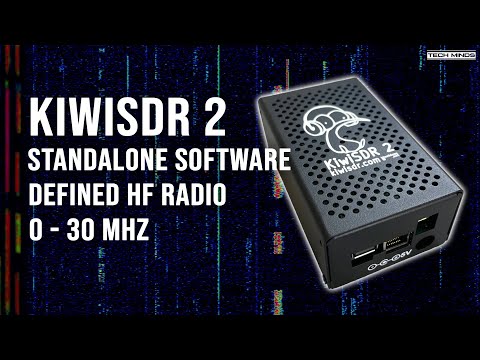
Tech Minds: Review of the KiwiSDR 2

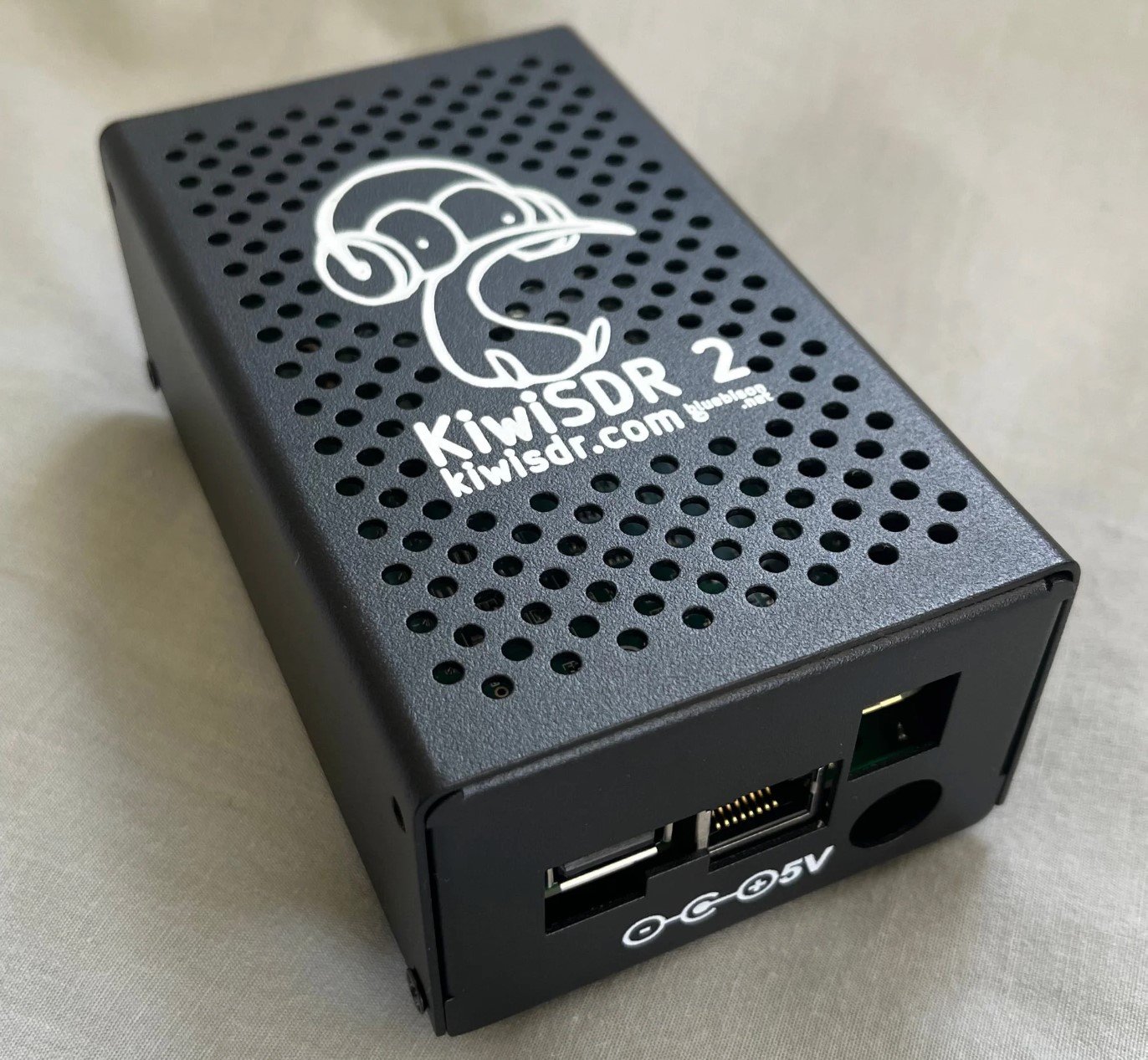
Earlier this year the KiwiSDR 2 became available for purchase and began shipping out to customers. The KiwiSDR 2 is an upgraded version of the original KiwiSDR with the main upgrades being an enhanced RF front end and the addition of a digital attenuator.

Over on the Tech Minds YouTube channel, Matt received his KiwiSDR 2 and uploaded a review and demonstration of the product. In the video, Matt shows the external ports of the KiwiSDR and discusses the differences between the KiwiSDR 2 and the original version. Matt goes on to show how to set up the KiwiSDR 2 and shows it receiving through it's web-based receiving software.

KiwiSDR is a 14-bit wideband RX-only HF software-defined radio created by John Seamons (ZL/KF6VO). The KiwiSDR has up to 32 MHz of bandwidth, so it can receive the entire 10 kHz - 30 MHz VLF/LF/MW/HF spectrum all at once. Other than the specifications, the main interesting feature about the KiwiSDR is that it is designed to be operated entirely as an online web-based SDR which is accessed over a network connection. Owners can optionally share their KiwiSDRs online with anyone who wants to access it, which also allows for interesting distributed applications, such as TDoA direction finding, which allows users to pinpoint the location of unknown HF transmissions such as numbers stations.

KiwiSDR 2 - A Standalone Software Defined HF Radio Receiver

KiwiSDR 2 Now Available For Purchase

Back in August 2023 we posted about the pre-announcement of the KiwiSDR 2, an upgraded version of the original KiwiSDR. Most of the upgrades are minor or due to some chips becoming EOL. The main upgrades are an enhanced RF front end and the addition of a digital attenuator. One change is also the manufacturing country. Instead of being manufactured in China, the KiwiSDR 2 is now manufactured in New Zealand.

The new KiwiSDR 2 can be purchased from kiwisdr.nz. Pricing is $648 NZD ($395 USD) for the full KiwiSDR 2 cape + Beaglebone and enclosure set. The cape by itself is also available for $484 NZD ($295 USD). Currently the second production run is selling, and a third production run is in progress. 

Previously the original KiwiSDR sold for $299 USD. Considering inflation, component changes and additions, and the change to a more expensive country to manufacture in, the price increase seems reasonable. 

KiwiSDR is a 14-bit wideband RX only HF software defined radio created by John Seamons (ZL/KF6VO). The KiwiSDR has up to 32 MHz of bandwidth, so it can receive the entire 10 kHz - 30 MHz VLF/LF/MW/HF spectrum all at once. Other than the specifications, the main interesting feature about the KiwiSDR is that it is designed to be operated entirely as an online web based SDR which is accessed over a network connection. Owners can optionally share their KiwiSDRs online with anyone who wants to access it, which also allows for interesting distributed applications, such as TDoA direction finding, which allows users to pinpoint the location of unknown HF transmissions such as numbers stations.

KiwiSDR 2 with BeagleBone and Enclosure Set

KiwiSDR 2 Pre-Announcement

KiwiSDR is a 14-bit wideband RX only HF software defined radio created by John Seamons (ZL/KF6VO). The KiwiSDR has up to 32 MHz of bandwidth, so it can receive the entire 10 kHz - 30 MHz VLF/LF/MW/HF spectrum all at once. Other than the specifications, the main interesting feature about the KiwiSDR is that it is designed to be operated entirely as an online web based SDR which is accessed over a network connection. Owners can optionally share their KiwiSDRs online with anyone who wants to access it, which also allows for interesting distributed applications, such as TDoA direction finding, which allows users to pinpoint the location of unknown HF transmissions such as numbers stations.

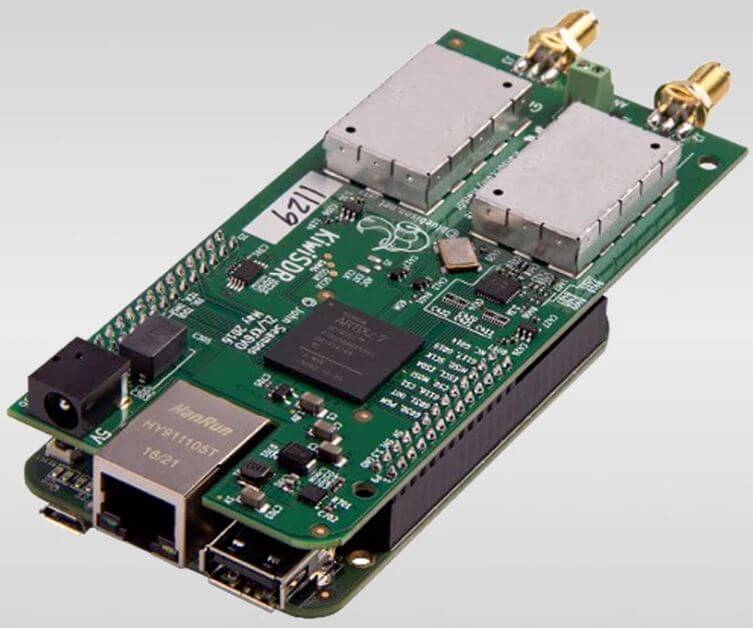
KiwiSDR 2 has recently been "pre-announced" by creator John Seamons on the KiwiSDR forums. The changes to the design are not huge, but they bring a few iterative improvements. He writes:

KiwiSDR 2 Goals:

Minimal changes. Fastest time-to-market with lowest possible risk. BUT since the PCB is going to be re-spun fix some of the known limitations that don't add too much risk:

  • New RF front-end:
  • Balanced input via balun transformer
  • Digital attenuator (per the advisory group: pSemi PE4312, 0 - 31.5 dB, 0.5 dB steps)
  • Gas discharge tube (GDT) across input in addition to TVS diodes
  • Static drain resistors (100K) from input connections to ground
  • External ADC clock brought out on third SMA connector
  • Self test loopback mode using a short cable between this SMA and antenna input
  • New GPS chip to replace current one which is now EOL
  • Reverse polarity protection (via P-FET) on 5V DC input
  • TVS diode across 5V input
KiwiSDR 2 PCB Design

The KiwiSDR Backdoor Situation

Since it's announcement in early 2016 we've posted many times about the KiwiSDR, a 14-bit wideband RX only HF software defined radio created by John Seamons (ZL/KF6VO). The KiwiSDR has up to 32 MHz of bandwidth, so it can receive the entire 10 kHz - 30 MHz VLF/LF/MW/HF spectrum all at once.

Compared to most other SDRs the KiwiSDR is a little different as it is designed to be used as a public web based SDR, meaning that KiwiSDR owners can optionally share their KiwiSDR online with anyone who wants to connect to it. The public functionality allows for some interesting distributed applications, such as TDoA direction finding, which allows users to pinpoint the location of unknown HF transmissions such as numbers stations.

In order to implement this online capability, the KiwiSDR runs custom open source software on a Beaglebone single board computer which connects to your home network. Recently there has been vocal concern about a security flaw in the software which could allow hackers to access the KiwiSDR. The flaw stems from the fact that the KiwiSDR has 'backdoor' remote admin access that allows the KiwiSDR creator to log in to the device and troubleshoot or make configuration changes if required. This backdoor has been public knowledge in the KiwiSDR forums since 2017, although not advertised and explicit consent to have it active and used was not required.

The intent of the backdoor is of course not malicious, instead rather intended as an easy way to help the creator help customers with configuration problems. However, as KiwiSDR owner Mark Jessop notes, the KiwiSDR operates in HTTP only, sending the admin master password in the clear. And as KiwiSDR owner and security researcher @xssfox demonstrates, the admin page gives full root console access to the Beaglebone. These flaws could allow a malicious party to take over the Beaglebone, install any software and perhaps work their way onto other networked devices. Another tweet from xssfox implies that the password hashes are crackable, allowing the main admin password to be easily revealed.

Creator John Seamons has already released a patch to disable the admin access, and as of the time of this article 540 out of 600 public KiwiSDRs have already been auto-updated. Owners of KiwiSDR clones should seek out updates from the cloner.

It is clear that the KiwiSDR is a passion project from John who has dedicated much of his time and energy to consistently improving the technical RF engineering side of the device and software. However we live in an age where malicious hacking of devices is becoming more common, so anyone releasing products and software that network with the internet should be reminded that they have a responsibility to also dedicate time to ensuring security.

John has reached out to us in advance and noted that he currently cannot yet comment publicly on this topic due to legal advice.

The KiwiSDR
The KiwiSDR

SuperSDR: A KiwiSDR + CAT Client for Ham Radio

Thank you to Marco (IS0KYB) for informing us about the release of his new software called "SuperSDR". SuperSDR allows you to easily synchronize frequency tuning with a remote KiwiSDR via a CAT connection to a standard ham radio. The KiwiSDR is a 14-bit wideband RX only HF SDR which has up to 32 MHz of bandwidth, so it can receive the entire 10 kHz - 30 MHz spectrum all at once.

It allows to use a remote KiwiSDR along with a local (or even remote) standard radio in sync. It works on Linux, Windows and MacOSX.

The main purpose is to have an interactive panadapter that is not forcibly tied to our local antenna, but allows one to try any combination of CAT radio / SDR. I'd like to implement a remote KiwiSDR selection interface to choose the best SDR for the purpose.

I'm still developing it, and it is not complete feature-wise, but it is ready to be used.

Somebody asked me if it would be possible to integrate a RTL-SDR into it and I plan to do that using the old PEPYSCOPE project code [covered in a previous post].

The video below shows a slightly older version of SuperSDR in action.

Comparing the KiwiSDR Against the RaspberrySDR Clone

The KiwiSDR is a 14-bit wideband RX only HF SDR which has up to 32 MHz of bandwidth, so it can receive the entire 10 kHz - 30 MHz spectrum all at once. Notably, the KiwiSDR does not connect to a PC directly, rather it is a cape (add on board) for the Beaglebone single board computing platform which similar to a Raspberry Pi. With most of the DSP processing done on the KiwiSDR's onboard FPGA, the Beaglebone serves a custom OpenWebRX browser interface which can be accessed over a network connection from anywhere in the world. If you're interested our initial KiwiSDR review from 2017 is here.

Over the years the KiwiSDR has brought some very interesting software developments out such as several new demodulators. However, our favourite is the TDoA feature, which allows users to leverage multiple public KiwiSDRs to locate the source of an HF transmission with remarkable accuracy.

KiwiSDR Clones

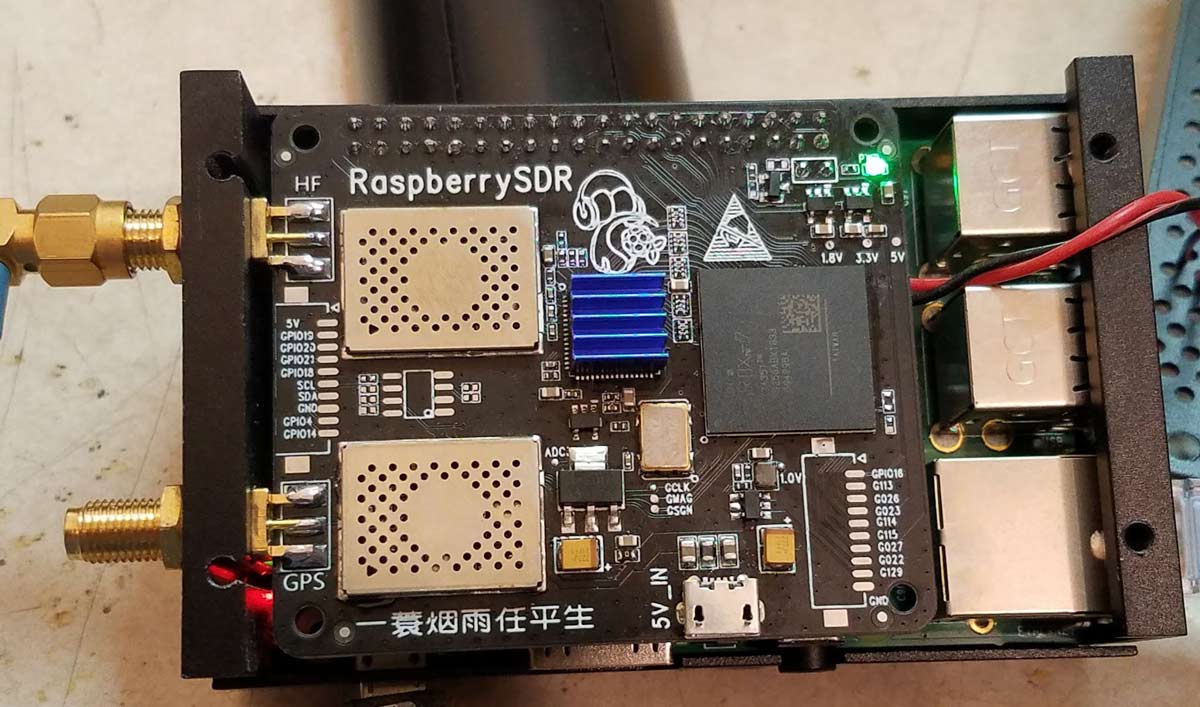
This year we've seen a number of cloned SDRs come out on the market, with almost all using LTC2208 ADC chips that have most likely been recycled from discarded equipment. One of those clones is the RaspberrySDR, which is a clone of the KiwiSDR.

The RaspberrySDR is not a direct clone however, as it brings some improvements. The biggest change is that the LTC2208 chip has a 16-bit ADC, and can provide up to 62 MHz of real time bandwidth. Also instead of a Beaglebone single board computer, a Raspberry Pi 3B+ is used instead. At the time of this post the RaspberrySDR retails for roughly $70 less than the KiwiSDR.

KA7OEI's image of the RaspberrySDR

Comparison

Over on his blog KA7OEI has written up a comprehensive comparison between the KiwiSDR and RaspberrySDR. KA7OEI notes RaspberrySDR powers up and works with it's full 62 MHz bandwidth as expected. Measurements for sensitivity, dynamic range, image rejection are about the same.

However, there are some issues such as inconsistent RF level calibration, a broken s-meter at high SNR levels, "motorboating" on strong narrowband signals, and a broken firmware update button. Also interestingly, KA7OEI's tests show no improvement to the dynamic range. With two extra bits of ADC resolution on the RaspberrySDR we would have expected an improvement. Most of these issues are probably firmware bugs which could be fixed, but the dynamic range issue could be related to less care taken in the hardware design.

There has also been some discussion over on the WSPRDaemon forums here.

Ethics + Official Future Software Development

As the KiwiSDR source code is open source, it could be considered fair game to fork the code and make use of it in a derivative product. However, at the same time we should remember that the KiwiSDR developers have been working on this code and providing constant updates ever since the release. No funds from the clones will go to them and the success of a clone could spell the end of motivation for future software developments. In addition as KA7OEI notes, the code used on the RaspberrySDR seems to be somewhat obscured, and unlike the KiwiSDR, no open source schematic has been released. Any official long term support of the RaspberrySDR seems unlikely too.

John Seamons (ZL/KF6VO), the leader of the KiwiSDR project has announced that despite the clones KiwiSDR development will remain 100% open source with any future updates also being available to the cloners should they choose to implement them. He also mentioned to us that the clones will also be able to contribute to the TDoA service and can be listed on the KiwiSDR directory. However, the reverse proxy feature will be limited only for official products.

The KiwiSDR
The Original KiwiSDR