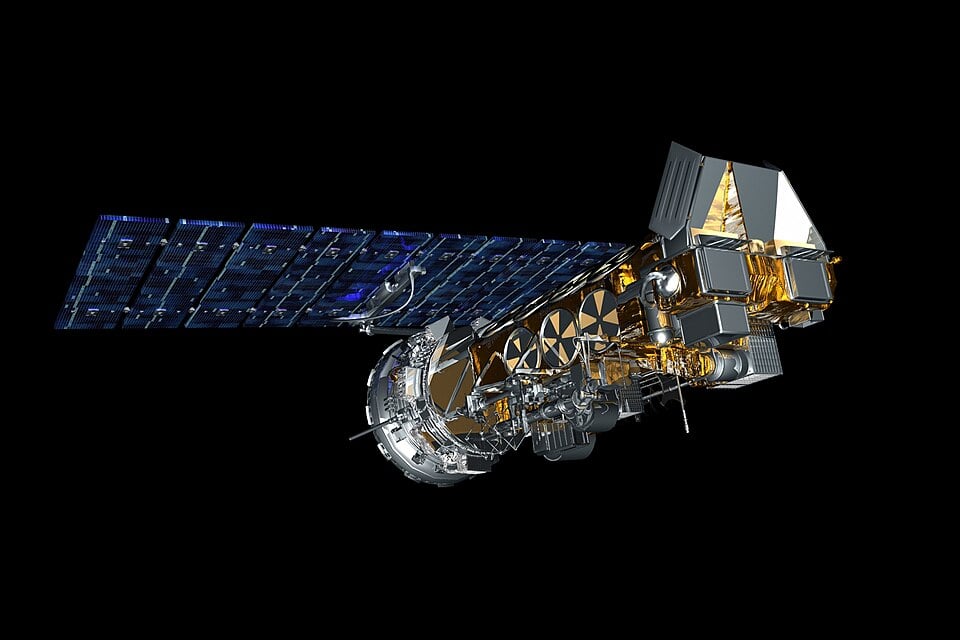
Over on YouTube Gabe from the saveitforparts channel has uploaded a new video discussing the decommissioning of NOAA-15 and NOAA-19. We also previously posted about this topic a few days ago, if you are interested.
NOAA-15 was scheduled to shut down on August 12, 2025, but due to anomalies with NOAA-19, the decommissioning date of NOAA-15 has been extended by a few days until the week of August 18th. NOAA-19 has recently been experiencing transmitter failures, and it may be impossible to receive signals from it at the moment, despite its expected decommissioning date of August 19, 2025.
In the video, Gabe also rushes to try and receive signals from all transmitters on NOAA-15 one last time, setting up VHF, L-Band, and S-Band receivers. He experiences some issues with weak signals, interference, and recording failures, but ultimately succeeds in capturing all three signals during one of the final passes of NOAA-15.
US Government Shutting Down More Weather Satellites
Discovery Drive is an automatic antenna rotator that is designed to be used with our Discovery Dish product, as well as similarly sized antennas such as Wi-Fi grid and Yagi antennas.
Discovery Drive with Discovery Dish Mounted
A motorized rotator allows you to use a satellite dish or directional antenna to track and receive signals from polar orbiting satellites, which quickly move across the sky. It also lets you switch swiftly between geostationary satellites without manually realigning the dish.
Examples of polar-orbiting weather satellites that you can track include NOAA POES, METEOR-M2, METOP, and FENGYUN. Depending on your location, you may also have access to other interesting satellites that dump data over specific regions. Amateur radio operators can also use Discovery Drive to track amateur radio satellites with Yagi antennas.
Discovery Drive
Discovery Dish is designed to be easy to set up and use. Unlike many other rotators on the market, no external controllers are required. Discovery Drive has a built-in ESP32 controller, and control can be commanded over WiFi or serial from rotctl-compatible software such as SatDump, GPredict, and Look4Sat on Android.
Features and Specifications
Up to 125 kgcm (12.25 Nm) of torque
ESP32 control board
± 1.5° of accuracy
-360° to +360° Azimuth range, 0° - 90° elevation range
1.5 RPM Azimuth speed, 0.25 RPM elevation speed
12 V power input (either barrel jack or USB Type-C Power Delivery)
Wi-Fi connectivity with browser-based web UI
Serial over USB data connectivity or Wi-Fi data connectivity
Low power draw (< 10 W, can be powered with PoE+ supplies and still have power left over for powering a single board computer and RTL-SDR)
Robust worm gear-locked output drives
Direct rotctl compatibility over Wi-Fi (compatible with programs that implement the rotctl protocol, such as SatDump, GPredict, and Look4Sat on Android)
At the beginning of this month, we posted about SkyRoof, a new software program by VE3NEA for receiving and tracking ham radio satellites with an RTL-SDR and other SDRs.
Recently, Matt from the TechMinds channel uploaded a video on YouTube testing out SkyRoof. In the video, Matt explains the software's various sections and features, such as Doppler correction. He then goes on to demonstrate various audio voice signals being received with the software.
SkyRoof - A Brand New Satellite Tracking Software With Built In SDR Software - This is awesome!
A few days ago, we posted news that NOAA-18 was to begin decommissioning steps effective immediately due to a recent transmitter failure. Multiple reports have now confirmed that NOAA-18 has indeed shut down as of 1740 UTC 06/06/2025.
In April, we posted news that the NOAA satellites would be classed as 'end-of-life' on June 16, 2025. According to the statements, the satellites were expected to remain in orbit and continue transmitting data that radio hobbyists could use, but no attempts would be made to rectify failures.
NOAA-18 may have been chosen to be decommissioned earlier than NOAA-15 and NOAA-19 as the S-band downlink transmitter failed last month, resulting in severe image degradation. The satellite has also been running on backup gyros since 2017, and has suffered various transmitter and sensor failures over the years.
Lutz's blog post first describes and shows his RTL-SDR GOES reception setup. Then, it explains how he used Edge Impulse on his Raspberry Pi 4 to create an AI model that automatically detects the clouds in the image.
The process begins by importing 100 images into Edge Impulse, manually labelling the clouds in each image, training the model, and testing it. The result was an average detection accuracy of 90%.
Over on the USradioguy.com blog, we've seen news from Carl Reinmann noting that NOAA 15, 18, and 19 will be classed as end-of-life on June 16, 2025. These NOAA satellites are ones commonly used by RTL-SDR hobbyists to download weather satellite images, either via APT on 137 MHz with a V-dipole antenna, or via HRPT on 1.7 GHz with a tracking dish antenna.
Initially, it was thought that this meant that transmissions would cease. However, Carl Reinmann has now clarified with NOAA that transmissions of the APT and HRPT signals will continue as usual. Importantly, NOAA urges that these transmissions will only be "data of opportunity" and should no longer be used for operational purposes (not for anything safety-critical, for example). The transmissions will be fine for everyday hobbyist use.
However, this does mean that should the sensors on these satellites start failing, no attempt will be made to repair them from the ground, and in case of critical failures, the satellites will be decommissioned. In the past, we've seen NOAA 15's scan motor fail multiple times before coming back to life. It's not clear if the satellite received commands from the ground that helped recover it or if the motor just recovered by itself.
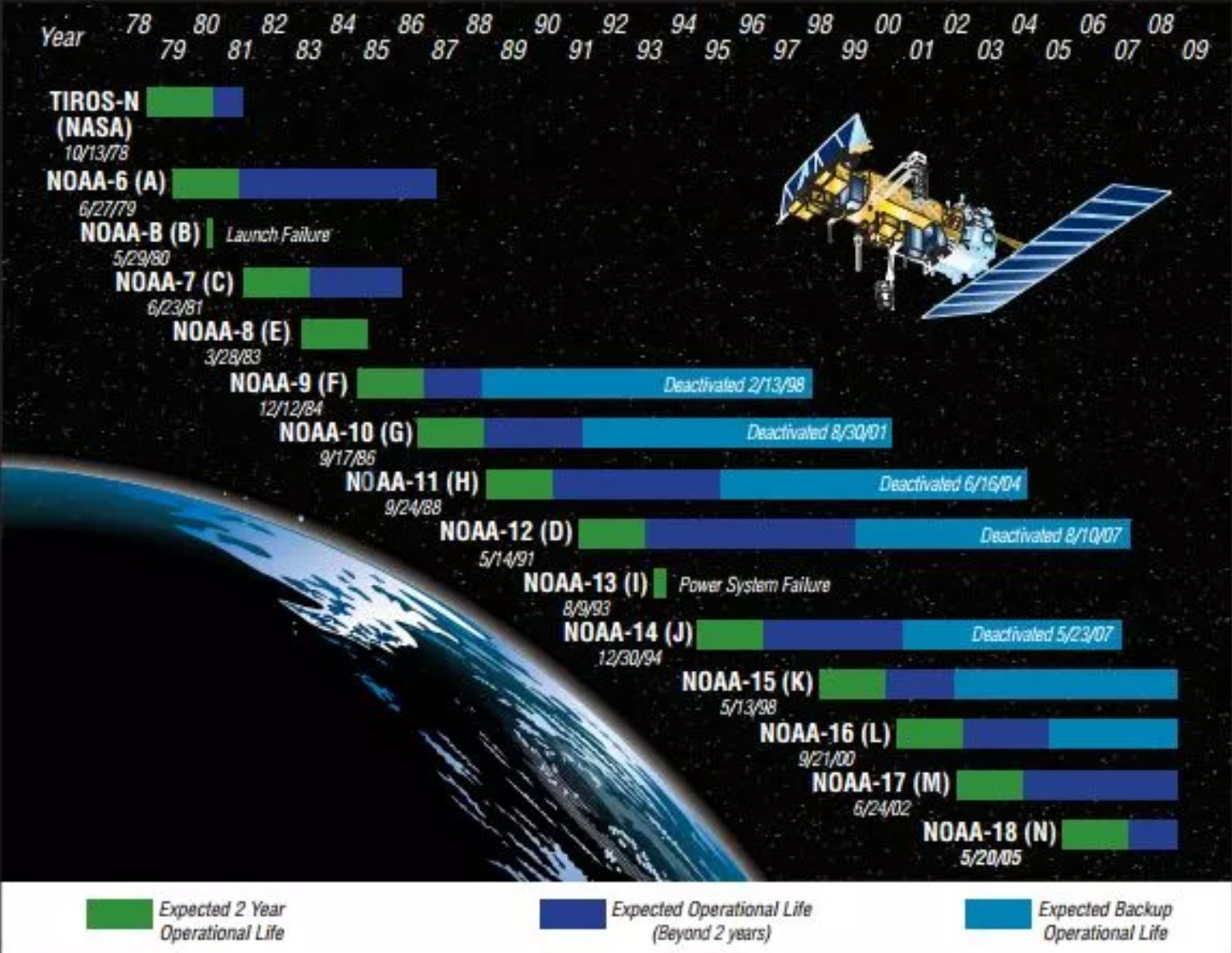
The NOAA satellites have lived well past their operational life.
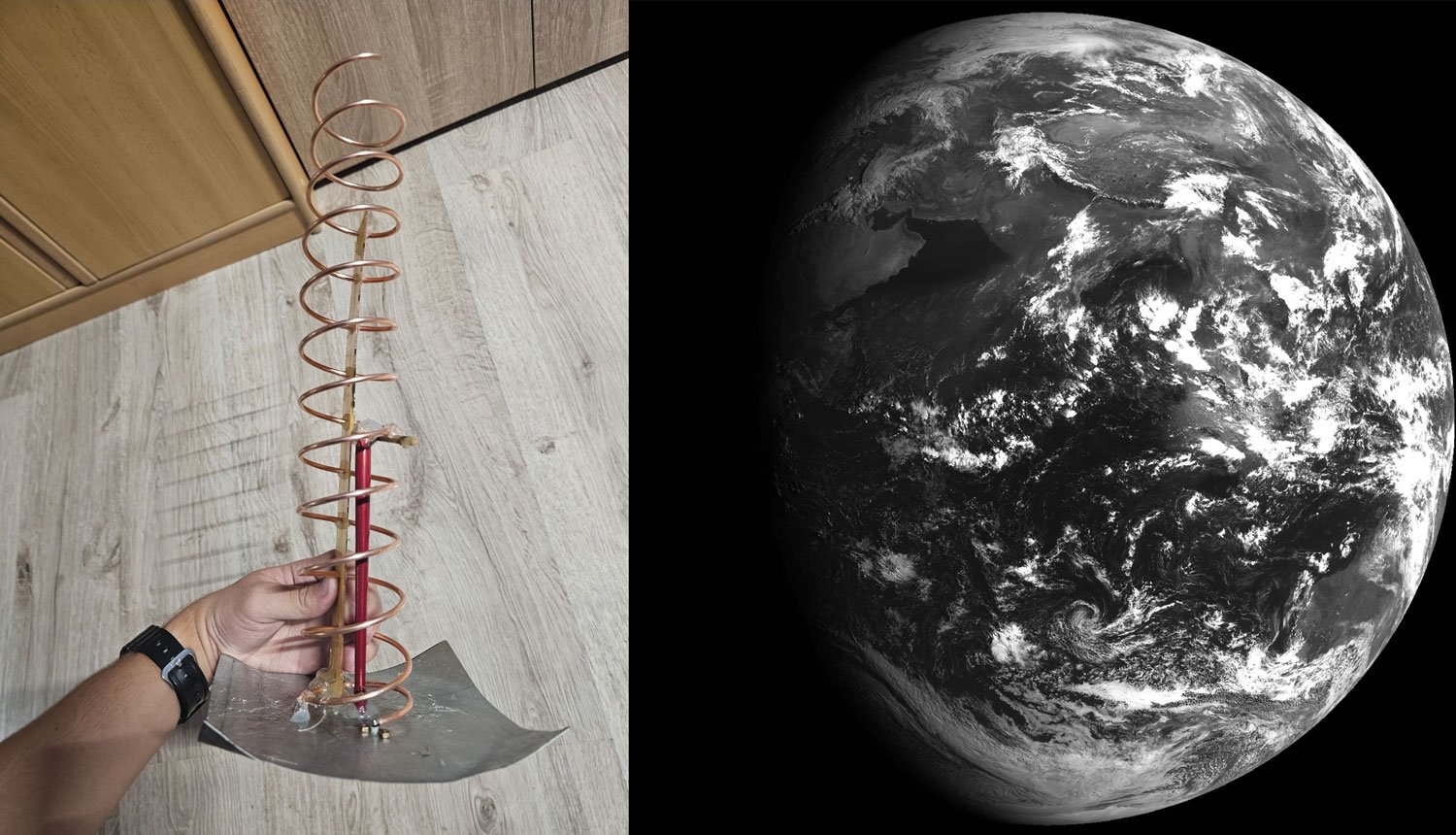
Typically, a satellite dish is used to receive Elektro L3. As an example, our 70cm diameter Discovery Dish with linear feed can do this easily, and achieve an SNR of about 5-6 dB. However, as Meti shows, it is possible to receive this satellite even without a dish, and as he shows, an SNR of 1.5 dB is sufficient for decoding a perfect image.
Meti's antenna is an 11-turn RHCP helix made of copper wire, with a 17 x 17cm ground plane. In his post, he also notes a few interesting findings, noting that the height of the antenna off the ground is critical, rotating the helix can help, interference from cell towers can cause issues, and bending the corners of the ground plane can help.
In the rest of the post, Meti also shows how well the helix antenna works at receiving weather satellite signals from polar orbiting L-Band satellites like Meteor M2-3.