Tagged: SECAM

OnAir: A Digital TV and DAB Decoder for SDRs

Thank you to Kristijonas for writing in and sharing with us his project, OnAir. OnAir is an easy-to-use digital TV decoder for DVB-T2, DVB-T, ATSC 1.0, ATSC 3.0, ISDB-T, and a digital audio decoder for DAB / DAB+ and FM Radio. It also supports Analog TV modes such as PAL, SECAM, and NTSC, and data modes like ADS-B, GNSS (GPS, GLONASS, BeiDou), and DMR.

It supports various wideband SDRs, including HackRF, PlutoSDR, BladeRF, LimeSDR, USRP, Airspy R2, and SDRplay. RTL-SDRs unfortunately do not have enough bandwidth to decode digital TV channels in SDR mode, but the software still supports RTL-SDRs for narrowband signals.

The software is easy to install, with an installer .exe being available for Windows, a .deb file for Debian Linux, and a .dmg file for macOS. 
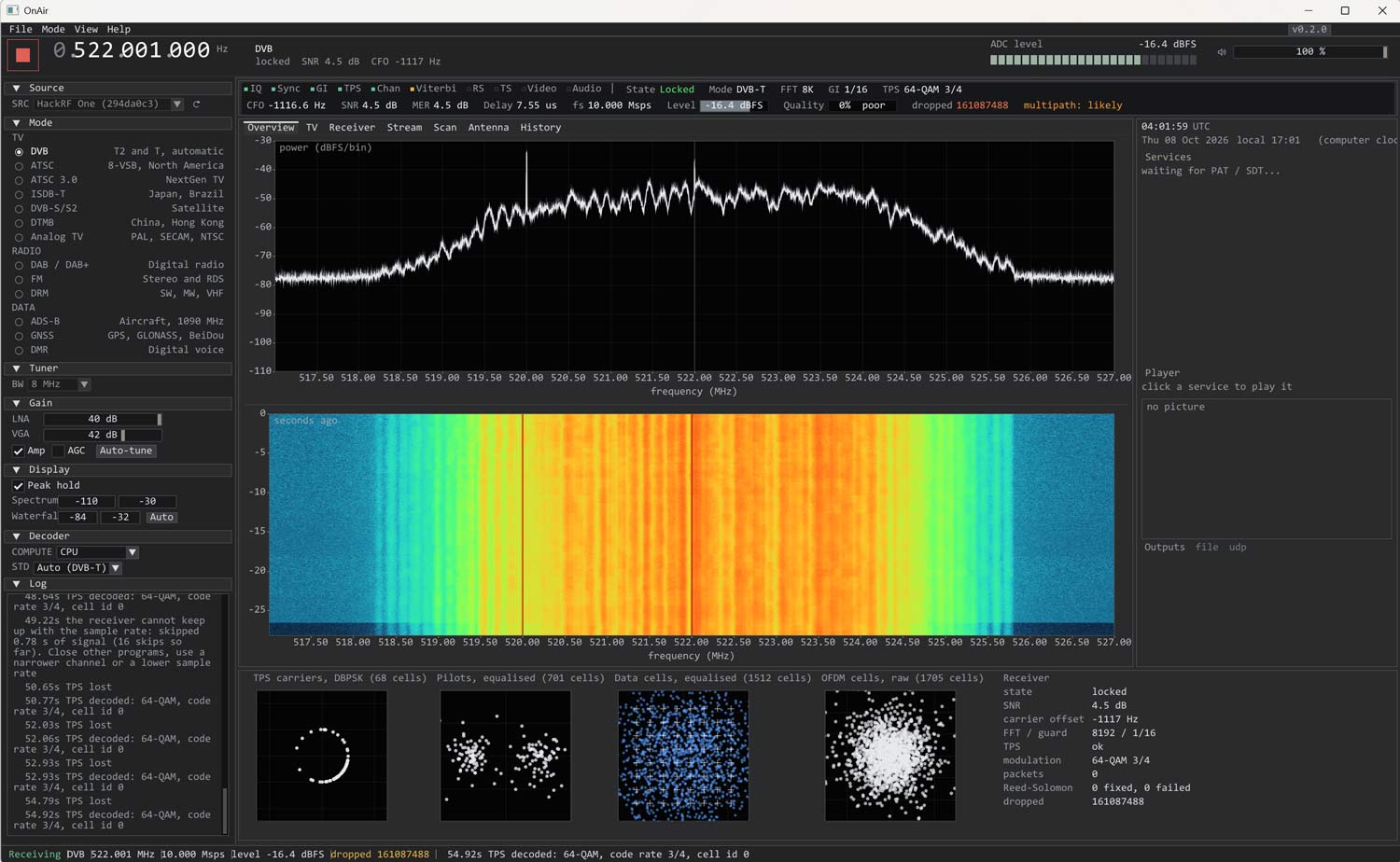
OnAir Screenshot
OnAir Screenshot

AI Disclaimer: This software lists Claude as a contributor.
uAVD: Analog Video Decoder Windows Software for SDRs

Thank yoy to Viol Tailer for submitting news about the release of his new software called "uAVD - Analog Video Decoder". uAVD is capable of demodulating the following:

  • AM (broadcast analog television - NTSC, PAL, SECAM)
  • FM (FPV drone video links)
  • RAW (composite output from VHS, camcorders, game consoles)

The software uses the uSDR software as a host, and it passes the IQ passband stream to the uAVD via a uSDR-TCP link. uSDR is a lightweight general purpose multimode software defined radio receiver Windows application that we have posted about on the blog in the past. Currently, it supports RTL-SDR, AirSpy, BladeRF, HackRF, FobosSDR, and LimeSDR devices.

The software supports full color and grayscale modes. With a wideband receiver, it will be possible to receive full-color video. With the reduced bandwidth available with an RTL-SDR, only grayscale will be available.

The code is not open-source, but the software is freely available from SourceForge.

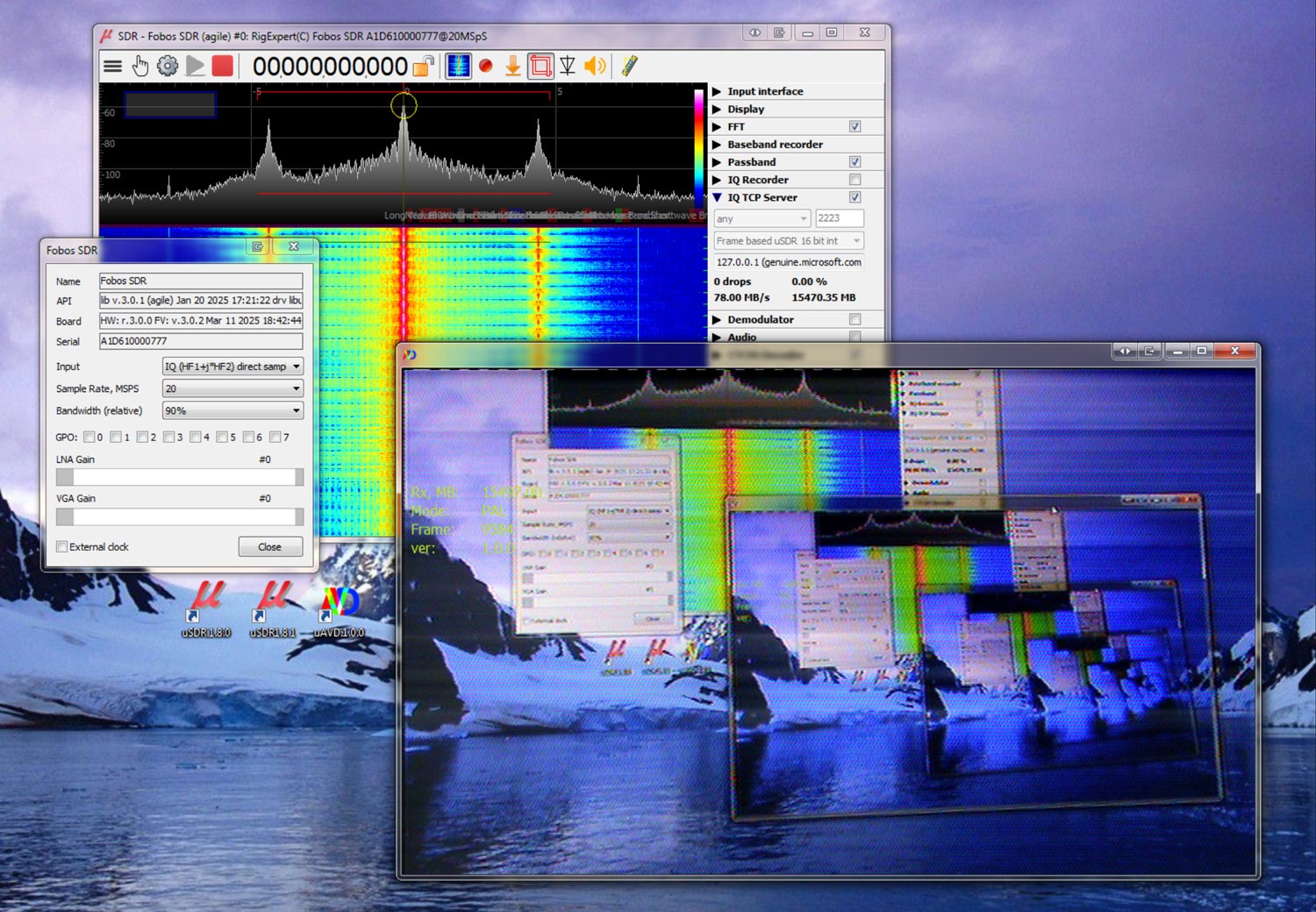
The image below shows it being used to receive video from a camcorder composite video output. A FobosSDR used in direct sampling mode is used to receive the signal.

uAVD Receiving Camcorder Composite Video via the Direct Sampling Input in FobosSDR

Below is a video from a user of the software demonstrating it in action.

uSDR and uAVD analog video decoder