Internet Archive has begun gathering content for the Digital Library of Amateur Radio and Communications (DLARC), which will be a massive online library of materials and collections related to amateur radio and early digital communications. The DLARC is funded by a significant grant from the Amateur Radio Digital Communications (ARDC), a private foundation, to create a digital library that documents, preserves, and provides open access to the history of this community.
The library will be a free online resource that combines archived digitized print materials, born-digital content, websites, oral histories, personal collections, and other related records and publications. The goals of the DLARC are to document the history of amateur radio and to provide freely available educational resources for researchers, students, and the general public. This innovative project includes:
- A program to digitize print materials, such as newsletters, journals, books, pamphlets, physical ephemera, and other records from both institutions, groups, and individuals.
- A digital archiving program to archive, curate, and provide access to “born-digital” materials, such as digital photos, websites, videos, and podcasts.
- A personal archiving campaign to ensure the preservation and future access of both print and digital archives of notable individuals and stakeholders in the amateur radio community.
- Conducting oral history interviews with key members of the community.
- Preservation of all physical and print collections donated to the Internet Archive.
The DLARC project is looking for partners and contributors with troves of ham radio, amateur radio, and early digital communications related books, magazines, documents, catalogs, manuals, videos, software, personal archives, and other historical records collections, no matter how big or small. In addition to physical material to digitize, we are looking for podcasts, newsletters, video channels, and other digital content that can enrich the DLARC collections. Internet Archive will work directly with groups, publishers, clubs, individuals, and others to ensure the archiving and perpetual access of contributed collections, their physical preservation, their digitization, and their online availability and promotion for use in research, education, and historical documentation. All collections in this digital library will be universally accessible to any user and there will be a customized access and discovery portal with special features for research and educational uses.
We are extremely grateful to ARDC for funding this project and are very excited to work with this community to explore a multi-format digital library that documents and ensures access to the history of a specific, noteworthy community. Anyone with material to contribute to the DLARC library, questions about the project, or interest in similar digital library building projects for other professional communities, please contact:
Kay Savetz, K6KJN
Program Manager, Special Collections
[email protected]
Twitter: @KaySavetz
Maverick-603: An Affordable FT8 Receiver with an Open Source RF Chip
The Maverick-603 is a US$149 FT8 receiver based on an open source RF chip design which is capable of acquiring signals between 7 MHz and 70 MHz (technically 1 MHz to 100 MHz). It is currently undergoing Crowd Funding on Crowd Supply with 7 days left in the campaign. Shipping is expected to begin in April 2023.
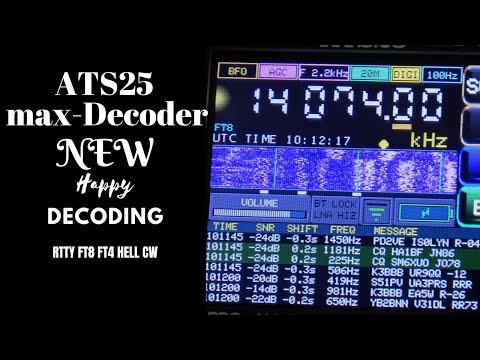
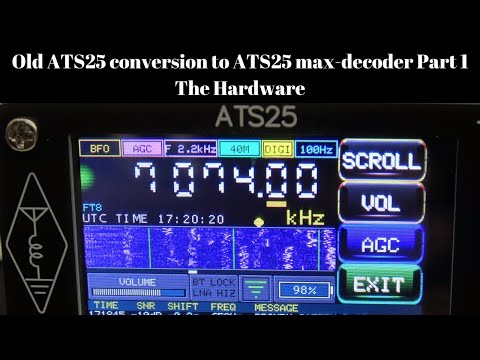
FT8 is a popular weak signal propagation digital mode used by ham radio enthusiasts. FT8 signals can be received and decoded all over the world even with low transmit power and poor propagation conditions thanks to its highly error tolerant encoding. A dedicated FT8 receiver allows enthusiasts to set up a 24/7 FT8 monitor without dedicating more expensive ham radio equipment to the task. Note that a computing device like a PC or possibly a Raspberry Pi 4 will still be required to run the FT8 decoding software as this is a software defined radio.
The Maverick-603 is based on a custom open source RF chip design made possible by the company eFabless. It is now possible to cheaply design and produce custom ASIC chips (at least at the lower end of the technology scale), replacing more costly FPGA designs. The technical specs of the Maverick-603 are:
- MCU: ATMEGA1608
- Power Supply: 3.3 V / 10 mA
- Operating Frequency Range: 1 to 100 MHz
- Minimum Signal Strength: -25 dBm
- Input Antenna Impedance: 50 Ohm
- Data Interface: SPI
- Board Size: 2" x 1.75"
- Capable of receiving FT8 signals
- 7 - 70 MHZ frequency range
- Low-power operation (1.8 Volts) means no battery or outlet is required
- USB Connection
- A compact surface area