Category: News

OpenWebRX Version 0.18.0 Released: New Decoders for Digital Voice, Digital Ham Modes and More

Back in early January we posted about how the popular web based SDR and RTL-SDR compatible receiver software known as OpenWebRX was officially discontinued by the original author. However, thanks to it's open source licence, code contributor Jakob Ketterl (DD5JFK) has been able to continue developing the code and is taking over as the lead developer on his own fork of the code.

Recently he released version 0.18.0 of OpenWebRX which includes a few major upgrades including the much needed shift to Python 3, and the inclusion of multiple new decoders for DMR, D-Star, YSF, NXDN, FT8, FT4, WSPR, JT65, JT9, APRS and Pocsag.

Hello fellow radio enthusiasts,

with great excitement I would like to announce the availability of OpenWebRX Version 0.18.0 as public release. This is the first release of the project in some time, and the first release since I started working on it, so I’m more than happy to bring this to you.

What’s new? Quite a lot, actually. For those that haven’t had the chance to follow the progress of the project in the past months, here’s a quick overview:

    • Most of the server code has been rewritten for better flexibility, stability and performance. The project is now fully based on Python 3.
    • Large parts of the frontend code have been updated or polished.
    • The new core now supports multiple SDR devices simultaneously, as well as switching between multiple profiles per SDR, allowing users to navigate between multiple bands or frequencies.
    • Added support for demodulation of digital voice modes (DMR, D-Star, YSF, NXDN).
Added support for digital modes of the WSJT-X suite (FT8, FT4, WSPR, JT65, JT9).
  • Added support for APRS.
  • Added support for Pocsag.
  • Bookmarks allow easy navigation between known stations.
  • Background decoding can transform your receiver into an automatic reporting station, including automatic band scheduling.
  • The integrated map shows digimode spots as well as APRS and YSF positions.
OpenWebRX 0.18.0 is available via the following channels: Please check out our updated Setup Guide along with the rest of the documentation on the Wiki!

Questions, ideas, problems? Get in touch with the community at [email protected]!

Best regards and vy 73s

Jakob DD5JFK

We're so glad to see that this excellent software isn't dead in the water and is in fact thriving. We will continue to follow the Jakob's and the OpenWebRX communities' future developments. If you are interested, you can follow OpenWebRX development on the OpenWebRX groups.io forum.

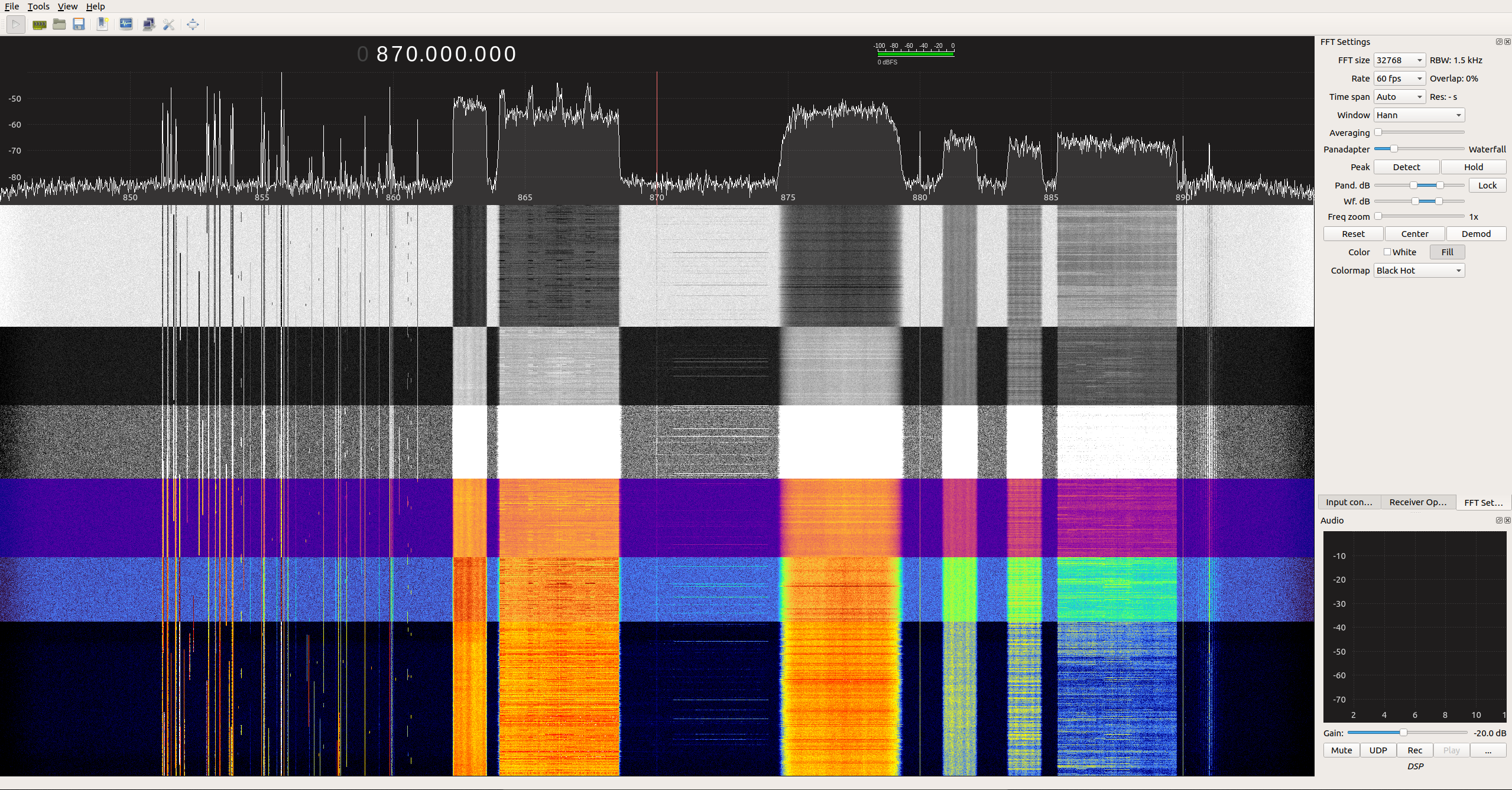
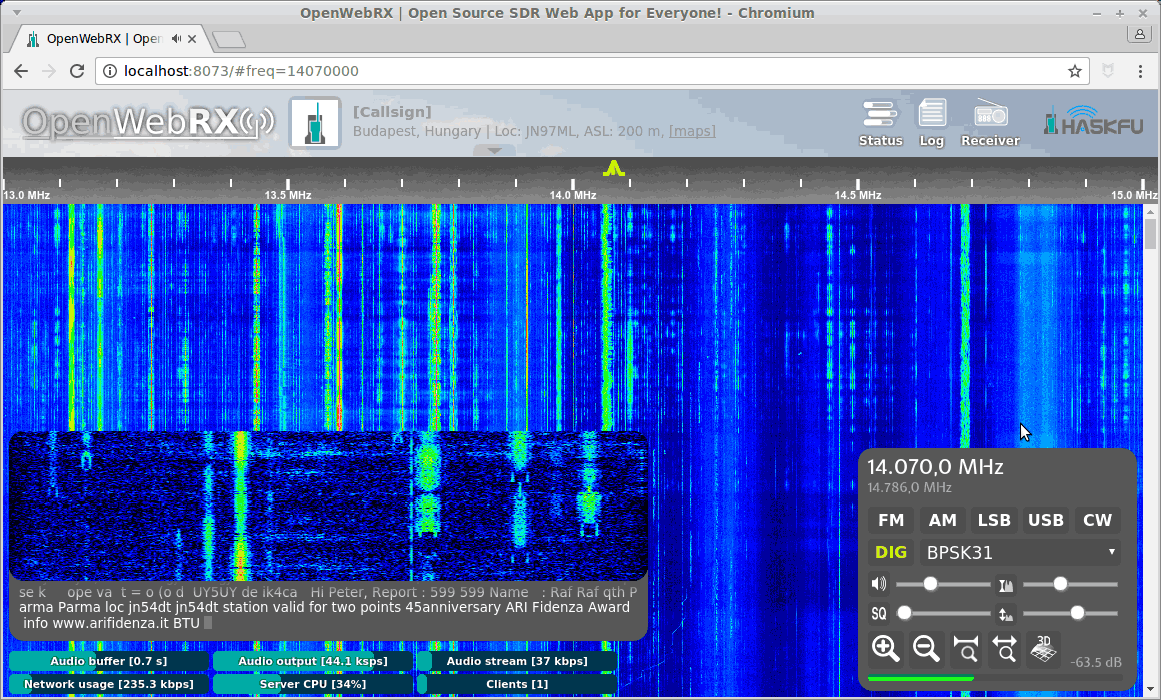
OpenWebRX Screenshot

New Elad FDM-S3 Specifications and Photos

The Elad FDM-S3 is an upcoming high performance Hf speciality SDR that is expected to be released this year with a price of 949.90 € ($1040 USD). Over on the swling.com blog, and the Elad website we've seen some recently released information about the new specs.

--- WIDEBAND DIRECT SAMPLING RECEIVER ----

 JAN 2020 SPECIFICATIONS

  • 2 switchable HF Antenna inputs direct sampling
  • 1 VHF Antenna input direct sampling
  • Works with FDM-SW2 ELAD Software & SDR Console
  • Optional: Antenna RF input  downconversion (50MHz - 2GHz preview)
  • Real Time I/Q Stream Bandwidth 192khz, 384KHz, 1536KHz, 12880KHz, 24576KHz
  • 122.88 MSPS - 98.304 MSPS 16bit A/D converter
  • Clock synchronized to GNSS Global Navigation Satellite System or 10MHz Ext Ref
  • GNSS works with GPS, GLONASS, GALILEO, BEIDOU
  • Auxiliary USB used to monitor GPS status or for clock firmware updates
  • 10MHz Clock reference Output
  • 10MHz internal standart TCXO 100ppb referenced, optional 3ppb OCXO referenced

Compared to the FDM-S2 the FDM-S3 looks to have significantly increased bandwidth, meaning now that almost the entire HF spectrum could be monitored. ALso the optional built in downconverter would allow tuning up to 2 GHz, where it was previously limited to only 160 MHz on the FDM-S2. The new GNSS referenced clock and improved TCXO/OCXO is also going to mean significantly improved frequency stability.

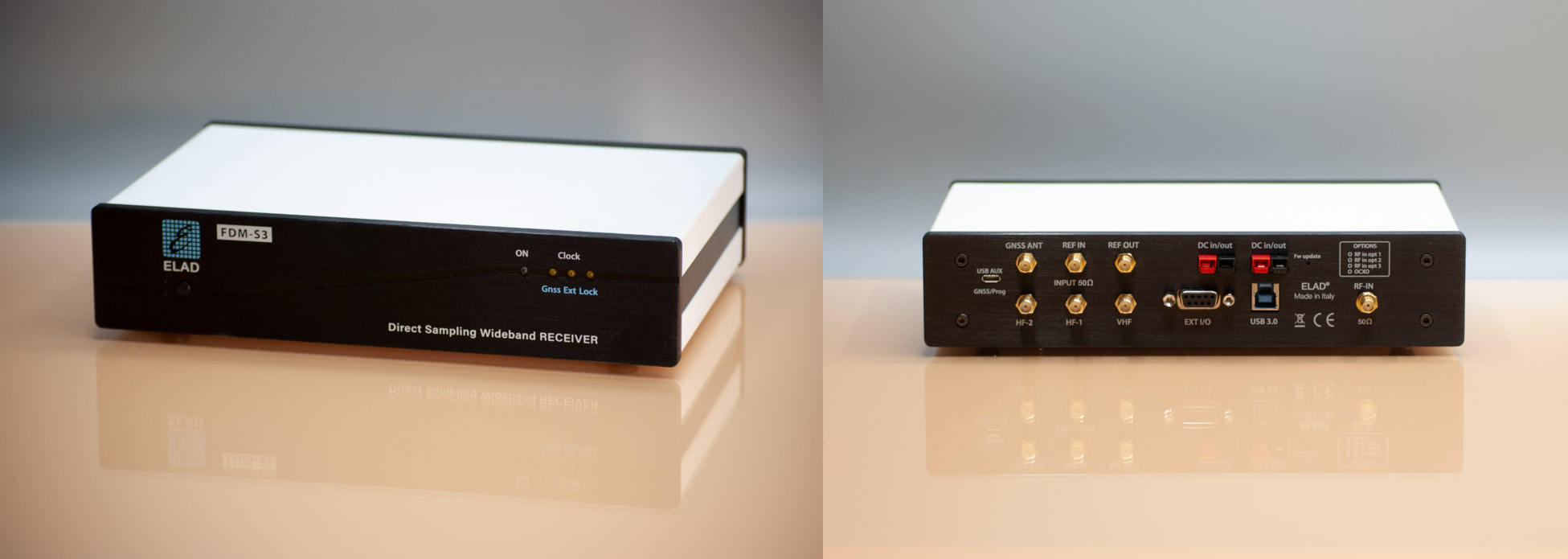
The Elad FDM-S3
The Elad FDM-S3

Meteor-M N2-2 Weather Satellite Updates: No More 137 MHz LRPT, L/X-Band Working in Daylight

In late December 2019 we posted about Russian weather satellite Meteor M N2-2 which had unfortunately been struck by a micro-meteorite on Dec 18, causing it to lose control and go offline. Meteor M N2 and N2-2 satellites are often monitored with RTL-SDR dongles as it is relatively simple to receive their LRPT signal at 137 MHz which contains a high resolution weather satellite image.

Recently Happysat updated his Meteor M status page, noting that Meteor M N2-2 has been partially recovered, but due to low power it can no longer transmit a 137 MHz LRPT signal ever again. However, the L and X-bands are transmitting while the satellite is in daylight. Happysat writes:

January 2020 There will be only short-term power-ups in the radio visibility zone, and the battery life will be reduced tenfold.

Of particular concern are the batteries they are very quickly overheated and switching from regular to backup.

Unfortunately the power supply features do not allow the 137 MHz transmitter to be used in abnormal power, mode (from solar panels) which is used now although technically it is working fine.

There will be no LRPT Transmission's anymore.

The older Meteor M N2 satellite remains operational transmitting at 137.100 MHz.

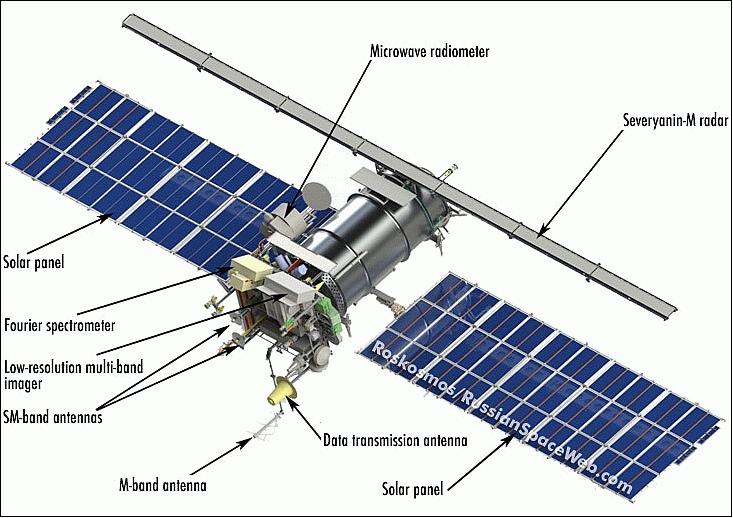
The Meteor-M2 Satellite
The Meteor-M N2 Satellite

KiwiSDR Portal SDR.HU Now Requires a Ham Licence + OpenWebRX Development Discontinued

The KiwiSDR is a US$299 HF SDR that can monitor the entire 0 - 30 MHz band at once. It is designed to be web-based and shared, meaning that the KiwiSDR owner, or anyone that they've given access to can tune and listen to it via a web browser over the internet. 

OpenWebRX is code originally created by András Retzler and a modified version runs on the KiwiSDR devices. This code is what allows them to be accessed online by a browser and was popularized by it's use in the KiwiSDR. The original code can also be used by other compatible SDRs such as the RTL-SDR.

Recently András released news that he is discontinuing work on OpenWebRX due to interest in other projects, but it will remain on GitHub as open source code. András also notes that the security of OpenWebRX will soon be in question as it utilizes Python 2, which has been designated end of life on January 1 2020. In addition, if you've been following OpenWebRX since the beginning, you'll know that in the past OpenWebRX was involved in an legal/ethical issue over open source licencing with KiwiSDR. Although the problems with KiwiSDR were resolved amicably, Andras also references his frustrations with similar situations to do with his code being forked again and again. 

We note that maintenance and development of the KiwiSDR OpenWebRX code will continue as they are considered separate projects. Due to some confusion, we importantly reiterate that the KiwiSDR product is unaffected by OpenWebRX being discontinued. Although KiwiSDR is based on OpenWebRX they use their own custom branch of the software that is maintained by the KiwiSDR owners and not by András.

András also runs the popular sdr.hu OpenWebRX/KiwiSDR directory, which was/is considered the main directory for finding and accessing public KiwiSDR and other SDR devices running OpenWebRX. Recently the directory was restricted, and now can only be accessed by those with a ham radio callsign. It is unclear why this decision was made as sdr.hu was very popular with shortwave listeners and radio newbies who are typically not hams. But the sdr.hu FAQ notes "The purpose of the site is to serve amateur radio. I decided to restrict access to the receiver list in order to protect the site and its purpose in the long term."

Fortunately, over on his SWLing.com blog, Thomas has noted that there are still other KiwiSDR directories available such as https://ve3sun.com/KiwiSDR, http://kiwisdr.com/public and http://rx.linkfanel.net.

SDR.HU Requires a Login Now

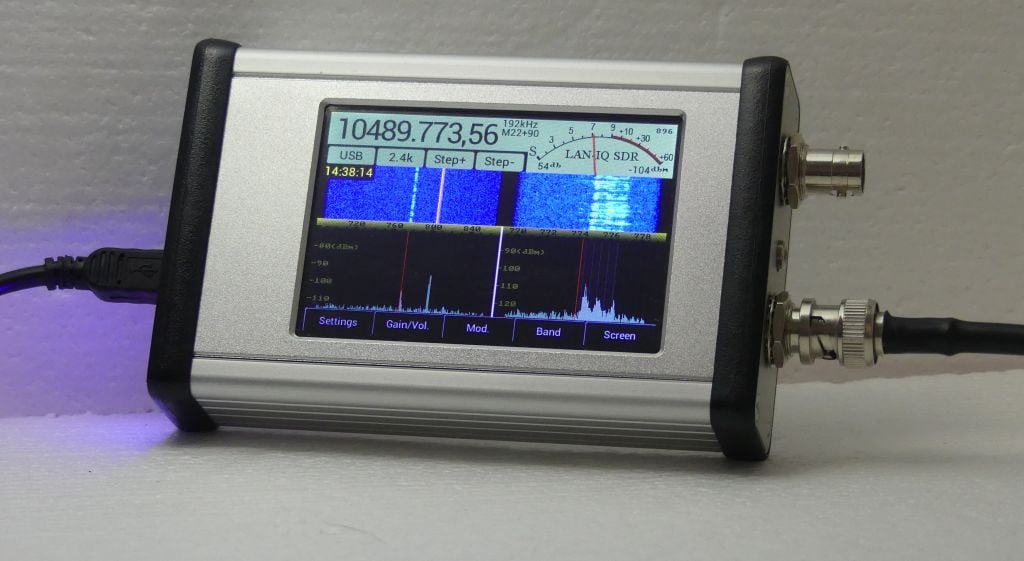
The Malachite-DSP: A $195 Russian Made Portable Wideband SDR Receiver with Touch Screen

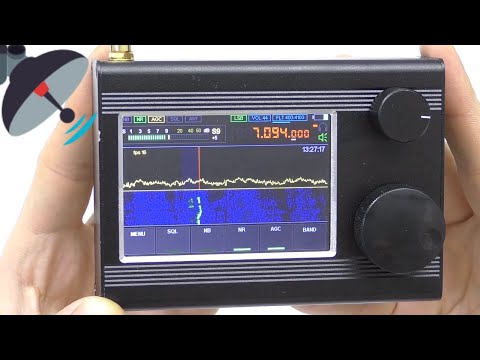
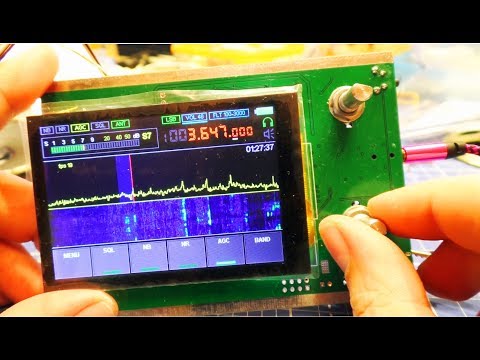
Over on the SWLing.com blog we've seen news about the release of a new Russian designed and made portable software defined radio called the "Malachite-DSP". The Malachite-DSP is an "all-in-one" portable SDR that is controlled via a touch screen and two control knobs. It covers 0.1 MHz to 1000 MHz with a bandwidth of up to 160 kHz, and the custom software supports all common modulation types. The whole device consumes 300mA and is powered by a Li-ion cell. It's marketed as a modern DEGEN and TECSUN replacement, so it appears to be targeting the HF short wave listening (SWL) customer.

Production appears to be small, with purchasing currently done by contacting RX9CIM, one of the project creators, directly at his email address (details on this forum post). The cost for a fully assembled unit is 12500 Russian Rubles which is 195 USD (not including international shipping). You can also purchase just the PCB without components for 1100 Rubles (17 USD). Importantly the forum post notes to watch out for scammers, who appear to be trying to take fake preorders for the device.

From the components list we can see that this SDR runs on the MSI001 tuner chip, which is the same tuner chip used in the SDRplay line of units. However, unlike the SDRplay units which use a wideband MSi2500 ADC, the Malachite-DSP uses an audio chip as the RF ADC. This provides a 16-bit ADC, resulting in high dynamic range, but at the expense of the available bandwidth which is only 160 kHz. A STM32H743VIT6 with ARM Cortex A7 processor runs what appears to be custom DSP and GUI software. The software doesn't seem to support DRM, but AM, WFM, NFM, LSB, USB are all supported.

The main place for news and discussion on the Malachite-DSP appears to be on a Russian ham radio forum thread. Judging by the fact that the schematic, software and BOM is all freely released, the project appears to be open source. There is also a group on the Russian Facebook clone vk.com where some discussion is occurring.

The YouTube videos below are by a Russian reviewers. Be sure to turn on the YouTube closed captioning and auto translation feature if you want to follow along in English.

😲ПРИЕМНИК КОТОРЫЙ ЛОВИТ ВСЁ!!!💥🔝 ЭТО ВАМ НЕ Degen и Tecsun ВСТРЕЧАЙТЕ НОВЫЙ МАЛАХИТ DSP V2💯🆕

SDR приемник МАЛАХИТ DSP

The Malachite-DSP reminds us a bit of the unreleased PantronX Titus II SDR, which is supposed to be a low cost (aiming for less than $100 USD) 100 kHz - 2 GHz tablet screen based SDR that was supposed to make DRM reception more popular. However the Titus II hardware has never eventuated since it's initial news in 2016, and at this time appears to be a dead project.

DARPA Spectrum Collaboration Challenge $2 Million Dollar Championship Video

DARPA (Defense Advanced Research Projects Agency) has recently released video from their Spectrum Collaboration Challenge Championship Event where team GatorWings took home a two million dollar prize. In the original DARPA grand challenge teams competed to produce an autonomous car that can get through an obstacle course. In this spectrum challenge DARPA poses the questions, what if there was no FCC to control the band plan, and how do we make more efficient use of a scarce spectrum?

Given those questions the goal is for software defined radios driven by artificial intelligence's created by each team to autonomously find ways to manage and share the spectrum all by themselves. The AI's are required to find ways to listen and learn the patterns of other AI SDRs using differing wireless standards all of which are competing for the same slice of spectrum at the same time. The competition asks the AI's to provide simulated wireless services (phone calls, data link, videos, images) during a simulation run with all the AI's running at once. Whichever AI is able to provide the most stable services and at the same time share the spectrum fairly with the other AI's wins.

On October 23, 2019, ten teams of finalists gathered to compete one last time in the Championship Event of DARPA's Spectrum Collaboration Challenge (SC2), a three-year competition designed to unlock the true potential of the radio frequency (RF) spectrum with artificial intelligence. DARPA held the Championship Event at Mobile World Congress 2019 Los Angeles in front of a live audience.

Team GatorWings from University of Florida took home the $2 million first prize, followed by MarmotE from Vanderbilt University in second with $1 million, and Zylinium, a start-up, in third with $750,000.

Throughout the competition, SC2 demonstrated how AI can help to meet spiking demand for spectrum. As program manager Paul Tilghman noted in his closing remarks from the SC2 stage: "Our competitors packed 3.5 times more wireless signals into the spectrum than we're capable of today. Our teams outperformed static allocations and demonstrated greater performance than current wireless standards like LTE. The paradigm of collaborative AI and wireless is here to stay and will propel us from spectrum scarcity to spectrum abundance."

The highlights video is shown below, and the full two hour competition stream can be viewed here

Highlights from the Spectrum Collaboration Challenge Championship Event

The competition was run on the DARPA Colosseum, the worlds largest test bed for performing repeatable radio experiments. Capable of running up to 128 two channel software defined radios with 3 peta-ops of computing power it allows experimenters to accurately simulate real world RF environments. It works by connecting special "channel emulator" RF computing hardware to each physical SDR, which can emulate any RF environment.

SDRplay Release the RSPdx: Replaces the RSP2/pro, Filtering & Intermod Improvements, 1kHz to 2 MHz HDR Mode

The RSPdx
The RSPdx

SDRplay have just released their new SDR that they're calling the RSPdx. This is their new top end product which replaces the older RSP2/pro line. The RSPdx is designed for high performance DX reception and they write that it achieves this with additional filtering, improved intermodulation performance, a DAB notch filter, additional attenuation steps, and a new high dynamic range for frequencies under 2 MHz.

Pricing is £159 GBP or $199 USD (excluding taxes). It doesn't yet appear to be for purchase, but they note that it will be fully released within the next few weeks.

The RSPdx is a replacement for the highly successful RSP2 and RSP2pro SDR receivers, which have been extensively redesigned to provide enhanced performance with additional and improved pre-selection filters, improved intermodulation performance, the addition of a user selectable DAB notch filter and more software selectable attenuation steps .

The RSPdx , when used in conjunction with SDRplay’s own SDRuno software, introduces a special HDR (High Dynamic Range) mode for reception within selected bands below 2MHz. HDR mode delivers improved intermodulation performance and fewer spurious responses for those challenging bands.

The SDRplay RSPdx is a single-tuner wideband full featured 14-bit SDR which covers the entire RF spectrum from 1kHz to 2GHz giving up to 10MHz of spectrum visibility. It contains three antenna ports, two of which use SMA connectors and operate across the full 1 kHz to 2 GHz range and the third uses a BNC connector which operates up to 200MHz.

The RSPdx also features a 24 MHz ‘plug and play’ reference clock input which allows the unit to be synchronised to an external reference clock such as a GPS disciplined oscillator (GPSDO)

This is one of many video guides from SDRplay - makers of the RSP family of SDR radios. See the full list of SDRplay videos and applications documents on: https://www.sdrplay.com/apps-catalogue/

SDRplay is a UK company. The RSP SDR receivers are made in the UK and can be purchased for worldwide delivery directly from http://www.sdrplay.com/ (click on purchase and select your country to view shipping costs) or you can buy from any of our worldwide resellers listed here: http://www.sdrplay.com/distributors/ Many of the resellers offer local free shipping and/or local language technical support.

SDRplay Product Comparisons

Mike Ladd (KD2KOG) who works for SDRplay Technical services has provided the following demonstration video.

Major Announcement... The RSPdx from SDRplay.

Independent reviewer TechMinds has also uploaded a new hardware and software overview and unboxing video as well.

NEW: SDRPlay RSPdx 1kHz - 2GHz HDR SDR Receiver

SDR Makerspace Conference to be Held in Switzerland in November

SDR Makerspace is a community based in Greece that is run by the European Space Agency and Libre Space Foundation (who are responsible for the SatNOGS project). It provides funding and resources for Software Defined Radio based space communication projects.

On November 28-29 2019 they are holding the SDR Makerspace Conference in Payerne, Switzerland. The conference is free to register although spaces are limited.

The technical talks during the first day will be:

  • Open-Source SDR Software for Satellite Communications - Alexandru Csete
  • LimeSDR as an enabler for Satellite TV Transmissions - Dave Crump
  • How wide band data converters enable SDR in Satcoms - e2v
  • Teaching SDR: EPFL experience - Bixio Rimoldi
  • Xilinx’s adaptive solutions for SDR application - Georg Hanak
  • SDR Makerspace: Evaluation of SDR Boards and Toolchains - Sheila Christiansen
  • SDR and Amateur radio in space - Michel Burnand
  • SDR Makerspace lightning talks - Multiple Authors

The second day will consist of workshops on using SDRs for satellite communications, and on using the LimeNET Micro and LimeRFE for SDR satcom development.

Exhibitors who will be at the conference.