Category: News

XYNC: A Massive MIMO SDR with up to 32×32 TX/RX Channels

Back in 2017 we posted about the crowd funding of the Fairwaves XTRX, a small PCIe based TX/RX capable software defined radio that back then cost US$199 (now only the XTRX Pro is available for US$599). The XTRX is based on the same RF chips that are used in the LimeSDR and each unit has 2 x 2 MIMO (multi-input, multi-output), 120 MSPS SISO / 90 MSPS MIMO, 30 MHz to 3.7 GHz tuning range and comes with an on board GPSDO.

Recently Fairwaves have begun crowdfunding a new software defined radio called the XYNC. The XYNC is essentially a motherboard for connecting up to 16 XTRX boards together which results in an SDR with 32 TX and 32 RX channels.

If you’re working on a massive MIMO system or have a large swath of spectrum you need to monitor, XYNC (pronounced iks-sync) is right for you. XYNC builds on the success of the Octopack SDR we offered during the XTRX campaign and takes into account feedback from the original Octopack users.

You can connect two XYNC boards, either to increase the number of RX/TX channels (e.g., two XYNC Octos give you 32 TX and 32 RX channels) or to increase throughput per channel (e.g., two XYNC Quadros give you twice the throughput of a single XYNC Octo). Connecting more than two XYNC boards is also possible, but requires an external clock and 1 pps signal distribution circuitry, neither of which is provided as part of this campaign.

While advertised as low cost, the pricing is probably out of reach for most hobbyists, with the quad 8x8 unit coming in at US$4500 and the top 16 board 32x32 unit priced at US$13,000. Still, these prices are very good for a massively MIMO SDR and pricing is set to rise once the crowdfunding campaign ends in 39 days.

The XSYNC Massively MIMO SDR with up to 32x32 TX/RX Channels

SDR in the Local Newspaper: Investigating an RF Dead Spot for Car Key Fobs

Reddit user [SDR_LumberJack] writes how he was recently featured in his local newspaper [Part2] in Ontario, Canada thanks to his efforts in helping to hunt down the cause of an RF deadspot with an SDR. He began his journey by reading a story in his local newspaper called the [Windsor Star]. The story was about locals having found a ‘dead-spot’ for car key-fobs. In the dead-spot key-less cars wouldn’t start, key-fobs wouldn’t unlock cars, and alarms would go off.

Being intrigued by the story [SDR_LumberJack] investigated by driving around with an RTL-SDR, HackRF and a laptop running SDR#. Eventually he found that there was what appeared to be a WBFM Broadcast radio station interfering at 315 MHz. This frequency happens to fall into the ISM radio band that used by car remotes and key-fobs. The exact source of the interference hasn’t been nailed down just yet though.

While it’s possible a broadcast station is at fault it is also possible that his SDR was just overloading, causing broadcast FM imaging. Perhaps a WBFM filter could be used to prevent signal imaging that could interfere with the investigation.

Hopefully [SDR_LumberJack] will continue his investigation and we’ll get an update on this story.

If you’re interested, back in 2016 we posted a very similar story about the exact same thing happening at a car park in Brisbane, Australia. The conclusion to that story was that the dead-spot only occurred in particular locations in the car park, and this was due to the shape of surrounding building causing the RF signals to reflect off the walls and distort the signal.

SDR_LumberJack in the local newspaper

International Space Station SSTV Event Scheduled for October 9 and 10

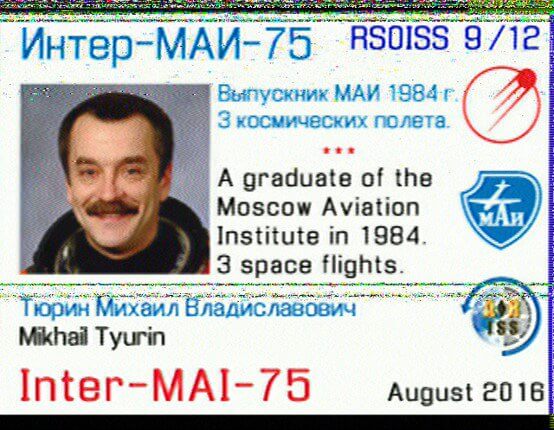
The International Space Station (ISS) periodically schedules radio events where they transmit Slow Scan Television (SSTV) images down to earth for listeners to receive and collect. This time they have scheduled SSTV images for October 9 09:50 - 14:00 GMT and October 10 08:55-15:15 GMT.

With an RTL-SDR and a simple V-Dipole from our RTL-SDR V3 antenna kit it is possible to receive these images when the ISS passes over. ISS passes for your city can be determined online, and the SSTV images can be decoded with a program like MMSSTV.

AMSAT-UK writes:

Russian cosmonauts are expected to activate Slow Scan Television (SSTV) image transmissions on 145.800 MHz FM from the International Space Station on Wednesday/Thursday, October 9/10.

This is the schedule for the planned activation of the MAI-75 SSTV activity from the ISS.
• Oct 9 09:50-14:00 GMT
• Oct 10 08:55-15:15 GMT

Transmissions will be sent on 145.800 MHz FM in the SSTV mode PD-120. Once received, images can be posted and viewed by the public at http://www.spaceflightsoftware.com/ARISS_SSTV/index.php

ISS SSTV uses a Kenwood TM D710E transceiver which is part of the amateur radio station located in the Russian ISS Service Module.

Please note that SSTV events are dependent on other activities, schedules and crew responsibilities on the ISS and subject to change at any time. You can check for updates regarding planned operation at:
ISS Ham https://twitter.com/RF2Space
ARISS Status https://twitter.com/ARISS_status
ARISS SSTV Blog https://ariss-sstv.blogspot.com/
AMSAT Bulletin Board http://www.amsat.org/mailman/listinfo/amsat-bb

Read the MagPi article Pictures from space via ham radio
https://www.raspberrypi.org/magpi/pictures-from-space-via-ham-radio/

ISS SSTV info and links https://amsat-uk.org/beginners/iss-sstv/

SDR# 1717 Officially Released: Dark Mode and Other Skins now Available

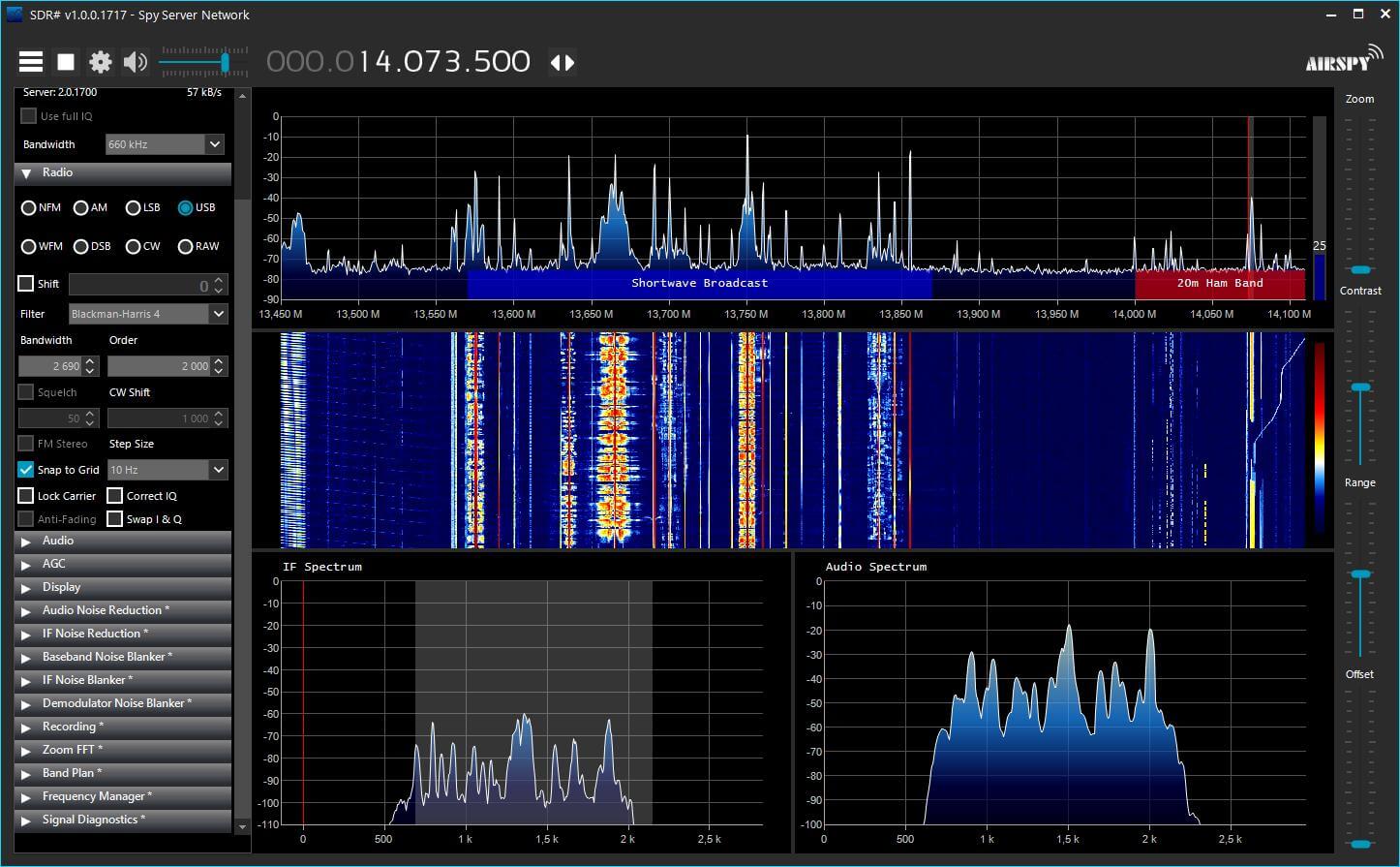
Release 1717 of the popular SDR# software that is commonly used with RTL-SDR dongles has just officially been released (actually already up to r1722 at the time of this post). This release brings with it UI theme customization including a very nice looking dark mode. Over on the Airspy/SDR# groups.io board programmer Youssef wrote:

We are pleased to announce the release of SDR# r1717 with the Telerik User Interface.

This is quite a big jump from the old UI components that will allow us to add many fancy features in the upcoming revisions.
For now, the functionality of the software was ported "one to one" with full support of the existing plugins.
A new Plugin API for the tool bar was added which allows plugin developers to add/remove special buttons for quick access.

Despite a slightly longer loading time at the startup of the application, many performance improvements should be noticed in run time, especially the CPU usage.
The package is now distributed with a set of skins/themes you can select in the control panel under "Display". Later on, we will add custom skins loading capability so you can customize the look and feel of the whole program.

Please note that some themes have slower rendering than others. You will have to experiment until you settle with something that is acceptable for the eye candy and the CPU usage / UI reactivity.

Some older plugins may not support the "Dark" themes and will have some rendering problems. The last unskinned version of SDR# will be still available for download in case you really need it. In any case, plugin developers are invited to support the new skins by either using Telerik UI components or at least setting the display properties of the old components so they render properly.

SDRSharp Dark Theme
SDRSharp Dark Theme

PREORDER SALE: Active L-Band 1525-1637 Inmarsat to Iridium Patch Antenna Set For $34.95

Over the last several months we've been working on a versatile active L-band patch antenna that can cover Inmarsat to Iridium satellite frequencies. That antenna is now almost ready, and should be able to ship out from our Chinese storage warehouse by week 1 or 2 of October NOTE: Due to an unfortunate Typhoon near the factory in Taiwan, and the Chinese National Week long holidays and Taiwan National day we are expecting them to ship out in week 3 or 4 of October now. Apologies for the delays. No other components like filters or amplifiers are required to be able to use this antenna, as it is an all in one system.

The expected price will be US$39.95, but right now we're releasing it for a discounted PREORDER price of US$34.95 incl. free shipping.

Please see our store to preorder the unit.

Preorder sale has ended. Please see our store to order.

Your preorder will ship out as soon as it's stocked in the warehouse in China. If you prefer to wait we'll also have this product on Amazon (at retail $39.95) about 2-3 weeks after it is stocked in our Chinese warehouse.

The antenna is based on the active (low noise amplified with built in filter) ceramic patch design that was used by Othernet (aka Outernet), back when they had their L-band service active. We've asked them to modify the antenna to cover a wider range of frequencies, and include an enclosure that allows for easier mounting.

The antenna is 3.3 - 5V bias tee powered, so you will need a bias tee capable RTL-SDR like our RTL-SDR Blog V3, or a 5V external bias tee. It draws about 20-30mA of current, so it is compatible with other SDRs like the SDRplay, HackRF and Airspy too.

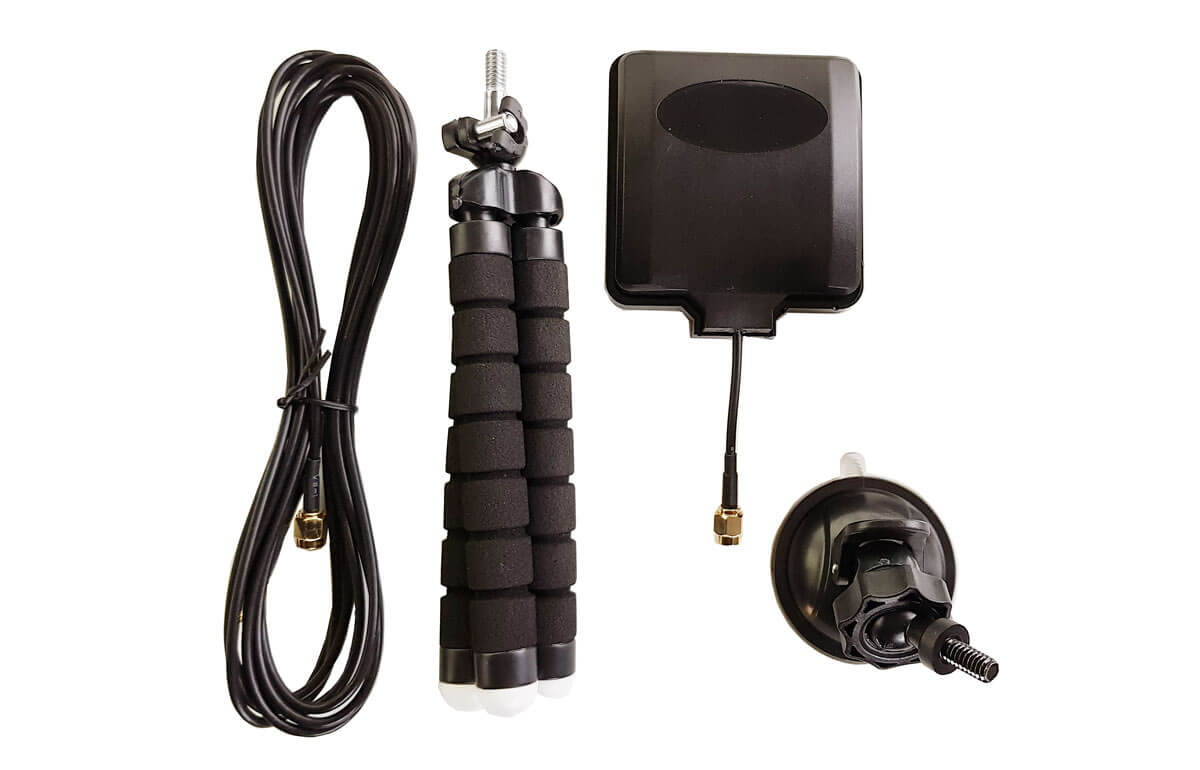
With this antenna we've paid close attention to the mounting solutions. One major difficulty with these patch antennas is finding a convenient place to mount them. The patch is designed with a built in 1/4" camera screw hole, so any standard camera mount can be used. In the kit we're including a window suction cup, a flexible tripod and 2 meters of RG174 cabling to help with mounting. Your own longer coax cabling can be used, however we'd recommend using lower loss cabling like RG59/58 or RG6 for anything longer than 3 meters.

The patch is also fully enclosed in an IP67 weather proof plastic case, so it can be kept mounted outdoors in the rain.

The RTL-SDR Blog L-Band Satellite Patch Antenna Set
Ways to mount the patch antenna

Performance

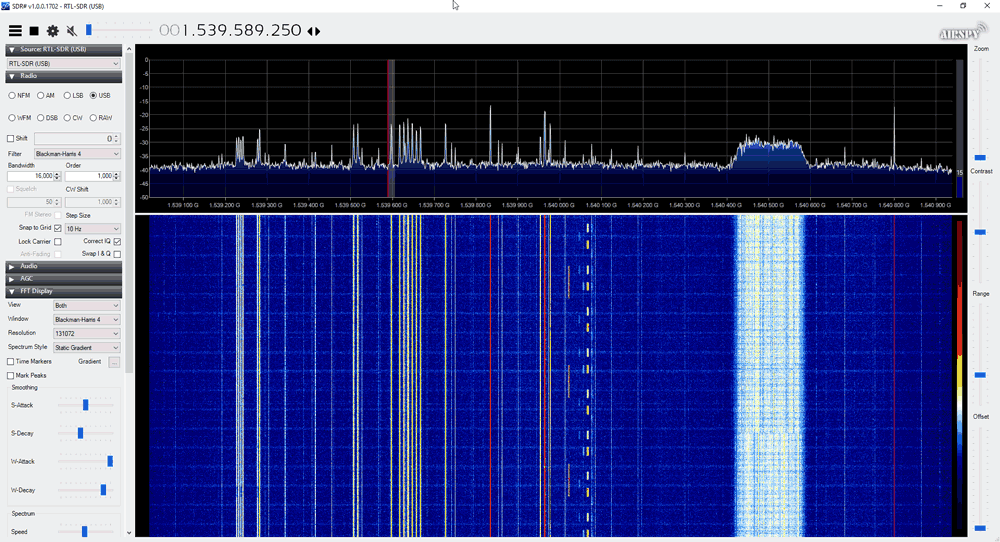
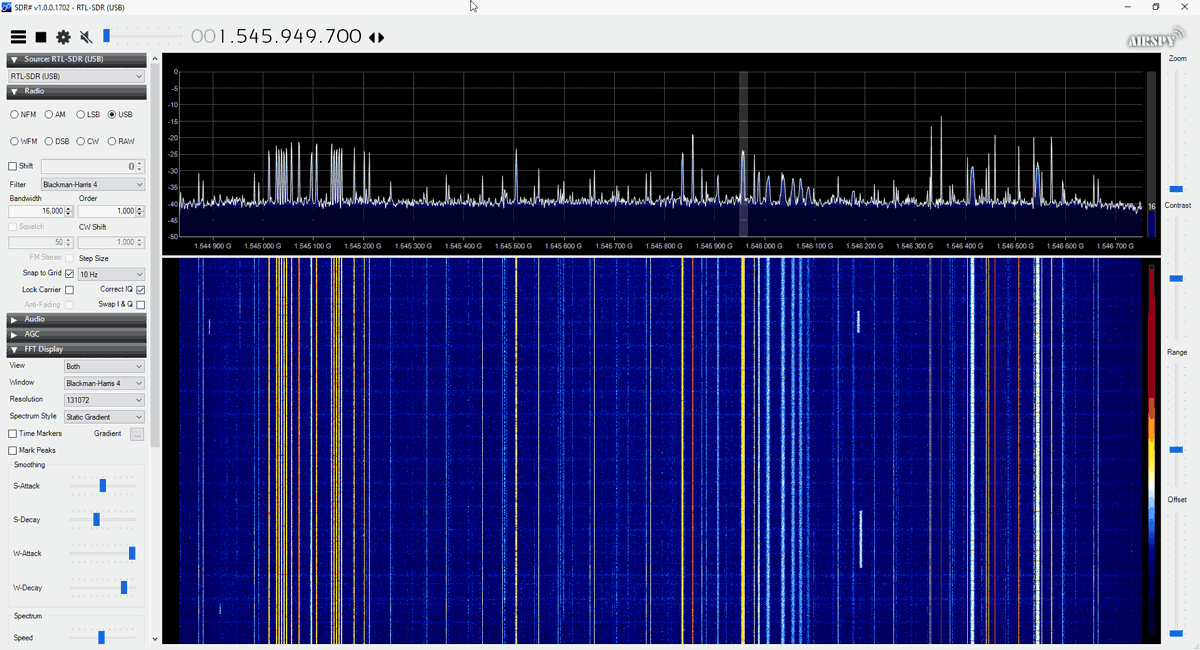
With the patch receiving AERO, STD-C and GPS should be a breeze. Simply point up at the sky, or towards the Inmarsat antenna, apply bias tee power and receive. Below are some sample screenshots showing reception.

Inmarsat Reception
Inmarsat Reception
Iridium Reception

Reception Tips

  • The patch is designed to be used with a 1m+ length of coax cable. It may perform poorly if the RTL-SDR is placed right at the antenna due to interference.
     
  • If receiving Inmarsat, the patch antenna should ideally be angled to face the satellite.
    • Rotate the patch until the signal strength is maximized. Rotating the patch optimizes the polarization of the antenna for the satellite and your location. NOTE: Using the wrong orientation could result in 20 dB attenuation, so please do experiment with the rotation.
    • You can also use the patch on a flat surface for Inmarsat (and rotate for best reception), but signal strength may be a little reduced. Depending on your location and the satellites elevation it should still be sufficient for decoding.
       
  • For receiving Iridium and GPS signals you can use the antenna flat, pointing straight up towards the sky. Try to get it seeing a clear view of the sky horizon to horizon to maximize the satellites that it can see.
     
  • If you happen to have a very marginal signal, you can clamp on a flat sheet of metal behind the patch antenna for improved performance.
     
  • AERO C-Channel: C-Channel transmissions are at 1647-1652 MHz which are outside of the advertised range of this antenna. However, the filter cut off is not that sharp, and you may be able to get results, although we cannot guarantee this. (If you want to test this for us and can demonstrate that you can receive C-Channel already, please contact us at [email protected] for a sample)

  • If you want to mount this on a car roof, you can use a standard magmount camera adapter.

What Can you do with this antenna?

Inmarsat STD-C EGC Decoding

AERO Satellite ACARS Decoding

Iridium Decoding

GPS Experiments

WWV and WWVH Special Messages to Broadcast!

Starting from Monday September 16th and continuing through to October 1st, both WWV and WWVH shortwave time signal transmission stations will broadcast a special message from the Department of Defense to mark the centennial of WWV. These messages will be heard on 2.5, 5, 10, and 15 MHz. In addition from September 28 to October 2 a special WWV event will occur:

The world’s oldest radio station, WWV, turns 100 years on October 1, 2019, and we are celebrating!

From September 28 through October 2, 2019, the Northern Colorado ARC and WWV ARC, along with help from RMHam, FCCW, and operators from across the country, are planning 24-hour operations of special event station WW0WWV on CW, SSB and digital modes. Operations will shift between HF bands following normal propagation changes and will include 160m and 6m meteor scatter. We will be operating right at the WWV site and face a challenging RF environment.

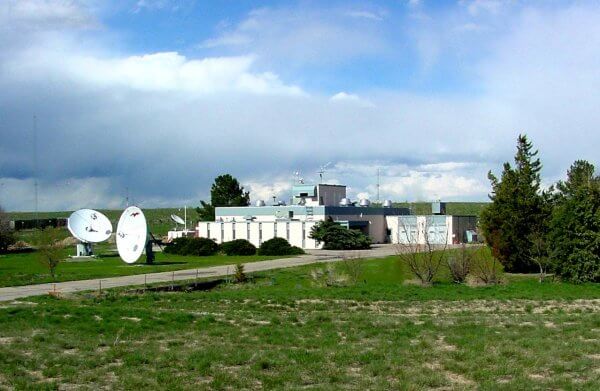
WWV is a [NIST] operated HF station based in Fort Collins, Colorado. It continuously broadcasts a continuous Universal Coordinated Time signal in addition to occasional voice announcements. It has been on the air since 1919 but began continuous broadcasts in 1945 from it’s final site in Fort Collins, Colorado. WWVH is a similar time signal, but based in Hawaii.

The WWV Transmit Building

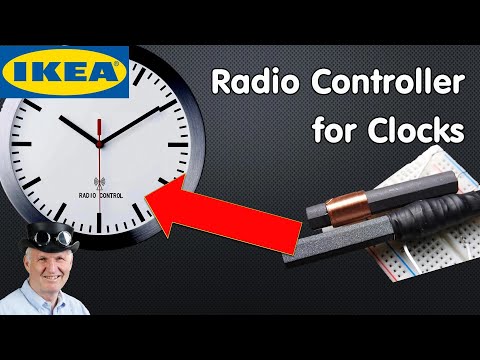
The WWV time signal can be used to automatically set RF enabled clocks to the correct time. [Andreas Spiess] on YouTube recently uploaded a video where he emulates this signal in order to control clocks within his home. This is a great watch if you’d like to learn more about how these time signals work.

The time format itself is actually pretty simple and it’s possible to emulate with a number of devices from an Arduino to Raspberry Pi and of course Software Defined Radio.

#287 Remote Controller for Clocks (IKEA and others, DCF77, WWVB, MSF, JJY)

SignalsEverywhere is Hosting An SDR Hack Chat

[Corrosive/SignalsEverywhere] will be hosting a Software-Defined Radio Hack Chat over on [Hackaday.io] on Wednesday September 18th at 12 PM PDT.

If you’re unfamiliar with Hackaday’s Hack Chat, these are chat sessions with individuals experienced in various fields in which anyone can join in and ask questions during the session. The Hackaday team has run these events with many guest hosts covering a plethora of interesting topics. This however, will be the first Hack Chat revolving around Software Defined Radio.

The hack chat will discuss many sub-hobbies of the SDR world from Amateur Radio and satellite operation to things like weather sonde tracking, monitoring and more.

If you have some SDR questions that have been burning you may want to hop on this session as it’s a one-day event, of course there is always our [Forums] where our community is happy to answer your questions as well.

KerberosSDR Batch 2 Ships Soon! Pricing will Rise on Monday

KerberosSDR Batch 2 will begin shipping very soon! Thank you to all who have supported this project so far. If you didn't already know KerberosSDR is our experimental 4x Coherent RTL-SDR product made in partnership with Othernet. With it, coherent applications like radio direction finding (RDF), passive radar and beam forming are possible.

We just wanted to note that this Monday the reduced preorder pricing of US$130 + shipping will end, and the price will rise to the retail price of $149.95 + shipping. So if you have been thinking about ordering a unit, now would be a good time. Ordering is currently possible through Indiegogo. On Monday we will change to our own store. EDIT: Now available to purchase on the Othernet Store.

For shipping, US orders will be sent domestically from Othernet's office in Chicago. They are still waiting on the US shipment to arrive, but it is expected to arrive by the end of next week. Once shipped locally you will receive a shipment notification.

For international orders, the packages are being labelled now, and should be going out early next week, or sooner.

KerberosSDR Inside and Outside the Enclosure

Future Updates to KerberosSDR

With the profits raised from KerberosSDR sales we are looking to continue funding development on the open source server software and visualization software being created (as well as applying updates ourselves). In future updates we will be looking at features such as:

  • Streamlining the sample and phase sync calibration process.
  • Experimenting with software notch filters for calibration (may reduce the need to disconnect the antennas during calibration).
  • Reworking the buffering code for improved sample ingestion performance and increased averaging.
  • Direction finding and passive radar algorithm improvements.
  • Creating a networked web application for combining data from two or more physically distributed KerberosSDRs over the internet for immediate TX localization.
  • Updates and bug fixes for the Android mobile direction finding app for use in vehicles.
  • Improving passive radar to be able to use all four RX ports for surveillance so that larger areas can be covered.
  • Plotting passive radar pings on a map.
  • Beginning experimentation with beam forming.
  • In the farther future we hope to eventually have even more clever software that can do things like locate multiple signals in the bandwidth at once, automatically plot them on a map, and track them via their unique RF fingerprint, or other identifiers.
  • Future hardware updates may see more streamlined calibration and smaller sizes.
KerberosSDR Android App for Direction Finding