VU GPSDR: An RTL-SDR Expansion Board for the Vivid Single Board Computer

Thank you to Shawn from UUGear for writing in and sharing with us news about the release of "VU GPSDR" an RTL-SDR expansion board for the "Vivid Unit" single board computer. The Vivid single-board computer (SBC) is based on the RK3399 CPU (same chip used on the Orange Pi 4), and comes with a built-in 5.5" touchscreen.

The VU GPSDR is an expansion board for the Vivid Unit that, when combined with a VU Extender board, sits on the back of the Vivid Unit, transforming the computing platform into a portable SDR capable of running software like their fork of SDR++ or an OpenStreetMap display of live ADS-B aircraft positions.

The VU GPSDR also integrates a GPSDO (GPS disciplined oscillator), with a built-in GPS patch antenna, for precise frequency tuning. It also comes with a built-in HF upconverter and two encoder wheels, presumably customizable, but primarily for tuning and volume control. Finally, they have also integrated a software-controlled frequency output port for experimenters.

The Vivid Unit costs €99.00 (approximately US$115) on its own. The Vivid Unit Extender, which is required for using expansion boards, costs €25.00 (approximately US$29). The VU GPSDR itself costs €65.00 (approximately US$75). So, in total, for a complete RTL-SDR system, you are looking at a total cost of €189 (US$220).

Shawn has also recently sent us a review sample, which we will be testing out and writing a review for within the next week, so stay tuned for that!
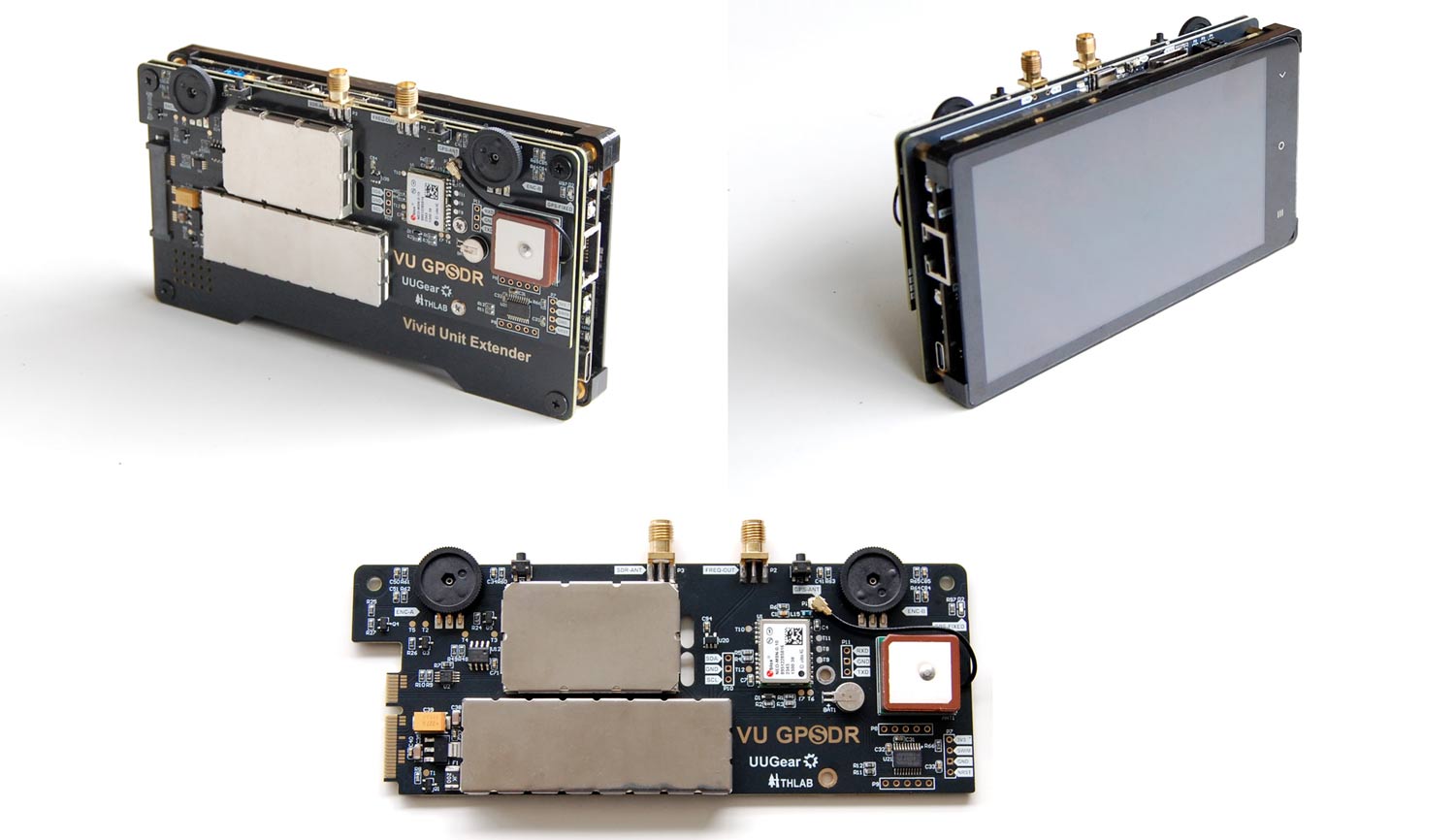
The VU GPSDR Expansion Board for the Vivid Unit Single Board Computer

DSG-22.6 GHz: An Open Source 300 MHz to 22.6 GHz Signal Generator

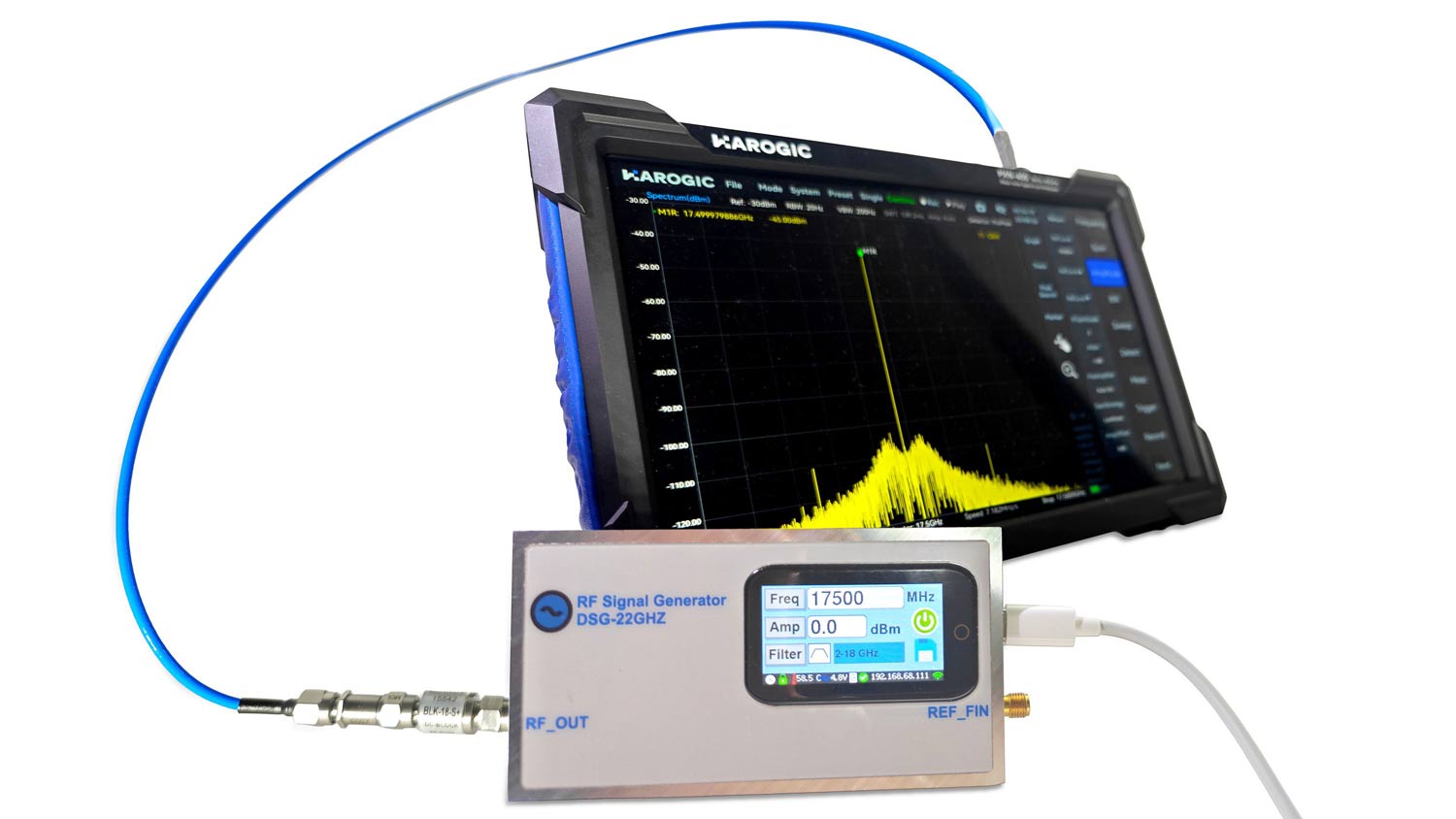
Thank you to Süleyman Dündar for submitting news about the pre-release of their new product called "DSG-22.6 GHz". DSG-22.6 GHz is a compact, handheld, open-source RF signal generator covering a continuous range from 300 MHz to 22.6 GHz with 1 Hz tuning resolution, 40BC harmonic level, and power output ranging from 15 dBm to -50 dBm.

An RF signal generator produces a clean, stable radio frequency signal at a chosen frequency. It is a helpful tool for testing SDRs and other radio equipment, such as low-noise amplifiers (LNAs), RF filters, mixers etc.

Competition to the DSG-22.6 GHz may include the ERASynth Micro and moRFeus; however, neither covers the wide frequency range of the DSG-22.6 GHz, and it appears that the ERASynth Micro has been discontinued.

Currently, the product is in the pre-release crowdfunding stage on Crowd Supply, so pricing hasn't been revealed. Interested individuals can subscribe to receive updates on their campaign page. The open source code can also be found on GitHub.

DSG-22.6 GHz. An upcoming wide frequency range, hand held and fully open source signal generator.


Amateur Radio Direction Finding With a KrakenSDR: AREG Presentation

Over on YouTube, we've seen a talk by Mark Jessop that may be interesting to some readers, as it covers Amateur Radio Direction Finding / Fox Hunting with the KrakenSDR, as well as various other radio tools. If you are unaware, KrakenSDR is our 5-channel coherent RTL-SDR based software defined radio system, designed for coherent applications like radio direction finding.

In the talk, Mark explains the amateur radio fox hunting sport, which involves the organizer hiding a transmitter somewhere in a defined area and having participants search for it using just its radio emissions. He goes on to show the different types of antennas, radio systems and vehicle setups participants used.

Mark further explains that on his particular vehicle, he uses a KrakenSDR as the primary receive system. He explains how the KrakenSDR works, how he integrated it into this vehicle and the custom software and LED display that he is using with it. 

ARDF at Mt Gambier - by Mark VK5QI and Grant VK5GR - AREG September 2025 Presentation

ESP32 Bus Pirate: Turn your ESP32 into a Multi-Purpose Hacker Tool

Thank you to "Geo" for writing in and sharing with us his open source project called "ESP32-Bus-Pirate" which he thinks might be of interest to those in the RTL-SDR community. The ESP32 is a popular low-cost microcontroller due to the fact that it has WiFi and Bluetooth capabilities built in. Although the ESP32 does not have true SDR capabilities, it can leverage its numerous built-in hardware radio components to achieve various interesting feats. Geo writes:

This firmware turns an inexpensive ESP32-S3 board into a multi-protocol debugging and hacking tool, inspired by the original Bus Pirate and the Flipper Zero.

It currently supports a wide range of protocols and devices, including I²C, SPI, UART, 1-Wire, CAN, infrared, smartcards, and more. It also communicates with radio protocols as Subghz, RFID, RF24, WiFi, Bluetooth.

Compared to existing solutions, the focus is on:

Accessibility — runs on cheap ESP32-S3 hardware (around $7–$10).

Versatility — one device can probe, sniff, and interact with multiple buses.

Extensibility — open-source and modular, making it easy to add new protocol support.

I believe this could be useful for hardware hackers, security researchers, and hobbyists looking for a low-cost, flexible alternative to commercial tools.

With the firmware installed on a compatible ESP32 device, it is possible to create WiFi, Bluetooth, and RF24 sniffers, scanners, and spoofers, as well as perform general sub-GHz and RFID sniffing, scanning, and replay attacks. It also has a host of non-RF capabilities useful for hacking devices.

PhaseLoom: A Software Defined Radio Powered by the Chip used in the Commodore 64, NES and other Early Home Computers

The MOS Technology 6502 is, by today's standards, an ancient chip, having just turned 50 this September 8. It was the chip behind the early age of home computing, powering iconic systems like the Apple I & II, Commodore 64, Atari, and Nintendo Entertainment System. It is, therefore, fascinating that someone has managed to use this chip as a core component in a modern software-defined radio system.

Over on his blog, Anders B Nielsen describes PhaseLoom, a 6502-based "Quadrature Sampling Detector Phase-Locked Loop SDR frontend". Realistically, we want to point out that the 6502 isn't actually doing any digital signal processing (DSP). The 6502 is used as an assembly programmed controller for a SI5351-based local oscillator and multiplexor chip that generates IQ data. Piping the IQ data into a PC with a soundcard is still required to actually get data out. However, Anders notes that he eventually hopes to get some DSP running on the 6502.

With the setup he is currently able to tune just to he 40m band, noting that performance isn't great, but at least it works!

Anders' video below explains the entire design and concept in detail, and we note that he is currently selling a full kit on his store and has uploaded the schematics to GitHub.

A 6502 Software Defined Radio

A Small 11.2 GHz Motorized Radio Telescope with TV Dish and RTL-SDR

Thank you to Kaustav Bhattacharjee for writing in and submitting to us his project, where he created a small 11.2 GHz motorized radio telescope with a TV dish and an RTL-SDR. A full description of Kaustav's work can be found in a white paper he wrote on behalf of the Department of Physics at the Indian Institute of Technology Roorkee. In summary he writes:

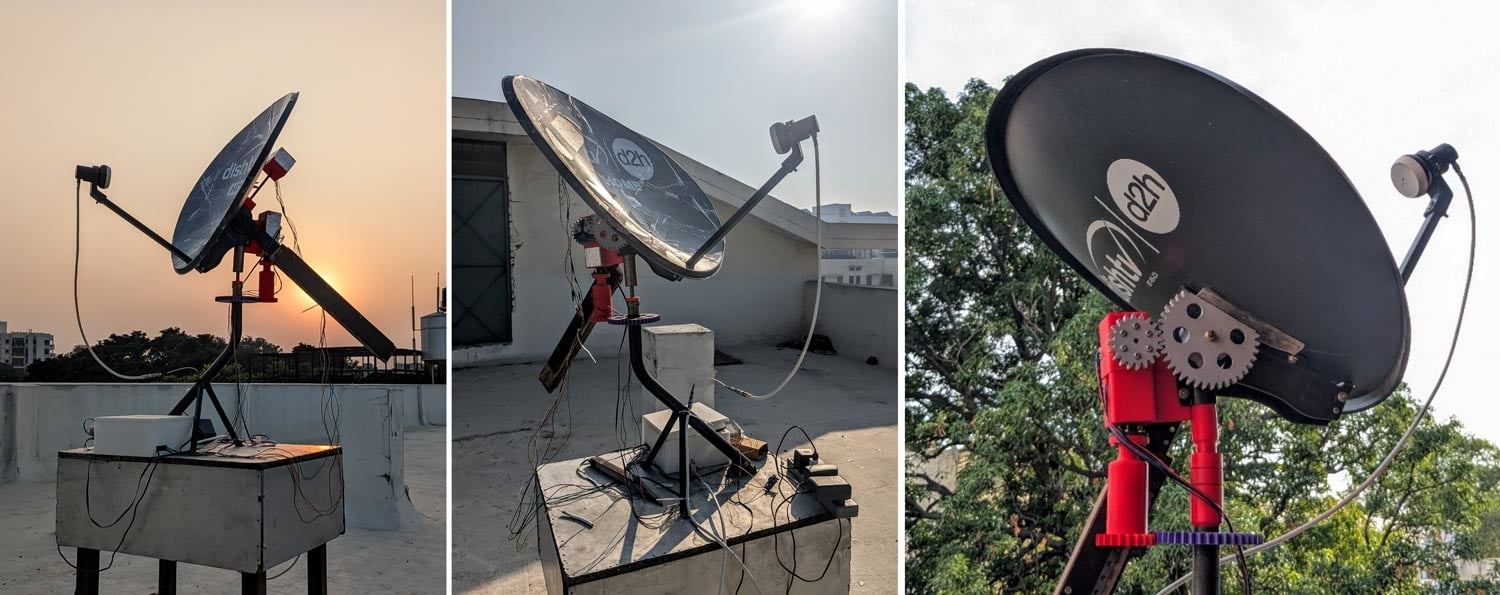
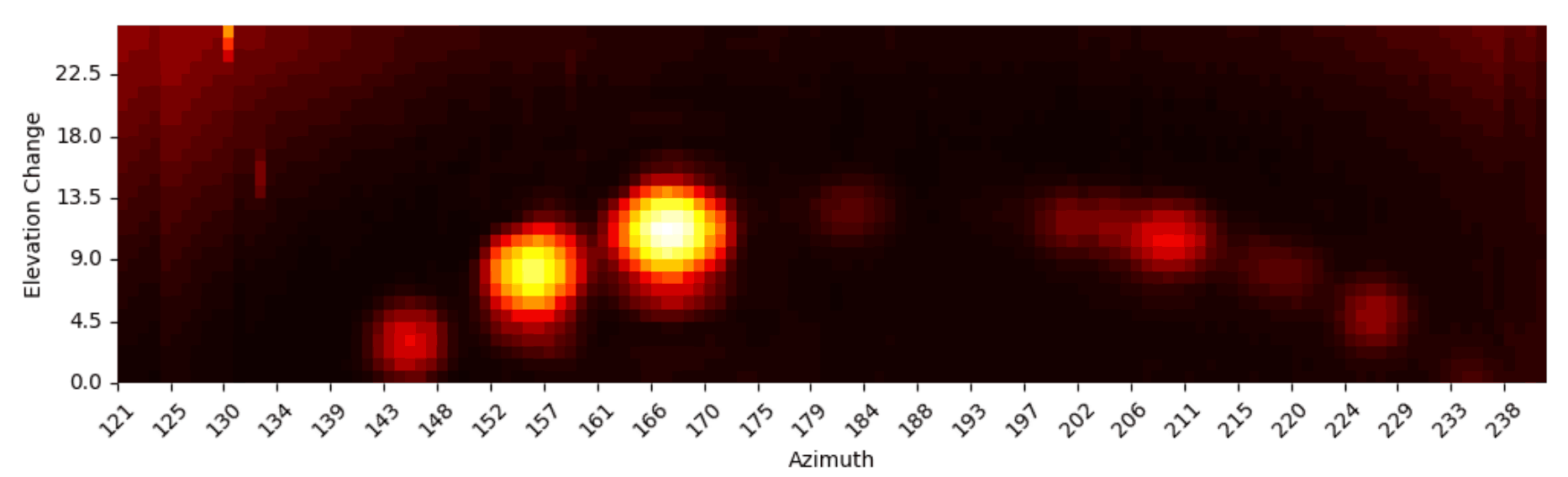
Briefly put, the hardware Setup comprises a 66 cm parabolic dish, a standard Ku-band LNB with bias tee power injection as the frontend, an RTL-SDR V3 tuned to 1.45 GHz (due to downconversion) as the receiver and a Raspberry Pi 5 handling SDR data (via GNU radio) and stepper motor control (using GPIO pins). A heatmap of the southern sky at 0.9° resolution, showing a belt of geostationary satellites, is the primary result of interest!

We also want to point out that his rotor setup involves several 3D printed gears driven by two NEMA17 stepper motors. However, Kaustav notes that the long term resolution is limited due to cumulative backlash errors from the open-loop control scheme.

Kaustav's 11.2 GHz RTL-SDR Radio Telescope
Geostationary satellites visualized with the radio telescope

Creating a Spectrum Analyzer with Zoom Capability with an RTL-SDR in GNU Radio

Thank you to Paul Maine "The SDR Guy" for submitting his latest video showing how to create a simple spectrum analyzer with zoom capability, using an RTL-SDR and GNU Radio. Paul writes:

Zoom capabilities are discussed in the 3rd edition of Richard G Lyons “Understanding Digital Signal Processing” book. This is a novel approach when compared to other YouTube videos about creating a Simple Spectrum Analyzer with an RTL-SDR.

Additionally, in the video, Paul explains what a spectrum analyzer is and what it's used for, as well as explaining the use of attenuators and discone antennas. In the video, Paul uses an RTL-SDR Blog V4, but has mentioned that an RTL-SDR Blog V3 would work well too.

E19 Create a Spectrum Analyzer with Zoom Capabilities

A Video on Optimizing VLF Loop Antennas

VLF (Very Low Frequency) refers to signals in the 3–30 kHz range. Software-defined radios like the SDRplay RSPdx can pick up these signals with an appropriate antenna.

Over on YouTube, @electronics.unmessed has uploaded a video showing how you can build a high-performing VLF loop using a single loop of wire and a balun. The one-turn design results in a naturally low impedance at low frequencies. A balun is then added to step up the impedance, resulting in impedance compatibility with an SDR.

The video explains the concepts behind VLF loops using an equivalent circuit model and shows how conductor thickness offers little benefit above 10 kHz (though wide sheet conductors can add ~3 dB), larger loops scale with area but 2 m is a good indoor compromise, extra turns help small loops but underperform a single turn with a proper transformer, and alternative ferrite mixes give little improvement over standard choke cores. Ultimately, it is concluded that a one-turn loop with a well-chosen balun is one of the most effective designs.

If you're interested in similar content, there are also several other interesting videos on the @electronics.unmessed channel about VLF antennas, mag loop antennas, SDR reception, and more.

VLF Loop - What really Matters? (EP172)