Highlighting some SDRPlay Reviews

Update: Note that we also now have our own comprehensive review available here which compares the Airspy, SDRplay RSP and HackRF.

The Radio Spectrum Processor (RSP) by SDRplay is a receive only software defined radio with a 100 kHz to 2 GHz range (with a small gap at 380 MHz to 430 MHz), a 12-bit analogue to digital converter (ADC) (~10.4 ENOB), 8 MHz bandwidth and a bank of several switched front end filters. It currently costs $299 USD and with these specs and price range we consider the RSP to be a competitor to the Airpsy and Funcube Dongle software defined radio offerings.

Recently several reviews of the SDRplay RSP have been written online and in magazines. The first review comes from the pages of the UK based Radio User magazine (pdf warning) which goes through the specs, design, install and operation of the device. A more recent review shows an unboxing and there’s also this review submitted to the SDRplay team which demonstrates some FM dxing results. There are also several more reviews collected by the SDRplay team linked on the SDRplay website at http://www.sdrplay.com/reviews.htm.

We also note that we recently posted about some in depth measurements that Leif (programmer of Linrad) recently made to multiple SDR’s, including the SDRplay.
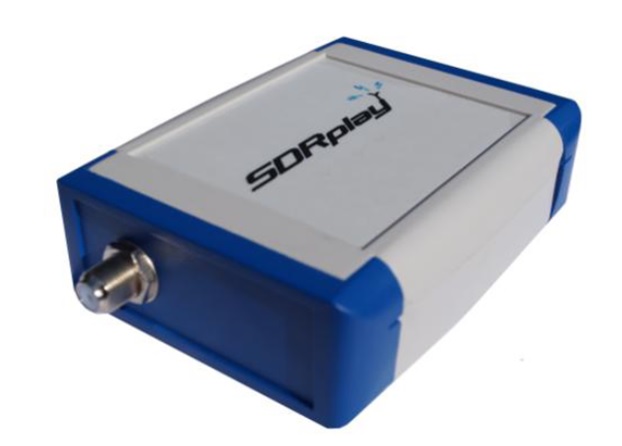
The Radio Spectrum Processor (RSP) by SDRplay.

The SatNOGS Story

In a previous post we talked about the SatNOGS project which aims to provide low cost satellite ground stations (where one critical component is currently an RTL-SDR dongle) along with free networking software in order to create a crowd sourced satellite coverage network. The SatNOGS project was also recently the grand prize winner of the Hackaday prize which saw them take almost $200k US dollars of prize money.

Today Hackaday has written a post promoting their project and explaining what it is all about. Check out their post here http://hackaday.com/2015/02/19/ground-stations-are-just-the-beginning-the-satnogs-story and go and support this project by checking out the SatNOGS community.

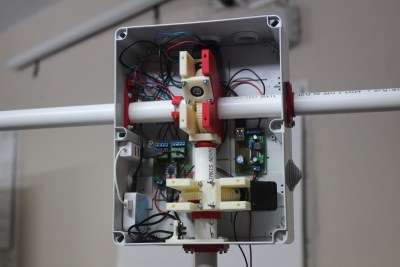
The internal of the current SatNOGS ground station.

SDR-J Updated to Version 0.98

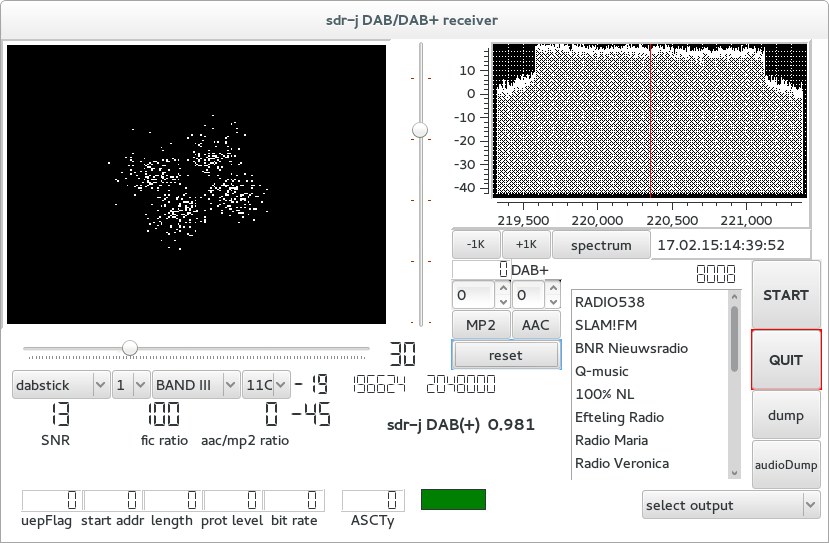
The RTL-SDR compatible DAB Radio receiving software SDR-J has recently been updated to version 0.98. DAB stands for digital audio broadcasting and is a type of digital radio signal used in some countries for transmitting broadcast radio stations in digital audio.

The new versions fixes some minor errors, brings back their ‘spectrum viewer’ software and also comes with a ‘DAB mini’ receiver which is simply a smaller windowed version of the regular DAB receiver. The new version also now supports the sdrplay and Airspy software defined radios.

SDR-J DAB Receiver
SDR-J DAB Receiver

Recovering 433MHz Messages with RTL-SDR and MATLAB

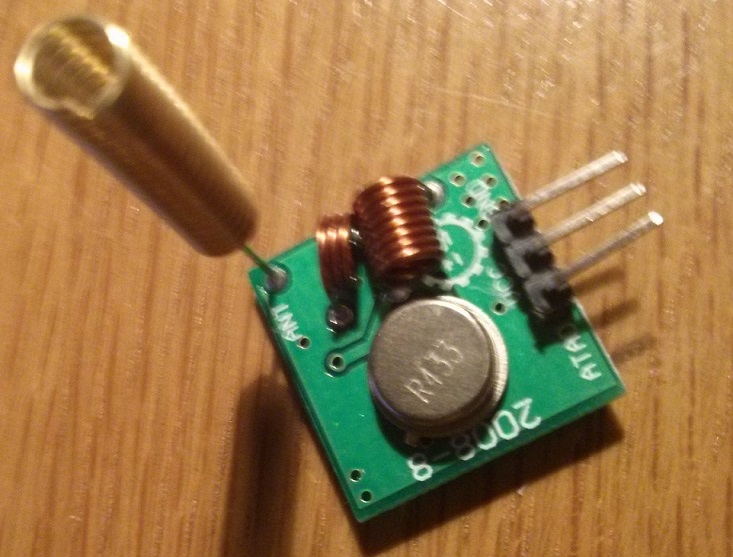
Recently RTL-SDR.com reader Ilias wrote in to let us know about a post he uploaded to his blog showing how he was able to decode data from a device transmitting at 433 MHz using an RTL-SDR and MATLAB. MATLAB is a technical computing language that can be used for signal analysis and processing. His post clearly explains the steps he took and is a great aide for anyone wanting to learn about decoding simple signals.

The goal of Ilias’ project was to be able to use the RTL-SDR and MATLAB to uncover the details of a 433 MHz transmitter he bought on Ebay. He wanted to see if he could determine the protocol and recover the data before even looking at the transmitter’s library code.

To do this he first used SDR# to record the data sent at 433 MHz. Then by looking at the waveform in the Audacity audio editor he was able to determine that the signal was on-off-key (OOK) modulated and from this knowledge he was able to manually recover the binary string. Next he used MATLAB to create a program that can automatically decode the received OOK signal. His post goes into further detail about the signal processing steps he took in MATLAB.

433 MHz OOK Transmitter

Getting started with amateur satellite reception and the RTL-SDR

Over on the hamspirit.de blog the author Jan has uploaded a post introducing the hobby of amateur satellite reception with the RTL-SDR (in German, use Google Translate). Amateur radio satellites may transmit signals like CW (morse code), voice, APRS and telemetry.

In the article Jan discusses the antennas required to receive satellites, the satellite tracking software gpredict and he introduces some amateur radio satellites that have strong transmitters and are thus easy to receive. He also shows waterfall screenshots of several amateur radio satellites that he has received.

FO-29 Doppler Effect

Sigidwiki and our Facebook and Twitter Pages

Our radio signal identification wiki sigidwiki.com has now been running for half a year and is starting to collect a wide range of example signals. We just wanted to remind you of the site and to submit any example signals or information that you may have to the wiki.

We would also like to remind everyone to follow us on Facebook and Twitter to hear about our posts as soon as they go up. We also often retweet interesting SDR related tweets by other users and have user comments and discussions on our Facebook page. Later in the year we also hope to hold some giveaways and competitions through these platforms.

facebook

twitter

Using filters to deal with interfering transmissions on the RTL-SDR

Over on a German ham blog Hamspirit.de, a contributer called Jan has written a post showing his results with filtering and the RTL-SDR (language in German, use Google translate).

Jan uses a DPX-210-270 diplexer which splits an antenna port into two ports with one port having a 50 – 210 MHz low pass filter and the other having a 270 – 1000 MHz high pass filter. His first test shows that the low pass filter correctly attenuates some TETRA signals at around 390 MHz. In his second test he scans the broadcast FM frequency range and finds that with the low pass filter enabled there was a 3.5 dB increase in signal strength for one station and a 10 dB increase for another.

Attenuation of higher frequencies provided by the low pass filter.

Testing GNU Radio on the Raspberry Pi 2

Earlier this year the successor to the hugely popular Raspberry Pi, the Raspberry Pi 2 was released. The Raspberry Pi 2 is a mini embedded computer that can run Linux.

Over on the RS Design Spark website Andrew Back has posted a tutorial showing how he installed GNU Radio and RTL-SDR on the Raspberry Pi 2. He also shows that the Raspberry Pi 2 runs the CPU intensive GNU Radio software well, utilizing 70% CPU when running osmocom_fft, a GNU Radio based spectrum analyzer. Andrew also installs and tests the gr-air-modes GNU Radio program which is an ADS-B receiver, finding that it also performed well with low CPU utilization.

Raspberry Pi 2 with an RTL-SDR Dongle Attached